
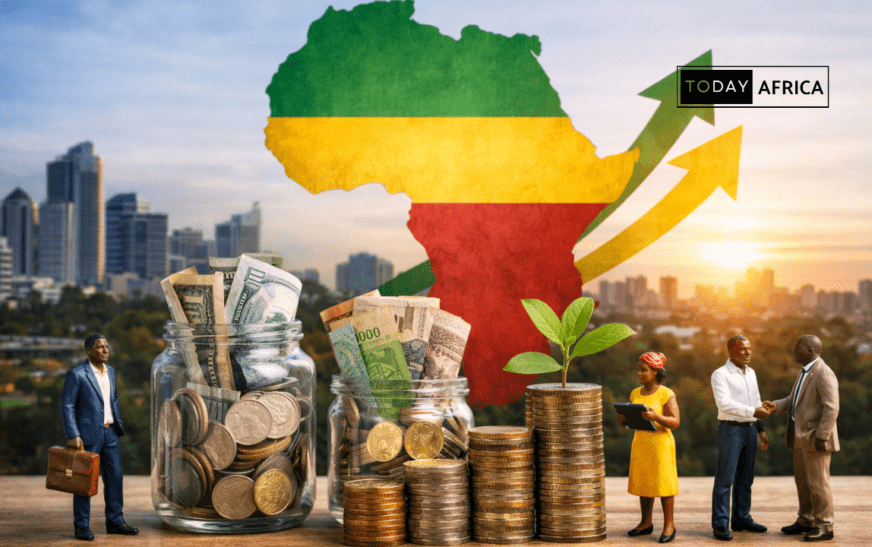
After two years of contraction, Africa’s startup ecosystem raised more capital in 2025 than it did the year before.
That reversal matters, not because it signals a return to earlier growth cycles, but because it clarifies how capital now evaluates risk, duration, and value creation across the continent.
The rebound was not driven by renewed enthusiasm for rapid scale, but by a reassessment of what kinds of businesses can absorb capital sustainably under current global conditions.
The pattern that emerged through the year suggests that African technology markets are increasingly being assessed through an infrastructure lens, less about user growth and more about systems that anchor energy, logistics, and financial flows within the real economy.
A rebound defined by structure, not speed
By mid-2025, the shape of the recovery was already visible. When examining the continent’s largest startup fundraises during the year, a clear divergence appeared: size no longer implied equity.
Only three of the ten largest raises were traditional venture capital rounds. The rest relied on debt, securitization, or project finance, particularly in energy, mobility, and asset-heavy fintech.
Briter’s full-year data confirms that this was not episodic.
Debt financing crossed the $1 billion mark across the ecosystem, cleantech attracted the largest individual allocations, and funding structures shifted decisively away from growth-first equity.
Capital returned, but on more conservative terms.
Rather than chasing expansion, investors prioritised businesses with contracted revenues, physical assets, and longer operating horizons.
In a year shaped by inflationary pressure, currency volatility, and tighter global liquidity, these models offered predictability that consumer-facing venture growth could not.
Infrastructure moves to the center
Energy and climate-focused companies raised approximately $1.2 billion in 2025, overtaking fintech to become the largest sector by total capital raised.
Fintech remained the most active sector by deal count, but the largest cheques flowed into solar generation, off-grid power, energy storage, and mobility systems.
This shift reflects a recalibration rather than a sudden turn. Investors increasingly favoured companies positioned close to essential services, powering homes, moving goods, and supporting enterprise activity, over those dependent on discretionary consumer demand.
Many of the year’s largest financings resembled infrastructure transactions more than classic venture rounds.
Debt and blended instruments dominated, reinforcing the idea that African tech, at scale, is increasingly being valued as a foundational layer of the economy rather than a speculative growth category.
Geography still matters, but differently
Nigeria remained Africa’s busiest startup market by deal count, driven by strong early-stage formation and sustained seed activity. More companies raised capital there than in any other country.
However, the largest transactions increasingly occurred elsewhere.
Kenya and South Africa captured a greater share of high-value rounds, reflecting their ability to support asset-heavy businesses and structured financing.
Kenya benefited from several large cleantech deals, while South Africa regained ground as a destination for sizeable equity transactions.
The signal is not a redistribution of entrepreneurial activity, but a reweighting of where large, durable capital can be deployed. Volume remains important, but scale now follows market structure and financing depth.
Read Also: Top 10 African startup fundraises in 2025
Debt enters the mainstream
One of the clearest developments in 2025 was the normalisation of debt as a growth instrument. More than $1 billion flowed into companies with tangible collateral and predictable cash flows, particularly in energy, mobility, and infrastructure-linked platforms.
For founders, debt offered a path to expansion without dilution. For investors, it reduced exposure to valuation risk. The result is a more stratified capital environment: venture capital concentrates on higher-risk innovation, while debt supports companies that have moved into operational maturity.
Briter’s data suggests this is not a temporary adjustment, but evidence of an ecosystem learning to match capital type to business fundamentals.
Exits return, selectively
Liquidity also reappeared in 2025, though without spectacle. Briter tracked more than 60 acquisitions and secondary transactions, ending a two-year slowdown. Most were trade sales focused on infrastructure, licenses, or cash-generating operations rather than growth narratives.
Exits clustered in Nigeria, Egypt, and South Africa, where acquisition processes are better established. Consumer applications were largely absent. The companies that found buyers were those that could be integrated and operated immediately.
Read Also: EFCC files ₦4.3bn forex fraud charges against UBA and others
Looking ahead
As Africa enters 2026, the contours of its technology ecosystem are clearer. Capital is available, but more conditional. Timelines are longer, structures are tighter, and outcomes are narrower.
What bears watching now is whether founders and policymakers can continue to align business models, regulation, and financing frameworks with this more disciplined phase of capital formation.
Leave a comment and follow us on social media for more tips:
- YouTube: Today Africa Studio
- Facebook: Today Africa
- Instagram: Today Africa
- Twitter: Today Africa
- LinkedIn: Today Africa