
Nowadays, operational efficiency is no longer optional; it is a strategic imperative. Companies face mounting pressure to optimize workflows, reduce operational costs, and respond swiftly to market changes.
Business process management (BPM) has emerged as a critical framework for achieving these objectives, offering structured methodologies to design, implement, monitor, and continuously improve business processes.
What is business process management
Business process management is a disciplined approach to identify, model, execute, monitor, and optimize processes within an organization.
Unlike traditional management practices that focus solely on outcomes, BPM emphasizes the efficiency and effectiveness of the processes that generate those outcomes.
This distinction is crucial: by improving processes, organizations can drive measurable improvements in productivity, cost management, and customer satisfaction.
A 2023 report by Grand View Research estimated the global BPM market size at $14.4 billion, projecting a compound annual growth rate (CAGR) of 10.3% through 2030.
The growth is driven by increasing adoption of digital technologies, heightened competition, and the need for regulatory compliance across industries.
From manufacturing to financial services, organizations are recognizing that streamlined processes are foundational to operational resilience and strategic scalability.
Read Also: How African Startups are Growing Without Burning Out
Key components of business process management
BPM typically encompasses several integrated stages:
- Process identification: Determining which processes are critical to organizational performance. Companies often begin with core operational processes, such as order-to-cash, procurement, or customer onboarding.
- Process modeling: Mapping existing workflows and designing optimized processes. Modern BPM tools allow organizations to visualize processes using flowcharts or digital modeling software, providing clarity on interdependencies and potential bottlenecks.
- Process execution: Implementing the defined processes using human or automated resources. Automation plays a growing role here; Gartner estimates that by 2025, 75% of organizations will have automated at least one business process using digital process automation platforms.
- Process monitoring: Tracking performance using key performance indicators (KPIs) such as cycle time, error rates, and cost per transaction. Data-driven monitoring ensures organizations can respond to inefficiencies in near real-time.
- Process optimization: Continuous improvement through iterative refinements. Techniques such as Six Sigma, Lean Management, and Robotic Process Automation (RPA) are often deployed to enhance efficiency and reduce variability.
Strategic benefits of business process management
The strategic advantages of implementing BPM extend beyond operational efficiency.
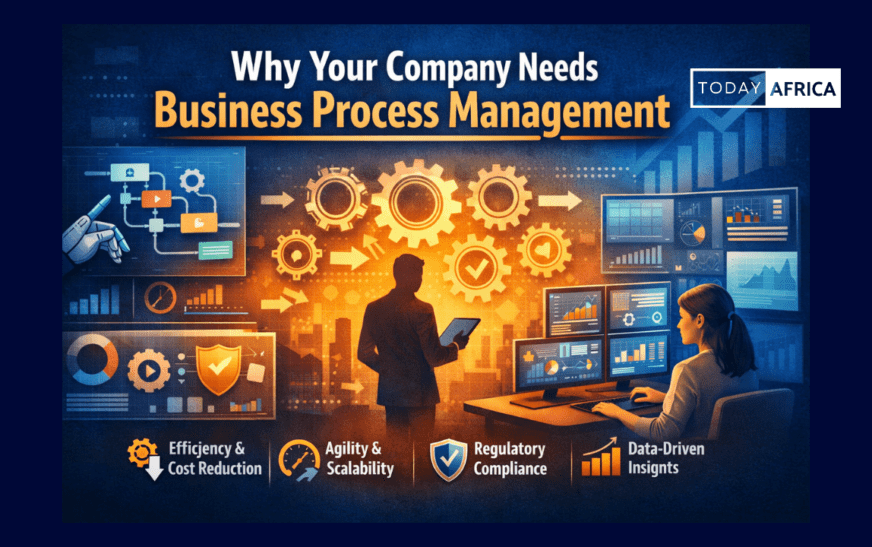
1. Operational efficiency and cost reduction
Inefficient processes represent hidden costs. According to McKinsey & Company, organizations can reduce operational costs by 20–30% through process optimization. BPM identifies redundancies, eliminates bottlenecks, and standardizes workflows, reducing the time and resources required to complete tasks.
2. Enhanced agility and scalability
BPM equips organizations to adapt quickly to market shifts. By standardizing processes and establishing clear monitoring mechanisms, companies can implement changes rapidly without disrupting operations. For multinational corporations, this agility translates into the ability to replicate successful processes across regions efficiently.
3. Regulatory compliance and risk management
In highly regulated industries such as finance, healthcare, and energy, non-compliance can result in significant fines and reputational damage. BPM systems provide audit trails, enforce standardized procedures, and generate compliance reports automatically, mitigating risks associated with human error.
4. Data-driven decision making
BPM is inherently tied to data collection and analytics. Organizations that integrate BPM with enterprise resource planning (ERP) or customer relationship management (CRM) systems gain actionable insights into process performance. For example, Salesforce reports that companies using integrated process management solutions achieve a 25% improvement in customer retention due to faster response times and consistent service delivery.
5. Customer experience improvement
Streamlined processes translate to faster service delivery and fewer errors, which are directly linked to customer satisfaction. According to a study by PwC, 73% of consumers point to experience as a key factor in purchasing decisions. BPM ensures that customer-facing processes, such as onboarding, order fulfilment, and support, are optimized for reliability and speed.
Read Also: How to Build B2B Partnerships in Fragmented African Markets
Implementing business process management
Successful BPM implementation requires more than software; it demands a cultural shift and executive buy-in. Key best practices include:
- Align BPM with strategic bbjectives: Processes should support the company’s overall strategy rather than being managed in isolation.
- Invest in the right technology: BPM platforms like Appian, IBM BPM, and Pega provide automation, analytics, and process modeling capabilities that enable comprehensive management.
- Foster a continuous improvement culture: Encourage employees to identify inefficiencies and participate in process redesign. Continuous improvement should be institutionalized rather than episodic.
- Measure and monitor: Define KPIs for every process and implement dashboards for real-time performance tracking. Without measurable metrics, process management becomes subjective.
- Start small, scale fast: Pilot BPM initiatives in critical processes, learn from initial outcomes, and gradually expand implementation across the organization.

Challenges and considerations
Despite its benefits, BPM is not without challenges. Poorly executed BPM can lead to bureaucratic rigidity, employee resistance, and underutilization of technology investments.
According to Forrester, over 50% of BPM initiatives fail due to lack of leadership commitment or failure to integrate BPM into daily operations. Organizations must approach BPM strategically, focusing on process value rather than process complexity.
Additionally, integrating BPM with emerging technologies such as AI, RPA, and advanced analytics requires technical expertise and a robust change management framework.
The payoff, however, is substantial: AI-driven process optimization can predict operational bottlenecks, automate repetitive tasks, and even simulate process outcomes under different scenarios.
Read Also: How to Build Scalable Distribution Channels in Africa
Conclusion
Business Process Management is no longer a supplementary function; it is a strategic lever for companies seeking efficiency, resilience, and competitive advantage.
By systematically analyzing, optimizing, and monitoring processes, organizations can reduce costs, mitigate risk, enhance agility, and improve customer satisfaction. While implementation requires careful planning, investment, and cultural adaptation, the returns are measurable and sustainable.
For companies navigating increasingly complex markets, BPM represents a framework that converts operational discipline into strategic capability, a necessity for any organization aiming to remain competitive in the next decade.
Leave a comment and follow us on social media for more tips:
- Facebook: Today Africa
- Instagram: Today Africa
- Twitter: Today Africa
- LinkedIn: Today Africa
- YouTube: Today Africa Studio