
As Nigeria approaches the 2027 general elections, a new battleground is emerging, not on the streets or in crowded campaign rallies, but within the invisible architecture of digital platforms.
Algorithms, artificial intelligence (AI), and data-driven campaign strategies are rapidly transforming how political information is produced, distributed, and consumed. Increasingly, the political messages that shape voter perception are not simply the result of campaign speeches or television broadcasts but are filtered through recommendation systems that determine what millions of Nigerians see online.
Nigeria has more than 122 million internet users and over 38 million active social media users, according to recent telecommunications estimates. For many citizens, platforms such as WhatsApp, Facebook, X, and TikTok have become primary sources of political information.
In this new political environment, the most decisive moments of an election may occur long before voters step into polling stations. Instead, they may take place inside algorithmically curated social media feeds, where political narratives are amplified, filtered, and personalized at scale.
While the growing influence of AI in politics is a global phenomenon, Nigeria presents a particularly significant case. The country’s rapid digital expansion, high social media engagement, and still-developing regulatory frameworks create conditions in which algorithmic influence could play an outsized role in shaping electoral outcomes.
By 2027, Nigeria’s elections may not only be contested at the ballot box but also within data systems, digital networks, and the algorithms that structure public attention.
AI and political campaigns
Rise of data-driven campaigns in Nigeria
Historically, Nigerian political campaigns relied heavily on physical rallies, traditional media coverage, and broad demographic messaging aimed at large segments of the population.
Campaign strategies focused on regional influence, ethnic alignments, and mass communication through radio, television, and newspapers.
However, the rapid expansion of digital connectivity has fundamentally altered this landscape.
Nigeria is now Africa’s largest internet market. With more than 120 million connected users, digital platforms have become central to how political information spreads.
WhatsApp alone is estimated to reach over 90% of Nigeria’s internet users, making it one of the most influential channels for political discussion and information sharing.
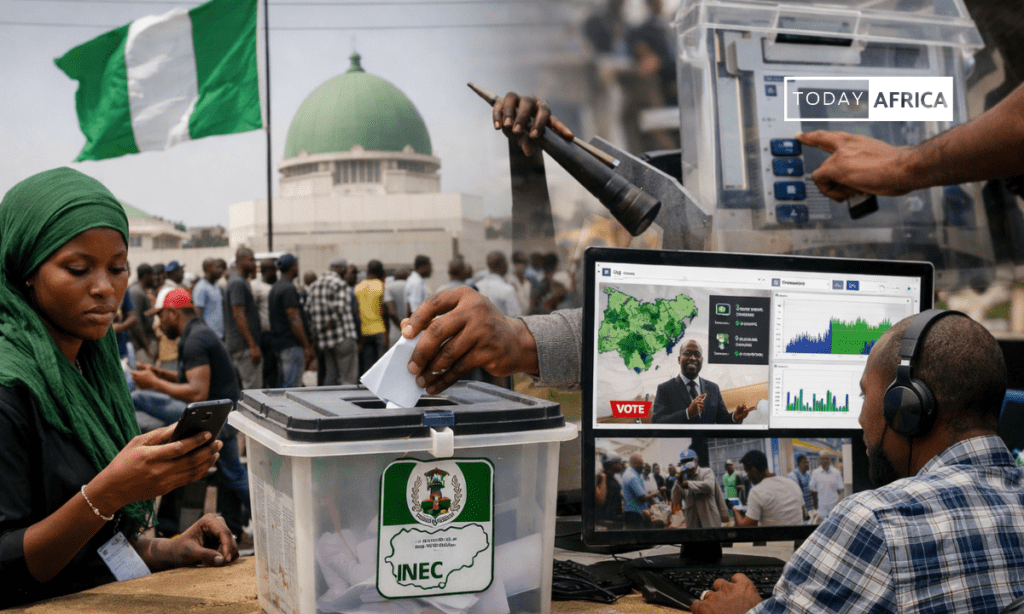
Modern political campaigns increasingly rely on data analytics and artificial intelligence to understand voter behavior, refine campaign messaging, and predict how different segments of the electorate will respond to policy proposals or political narratives.
Instead of broadcasting a single message to the entire population, campaigns now focus on tailoring messages to highly specific audiences.
AI systems can analyze large datasets on social media engagement patterns, search behavior, and demographic information to identify which issues resonate most strongly with particular groups of voters.
In this environment, political communication becomes less about persuasion at the mass level and more about precision targeting.
Micro-targeting and the fragmentation of political messaging
One of the most significant transformations enabled by AI is the rise of micro-targeting.
Traditional campaigns relied on broad messaging strategies designed to appeal to large voter blocs. Today, however, digital tools allow political strategists to divide the electorate into increasingly granular segments such as young professionals, small-business owners, or rural families.
These segments may include groups defined not only by demographics but also by behavioral patterns, economic interests, and online engagement habits.
Young professionals, small business owners, university students, or rural entrepreneurs may each receive entirely different political messages tailored specifically to their perceived concerns.
Artificial intelligence enables campaigns to analyze how these groups interact with content online – what they click on, what they share, and which topics generate emotional responses.
Algorithms can then deliver personalized political messaging designed to maximize engagement and persuasion.
Globally, data-driven political campaigns have already demonstrated their impact. During the 2016 U.S. presidential election, the Cambridge Analytica scandal revealed how millions of social media profiles were used to build psychological voter models for targeted political advertising.
More recently, digital targeting strategies were widely used during Kenya’s 2022 elections, where campaign narratives focused heavily on economic identity groups such as the “hustlers”, small traders, and unemployed youth.
In Nigeria, where the electorate exceeds 93 million registered voters, the ability to tailor messages at scale could significantly influence how political narratives evolve during the 2027 campaign cycle.
The algorithmic amplification of political narratives
Beyond targeted messaging, algorithms play another crucial role in shaping political discourse: amplification.
Social media platforms rely on recommendation systems designed to maximize user engagement. These systems prioritize content that generates strong reactions such as likes, comments, shares, and viewing time.
In practice, this means emotionally charged or controversial political content often spreads faster than neutral or fact-based information.
Research has shown that false or misleading content can spread up to six times faster than factual information on social media platforms.
As a result, polarizing narratives can receive disproportionate visibility, even if they originate from relatively small sources.
Once amplified by platform algorithms, such narratives can rapidly dominate online discussions.
During election cycles, this dynamic can significantly influence public perception.
Political messaging that provokes outrage, fear, or enthusiasm may receive algorithmic advantages that allow it to reach millions of users within hours.
In such an environment, the structure of digital platforms themselves becomes a powerful actor in the political process.
Read Also: What Peter Obi’s defection to ADC means for the Labour Party, APC, & 2027 elections
The dark side of AI
While AI technologies offer powerful tools for political communication, they also introduce significant risks.
Two of the most concerning developments are the emergence of deepfake technology and the growing sophistication of automated misinformation campaigns.
Deepfake technology
Deepfakes, synthetic images, audio, or video generated by sophisticated Artificial Intelligence (AI) designed to mimic real individuals, have become increasingly convincing in recent years.
Advances in generative AI tools have dramatically lowered the cost and expertise required to produce realistic fake media.
During election campaigns, such content can spread rapidly across social media platforms, potentially damaging reputations and shaping public perception before the authenticity of the material can be verified.
Globally, deepfake technology has already appeared in political contexts.
In 2023 Slovakia’s elections, a fabricated audio recording of a candidate discussing vote-rigging circulated widely online just days before voting.
As generative AI tools become more accessible, the risk of similar tactics appearing in Nigeria’s political landscape increases significantly.
The 2027 Nigerian elections may see deepfake technology used as a political weapon. The rapid spread of deepfake content on social media can cause confusion, mislead voters, and undermine trust in political figures.
A single convincing deepfake released at a strategically sensitive moment could alter public discourse and undermine trust in political institutions.
The spread of disinformation via deepfakes has already been seen in global politics, and Nigeria’s 2027 election could be a prime example of its detrimental effects.
AI-driven misinformation
Artificial intelligence has also enhanced the scale and efficiency of misinformation campaigns.
Automated bot networks and coordinated influence operations can generate and distribute large volumes of political content across social media platforms.
AI-powered bots, known as troll farms, are already being employed to flood social media platforms with false information, amplify divisive messages, and distort political narratives.
Some studies estimate that automated accounts can generate thousands of coordinated posts per hour, artificially amplifying certain narratives and creating the illusion of widespread public support.
Nigeria has already experienced widespread misinformation during previous election cycles.
During the 2023 Nigerian elections, fact-checking organizations recorded hundreds of viral misinformation claims circulating across social media platforms.
The integration of AI tools into such campaigns could significantly increase their sophistication, allowing political actors to tailor misleading narratives to specific groups of voters.
Whether through deepfake videos, fake news articles, or misleading social media posts, the digital landscape during the election campaign period may become a battleground for truth and lies.
Read Also: Africa lost $1.11 Billion to govt-imposed internet shutdowns in 2025
Global election examples
The growing influence of algorithms in elections is not unique to Nigeria. Across major democracies, political campaigns are increasingly shaped by digital platforms that control how information flows to voters.
During the 2024 United States presidential election cycle, researchers identified a measurable surge in AI-generated political content circulating online, raising concerns about the role of automated media in shaping voter perceptions.
In the United Kingdom’s 2024 general election, political parties spent more than £90 million on campaign activities, with digital advertising accounting for an increasing share of that spending.
These developments suggest that elections around the world are gradually moving toward an algorithmically mediated political environment, in which the architecture of social media platforms can influence which narratives dominate public discourse.
Nigeria’s electoral infrastructure and regulatory gaps
Lack of regulatory frameworks
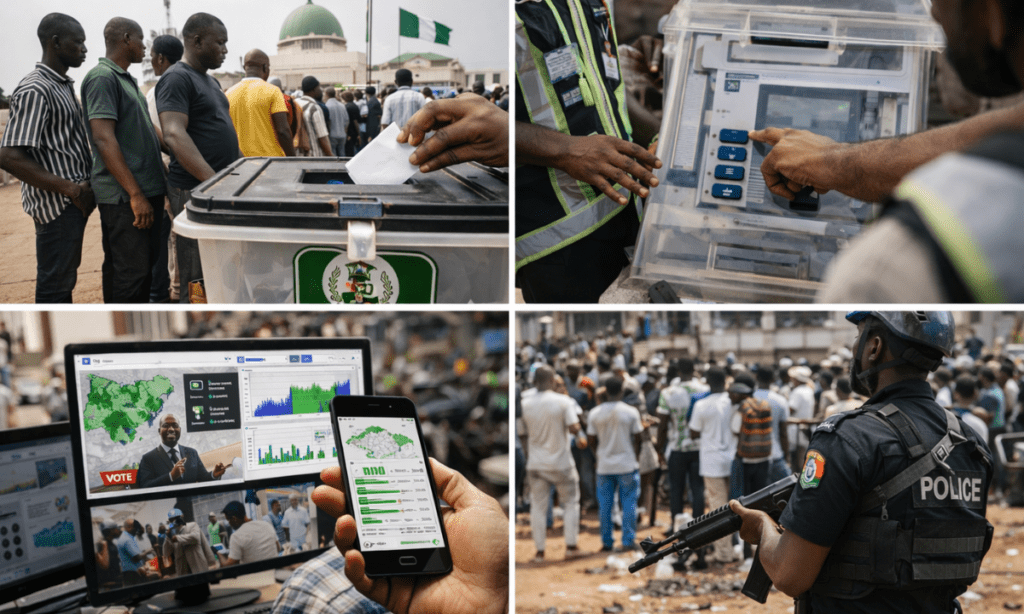
Despite the growing role of digital technologies in political campaigns, Nigeria’s institutional frameworks for addressing these developments remain limited.
The country’s electoral system was designed primarily for a traditional political environment in which campaign communication occurred through physical rallies and conventional media channels.
Today’s digital ecosystem presents entirely new challenges.
Experts at technology and governance forums, including discussions during Open Data and AI Day in Lagos, have warned that Nigeria’s regulatory institutions are not yet fully equipped to address the risks associated with AI-driven political influence.
Unlike some advanced economies that are beginning to introduce legislation around algorithm transparency and political advertising online, Nigeria currently lacks comprehensive frameworks governing the use of AI in election campaigns.
Without clear oversight mechanisms, the country risks becoming vulnerable to election manipulation through digital technologies.
Independent auditing systems, algorithmic accountability measures, and transparent political advertising rules may become increasingly necessary to safeguard electoral integrity.
Building trust in a digital age
As digital technologies become central to political communication, trust in the electoral process will depend not only on the integrity of ballot counting but also on the credibility of the information environment in which voters make their decisions.
Protecting voter data, ensuring transparency in digital political advertising, and strengthening media literacy will be essential steps in maintaining public confidence.
Regulators such as the Independent National Electoral Commission (INEC), technology companies, civil society organizations, and election management bodies will likely need to collaborate more closely to address these emerging challenges.
Without proactive measures, the growing influence of algorithmic systems could erode trust in democratic processes and increase political polarization.
Read Also: EFCC files ₦4.3bn forex fraud charges against UBA and others
What Nigeria Can Do Before 2027
As the influence of algorithms and artificial intelligence grows, Nigeria’s policymakers, INEC, and technology companies may need to act proactively to safeguard the integrity of future elections.
Several steps could help reduce the risks associated with AI-driven political manipulation.
First, INEC could introduce transparency rules for digital political advertising, requiring campaigns to clearly disclose when advertisements are targeted using data-driven methods. Similar measures are already being discussed in parts of Europe and North America.
Second, social media platforms operating in Nigeria may need to strengthen their content verification and labeling systems, particularly for AI-generated media such as deepfake videos or synthetic audio recordings.
Third, INEC could collaborate with civil society organizations, researchers, and technology companies to develop early-warning systems for coordinated misinformation campaigns during election periods.
Finally, improving digital literacy among voters will be essential. As political information increasingly circulates through algorithmic feeds, the ability of citizens to critically evaluate online content may become one of the most important safeguards against manipulation.
Taken together, these measures could help ensure that technological innovation strengthens rather than undermines Nigeria’s democratic institutions.
Conclusion
Nigeria’s 2027 general elections may mark a turning point in the relationship between technology and democracy on the African continent.
With over 90 million registered voters and one of the largest digital populations in Africa, the country represents a significant testing ground for how artificial intelligence and algorithm-driven platforms interact with democratic institutions.
As AI and digital platforms become increasingly embedded in political campaigns, algorithms are likely to play a greater role in shaping what voters see, believe, and discuss.
The central challenge for Nigeria will not simply be adopting new technologies but ensuring that they are used in ways that strengthen democratic institutions rather than undermine them.
The future of elections may be increasingly digital, but the legitimacy of democracy will continue to depend on transparency, accountability, and public trust.
Ensuring that algorithmic systems operate within ethical and regulatory frameworks may ultimately become one of the most important tasks for Nigeria’s democratic institutions in the years leading up to 2027.
Leave a comment and follow us on social media for more tips:
- YouTube: Today Africa Studio
- Facebook: Today Africa
- Instagram: Today Africa
- Twitter: Today Africa
- LinkedIn: Today Africa