

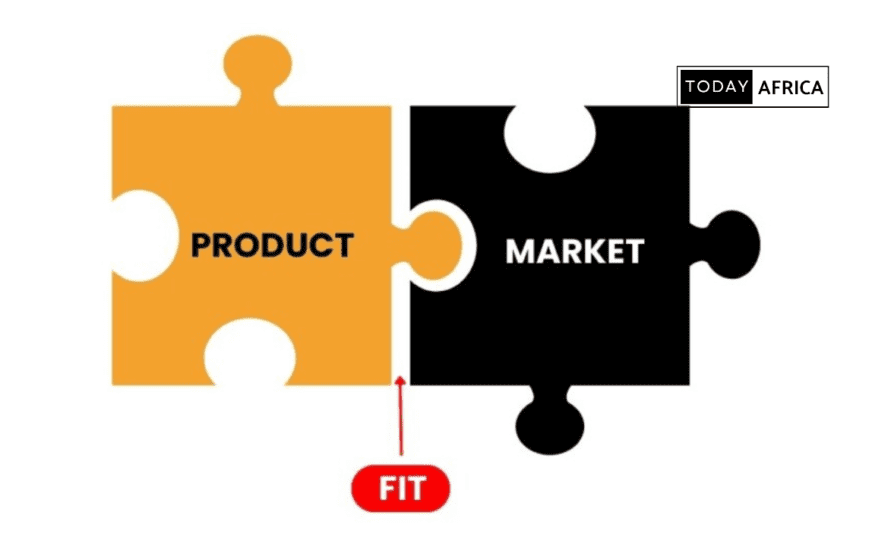
Creating a product is not a trump card to milk the market. There are critical analyses that must be made beforehand. First, you must understand your market and determine the prevalent needs before creating a product to meet such needs.
If a product fails to meet the needs of consumers, it’s bound to fail in the market. In the same vein, where a product has outlived its usefulness, there is bound to be a steady decline in its market value and overall profit.
- But how do you keep your product afloat in the market?
- How do you manage your product such that it maintains its usefulness to consumers for a long time?
These are questions that will be resolved under product management. Product and market analysis are important to creating, managing and further growing a product.
For all it is worth, your product can remain in the market eternally as long as it serves a purpose, and consumers are constantly buying, using, and referring others to your product.
This is where product-market fit comes in.
What is product-market fit?
Product-market fit is a point where your target consumers are steadily buying, using, and referring others to your product, such that there is a steady rise in your product’s market value and growth.
This is the peak where the yields from consumer referrals trump those of your ad campaign.
But first let’s remember how to to build a product and where should you start. building a product is the combination of the answers to the following questions:
- Why do I want to build a product?
- What product do I want to build?
- How do I build this product?
Just like Marc Andreesen puts it, product-market fit is all about putting a product that satisfies the market need. You find the needs that are not being catered for, and you create a product unique to such needs.
What’s the point of product-market fit?
Looking at the nature of the product-market fit, you can tell it is of high importance to every product in the market. It literally determines how long a product will last, and how profitable it will be in the market.
You need to be certain about the size of the market you bring your product into before making any moves. You cannot scale a product where there are little to no customers.
Where no one is buying, there is a certainty that no one will refer, and that is a negative sign for the product’s sustainable growth. Product-market fit will determine if the target market can first sustain the product and generate profit, before scaling further via consumer use and referrals.
One of the very important points here is that when we say product-market fit, we usually understand and imagine the fit in its early stages.
It is surely very important, but as the technologies, so the customer’s needs keep evolving, and the reality before product-market fit and after identifying the product-market fit can be quite different.
Read Also: From employee to entrepreneur: What no one warns you about
How to measure product-market fit
Measuring product-market fit doesn’t have to be complicated. Follow these four steps to get an idea of where you’re at and where you need to be.
1. Talk to your customers
One of the easiest ways to determine if your product is meeting a key need for your customers is to ask them. Conduct interviews, send out surveys, or solicit reviews from your current and past customers.
I recommend leveraging both standardized questions (like multiple choice, for example) and open-ended ones. The former will enable you to establish benchmarks that you can refer back to in order to gauge progress, and the latter will help you uncover detailed insights that you would never have gathered with just an A, B, or C response.

2. Look closely at retention
Products come and go, and a new product experiencing decent adoption could very well be a fad. That’s why retention is a critical metric to help you determine how important your product really is in the market.
Get a clear understanding of your retention rate, and determine if the lifetime value (LTV) of your average customer is continuing to rise or if it’s leveled off.
3. Determine your Net Promoter Score (NPS)
A high net promoter score simply means that your customers are willing to recommend your product to other people in their network. To calculate your score, simply ask your users how likely they are to recommend you on a scale of 0 to 10.
Subtract the percentage of detractors (scoring 0-6) from the percentage of promoters (scoring 9-10), and you have your net promoter score.
4. Examine adoption speed
Take an honest look at your product so far. Has the market quickly adopted your solution, or has it taken a long time to get any wins at all?
Perhaps even more telling, if you’ve released additional features, do existing customers quickly adopt them? Or, are you having to advocate for your updates and convince users to see the value in the work you’ve put in?
I know it seems obvious, but if you’re fighting an uphill battle, you haven’t achieved product-market fit. If your existing customers aren’t convinced of the value of the features in your roadmap, it might be time to reconsider the path you’re on.
Read Also: Profit vs social impact… Why should businesses care?
How to achieve product-market fit
Conduct market research
Your company should have already checked this box. However, you’ll want to have readily available information about your ideal customer profile (ICP), different personas that fit that mold, the size of the total addressable market, and your current share of the market.
You should also have a fairly good knowledge of your competitors, their differentiators, and why some buyers in the market choose their solutions over your own.
Implement customer feedback
The pointed questions you asked your customers in the measuring section will yield vital information. “Is the product a must-have?” “What would you use if our product ceased to be an option?”
Make sure you hear from several different buyer personas to avoid creating blind spots in your research, and if you get the same criticism consistently enough, implement changes to improve your product.
Combat churn aggressively
Conduct a post-mortem whenever you lose a key account. Figure out what you need to do to keep the churn from happening next time, but don’t lose sight of your ICP.
Not all customers are a great fit, so don’t mind letting some go if they’re either hindering growth or there’s honestly a better fit available for their specific needs.
Customers will remember how you treat them, so look after their best interests. The goodwill comes back to you in the long run.
Lean on product-led growth (PLG)
As a salesperson, I’m a firm believer that sales-led growth has its place, and the right sales teams can produce incredible results in the right circumstances.
For fledging companies, however, product-led growth can be a great way to go from a mere foothold in the market to a more robust product-market fit.
Essentially, PLG involves lowering barriers to entry for customers (often with a freemium version) and letting early and passionate adopters advocate for the direction they want the product to take.
Read Also: How to balance impact with profit in your business
Product-market fit considerations for African startups
Starting a business is hard for a lot of reasons, but don’t make it any harder by wasting time and money developing a product no one wants to buy. I can’t stress enough how important product-market fit will be to your success, so follow these steps and make sure it’s an achievable goal.
1. Conduct market research
What need is your product going to meet? Who has that need, and what’s it worth to this audience to have it met? Use market segments to define your product’s ICP and develop buyer personas for different customers in this group, so your team will clearly understand who it’s building for.
I know this step isn’t the most fun. Why research when you can learn by doing, right? Wrong.
African startups have a limited amount of time and money called a runway, and if the “plane” hasn’t taken flight by the time it gets to the end, the results are self-explanatory.

2. Gather intelligence
Once you have a minimum viable product (MVP) or even a rough outline of one, talk to current or prospective customers to determine their pain points and how much they would consider paying for a solution to those challenges.
Seek insights from your sales and marketing teams to identify recurring customer complaints. Collect a large enough data sample to provide meaningful feedback.
Consider, too, that face-to-face conversations will often generate feedback that online surveys will not. This stage is critical because it will inform both your overall business model and the prices you charge in that model.
3. Focus on a single vertical
I have yet to see an African startup where money isn’t an issue, and while I can’t make that issue go away, I can recommend that you reduce your scope. Begin with a narrow focus and dive deep into one industry. Establishing your company in a single domain can serve as a great jumping-off point for expansion down the road.
4. Specify your value proposition
Figure out how you can outperform your competitors and surprise your customers. Don’t lose sight of your product roadmap when determining which challenges you’ll address; not every problem will fit into your product’s scope.
5. Measure your product-market fit
Identify key data points that will help you track performance on the journey to product-market fit. Start by identifying your total addressable market (TAM), otherwise known as the total number of people who can benefit from your product/service.
Read Also: When to outsource and when to in-house: A founder’s decision tree
Frequently asked questions
1. How do I know when I’ve achieved product-market fit?
You’ve likely reached product-market fit when customers consistently buy, use, and recommend your product. High retention, positive reviews, and word-of-mouth referrals are key indicators.
2. Can product-market fit change over time?
Yes. Markets evolve, and so do customer needs. Even established products can lose their fit if they fail to adapt. Regularly revisiting your customer insights and product data helps you maintain alignment with the market.
3. What’s the best way to test for product-market fit early on?
Before launch, validate your ideas through customer interviews, prototype testing, and small-scale pilot programmes. Focus on real feedback rather than assumptions, it’s the fastest way to refine your product and reduce risk.
Leave a comment and follow us on social media for more tips:
- Facebook: Today Africa
- Instagram: Today Africa
- Twitter: Today Africa
- LinkedIn: Today Africa
- YouTube: Today Africa Studio