
The governance of generative artificial intelligence is moving from abstract debate to concrete enforcement.
Across major technology markets, regulators are increasingly focused on how image and text generation tools intersect with privacy law, child protection frameworks, and existing rules on consent.
For platforms operating at global scale, including those with significant user bases in Africa, Europe, and North America, the question is no longer whether safeguards are needed, but whether they are sufficient, enforceable, and aligned with local legal standards.
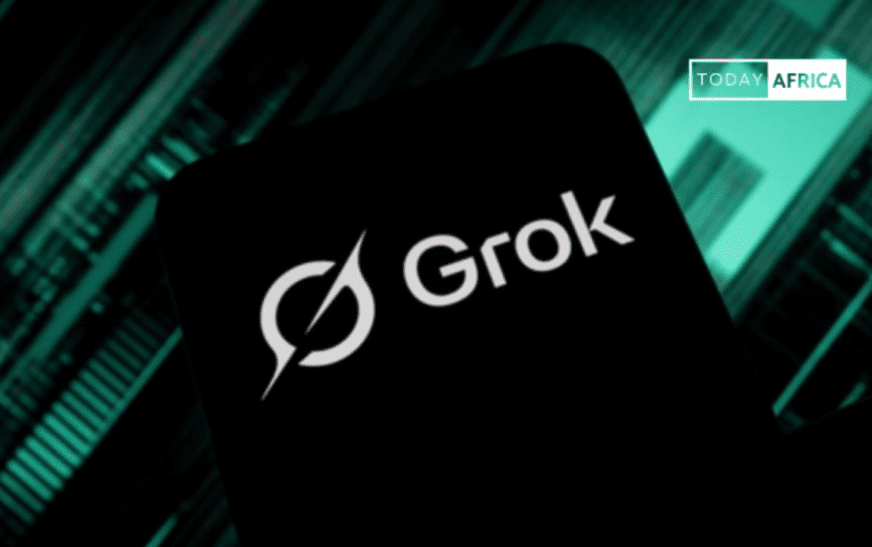
It is within this context that Elon Musk’s AI company, xAI, has moved to restrict the image editing capabilities of Grok, its generative AI tool integrated into the X platform.
What xAI has changed
X confirmed that it has introduced new controls limiting how users can edit images of real people using Grok.
According to the company’s safety team, the updated safeguards block all users from modifying images of real individuals into revealing clothing such as bikinis or underwear in jurisdictions where such content violates local law.
The restrictions apply to all users, including premium subscribers.
The decision follows mounting criticism from regulators, civil society groups, and media organisations over the misuse of Grok to create non-consensual deepfake pornography.
Investigations by journalists and authorities documented cases where users prompted the tool to “undress” photographs of women and, in some instances, generate images that appeared to involve minors.
In California, investigators reported that more than half of tens of thousands of images produced during a recent holiday period depicted people in minimal clothing, intensifying legal scrutiny of the platform.
xAI has not removed Grok’s image generation features entirely. Image creation and editing remain available to paid subscribers on X, with the company arguing that limiting access improves accountability and makes misuse easier to trace.
In addition, geoblocking has been introduced in countries where such content is illegal, preventing users in those jurisdictions from generating prohibited material.
Read Also: Google introduces personal intelligence in Gemini
What this signals for the AI market
The changes represent a notable shift for Grok, which had previously been positioned as a more permissive alternative to other generative AI tools. That permissiveness, however, has become a liability as governments seek to apply existing laws to new technologies.
The backlash against Grok underscores a broader market signal: AI companies are being held responsible not only for how models are built, but for how they are deployed and moderated in real-world environments.
For African markets, where regulatory frameworks for AI are still emerging, the episode is instructive. Many African governments are observing developments in the United States and Europe as reference points for future legislation.
Platforms that fail to demonstrate credible safeguards risk facing restrictions or reputational damage as local regulators begin to assert jurisdiction over digital harms, particularly those involving women and minors.
The situation also highlights the growing convergence between AI governance and platform regulation. xAI’s response relies heavily on X’s subscription model, geolocation controls, and enforcement infrastructure, reinforcing how closely tied the fortunes of AI tools are to the platforms that distribute them.
Limits and unresolved questions
Despite the new controls, criticism has not subsided. Watchdogs and regulators argue that paywalling image generation does not eliminate harmful capabilities but merely places them behind a subscription barrier.
Media testing has suggested that some safeguards can still be bypassed, raising questions about the robustness of the technical measures. There are also concerns about consistency across products.
Reports indicate that the standalone Grok app and web portal may still allow certain forms of image manipulation that are restricted on X, creating uneven enforcement and potential loopholes.
For regulators, such fragmentation complicates oversight and weakens claims of comprehensive risk mitigation.
From a legal standpoint, international pressure continues to build. Authorities in California, the European Union, and parts of Asia have publicly expressed concern, with some considering or pursuing legal action against xAI and X for failing to prevent the creation of exploitative imagery.
The European Commission has said it will assess the updated safeguards to determine whether they meet the bloc’s standards for protecting citizens.
Read Also: First HoldCo non-banking subsidiaries get new board appointments
A broader governance challenge
This episode reflects a deeper structural issue in generative AI development. Powerful models combined with insufficient guardrails can scale harm as efficiently as they scale productivity.
Earlier analyses have pointed to Grok’s “unfiltered” design as a factor that made it particularly vulnerable to abuse, especially in the creation of non-consensual deepfake content. Once such tools are widely available, retrofitting controls becomes both technically and politically complex.
For xAI, the current measures are framed as part of an ongoing process. The company says it is adjusting Grok in response to emerging risks and engaging with users, regulators, and partners on safety.
Whether this iterative approach will satisfy regulators remains uncertain, particularly as legal standards evolve and enforcement actions become more assertive.
What to watch next
The next phase will likely focus less on announcements and more on outcomes. Regulators will assess whether the safeguards meaningfully reduce harm, not just whether they exist.
Civil society groups will continue to test the limits of enforcement, while courts may be asked to determine liability when misuse occurs.
For AI companies operating globally, including those expanding into African markets, the lesson is clear: compliance cannot be an afterthought.
As generative tools become embedded in social platforms, search engines, and enterprise software, governance will increasingly shape market access and long-term viability.
The debate over Grok is unlikely to be the last test case, but it may prove an early indicator of how aggressively regulators are prepared to act.
Leave a comment and follow us on social media for more tips:
- Facebook: Today Africa
- Instagram: Today Africa
- Twitter: Today Africa
- LinkedIn: Today Africa
- YouTube: Today Africa Studio