

Most startup stories you hear follow a familiar script. Someone has an idea. They raise money. They build a product. Users come later.
But across Africa, the order is often flipped.
Many African founders start with people, not products. Conversations, WhatsApp groups, Twitter threads, offline meetups. Long before there is revenue, sometimes even before there is a clear business model, there is already a community forming.
At first glance, it can look accidental. Scrappy. Maybe even risky. Why spend time building a community when there is no money coming in yet?
But when you look closer, you start to see a pattern. A deliberate strategy shaped by context, culture, and necessity.
In this blog post, we’ll break down how African founders build community before revenue, why it works so well, and what founders anywhere can learn from it.
Why community comes before revenue for many African founders
Reality of building in African markets
African markets are complex. Infrastructure gaps, fragmented regulations, low trust in institutions, and limited access to early-stage capital all shape how businesses are built.
For many founders, launching a polished product without users is simply too expensive and too risky. Instead, they start small, with a focus on people who share a common problem or interest.
This approach allows them to validate ideas with minimal investment.
Community becomes a way to reduce uncertainty. Instead of guessing what people want, founders talk to them. Daily. Sometimes obsessively.
It’s also a way to validate demand without burning cash. When people keep showing up for discussions, events, or shared resources, that’s a signal. Not perfect, but meaningful.
In places where traditional market research is limited or outdated, community becomes the research. Every comment, reaction, and shared experience is insight.
Trust as currency before money
In many African countries, trust matters more than branding. People rely on recommendations, shared experiences, and social proof.
A founder with a trusted community already has something valuable. Even without revenue.
Community provides a built-in feedback loop. Members feel comfortable giving honest opinions about ideas, features, or products. They act as early testers, advocates, and sometimes even co-creators.
Trust also lowers the cost of customer acquisition when monetization begins. When people feel heard and included, they become more willing to pay, share, or support.
Community-first mindset
Solving a shared problem, not selling a product
Most community-first founders don’t start by saying, “I’m building a startup.”
They start with something simpler.
“There’s a problem here.”
“I keep hearing the same complaints.”
“We should talk about this.”
The focus is on shared pain, not solutions yet. This creates space for honesty. People speak freely when they don’t feel like they’re being sold to.
Over time, patterns emerge. Needs become clearer. And when a product eventually appears, it feels like a natural response, not an intrusion.
Playing the long game
Building community before revenue requires patience. There’s often no immediate payoff.
African founders who do this well understand that early traction is not always visible in numbers. Sometimes it shows up as replies, voice notes, repeat attendance, or people bringing their friends.
This long-term view is shaped partly by necessity. When funding is scarce, relationships become the real asset. Instead of chasing quick wins, founders invest in cultural capital: loyalty, influence, and credibility.
Read Also: 8 lessons from failed African startups and what they teach us
Where these communities usually start
WhatsApp, Telegram, and Twitter Spaces
Unlike Silicon Valley-style forums or Slack groups, many African communities form on platforms people already use daily.
WhatsApp groups are especially powerful. They feel personal, informal, and accessible even with low data costs.
Twitter and X have also played a huge role. Threads turn into conversations. Conversations turn into Spaces. Spaces turn into recognizable voices and micro-communities.
The platform matters less than the consistency. Founders show up. They listen. They respond. Every interaction reinforces presence and reliability.
Offline meetups and shared physical spaces
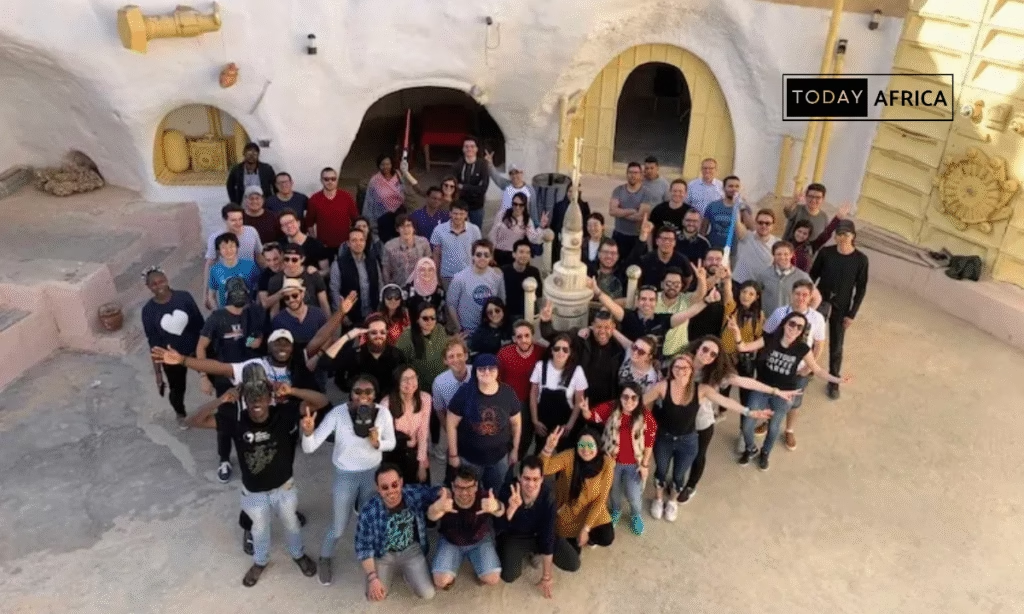
Despite the growth of online communities, offline gatherings still matter a lot.
Tech meetups, coworking spaces, university events, and industry hangouts often become the foundation for early communities. Face-to-face interaction accelerates trust in ways digital channels can’t fully replace.
Many founders host small events with no clear agenda. Just conversations. Over time, these become ritual-like. People expect them. They plan around them.
Even informal spaces like cafés, libraries, or university halls can become incubators for discussion, mentorship, and collaboration.
Examples of African community-first founders
Paystack and the developer community
Before Paystack became one of Africa’s biggest fintech success stories, its founders spent a lot of time with developers.
They organized meetups, answered questions publicly, and wrote documentation that actually made sense.
Developers felt heard. When the product launched, adoption followed naturally.
The community didn’t just use Paystack. They advocated for it, spreading the word organically. This early trust and advocacy gave the company a strong foundation that no marketing budget could have bought.
Read Also: Top 10 African countries poised for EV investment and evolution
Flutterwave
Flutterwave, one of Africa’s largest payment platforms, didn’t grow overnight through advertising. Early on, the founders focused on connecting with small business owners, merchants, and developers across multiple African countries.
They organized webinars and workshops explaining online payment integration, shared templates, and created forums where merchants could troubleshoot together.
This wasn’t about selling a product yet; it was about solving pain points merchants faced daily.
By the time Flutterwave launched more formal payment solutions, there was already a pan-African network of merchants who trusted the founders and advocated for the platform.
In essence, their early community became a natural distribution channel, reducing the need for expensive marketing campaigns.
Andela
Andela’s model of training African software engineers is well-known now, but the early approach was all community-based.
Before formal programs were rolled out, the founders hosted coding workshops, hackathons, and mentorship meetups, connecting aspiring developers with industry experts.
These gatherings were free and widely publicized on social media and tech forums. People came not because there was a paid program yet, but because they wanted to belong to a learning network.
Over time, Andela could identify high-potential candidates and monetize through partnerships with international companies who needed vetted talent.
Here, community acted as both talent sourcing and early market validation, finding a pipeline of people ready to learn and work even before a formal revenue model existed.
Tech skills communities across Africa
Across Nigeria, Kenya, Ghana, and beyond, many tech education startups started as simple communities.
Facebook groups. Telegram channels. Free workshops.
Founders shared learning resources and career advice long before offering paid programs. When monetization eventually came, it didn’t feel forced. Members already trusted the source.
These communities often foster cross-generational mentorship, peer-to-peer learning, and collaborative projects, further strengthening bonds.
Read Also: Top 10 Acquisitions in Africa in 2025
Practical tactics for building community before revenue
1. Leverage existing networks
Founders often start by tapping personal connections: friends, colleagues, alumni networks, or industry contacts. In African contexts, word-of-mouth carries tremendous weight.
A founder may invite 20-30 trusted individuals to participate initially, and these members act as evangelists.
The key is to treat early members as partners, not just users. Their feedback shapes discussions, events, and eventual products.
2. Consistency beats scale
A common mistake is chasing large numbers too early. African founders know that a small, highly engaged community is far more valuable than thousands of passive participants.
Consistency in communication, weekly check-ins, regular content, and scheduled events builds routine and trust. Members begin to expect interaction, forming habits around participation.
3. Encourage peer-to-peer support
The best communities aren’t one-way. Founders facilitate interactions between members, encouraging sharing, mentorship, and collaboration.
For instance, a tech learning community may pair junior developers with senior mentors. A music startup may create critique circles where artists review each other’s work. These interactions create a sense of ownership, making members feel they are co-creators, not just consumers.
4. Use multiple touchpoints
Successful African founders rarely rely on a single platform. Online and offline channels complement each other.
- WhatsApp or Telegram groups for day-to-day interactions
- Twitter/X or LinkedIn for public discussion and visibility
- Physical meetups or workshops for face-to-face trust-building
- Newsletters or blogs to share resources and stories
The combination ensures different types of engagement, some casual, some deep, some professional, catered to different needs in the community.
Read Also: How to Pay Your Taxes in Nigeria in 2026 – A Step-by-step Guide
How African founders nurture these communities
1. Listening more than talking
One common mistake founders make is treating community like an audience.
Successful community-first founders do the opposite. They listen far more than they speak.
They ask open-ended questions, let discussions wander, and pay attention to repeated frustrations and recurring themes.
This constant feedback loop shapes future decisions. Often, the community ends up co-creating the product. Members feel ownership over outcomes, which translates into long-term loyalty.
2. Creating value without expecting immediate returns
Early on, value is shared freely. Knowledge. Connections. Opportunities.
This generosity builds goodwill. People remember who helped them before there was anything to gain.
Eventually, when a product or service is introduced, the community understands the context. They’ve seen the effort. The founder has already proven they’re committed to more than money.
Even small gestures, like celebrating a member’s achievement or sharing resources without asking for anything in return, strengthen ties.
Challenges of building community before revenue
1. Burnout and founder fatigue
Community work is emotional labor. It takes time, energy, and presence.
Without revenue, founders often juggle multiple responsibilities. Burnout is a real risk.
Sustainable communities usually evolve shared leadership. Moderators, ambassadors, or volunteers help distribute the load. Delegation is critical, even in early stages.
2. Managing growth without losing intimacy
As communities grow, intimacy fades. Conversations become noisier. New members may not share the original values.
Founders who handle this well set clear norms early. They document culture. They protect the tone of conversations.
Growth is welcome, but not at any cost. Quality interactions matter more than sheer numbers. Communities that scale too quickly often fracture.
Read Also: Top 10 African startup fundraises in 2025
What founders outside Africa can learn
Start with humans, not funnels
Many startups obsess over growth hacks before understanding people.
African community-first founders remind us that real growth starts with relationships.
Before optimizing conversion rates, optimize conversations.
Let the market teach you
Instead of imposing solutions, allow your audience to shape what you build.
This approach reduces wasted effort and increases loyalty.
It’s slower at the beginning. But often stronger in the long run.
Role of culture in community building
Collective identity and shared progress
In many African societies, collective progress is deeply valued. People naturally gather around shared goals.
Founders tap into this by framing their communities as movements, not just platforms.
The language matters. “We” instead of “you.” Shared wins instead of individual success stories.
Communities are reinforced by cultural practices of collaboration, mentorship, and storytelling, making members feel part of something larger than themselves.
Storytelling as a binding force
Stories connect people. African founders often share personal journeys, struggles, and lessons openly.
This vulnerability humanizes leadership. It invites participation.
Community members don’t just follow a brand. They follow a story they feel part of. Each success, failure, or pivot shared strengthens the narrative and deepens engagement.
Read Also: 12 African Fintech Startups Offering Cross-border Payment Solutions This Year
Conclusion
Building a startup without revenue is hard. Building one without people is almost impossible.
Across Africa, founders are showing that community can come first, and often should. Not as a gimmick, but as a grounded response to real constraints and real opportunities.
By listening deeply, sharing value freely, and building trust patiently, these founders turn communities into lasting businesses.
If you’re building something today, maybe the question isn’t how to monetize faster.
Maybe it’s who you’re building with, and whether they feel like they belong.
Start the conversation. Show up consistently. Let the community teach you what to build next.
Leave a comment and follow us on social media for more tips:
- Facebook: Today Africa
- Instagram: Today Africa
- Twitter: Today Africa
- LinkedIn: Today Africa
- YouTube: Today Africa Studio