
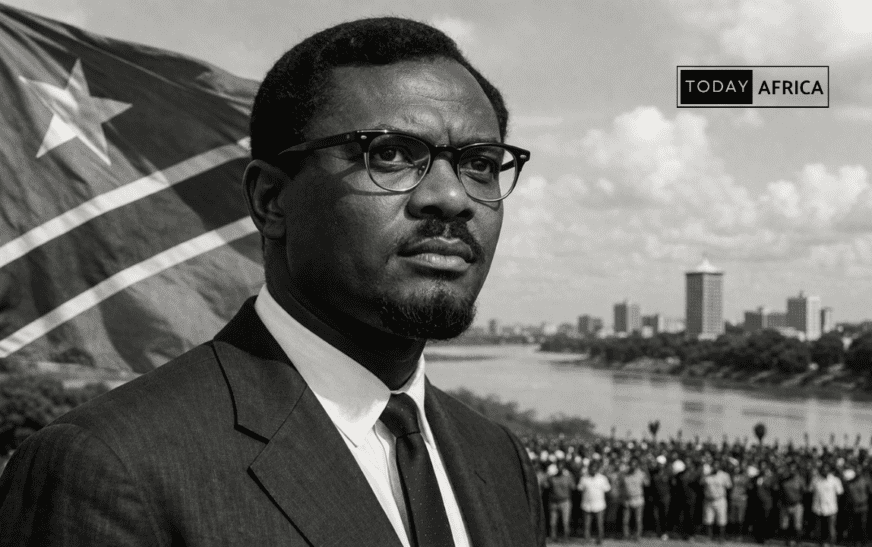
Few figures in African political history embody the promise and tragedy of post-colonial independence as vividly as Patrice Lumumba.
Emerging from the final years of colonial rule in Central Africa, Lumumba became the first democratically elected prime minister of the newly independent Democratic Republic of the Congo in 1960.
His rise was swift, his political message uncompromising, and his tenure extraordinarily brief. Within months of independence, Congo descended into political crisis, international intervention, and eventually a coup that ended Lumumba’s life.
Patrice Lumumba’s biography is not only the story of a charismatic nationalist leader; it is also a study in the complex transition from colonial rule to statehood during the Cold War era.
His leadership unfolded amid competing domestic interests, ethnic divisions, corporate interests in Congo’s mineral wealth, and geopolitical tensions between Western powers and the Soviet bloc.
More than six decades after his assassination, Lumumba remains a powerful symbol of African sovereignty, anti-imperialism, and the difficult realities of nation-building in post-colonial Africa.
Understanding his life provides important insight into the political history of Congo and the broader dynamics of African independence movements in the twentieth century.
Early life and colonial context
Patrice Émery Lumumba was born on July 2, 1925, in Onalua village in the Kasai region of what was then the Belgian Congo. At the time, Congo was one of the most tightly controlled European colonies in Africa, administered by Belgium after the territory had been previously ruled as the private domain of King Leopold II.
The colonial system was structured around economic extraction. Congo possessed vast reserves of copper, cobalt, uranium, diamonds, and rubber. By the mid-twentieth century, the colony had become one of the most resource-rich territories in the world, but Congolese citizens were largely excluded from political participation and economic power.
Education opportunities for Congolese Africans were extremely limited. By 1956, fewer than 20 Congolese had university degrees, and the colonial administration had trained almost no African civil servants capable of running a modern state. This lack of institutional preparation would later complicate Congo’s transition to independence.
Lumumba attended Protestant missionary schools and was considered an intelligent student. Although he did not attend university, he worked as a postal clerk and later as a beer salesman. These jobs allowed him to travel and interact with different communities across the colony, helping him develop political awareness.
During the 1950s, Lumumba began writing essays and articles criticizing colonial discrimination and advocating for Congolese dignity. His political ideas were influenced by African nationalism and the growing independence movements across the continent.
Entry into politics
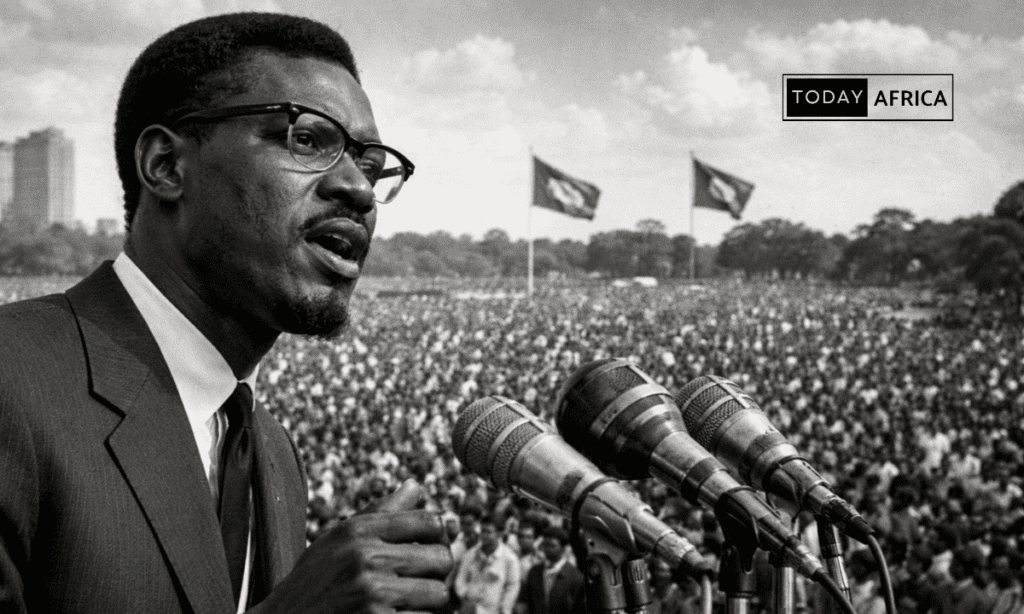
Lumumba formally entered politics during the late 1950s, a period when independence movements were gaining momentum across Africa. In 1958, he founded the Mouvement National Congolais (MNC), one of the first political parties in Congo to advocate for national unity rather than regional or ethnic interests.
This distinction was significant. Many Congolese political organizations at the time were built around ethnic identities or regional alliances. Lumumba, however, promoted a pan-Congolese political vision, arguing that independence could only succeed if the country avoided fragmentation.
The late 1950s were also marked by increasing unrest. Demonstrations and strikes spread across the colony, reflecting growing frustration with the slow pace of political reform. In January 1959, riots in Leopoldville (now Kinshasa) left dozens dead and forced the Belgian government to accelerate plans for independence.
In response, Belgium organized a political conference in Brussels in 1960, bringing together Congolese leaders to negotiate the terms of independence. Lumumba emerged from the conference as one of the most prominent national figures.
Read Also: Julius Nyerere Biography: Leadership, Ujamaa, and the Making of Modern Tanzania
The road to independence
Elections were held in May 1960 to determine Congo’s first independent government. Lumumba’s party won the largest share of seats in parliament, enabling him to form a coalition government.
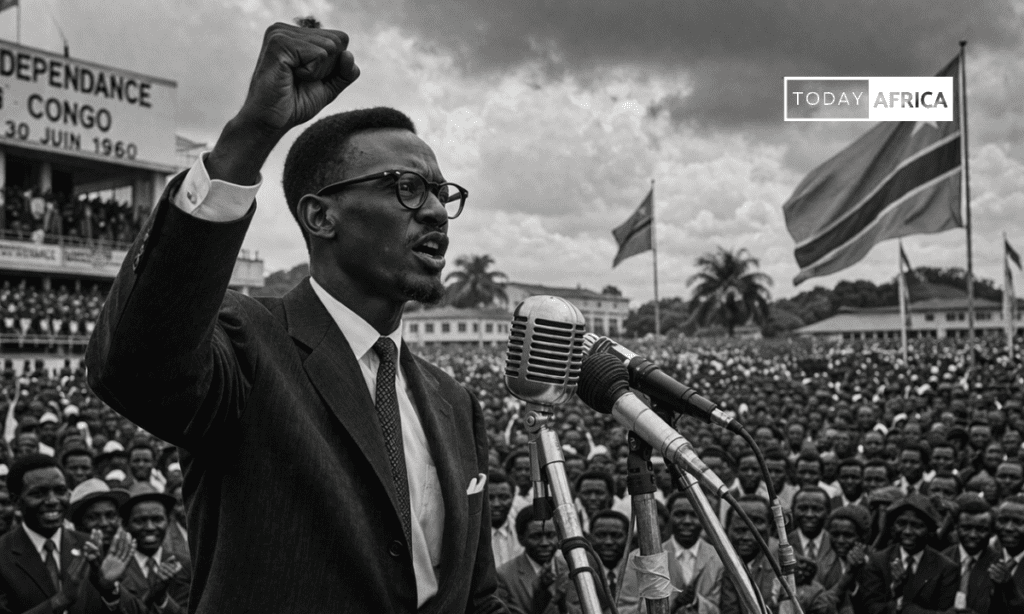
On June 30, 1960, the Independence of the Democratic Republic of the Congo was formally declared. Lumumba became prime minister, while Joseph Kasa-Vubu assumed the largely ceremonial role of president.
The independence ceremony is remembered for Lumumba’s unscripted speech criticizing colonial oppression. While Belgian officials expected a ceremonial tone, Lumumba used the platform to highlight decades of exploitation, forced labor, and racial discrimination under colonial rule.
His speech was widely praised by African nationalists but angered Belgian authorities and some Western observers, who interpreted his remarks as confrontational.
Within days of independence, the new government faced a series of crises that threatened the stability of the state.
The Congo crisis
Shortly after independence, Congo’s national army mutinied against its Belgian officers. The rebellion triggered widespread instability and violence, leading many Belgian citizens and companies to demand protection.
Belgium responded by deploying troops without the consent of the Congolese government. At the same time, the mineral-rich province of Katanga declared independence under the leadership of Moise Tshombe, supported by Belgian mining interests that feared nationalization of resources.
These developments marked the beginning of the Congo Crisis, one of the most complex conflicts in early post-colonial Africa.
Lumumba sought assistance from the United Nations to help restore order and remove Belgian troops. The UN agreed to deploy peacekeepers but refused Lumumba’s request to use force against Katanga’s secessionist government.
Frustrated by the UN’s limitations, Lumumba turned to the Soviet Union for logistical and military support. This decision dramatically intensified international tensions, as Congo suddenly became entangled in the global rivalry of the Cold War.
Western governments, particularly the United States and Belgium, feared that Lumumba might align Congo with the Soviet bloc. These concerns contributed to growing international opposition to his leadership.
Political struggle and removal from power
The internal political situation deteriorated rapidly. Disagreements between Lumumba and President Joseph Kasa-Vubu escalated into a constitutional crisis.
In September 1960, Kasa-Vubu announced that he had dismissed Lumumba as prime minister. Lumumba responded by declaring that the president had no authority to remove him. The country effectively had two competing governments.
Amid the chaos, the army chief of staff, Mobutu Sese Seko, staged a coup with the support of Western powers. Mobutu suspended parliament and placed Lumumba under house arrest.
Lumumba attempted to escape to the city of Stanleyville (now Kisangani), where his supporters were organizing resistance. However, he was captured by troops loyal to Mobutu in December 1960.
Read Also: Biography on Abraham Lincoln & his impact on American leadership
Assassination
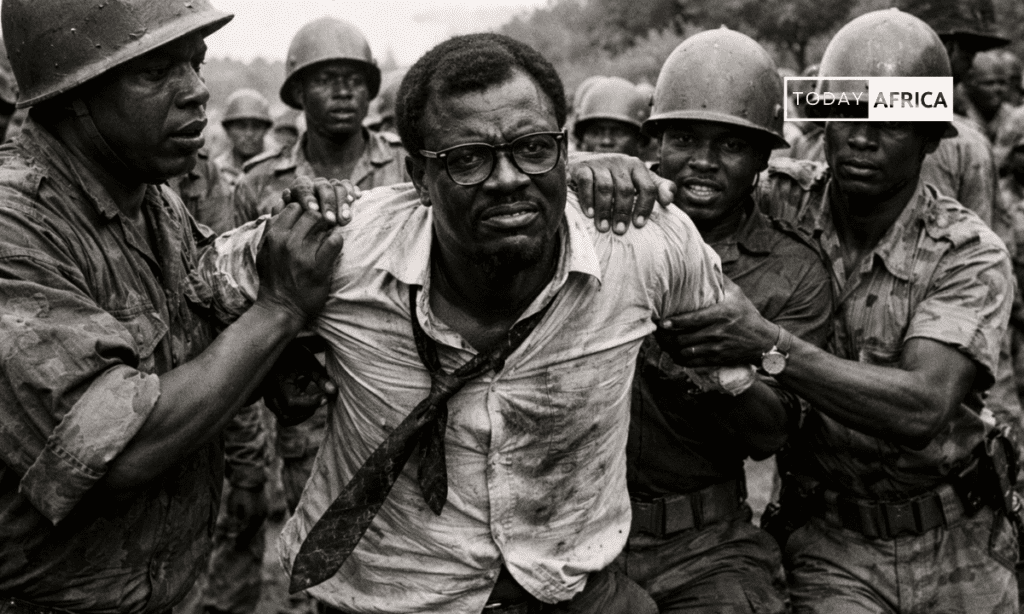
Lumumba was transferred to Katanga in January 1961, where he was executed by firing squad on January 17, 1961. The killing was carried out by Katangan authorities with the involvement of Belgian officers.
For decades, the circumstances surrounding Lumumba’s death were the subject of international controversy. Later investigations revealed that foreign governments had been involved in efforts to remove him from power.
A Belgian parliamentary inquiry in 2001 concluded that Belgium bore “moral responsibility” for Lumumba’s assassination. Declassified documents from the United States also confirmed that American officials had considered plans to eliminate him during the Cold War.
Lumumba was only 35 years old at the time of his death.
Legacy and historical significance
Lumumba’s assassination transformed him into a powerful political symbol across Africa and the Global South. Many African leaders viewed his death as evidence of the vulnerability of newly independent states to external interference.
Throughout the 1960s and 1970s, Lumumba became an icon of anti-colonial resistance. His name was invoked by political movements advocating sovereignty, resource control, and political independence from Western influence.
The Soviet Union and several African countries honored him through monuments, universities, and institutions bearing his name.
In Congo itself, Lumumba’s legacy remained politically sensitive during the long rule of Mobutu Sese Seko, who governed the country, renamed Zaire, from 1965 to 1997.
Following Mobutu’s fall, the Congolese government officially rehabilitated Lumumba’s historical role. In 2002, he was declared a national hero.
Repatriation and historical recognition
One of the most symbolic moments in Lumumba’s historical recognition occurred in 2022, when Belgium returned a tooth believed to be the only remaining physical relic of the leader. His body had been dissolved in acid shortly after his execution in an attempt to eliminate evidence of the killing.
The repatriation ceremony was held in Kinshasa, where Lumumba was honored with a state funeral more than six decades after his death. The event represented an attempt to acknowledge historical injustices and confront the legacy of colonial intervention.
Read Also: The biography of Malcolm X: Power, race, & black consciousness
Lumumba’s political vision
Lumumba’s political philosophy centered on three key principles:
- National unity: He believed Congo’s survival depended on overcoming ethnic and regional divisions.
- Economic sovereignty: Lumumba argued that Congo’s vast mineral wealth should benefit its citizens rather than foreign corporations.
- Political independence: He rejected external control from both Western powers and Cold War blocs.
These ideas resonated with broader Pan-African movements led by figures such as Kwame Nkrumah and Julius Nyerere, who similarly advocated African self-determination.
However, Lumumba’s ambitions also collided with the structural realities of the time: weak institutions, Cold War geopolitics, and the economic interests surrounding Congo’s mineral resources.
Conclusion
The biography of Patrice Lumumba reflects both the optimism and the turmoil of Africa’s decolonization era. Rising from modest beginnings, he became the first prime minister of an independent Congo and one of the most visible nationalist leaders of his generation.
Yet his leadership unfolded within a fragile political environment shaped by internal divisions and global rivalries. The Congo Crisis illustrated how newly independent states could become arenas for geopolitical competition, with profound consequences for domestic stability.
Lumumba’s assassination did not end the political struggles he represented. Instead, it cemented his legacy as a symbol of African sovereignty and resistance to foreign domination.
More than sixty years later, debates about resource control, governance, and international influence in Congo continue to echo the political challenges Lumumba confronted in 1960. His life therefore remains central to understanding the historical trajectory of one of Africa’s most strategically important nations.
Leave a comment below and follow us on social media for update:
- Facebook: Today Africa
- Instagram: Today Africa
- Twitter: Today Africa
- LinkedIn: Today Africa
- YouTube: Today Africa Studio




![Biography of Tony Elumelu [Investor, Entrepreneur, & Philanthropist]](https://todayafrica.co/wp-content/uploads/2023/12/Blue-Simple-Dad-Appreciation-Facebook-Post-1200-×-720-px-7-1.png)