

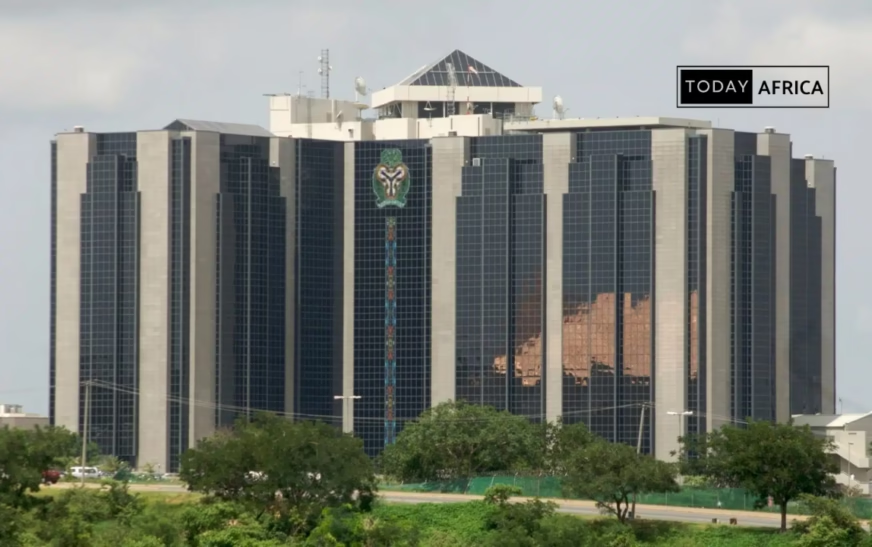
The Central Bank of Nigeria (CBN) has issued a circular to all banks, other financial institutions, and the general public, revising its cash-related policies and making significant changes to how Nigerians withdraw and handle cash.
The circular, titled ‘Revised Cash-Related Policies’, states that:
- The previous limits on deposits and the associated fees on excess deposits will no longer apply.
- The weekly withdrawal limits have been adjusted to ₦500,000 for individuals and ₦5 million for companies. Withdrawals above this limit will incur an excess withdrawal fee of 3% for individuals and 5% for companies.
- ATM withdrawals are limited to ₦100,000 per customer per day.
Additionally, exemptions for embassies, diplomatic missions, and donor agencies have been removed, meaning these entities will now be subject to the revised withdrawal and deposit rules.
However, revenue-generating accounts of federal, state, and local governments, as well as accounts of microfinance banks and primary mortgage banks, remain exempt from the withdrawal limits and fees for excess withdrawals.
The CBN says the rationale for these changes includes reducing cash-management costs for banks, addressing security concerns, and minimising risks tied to money laundering and illicit cash flows.
The new cash policies are set to take effect from January 1, 2026.
For years, the CBN has been priming Nigeria for a transition to a cashless economy, and the new deposit and withdrawal policy is another step in its strategy. The earliest move was in 2012 with the introduction of the cashless policy, which was supposed to fully transition the economy by 2020.
Related Story: Moniepoint launches Moniebook to help businesses manage daily operations
Taken together, these initiatives, ranging from the long-running cashless policy and mobile money guidelines to USSD banking, the eNaira, and the more recent revisions to withdrawal and deposit rules, demonstrate the CBN’s ongoing effort to reduce reliance on physical cash and expand digital payments across the country.
While the country has yet to fully transition, over the past decade, Nigeria has steadily built one of Africa’s most active electronic payment ecosystems. The latest policy update signals the central bank’s intention to continue strengthening this shift.
As the 2026 implementation date approaches, the revised framework stands as another step in Nigeria’s broader plan to modernise its financial system and promote a more secure, efficient, and cash-lean economy.
Leave a comment and follow us on social media for more tips:
- Facebook: Today Africa
- Instagram: Today Africa
- Twitter: Today Africa
- LinkedIn: Today Africa
- YouTube: Today Africa Studio