
If you’re planning your first travels in West Africa, or even just thinking about it seriously, this article is for you. Not the glossy version. Not the fear-driven version either. Just the honest stuff people wish they knew before they arrived.
By the end of this, you’ll understand what traveling in West Africa actually feels like when you visit.
How to prepare properly. What to expect culturally, where people usually get it wrong, and how to enjoy the region without stress or unrealistic expectations.
West Africa isn’t one country or a unified experience. Deeply traditional and incredibly modern. Warm in ways you won’t expect, and challenging in ways you can handle if you’re prepared.
Let’s get into it.
West Africa is not one place
Traveling in West Africa offers rich cultural immersion, unique landscapes from the Sahel to the rainforest, and vibrant festivals, best experienced during the dry season for easier travel, though road safety and potential scams require vigilance.
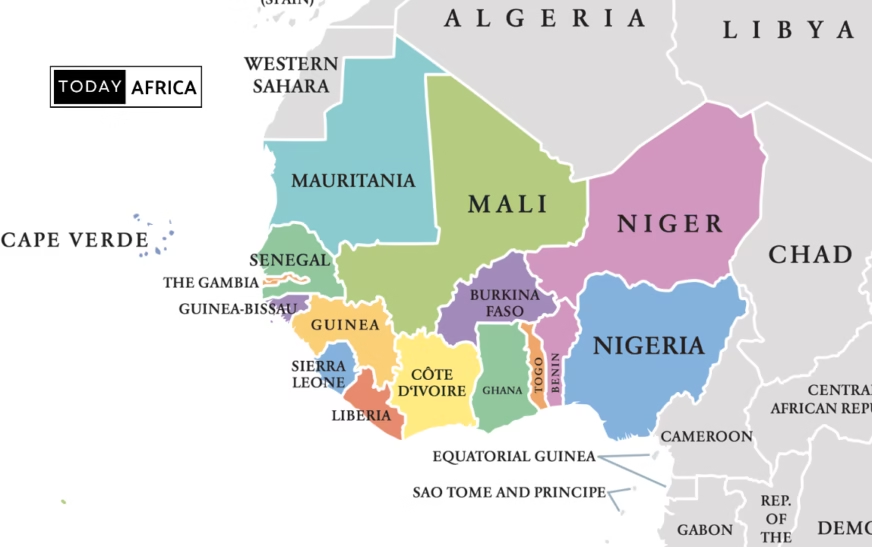
West Africa is made up of 16 countries, including Nigeria, Ghana, Senegal, Côte d’Ivoire, Sierra Leone, Benin, Togo, Mali, and others. Each has its own languages, food, social norms, and pace of life.
Traveling in West Africa means adjusting constantly. The way people communicate in Senegal is different from Nigeria. Ghana feels different from Guinea. Even neighboring countries can feel worlds apart.
A 2023 UNWTO report showed that West Africa receives millions of regional travelers yearly, yet international visitors often underestimate how diverse the region is. Treating it as one cultural block leads to confusion and frustration.
The more you research each country individually, the smoother your experience will be.
History shapes everything
Colonial history still influences borders, languages, and systems. That’s why English is widely spoken in Nigeria and Ghana, while French dominates in Senegal, Benin, and Côte d’Ivoire.
Understanding this helps when you’re dealing with bureaucracy, education systems, and even food. It also explains why traveling in West Africa sometimes feels inconsistent across borders.
History isn’t just in museums here. It’s in daily life.
Visas, entry rules, and documentation
For many passport holders, visas are still required before arrival. Some countries offer visa on arrival or e-visas, others don’t.
Nigeria, for example, has strict entry requirements. Ghana is slightly more straightforward. Senegal allows visa-free entry for many nationalities.
Always check official government sources, not random blogs. Visa rules change more often than people realize. When planning travels in West Africa, build buffer time for visa processing. Rushing this part causes most pre-trip stress.
Yellow fever cards are not optional
This catches people off guard. Most West African countries require proof of yellow fever vaccination. Immigration officers do ask. Airlines do check. Carry the physical card, not just a photo. Losing it can mean delays or denied entry. It’s not a suggestion. It’s mandatory.
Read Also: 9 Best Tourist Attractions in Egypt You Wouldn’t Want to Miss This Year
Health, safety, and common sense
Before traveling in West Africa, visit a travel clinic. Not just your regular doctor.
Malaria prophylaxis is strongly recommended in most countries. So are vaccines for hepatitis A and B, typhoid, and tetanus.
According to the CDC, malaria accounts for a significant percentage of illness among travelers returning from West Africa. The risk is real, but manageable with preparation.
Also pack a basic medical kit. Pharmacies exist, but brand names and availability vary.
Safety is about awareness, not fear
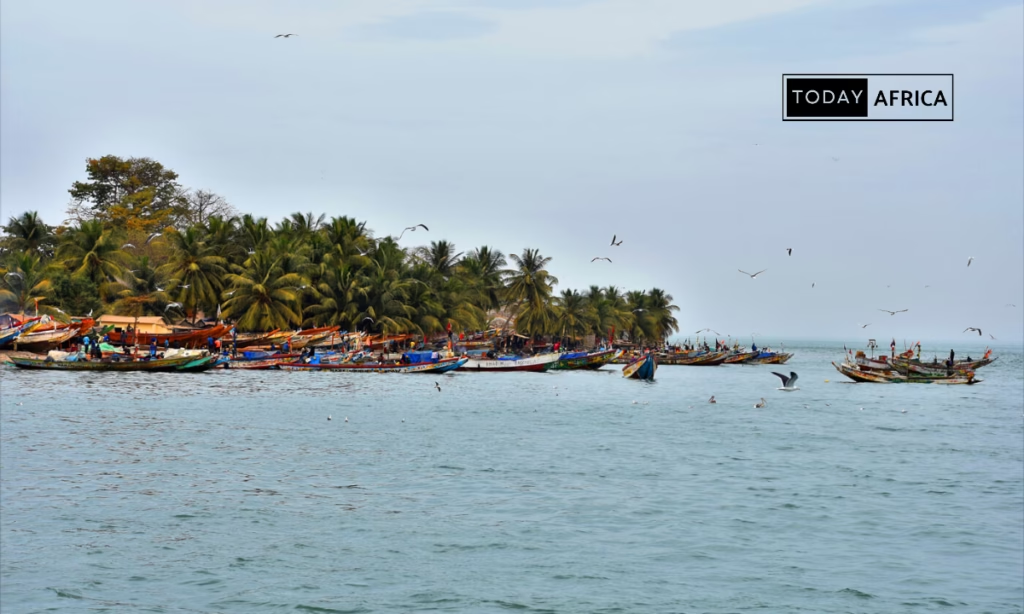
West Africa isn’t more dangerous than many parts of the world, but it requires situational awareness. Avoid flashing expensive items. Don’t wander unfamiliar neighborhoods at night. Ask locals where not to go.
In cities like Lagos or Abidjan, traffic accidents are statistically a bigger risk than violent crime. Use trusted transport. Listen more than you talk. Blend in when you can.
Traveling in West Africa rewards people who stay alert without being paranoid.
Read Also: Top 19 Morocco Tourist Sites to Visit This Year
Money, costs, and daily spending
Cards are accepted in some hotels and high-end restaurants, but cash dominates daily life. ATMs exist, but can be unreliable. Sometimes they run out of cash. Sometimes foreign cards don’t work.
Carry small denominations. Breaking large notes can be surprisingly difficult. When planning your travels in West Africa, budget extra time for money logistics. It’s part of the rhythm.
Bargaining is normal
In markets and informal settings, prices are flexible. Bargaining isn’t rude. It’s expected. That said, there’s a line between negotiating and disrespect. Smile. Be patient. Don’t argue aggressively over small amounts. If a price feels too high, walk away calmly. Often, that’s when the real price appears.
Read Also: 8 Best Things to Do in Cairo Egypt This Year
Getting around
Public transport in West Africa is efficient in its own way, but rarely intuitive for first-time visitors. Shared taxis, minibuses, and motorcycles are common. They follow local logic, not posted schedules.
Ride-hailing apps like Bolt and Uber work in some cities, especially in Ghana and Nigeria. If you’re nervous, start with ride-hailing, then gradually explore local options.
Roads and timing work differently
Distances on maps don’t reflect travel time. A 100-kilometer trip can take five hours. Road conditions, checkpoints, and traffic patterns all play a role. Build flexibility into your itinerary. Rigid schedules lead to frustration when traveling in West Africa.
Culture, etiquette, and social norms
People greet each other properly. Skipping greetings can be seen as rude. Simple phrases go a long way: ‘Good morning.’ ‘How are you?’ ‘Thank you.’ In many places, greetings come before business. Even with strangers. This is one of the easiest ways to build goodwill quickly.
Dress with context in mind
West Africa is not conservative in one uniform way, but modesty is generally respected. In cities, people dress fashionably and boldly. In rural or religious areas, covering shoulders and knees is appreciated.
Observe how locals dress where you are. Adjust accordingly. Traveling in West Africa becomes easier when you respect local norms without overthinking them.
Read Also: Top 25 Destinations for Africa Adventure Trips This Year
Language and communication
English is widely spoken in some countries, less so in others. Even where English is common, accents and local expressions take time to understand.
Learning basic French helps a lot if you’re visiting francophone countries. Even a few phrases change interactions completely. Non-verbal communication matters too. Tone, patience, and body language carry weight.
Communication is often indirect
People may avoid saying no directly. Responses can be polite but non-committal. This isn’t dishonesty. It’s cultural. If something sounds vague, ask follow-up questions gently. Understanding this saves you confusion when traveling in West Africa.
Food, water, and eating out
West African cuisine is rich, spicy, and deeply regional. Food like jollof rice, thieboudienne, fufu, egusi, attiéké, and groundnut soup. Food is central to social life. Sharing meals builds connection. Start slow if you’re not used to spice. Your stomach will thank you.
Be smart about water
Drink bottled or filtered water only. Avoid ice unless you trust the source. Street food can be safe and delicious, especially where it’s busy and freshly cooked. Watch how locals eat. Follow their lead.
Read Also: Budget Travel to Egypt This Year: The Ultimate Guide
Expectations versus reality
Power cuts happen. Internet drops. Systems are sometimes slow. This frustrates people who expect everything to run on rigid timelines. The more flexible you are, the more enjoyable traveling in West Africa becomes. Patience isn’t optional. It’s part of the experience.
Hospitality is deeply genuine
Despite challenges, hospitality is one of the region’s strongest features. People will help you. Strangers will check on you. Conversations happen easily. Many first-time visitors leave with lifelong friendships. That’s not marketing. It’s common.
Read Also: Top 12 Things to Do in Rwanda This Year
Top 15 historical sites in West Africa
1. Timbuktu
Nothing evokes a greater image of remoteness and being at the end of the world than the fabled city of Timbuktu in Mali. Founded as a permanent settlement nearly 1,000 years ago, Timbuktu was a major trading outpost and the first and last stop for caravans traversing the Sahara. A center of learning and religion with traditional mud mosques and houses, the city has unfortunately seen better days as Islamic extremists took over the area during their 2012 siege of Northern Mali.
2. Stone Circles of Senegambia
Head to central Senegal and Northern Gambia and discover the ancient stone circles of the region. Covering a roughly 30,000 square km area, researchers think that these monuments were built between the third and sixteenth centuries, although theories to why they were built still remain elusive.
3. Grand-Bassam
Due East of Abidjan, Cote d’Ivoire you’ll find the French colonial capital of Grand-Bassam. Step back into another era and wander through the town’s abandoned streets and buildings. The capital existed for three years (1893-1896) before yellow fever infections caused the capital and seaport to be moved. Now, little more than a village, there is a National Museum of Costume and a few other sites worth checking out.
4. Ruins of Loropeni
Near the market town of Loropeni lay incredible ruins, stone walls set amidst an arid Sahelian forest. Thought to enclose the courtyard and buildings of Kaan Iya, a former king of the Kaan people, the site is not only Burkina Faso’s only UNESCO World Heritage Site, but also thought to be the best preserved fortified settlement in all of West Africa.
Read Also: 14 Seychelles Top Attractions You Wouldn’t Want to Miss This Year
5. Royal Palaces of Abomey
The Royal Palaces of Abomey (the former capital of Dahomey) are a group of earthen structures located in Southern Benin. The palaces were built and inhabited by the Fon people between the early 1600s and 1900s, and 12 kings inhabited the grounds and palace. Interestingly, each new king had a new palace built. Hire a guide to help you explore the grounds and check out the nearby history museum.
6. Osun-Osogbo Sacred Grove
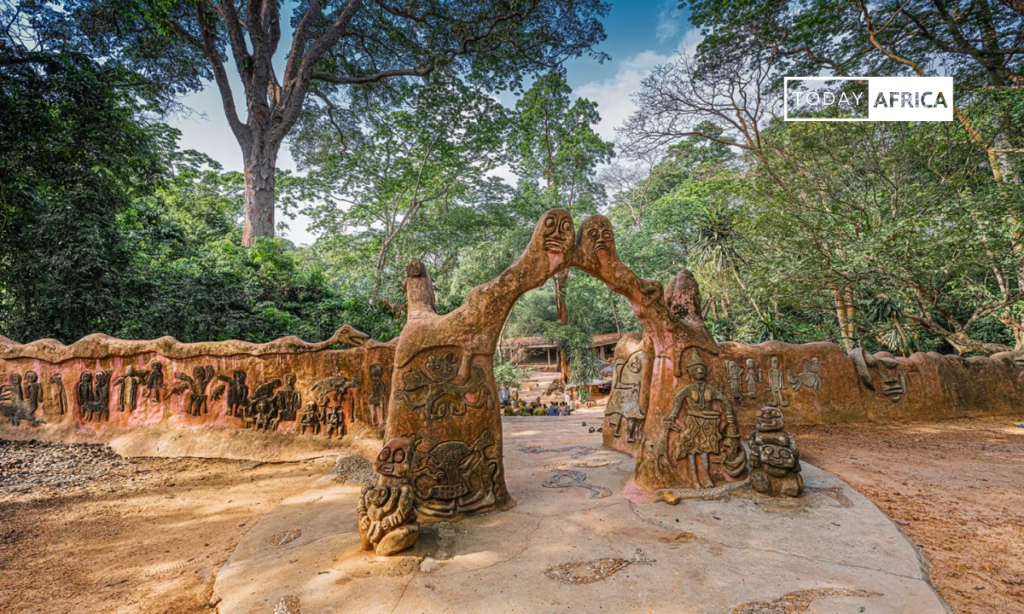
In a beautiful setting along the shores of the Osun River in Southwestern Nigeria, you’ll find the Sacred Grove of Osun-Osogbo. One of the last sacred sites of the Yoruba people, many of the sites, religious ceremonies, and cultural practices have fallen into disuse, especially in the last century. Thankfully, the Sacred Grove is well preserved and every year, thousands gather for the two week Osun-Osogbo Festival which features many traditional ceremonies including the lighting of a 16-point torch.
7. Koutammakou
Koutammakou, the Land of the Batammariba people is found in Northern Togo. Designated as a UNESCO Cultural Landscape, the Batammariba are known for their famous two-story Somba houses which house livestock in the lower level and contain a rooftop courtyard for grain storage and sleeping. These are truly some of the most interesting pre-modern African architectural achievements.
8. Djenne
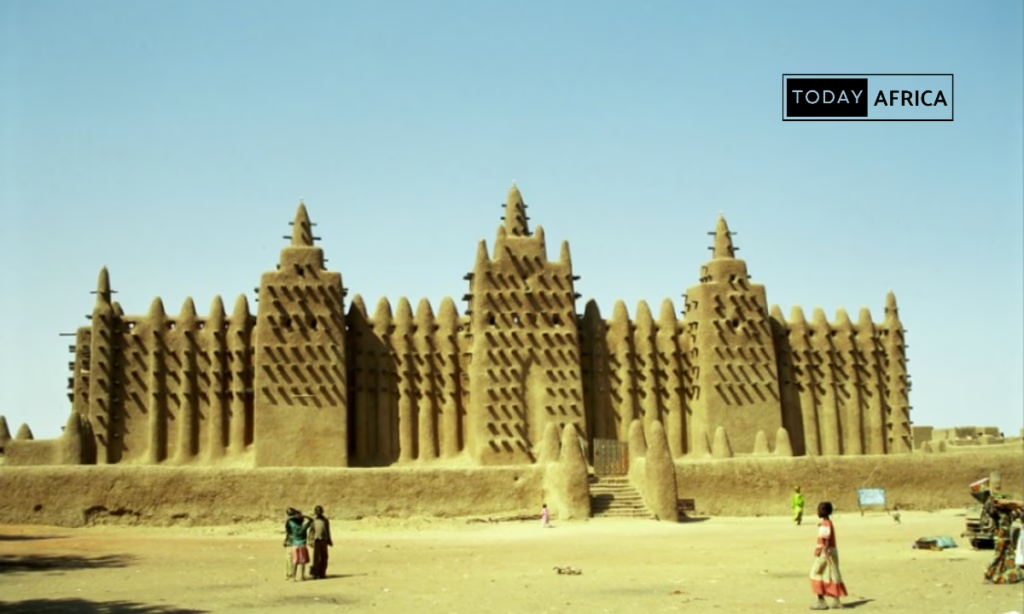
Rising out of the dusty Sahelian landscape is the towering Great Mosque of Djenne in Mali. Although the original foundations date back to the 1200s, the current structure is over a century old. Not only is the Great Mosque the largest mud structure in the world, but it’s also one of the best examples of Sahelian mud architecture. Recently, Djenne has been on the fringes of what the government controls from Islamic extremists.
9. James Island
Now Kunta Kinteh Island (inspired by the film, Roots), James Island was a crucial gold, ivory, and slave trading post situated in the middle of the Gambia River. While only 15% of its former size due to erosion, the ruins of the fort are still impressive, despite having been abandoned nearly 150 years ago.
Read Also: All Inclusive African Family Vacations This Year
10. Saint-Louis
Formerly the administrative capital of French Senegal, the city of Saint Louis was founded in 1659 and named for the French monarch at the time. Throughout the centuries, the city has maintained its characteristically colonial appearance much like other French or Spanish Atlantic colonial cities (i.e. New Orleans). The European city planning and preserved buildings continue to draw tourists as well as nearby national parks and the international jazz festival.
11. Asante traditional buildings
A collection of 13 traditional structures in central Ghana, these buildings are the last remaining and best preserved remnants of the once great Asante Empire. Although they are made of earth, wood, and straw, and vulnerable to erosion, most of the buildings are well preserved and are definitely one of the most interesting attractions in Ghana.
12. Tomb of Askia
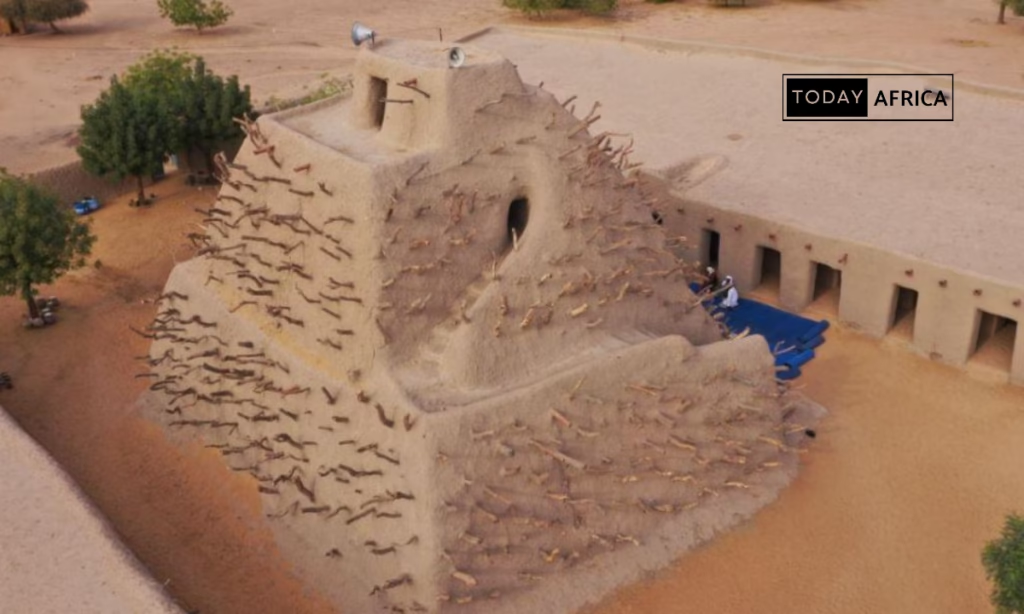
Askia Muhammed I or Askia the Great was the greatest ruler of the Songhai Empire which at one point stretched from Senegal and Gambia through Mali and Burkina Faso into Niger and Nigeria. Located in Gao, Mali, his tomb is another fine example of Sahelian mud architecture. It’s said he brought back the materials for it returning from hajj in Saudia Arabia, and that his caravan consisted of thousands of camels.
13. Ribeira Grande
The old town of Ribeira Grande in Cape Verde was one of the first colonial outposts in the tropics. Tourists still come to see the old fort, colonial buildings, and cobblestone streets, some of which date back to the 1500s. The town is hands down, the best example of colonial Portugal’s reach in West Africa.
14. Goree
Founded by the Portuguese, trading hands to the Dutch several times, and eventually taken over by France, the island and fort of Goree in Dakar is another place with a dark past. Though not as important to the slave trade as Saint-Louis or James Island, Goree is still more visited. With its view of Dakar and museums housed in the old fort and structures, the island is not to be missed by history enthusiasts or any visitors to Senegal.
Read Also: 26 Best Restaurants in Lagos Nigeria This Year
15. Ksours of Mauritania
“Ksours” is the Arabic word for castle, and the towns of Ouadane, Chinguetti, Tichitt, and Oualatta were important trade, cultural, and religious centers in Mauritania on the trans-Saharan route. The mud brick and stone sites are fascinating examples of traditional castles, and with few visitors to Mauritania, chances are you’ll have them all to yourself!
Conclusion
Traveling in West Africa isn’t about ticking boxes or chasing viral moments. It’s about learning how to move differently. How to listen more and how to slow down when things don’t go as planned.
If you prepare properly, stay open-minded, and respect local rhythms, your first travels in West Africa can be transformative. Not perfect. Not effortless. But deeply rewarding.
Do the research, ask questions, and when you arrive, let the place meet you where you are.
If you’re planning a trip, bookmark this guide, share it with your travel partner, and start preparing with clarity instead of fear. West Africa has a lot to offer you.
FAQs
Is West Africa safe for first-time travelers
Yes, with preparation and awareness. Like anywhere else, some areas are safer than others. Research your destination and follow local advice.
Do I need to speak French to travel in West Africa
Not always, but it helps. English works well in some countries. Basic French is useful in many others.
What is the best time to visit West Africa
The dry season, usually between November and March, is generally more comfortable for travel.
How expensive is traveling in West Africa
Costs vary by country and travel style. Daily expenses can be affordable, but flights and visas add up.
Can I travel between West African countries easily
It’s possible, but border crossings can be slow. Plan ahead and expect delays.
Leave a comment and follow us on social media for more tips:
- YouTube: Today Africa Studio
- Facebook: Today Africa
- Instagram: Today Africa
- Twitter: Today Africa
- LinkedIn: Today Africa






![15 Best Beaches in Morocco to See This Year [& Essential Packing List]](https://todayafrica.co/wp-content/uploads/2023/12/Blue-Simple-Dad-Appreciation-Facebook-Post-1200-×-720-px-6-9.png)