

Content that truly converts is not about posting frequently or sounding sophisticated.
It is about understanding how African buyers think, how decisions are made inside organizations, and how trust is earned in markets shaped by uncertainty, informal systems, and relationship-driven commerce.
Content helps in explaining complex problems clearly, positions the brand as a reliable authority, and guides prospects through long, cautious buying journeys. When done well, content becomes a silent salesperson working long after meetings end and pitches are forgotten.
This article breaks down, step by step, how to create content that converts for your startup that does more than attract attention.
How to create content that converts for your startup (8 steps to follow)
1. Study your target audience
For most African startups, especially those operating in B2B, content does not exist in a vacuum. It exists inside long buying cycles, cautious decision making, and environments where trust often matters more than price.
Unlike B2C, where impulse and emotion can drive quick decisions, B2B buyers are actively searching for solutions to specific problems. They are comparing options, asking peers for recommendations, and weighing risk. Your content has to meet them in that moment of intent. Not before. Not after.
This is where buyer personas come in, and despite how abstract the term sounds, they are one of the most practical tools in content marketing.
A buyer persona is not a fictional character for fun. It is a structured way of understanding how real people inside real organizations make purchasing decisions.
Take the example of a paint manufacturing business. At first glance, the customer is anyone who needs paint. But in reality, the decision makers vary widely.
- An interior designer cares about finish, color consistency, and delivery timelines.
- A construction project owner prioritizes cost, bulk supply, and reliability.
- A real estate developer is thinking about durability and resale value.
- An automobile manufacturer looks at chemical composition and compliance standards.
If you create one generic message for all of them, it converts no one particularly well. Studying your target audience means going deeper than age, gender, and location.
It means understanding how they buy, where they get information, who influences their decisions, and what risks they are trying to avoid.
In African markets, this often includes informal processes, relationship-based procurement, and sensitivity to economic volatility.
2. Set goals and relevant KPI
One of the quiet reasons content fails is not poor writing or weak ideas, but confusion about what success actually looks like.
In B2B, customer bases are smaller and more concentrated. This makes alignment between content goals and business goals even more important. Yet many startups fall into the trap of tracking what is easy instead of what is meaningful.
It is common to see teams celebrating engagement numbers while struggling to explain how content contributes to revenue. The problem is not data availability. Most companies have access to analytics. The problem is clarity.
If your primary goal is lead generation, metrics like impressions and likes tell only a partial story. You need to track form submissions, qualified leads, demo requests, and follow up conversions. If your goal is brand authority or thought leadership, reach, share of voice, and impressions matter far more.
This distinction is critical in African startup ecosystems where resources are limited and every effort must justify itself.
Different goals demand different KPIs. Branding efforts are measured through visibility and recall. Community building shows up in comments, messages, and repeat interactions. Sales driven content is evaluated through pipeline movement and conversion rates, both online and offline.
The most disciplined teams adopt SMART goals – Specific, Measurable, Attainable, Relevant, & Time bound.
They decide upfront what success means and review performance regularly. This allows them to adapt quickly instead of waiting months to realize something is not working.
In environments where markets shift quickly, this feedback loop is not optional. It is survival.
Read Also: How to create a winning social media strategy for your African brand
3. Chalk down your content plans
Once the audience is clear and goals are defined, content planning becomes a strategic exercise rather than guesswork.
African B2B buyers consume information differently depending on where they are in their decision making journey.
- A founder in the early research phase needs clarity and education.
- A procurement manager comparing vendors wants evidence and reassurance.
- And a CFO signing off wants justification and risk mitigation.
This is why content must be mapped deliberately across the buyer journey.
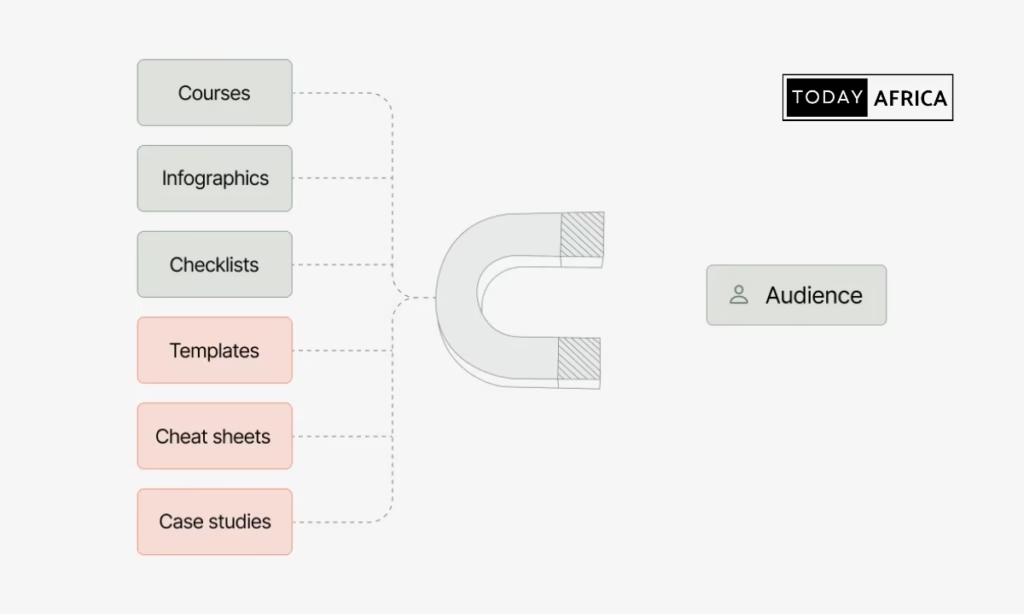
At the awareness stage, content should focus on problem identification. These pieces help the audience articulate challenges they already feel but may not fully understand. Blogs, infographics, short videos, and industry commentary work well here. They should be accessible, practical, and free.
As the audience moves into interest, they begin to associate the problem with your brand. This is where you introduce your perspective and approach. Ebooks, newsletters, webinars, and templates allow for deeper engagement. Some content can be gated, but the value must justify the exchange.
During consideration, the tone shifts. The content becomes more persuasive and specific. Guides, demos, and tutorials demonstrate how your solution works and why it is different. This is where credibility matters most.
Finally, conversion focused content introduces urgency. Feature updates, onboarding tutorials, certifications, and customized reports push prospects to act. These assets directly support revenue and retention.
Strong content plans ensure no stage is neglected. They also prevent over-reliance on a single format, which is a common mistake among early-stage startups.
4. Stick to your content calendar
Consistency is one of the hardest things to maintain in content marketing. Not because ideas are scarce, but because execution competes with daily operational demands.
A content calendar turns strategy into routine.
African audiences are spread across platforms, and platform usage varies by industry and role.
- LinkedIn remains central for decision makers.
- Instagram and TikTok work well for quick education and visibility.
- X (formerly Twitter) supports conversations and real time engagement.
- YouTube enables deeper storytelling.
- Email and WhatsApp remain powerful distribution channels.
Managing this mix without structure leads to burnout and inconsistency.
A content calendar creates visibility and accountability. It helps teams plan ahead, allocate resources, and maintain quality. It also allows for coordination across departments, which is critical in B2B environments where marketing, sales, and product must align.
The most effective calendars track not just publishing dates, but performance. They record KPIs, engagement metrics, and feedback. Over time, this data informs smarter decisions about what to double down on and what to drop.
Seasonal campaigns deserve special attention. Black Friday, industry conferences, regulatory changes, and fiscal year cycles all create opportunities for targeted content. Planning for these moments in advance allows startups to show up prepared rather than reactive.
Read Also: How African founders build community before revenue
5. Choose your tool stack
As content operations scale, manual processes quickly become bottlenecks. This is where tools move from optional to essential.
A well chosen tool stack does not replace strategy. It supports it.
Research tools help identify what audiences are searching for and talking about.
- Content management systems provide structure and control.
- Collaboration platforms keep teams aligned.
- Design tools improve visual communication.
- Scheduling and automation tools ensure timely distribution.
- Analytics platforms close the loop with performance insights.
For African startups, tool selection must balance capability with cost and usability. High end platforms are not always necessary. What matters is integration and adoption.
The return on investment often comes from time saved and clarity gained. Automated workflows reduce errors. Dashboards improve decision making. Personalization features enhance engagement.
Tools also introduce accountability. Ownership becomes clearer. Progress becomes visible. Reporting becomes faster. When used thoughtfully, they allow small teams to operate with the efficiency of much larger ones.
6. Implement competitive analysis methodology
Even with a solid framework, performance can plateau. This is usually a signal to look outward.
Competitive analysis is not about imitation. It is about context.
Understanding how competitors position themselves, what content they prioritize, and how audiences respond provides valuable perspective. It highlights gaps and opportunities that internal analysis often misses.
In African markets where industries are still forming, competitors may come from unexpected places.
Direct competitors offer similar products. Indirect competitors solve the same problem differently. Replacement competitors address adjacent needs and can shift customer behaviour entirely.
Studying their messaging, channels, and engagement reveals patterns. What topics dominate the conversation, what formats perform best, and what promises resonate.
The goal is not to copy, but to differentiate with intention.
Read Also: 8 lessons from failed African startups and what they teach us
7. Use content repurposing, curation, and reposting tricks
Creating content from scratch every time is unsustainable. Repurposing solves this problem without sacrificing quality.
High performing content can be reshaped into multiple formats. A blog becomes a video script. A webinar becomes short clips. A guide becomes a newsletter series. User generated content becomes social proof.
This approach respects audience preferences and platform dynamics. It also extends the lifespan of strong ideas.
Curation plays a complementary role. Sharing and commenting on relevant industry content positions your brand as informed and connected. Following the 80 20 rule ensures balance between promotion and contribution.
Together, repurposing and curation allow teams to maintain momentum without burning out.
8. Try some customer retention tactics
Conversion does not end at the sale. In many African markets, retention is where real growth happens. Acquiring new customers is expensive. Retaining existing ones compounds value.
Content plays a critical role here.
Exclusive resources, personalized updates, customer communities, and ongoing education strengthen relationships. Tutorials help users extract value. Feedback loops inform improvement. Recognition through testimonials and case studies reinforces loyalty.
Referral programs and customized offers turn satisfied customers into advocates. In trust driven markets, this word of mouth effect is powerful.
Ultimately, content that converts is not just about acquisition. It is about sustaining belief long after the first transaction.
Read Also: Top 10 Acquisitions in Africa in 2025
Conclusion
Creating content that converts is not a one off campaign or a viral moment. It is a discipline.
It has to educate before it persuades, align tightly with business goals rather than vanity metrics, and most importantly, it has to respect the intelligence and caution of the audience it serves.
The best teams treat content as infrastructure, not decoration.
- They invest time in understanding who they are speaking to and why.
- Plan deliberately across the buyer journey.
- Measure what matters.
- Refine their approach by watching competitors and listening closely to customers.
- And they reuse what works and abandon what does not.
Over time, this approach compounds.
- Content becomes clearer
- Messaging becomes sharper
- Trust deepens
- Acquisition costs fall
- Retention improves
- And the brand begins to occupy a distinct, defensible position in the market
So, to win, your content has to consistently show that you understand the problem, respect the buyer, and can be trusted to deliver.
Leave a comment and follow us on social media for more tips:
- Facebook: Today Africa
- Instagram: Today Africa
- Twitter: Today Africa
- LinkedIn: Today Africa
- YouTube: Today Africa Studio