
E-commerce in Africa has entered a more measured and consequential phase of development.
After a decade of experimentation marked by rapid platform launches, aggressive customer acquisition, and uneven capital deployment, the sector is now being reshaped by economic pressure, infrastructure constraints, and a sharper focus on unit economics.
The narrative has shifted from speculative growth to operational sustainability.
Despite its relatively small share of global online retail, Africa’s ecommerce market occupies an important strategic position.
It sits at the intersection of three structural forces: a rapidly growing population, expanding digital connectivity, and the formalisation of retail and payments systems across emerging economies.
Yet the sector’s progress remains uneven, shaped less by abstract digital potential and more by the practical realities of logistics, payments, regulation, and consumer trust.
Market size and revenue outlook
Africa’s e-commerce market remains modest by global standards, but its growth trajectory is stable rather than speculative.
According to Statista’s 2025 e-commerce outlook, total e-commerce revenue in Africa is projected to reach approximately $43 billion in 2025, with a forecast compound annual growth rate (CAGR) of about 7.5% through 2030.
This growth is slower than earlier forecasts made during the pandemic-era digital surge but reflects more realistic assumptions about purchasing power, logistics capacity, and macroeconomic conditions.
Alternative market estimates vary significantly depending on the scope.
IMARC Group’s 2024 Africa e-commerce market report places the market value above $300 billion, but this figure includes a broader definition encompassing digital services, payments, and informal online trade.
Narrowly defined online retail, the segment most relevant to logistics and consumer goods, remains substantially smaller.
E-commerce penetration across Africa still averages below 5% of total retail sales, compared with approximately 15% in the United States and over 20% in China.
This low penetration rate underpins long-term opportunity but also highlights how structural barriers, rather than consumer demand alone, continue to constrain growth.
Read Also: Franchises in South Africa as an engine of business growth
Geographic concentration and leading markets
E-commerce activity in Africa is highly concentrated, with a small number of markets accounting for the majority of transactions and platform revenue. According to UNCTAD and national statistics, Nigeria, South Africa, Egypt, and Kenya collectively represent more than 60% of Africa’s e-commerce activity.
- South Africa remains the continent’s most mature ecommerce market. A 2024 industry study cited by Reuters projects South Africa’s online retail turnover to exceed 130 billion rand (approximately $7.4 billion) in 2025, accounting for close to 10% of total retail sales. Strong logistics networks, reliable payments, and higher consumer trust underpin this performance.
- Nigeria is Africa’s largest ecommerce market by population, though monetisation remains constrained by logistics costs and currency volatility. Platforms such as Jumia, Konga, and numerous social commerce merchants dominate urban centres, particularly Lagos and Abuja.
- Egypt has experienced rapid ecommerce growth driven by high smartphone penetration, a large urban population, and local platforms integrated with digital payments and installment-based purchasing.
- Kenya benefits from deep mobile money penetration, with M-Pesa continuing to lower transaction friction and enable micro-commerce at scale.
Outside these core markets, ecommerce growth is emerging in Ghana, Morocco, Rwanda, and Senegal, often through niche platforms, cross-border trade, or social commerce rather than large marketplaces.
Digital access and mobile-first commerce
Digital infrastructure remains the primary enabler of e-commerce adoption.
According to GSMA’s 2024 Mobile Economy Sub-Saharan Africa report, Africa had over 515 million mobile internet users in 2023, with continued growth expected through 2025.
Internet penetration now exceeds 43% continent-wide, though regional disparities remain pronounced.
E-commerce in Africa is overwhelmingly mobile-first. Desktop-based online retail plays a marginal role outside corporate procurement and high-income segments.
Smartphones are the primary interface for browsing, ordering, payment, and customer service, shaping platform design and user experience.
Data affordability and network reliability remain constraints. While smartphone ownership is rising, high data costs relative to income continue to suppress frequent online purchasing, particularly outside major cities.

Payments infrastructure and fintech integration
Payments have historically been one of the most significant barriers to ecommerce in Africa. Low credit card penetration and limited trust in online transactions led platforms to rely heavily on cash-on-delivery models, increasing fulfilment risk and return rates.
This dynamic is changing rapidly due to fintech expansion. According to GSMA, Africa now hosts over 800 million registered mobile money accounts, making it the largest mobile money market globally.
Platforms such as M-Pesa, MTN MoMo, Airtel Money, and payment gateways like Paystack, Flutterwave, Chipper, and PayDay have significantly reduced transaction friction.
Recent developments also point to growing institutional support.
Regional initiatives such as the COMESA Digital Retail Payments Platform, launched in 2025, aim to facilitate cross-border digital transactions, while global firms like Visa have expanded local infrastructure, including a new African data centre in Johannesburg.
Despite progress, fragmentation persists. Currency controls, inconsistent regulation, and limited interoperability continue to complicate cross-border ecommerce at scale.
Logistics and fulfilment: The structural bottleneck
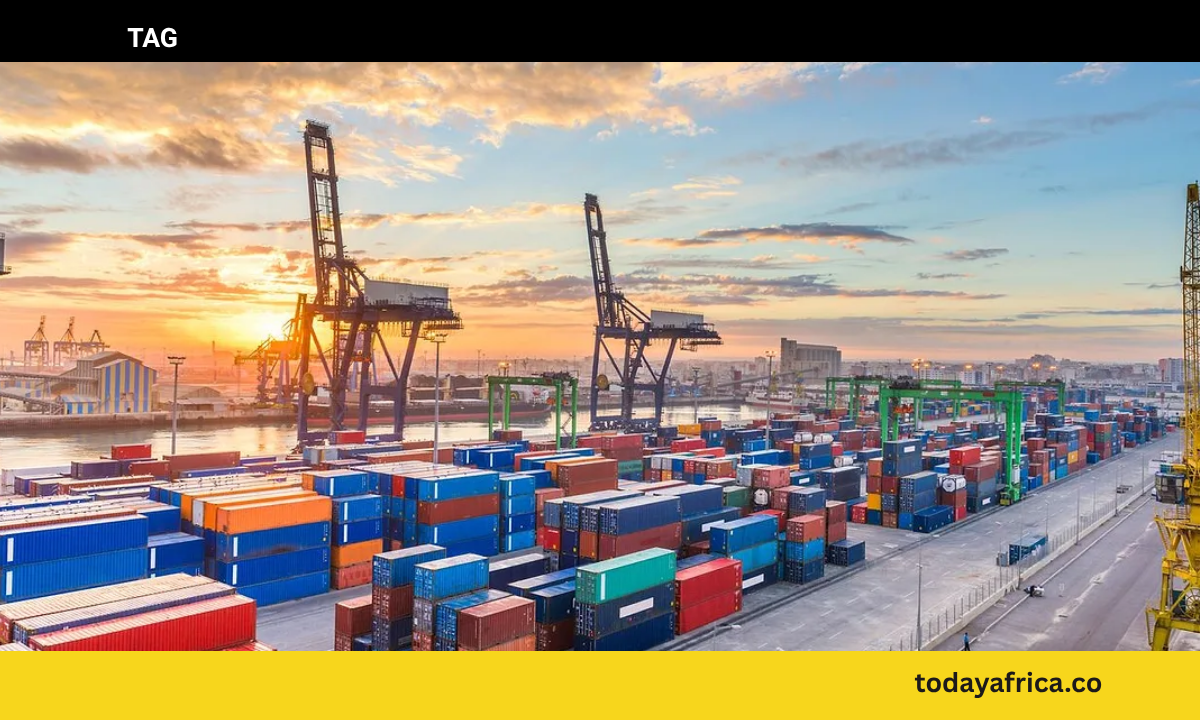
Logistics remains the most binding constraint on ecommerce growth in Africa. Unlike payments, which scale digitally, fulfilment depends on physical infrastructure that varies widely across countries.
The World Bank’s Logistics Performance Index consistently ranks most African economies in the lower half globally, reflecting challenges in road quality, addressing systems, warehousing, and customs efficiency.
Last-mile delivery costs remain high, particularly outside dense urban centres.
To mitigate these constraints, large platforms have invested in proprietary logistics networks. Jumia operates fulfilment centres and delivery fleets across multiple countries, while others partner with logistics startups such as Sendbox and Kobo360.
However, these solutions are capital-intensive and difficult to scale profitably.
As a result, ecommerce growth remains disproportionately urban, reinforcing geographic inequality in access and adoption.
Read Also: Business loans in South Africa: Access, costs, & constraints
Consumer behaviour and trust dynamics
Consumer trust continues to shape ecommerce outcomes in Africa. Surveys consistently show that concerns around delivery reliability, product authenticity, and payment security influence purchasing decisions.
Key behavioural patterns include:
- Continued preference for pay-on-delivery or escrow-style payments
- High sensitivity to delivery timelines and costs
- Reliance on social proof and peer recommendations, particularly via WhatsApp, Instagram, and Facebook
According to Meta, more than 70% of African small online businesses conduct sales primarily through social platforms, blurring the distinction between e-commerce, messaging, and informal retail.
This social commerce model reflects consumer trust dynamics more than platform sophistication.
Investment trends and capital allocation
Investment in African e-commerce has moderated significantly since 2022.
According to Partech Africa, ecommerce and retail-tech startups raised approximately $1.2 billion between 2019 and 2023, with a clear decline following global monetary tightening.
Investor focus has shifted away from consumer marketplaces toward B2B ecommerce, wholesale distribution, and embedded finance models.
Platforms such as Wasoko, MaxAB, and TradeDepot have attracted funding by addressing inefficiencies in informal retail supply chains rather than consumer convenience alone.
Profitability, rather than user growth, now dominates investor evaluation criteria.
Regulation, trade policy, and AfCFTA
Africa’s regulatory environment for ecommerce remains fragmented. While many countries have introduced digital economy frameworks, enforcement capacity and regulatory clarity vary widely.
The African Continental Free Trade Area (AfCFTA) offers long-term potential for cross-border ecommerce, but implementation challenges remain.
Intra-African trade still accounts for less than 17% of total African trade, according to the African Development Bank, constrained by customs delays, currency issues, and logistics inefficiencies.
Digital trade harmonisation remains aspirational rather than operational.
Read Also: Africa’s startup funding shifted from growth to infrastructure in 2025
Conclusion
Ecommerce in Africa is no longer defined by novelty or speculative growth projections.
It is increasingly shaped by structural realities: logistics capacity, payment interoperability, consumer trust, and regulatory coherence.
While the market’s long-term potential is underpinned by demographic growth and rising digital access, near-term outcomes will depend on execution rather than ambition.
The next phase of ecommerce growth in Africa will not be driven by platform replication from developed markets, but by locally adapted models that integrate fintech, logistics, and informal retail systems.
The sector’s success will be measured not by scale alone, but by its ability to operate sustainably within the continent’s economic and infrastructural constraints.
Leave a comment and follow us on social media for more tips:
- Facebook: Today Africa
- Instagram: Today Africa
- Twitter: Today Africa
- LinkedIn: Today Africa
- YouTube: Today Africa Studio