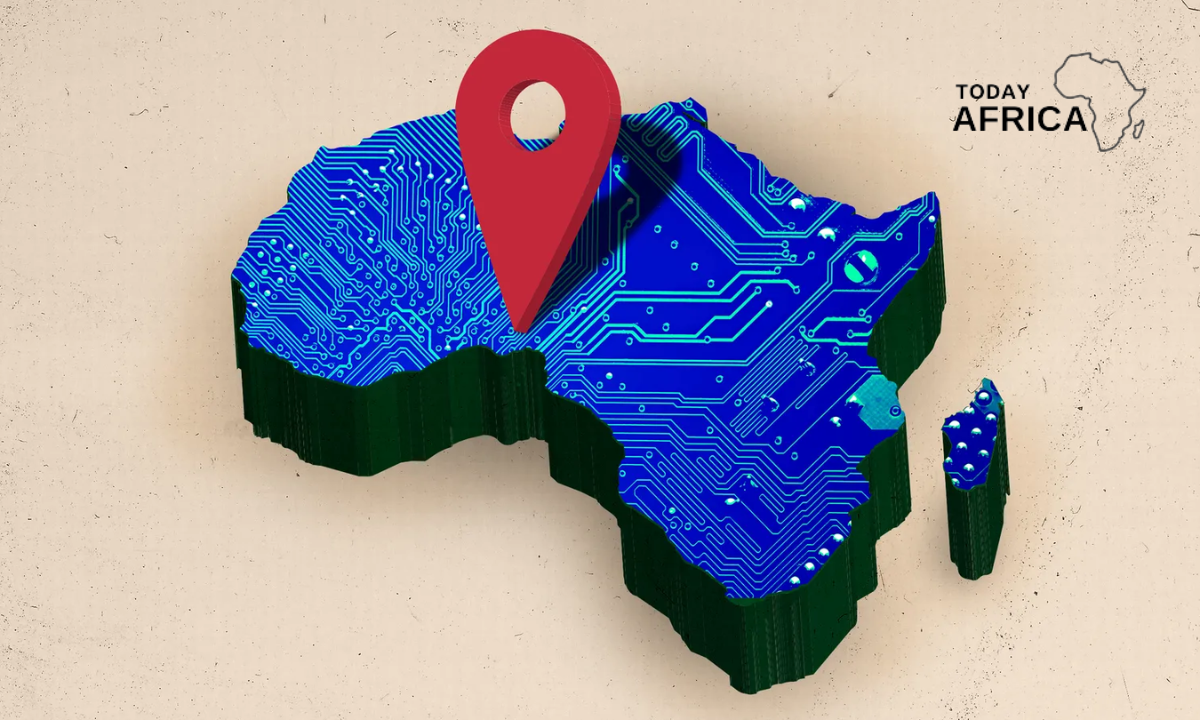


According to the International Telecommunication Union (ITU), over 5.4 billion people, approximately two-thirds of the global population, are now connected to the internet.
GSMA reports that mobile internet usage accounts for the majority of online access in emerging markets, particularly in Africa and parts of Asia. Meanwhile, global retail e-commerce sales surpassed $5 trillion in 2023 and are projected by eMarketer to exceed $6 trillion within the next few years.
These figures underscore a structural shift: growth increasingly occurs where attention, transactions, and data converge, online.
However, growing a business online is not simply a matter of launching a website or opening a social media account. Sustainable digital growth requires deliberate strategy, operational alignment, data analysis, and disciplined execution.
This article outlines a structured framework on how to grow my business online, grounded in market data, platform economics, and performance principles.
How to grow my business online this year
1. Establish strategic positioning before tactical execution
Many businesses begin digital expansion with tools, websites, ads, social media, before clarifying positioning. This sequence often results in low conversion and inconsistent messaging.
Effective online growth begins with clarity on:
- Target customer segments
- Value proposition
- Competitive differentiation
- Revenue model
- Unit economics
According to McKinsey, companies that articulate clear customer value propositions outperform peers in digital customer acquisition efficiency.
Digital platforms amplify clarity, and expose confusion. If a business cannot define its value in one sentence, performance marketing will likely magnify inefficiency rather than solve it.
Strategic groundwork should include:
- Market demand analysis using search trends and keyword data
- Competitive benchmarking (pricing, distribution, messaging)
- Customer journey mapping
- Identification of digital acquisition channels aligned with audience behavior
Online growth is ultimately about matching intent with value.
2. Build a high-performance digital infrastructure
Online growth requires infrastructure that supports discoverability, conversion, and retention. At minimum, this includes:
a. A conversion-optimized website
A website remains the digital headquarters of a business. Research from Stanford University indicates that 75% of consumers judge a company’s credibility based on its website design.
Poor load times and weak user experience directly impact revenue. Google data shows that as page load time increases from 1 second to 3 seconds, bounce probability increases by 32%.
Key elements of a performance-oriented website:
- Fast loading speed (under 3 seconds)
- Mobile-first design
- Clear value proposition above the fold
- Simplified checkout process
- Visible trust signals (reviews, certifications, testimonials)
- Structured data for search visibility
For service-based businesses, clarity of offering and frictionless contact forms are essential. For e-commerce, optimized product pages and secure payment systems are critical.
B. Search Engine Optimization (SEO)
Search remains one of the highest-intent digital channels. According to BrightEdge, organic search drives over 50% of trackable web traffic across industries.
SEO growth requires:
- Keyword research based on real search demand
- Technical optimization (site structure, indexing, metadata)
- High-quality, authoritative content
- Backlink acquisition from credible domains
Google’s algorithm increasingly rewards expertise, authority, and trustworthiness. Businesses that invest in domain authority and structured content often achieve compounding traffic growth over time, reducing dependency on paid advertising.
Read Also: What is growth strategy in business?
3. Leverage data-driven content strategy
Content is not simply a branding tool; it is a distribution engine when aligned with search and social behavior.
HubSpot’s research shows that companies publishing consistent, optimized content generate significantly more leads than those that do not. However, volume alone does not produce results, relevance and authority do.
A structured content strategy includes:
- Educational blog articles targeting high-intent keywords
- Industry insights that demonstrate expertise
- Case studies that show measurable outcomes
- Video content optimized for search and platform algorithms
- Downloadable assets (whitepapers, guides) for lead capture
For B2B businesses, LinkedIn and search-based content often outperform broad social platforms. For consumer brands, short-form video and visual platforms can drive awareness more effectively.
The key is channel alignment. Businesses must analyze where their audience spends time and what content formats influence purchasing decisions.
4. Use performance marketing strategically
Paid advertising accelerates growth when unit economics are sound. Without margin clarity, paid campaigns can scale losses.
According to WordStream data, average conversion rates for Google Ads vary between 2–5% across industries, with higher rates in niche B2B markets. Meta advertising remains effective for audience targeting but requires strong creative testing due to algorithm competition.
Before scaling paid ads, businesses should confirm:
- Customer acquisition cost (CAC)
- Customer lifetime value (LTV)
- Break-even point per acquisition
- Retention rates
A common benchmark in subscription or repeat-purchase models is an LTV:CAC ratio of at least 3:1.
Paid growth should follow validation, not precede it. Test small, analyze data, optimize creatives, and only then scale budgets.
5. Build an email and owned audience asset
Algorithm-dependent growth is fragile. Social platforms and search rankings fluctuate.
Email marketing, by contrast, remains one of the highest ROI digital channels. According to the Data & Marketing Association, email marketing can generate an average return of over $30 for every $1 spent.
Online growth strategies should prioritize:
- Lead capture through gated content
- Welcome sequences for new subscribers
- Behavior-triggered automation
- Regular value-driven communication
Owning direct customer contact reduces platform risk and increases repeat revenue opportunities.

6. Strengthen social proof and digital trust
Trust significantly influences online purchasing behavior. Research from Spiegel Research Center indicates that displaying reviews can increase conversion rates by up to 270% for lower-priced products.
Trust signals include:
- Verified customer reviews
- Transparent return policies
- Visible pricing
- Case studies with measurable results
- Media mentions and certifications
For businesses in emerging markets where digital trust may be lower, payment security and customer support responsiveness are particularly important.
Reputation management also matters. Monitoring online reviews and responding to feedback publicly can influence future buyers.
Read Also: You need these 5 business growth strategies to expand your company
7. Optimize for mobile and local context
In regions like Africa, Southeast Asia, and Latin America, mobile-first consumption dominates. GSMA data shows that mobile accounts for the majority of internet access in Sub-Saharan Africa.
This has implications for:
- Lightweight website design
- WhatsApp integration for customer service
- Mobile payment systems
- Short-form video marketing
Local payment infrastructure, logistics partnerships, and delivery reliability are often the primary bottlenecks in online growth in emerging markets, not demand.
Businesses must align digital growth strategies with real-world operational capacity.
8. Analyze metrics relentlessly
Growth without measurement is speculative. Core metrics to monitor include:
- Traffic sources and growth rate
- Conversion rate
- Customer acquisition cost
- Lifetime value
- Churn rate
- Average order value
- Return on ad spend (ROAS)
Tools such as Google Analytics, Search Console, CRM dashboards, and marketing automation platforms provide measurable insights.
Companies that adopt a test-and-iterate model outperform those relying on static campaigns. A/B testing headlines, pricing structures, and call-to-action placement can materially affect revenue.
Digital growth is cumulative and compounding, but only when informed by data.
9. Invest in brand authority, not just visibility
Short-term traffic spikes do not equal durable growth. Authority builds defensibility.
Authoritative brands typically:
- Publish original insights or research
- Maintain consistent voice and positioning
- Participate in industry discourse
- Partner with credible institutions
- Deliver consistent customer experience
According to Edelman’s Trust Barometer, trust significantly influences purchasing decisions, particularly in uncertain economic environments.
Brand authority reduces price sensitivity and improves customer retention, two key drivers of sustainable online growth.
10. Align operations with digital demand
A common failure point in online expansion is operational misalignment. Marketing may generate demand that supply chains cannot fulfill.
Growth planning should consider:
- Inventory management systems
- Fulfillment capacity
- Customer support scalability
- Refund and dispute handling processes
- Data security compliance
Digital growth magnifies operational weaknesses. Businesses must ensure backend systems scale alongside front-end demand.
Read Also: Companies that help businesses grow: Structures, services, & outcomes
Conclusion
Growing a business online is neither a single tactic nor a short-term campaign. It is a structured process that integrates positioning, infrastructure, content, performance marketing, analytics, trust-building, and operational alignment.
The scale of global digital adoption presents significant opportunity. However, opportunity alone does not guarantee performance.
Businesses that approach online growth with analytical discipline, data-informed strategy, and long-term infrastructure investment are better positioned to convert digital presence into measurable revenue.
Online growth is not defined by follower counts or website traffic alone. It is defined by sustainable acquisition economics, repeat customers, and brand authority in increasingly competitive digital markets.
For business leaders, the central question is not whether to grow online, but whether their strategy is robust enough to compete in an environment shaped by data, trust, and platform economics.
Comment and follow us on social media for more tips:
- Facebook: Today Africa
- Instagram: Today Africa
- Twitter: Today Africa
- LinkedIn: Today Africa
- YouTube: Today Africa Studio