
It’s February, and if you haven’t read the ‘100+ Entrepreneurs in Africa to Watch in 2026‘, know that you’re missing out on the entrepreneurs making a difference on the continent.
These founders aren’t just building startups. They’re filling structural gaps across sectors, creating jobs, expanding access to essential services, and turning ideas into real economic activity.
From here, let’s get into what happened last week.
African tech news highlights
There wasn’t a single headline that broke the internet last week, but a couple of stories showed the ecosystem was active.
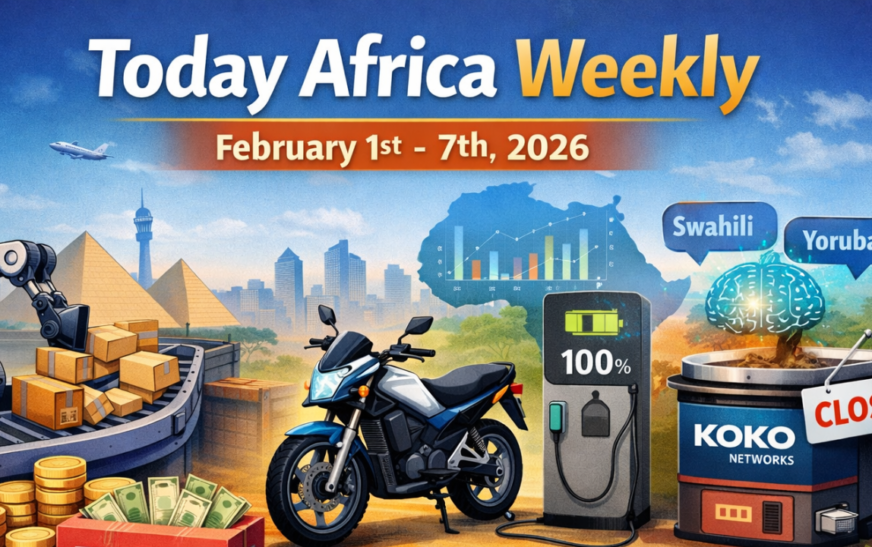
Maybe the most eye-catching was Google teaming up with African universities to launch WAXAL, a big speech dataset for African languages such as Hausa, Yoruba, Igbo, Swahili, and others. This isn’t just another “data thing”; it’s meant to help voice tech actually work for people across the continent, not just tourists and expats. That matters for everything from voice assistants to healthcare tech and fintech UX.
Down in Egypt, logistics startup Bosta put out a statement that feels like a wink at how important operational tech has become. They’ve launched what they’re calling the largest automated sorting machine in the Middle East, capable of handling more than 11,000 parcels an hour and pushing towards plans to process roughly 80 million packages in 2026. Its logistics have grown up, not just apps and wallets, but physical infrastructure powering those shipments.
Not all of the news is growth and hope, though. KOKO Networks, the Kenyan startup focused on bioethanol fuel alternatives, filed for administration after failing to get government approval to sell carbon credits internationally. Layoffs followed and administrators are now in charge, which really underlines how policy friction can flip a young company’s prospects overnight.
There were other stories too, UN Global Pulse Accelerator applications opened for African startups (think structured support to take pilots to scale), and Obiex, a Nigerian crypto exchange, said it’s gearing up to expand into Ghana and South Africa.
Key funding round (February 1 – 7, 2026)
- Lula (South Africa) raised about US$21 million in growth capital from Dutch development bank FMO. The fintech (rebranded from Lulalend) uses AI to help MSMEs manage cash flow, and this injection is meant to deepen its reach into smaller business lending and digital banking services.
- Frontier investor XSML Capital closes 4th fund at $142m: XSML Capital, a leading provider of growth capital to SMEs in Central and Eastern Africa, has closed its fourth fund, African Rivers Fund IV (ARF IV), at US$142 million, exceeding its hard cap. Founded in 2008 to help talented entrepreneurs in frontier markets in Africa grow their businesses into sustainable medium and large companies
Trends to watch
Here’s where the subtle currents start becoming visible.
One trend is infrastructure-level innovation, not just apps and marketplaces, but physical logistics tech like Bosta’s sorting machine. That reflects a sector slowly maturing beyond web apps into hardware-enabled services.
Another is AI and language tech. Tools like WAXAL are not gadgets for tech bros, they’re foundations for inclusive AI services tailored to African users. Once you have good speech data, you unlock new value in education, health, accessibility tech.
Investors seem more cautious but also more strategic. Big multi-million rounds aren’t as frequent as a couple of years ago, but where capital is flowing is into companies that are building real revenue-generating operations and B2B services, fintech for MSMEs, logistics automation, or scalable infrastructure.
Finally, the policy angle can’t be ignored, the KOKO situation shows how regulatory delays or missteps can wipe out value and jobs overnight. Investors and founders say this all the time, yet weeks like this one make it feel very real.
Conclusion
So what does all this mean for founders and investors? It suggests a shift: the era of easy capital and moonshot valuations is fading into a phase where execution and regulatory navigation matter more than ever. That’s good for long-term sustainability, even if it feels slower right now.
Africa’s tech scene isn’t slowing, and if that sounds boring, wait a few months when the real structure starts to show. That’s usually when the next big leaps begin.
Leave a comment and follow us on social media for more tips:
- Facebook: Today Africa
- Instagram: Today Africa
- Twitter: Today Africa
- LinkedIn: Today Africa
- YouTube: Today Africa Studio