
Many African startups begin with a problem that feels personal: unreliable power, broken supply chains, people locked out of basic financial services, and healthcare that works only if you already have money or connections
Founders often start building not because they want to chase a market, but because something around them feels wrong and fixable. That instinct toward impact is real, and it matters.
But somewhere between the pitch deck and the first serious revenue conversation, a tension shows up.
Investors ask about margins, teams worry about runway, customers turn out to be more price sensitive than expected, and suddenly, purpose feels expensive.
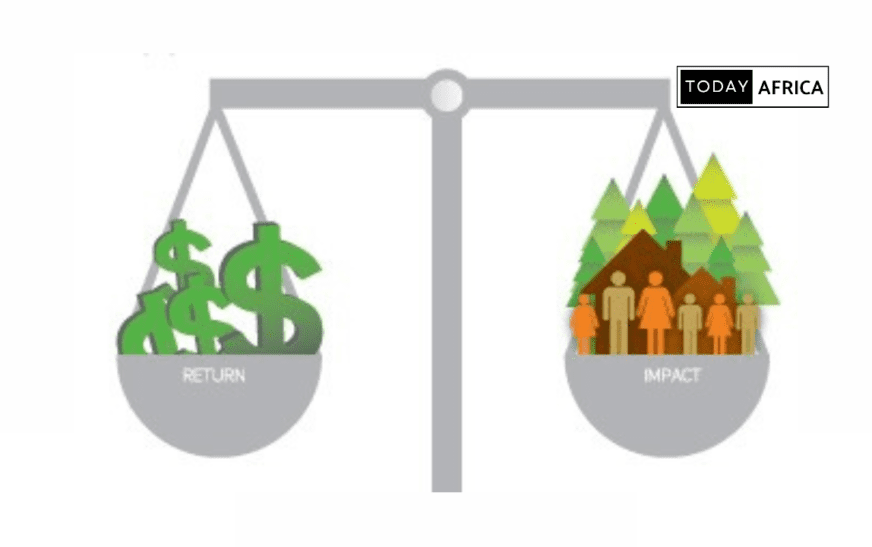
This is where the impact and profit debate comes in, as if African startups must choose between doing good and making money. Honestly, this has cost many founders time, trust, and sometimes their companies.
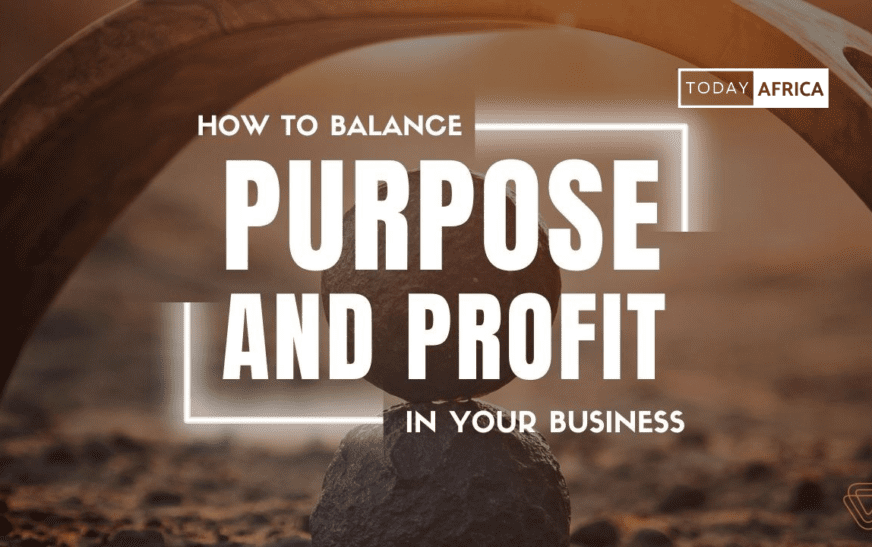
This article examines how to balance impact with profit in your business, and how some founders are learning to design businesses that thrive without compromising their original purpose.
Why impact is so central to African startups
1. Many African markets are built around failures
In many parts of the world, startups compete with efficient systems. In much of Africa, they compete with absence.
- Banks that do not reach informal workers
- Logistics networks that skip entire neighborhoods
- Healthcare systems stretched beyond capacity
- Education that works well only for a few
So when a founder builds in this environment, they are often stepping into a gap created by systemic failure. The business opportunity and the social problem are usually the same thing.
This is why impact is not branding fluff in Africa. It is often the core market logic.
If mobile money did not improve daily life for millions, it would not have scaled. If off-grid solar did not replace unreliable power, customers would not keep paying. Impact shows up early because the problem is obvious and close to home.
2. Lived experience shapes founder motivation
Many African founders are solving problems they have personally faced. That shapes how they talk about their companies and how they design products.
A healthtech founder who grew up navigating overcrowded hospitals does not see healthcare access as an abstract metric. A logistics founder who watched goods rot due to poor transport infrastructure understands inefficiency in their bones.
This lived experience makes impact feel non-negotiable. Walking away from it can feel like a kind of betrayal, not just of users, but of self.
The danger is when that emotional commitment is not matched with a business model strong enough to sustain it.
3. Global narratives reward impact language
There is also an external factor. International investors, donors, accelerators, and media often expect African startups to lead with impact.
Pitch decks emphasize lives touched. Grant applications ask for development outcomes. Press coverage frames companies as saviors of broken systems.
This can subtly push founders to over index on purpose, sometimes before they have figured out unit economics. Impact becomes something to sell, not something to design carefully.
Read Also: When to outsource and when to in-house: A founder’s decision tree
Where the impact vs profit comes from
Customers who need the product often cannot pay much
One of the hardest realities in African markets is that the people who benefit most from impactful solutions often have the least purchasing power.
- Smallholder farmers
- Informal traders
- Low income households
- Rural communities
Serving these groups at scale requires low prices, flexible payments, and high operational efficiency. That combination is difficult. Not impossible, but difficult.
When revenue grows slowly and costs rise quickly, founders face pressure to compromise. Either raise prices and lose reach, or keep prices low and burn cash.
This is where impact and profit become a daily operational question, not a philosophical one.

Investors optimize for returns, not intentions
Even mission aligned investors have timelines, portfolios, and return expectations. They may care deeply about impact, but they still need exits, they still compare opportunities, and they still push for growth and margins.
This can create subtle pressure to pivot toward more profitable customer segments, often urban, wealthier, or corporate. Over time, the original mission can blur.
The shift is rarely dramatic. It happens feature by feature, customer by customer. Until one day, the startup looks very different from what it set out to be.
Cost structures are often misunderstood
Many early-stage African startups underestimate how expensive it is to operate across fragmented markets.
- Logistics costs are high
- Talent is scarce and competitive
- Infrastructure gaps create hidden expenses
- Regulatory environments vary widely
Impact-driven models often require more education, more trust-building, and more offline presence. All of that costs money. Without realistic cost assumptions, founders may design impact-heavy products that are structurally unprofitable from day one.
Rethinking impact vs profit as a design problem
1. Impact does not have to mean low margins
One of the most persistent myths is that impact requires sacrificing profitability. In reality, some of the most impactful African startups succeed because they have strong margins in specific parts of their value chain.
Payments companies generate revenue from transaction volume. Logistics platforms charge for reliability. Agtech firms monetize data, inputs, or market access rather than advice alone.
The key is to identify where value is created and who is best positioned to pay for it. Impact does not disappear when the paying customer is not the end user. It just moves.
2. Cross-subsidization is common, but risky
Many startups attempt to balance purpose and profit through cross subsidization. Serve low income users cheaply, while charging higher fees to wealthier users or enterprises. This can work, but it requires careful execution.
If the profitable segment grows too slowly, the whole model suffers. If it grows too fast, it can dominate product priorities and dilute impact. Cross-subsidization is not a moral solution; it is a strategic one, and like any strategy, it can fail.
3. Profit is what allows impact to last
A startup that cannot sustain itself eventually stops serving anyone. This sounds obvious, but it is often ignored in early impact conversations. Short term impact metrics look impressive, but long term viability is what determines whether a solution remains available.
Profit is not the opposite of purpose. It is what allows purpose to survive beyond pilot programs and donor cycles. In the African context, where external funding is volatile and infrastructure challenges persist, sustainability matters even more.
Read Also: A playbook for launching an MVP with less than $500
How founders can build with both purpose and profit in mind
1. Be honest about who pays and why
Every startup needs a clear answer to a simple question. Who is paying for this, and what problem are they paying to solve?
If the answer is vague, impact alone will not save the business. Clear revenue logic does not make a startup less mission-driven. It makes it more durable. Founders should resist the temptation to hide behind impact language when the business model is unclear.
2. Design impact into the core product, not the marketing
Impact should not live only in pitch decks or mission statements. It should be reflected in pricing, product decisions, customer support, and long-term roadmap.
If impact disappears the moment growth slows, it was never structural. It was cosmetic. The strongest startups make impact a consequence of their business model, not a separate goal that competes with it.
3. Choose investors carefully
Not all capital is equal. Some investors understand African market complexity and are comfortable with longer timelines. Others expect Silicon Valley style growth in very different conditions.
Founders who care about impact must be selective. Misaligned capital can force decisions that feel impossible to reverse later. This does not mean avoiding profit focused investors. It means choosing partners who understand how profit will be achieved in context.
4. Accept tradeoffs without pretending they do not exist
Balancing impact and profit is not about finding a perfect equilibrium. There will be compromises. Some users will be harder to serve, some features will be delayed, and some missions will evolve. What matters is intentionality. Making tradeoffs consciously is very different from drifting into them.
What this means for the African startup ecosystem
1. We need more honest conversations
The ecosystem often celebrates impact stories without interrogating sustainability. At the same time, it sometimes praises profitability without asking who is being left out.
Both extremes are unhelpful. Founders, investors, and media need more nuanced conversations about how businesses actually operate on the continent.

2. Metrics should reflect reality
Counting users is easy. Measuring lasting value is harder. Ecosystem stakeholders should pay more attention to retention, unit economics, and operational resilience. Impact that disappears after funding runs out is not impact. It is a temporary intervention.
3. Long term thinking matters more than optics
Africa does not need more short lived experiments. It needs companies that survive multiple economic cycles. Balancing purpose and profit is slow, uncomfortable work. It rarely produces dramatic headlines. But it is the work that builds institutions, not just startups.
Read Also: How to use customer discovery to avoid premature scaling
Conclusion
Impact and profit are not a battle with a winner, but one that has to be managed, revisited, and redesigned over time. African startups exist in environments where the need for impact is obvious and urgent. At the same time, the path to profitability is often narrow and unforgiving.
Pretending one side does not matter leads to failure. Treating them as enemies leads to confusion. The most resilient founders understand that profit is not a betrayal of purpose. It is what gives purpose the chance to scale, adapt, and endure.
The question is not whether to choose impact or profit. It is how to build businesses where one strengthens the other, even when the path is messy.
FAQs
Can African startups really balance impact and profitability?
Yes, but it requires realistic models, patient capital, and clear prioritization. It rarely happens by accident.
Does focusing on profit mean abandoning low income users?
Not necessarily. Many startups serve low income users indirectly through partnerships, cross subsidization, or alternative revenue streams.
Why do so many impact driven startups struggle?
Often because costs are underestimated, revenue logic is unclear, or investor expectations are misaligned with market realities.
Is impact only relevant for social enterprises?
No. Any business operating in African markets affects livelihoods, access, and opportunity. Impact exists whether it is acknowledged or not.
What should founders prioritize first?
Clarity. On the problem, the customer, and the path to sustainability. Impact follows stronger foundations.
Leave a comment and follow us on social media for more tips:
- Facebook: Today Africa
- Instagram: Today Africa
- Twitter: Today Africa
- LinkedIn: Today Africa
- YouTube: Today Africa Studio