
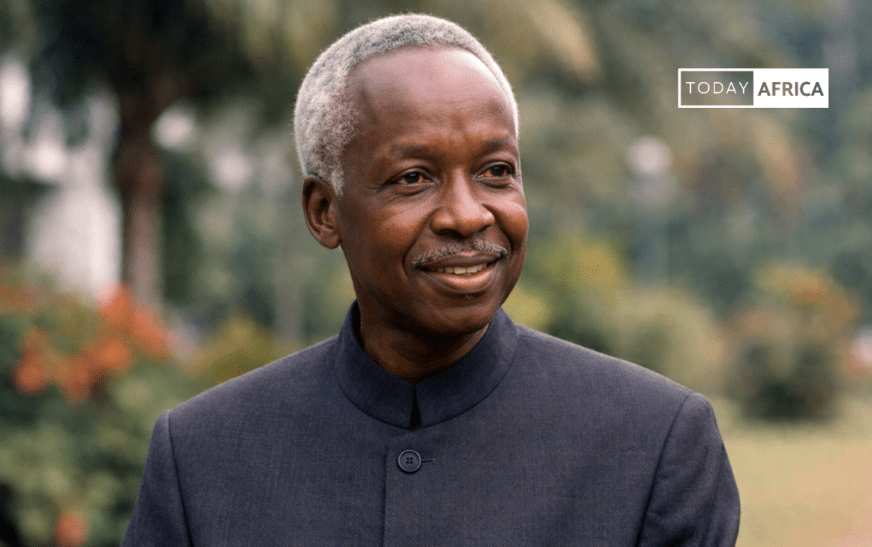
In 1985, at a time when many African leaders were consolidating power indefinitely, Julius Nyerere voluntarily stepped down after more than two decades as head of state.
He left behind a country that was politically stable, socially unified, and economically strained.
This contradiction defines Nyerere’s legacy. As the founding president of Tanzania, he pursued one of Africa’s most ambitious socialist development experiments under the doctrine of Ujamaa.
His policies expanded literacy, promoted national identity, and restrained elite accumulation. Yet they also coincided with economic stagnation, fiscal crisis, and eventual structural adjustment.
This article examines Julius Nyerere’s biography, his intellectual formation, political strategy, economic vision, and institutional legacy.
Early life and education
Julius Nyerere was born on April 13, 1922, in Butiama, in what was then Tanganyika, a British-administered territory following Germany’s defeat in World War I. He was one of 26 children of Chief Nyerere Burito of the Zanaki ethnic group.
His early education took place in Catholic mission schools, where he developed both intellectual discipline and a strong moral framework influenced by Christian social teaching.
In 1949, Nyerere became the first Tanganyikan to study at the University of Edinburgh in Scotland, earning a Master of Arts degree in history and economics in 1952. Exposure to Fabian socialism and post-war British debates on welfare and state planning shaped his later economic philosophy.
Upon returning to Tanganyika, Nyerere worked as a teacher, a profession that would define his political identity.
His reputation for integrity, clarity of thought, and modest lifestyle later contributed to his political credibility in a continent often marked by post-independence authoritarianism and elite accumulation.
Political mobilization and independence
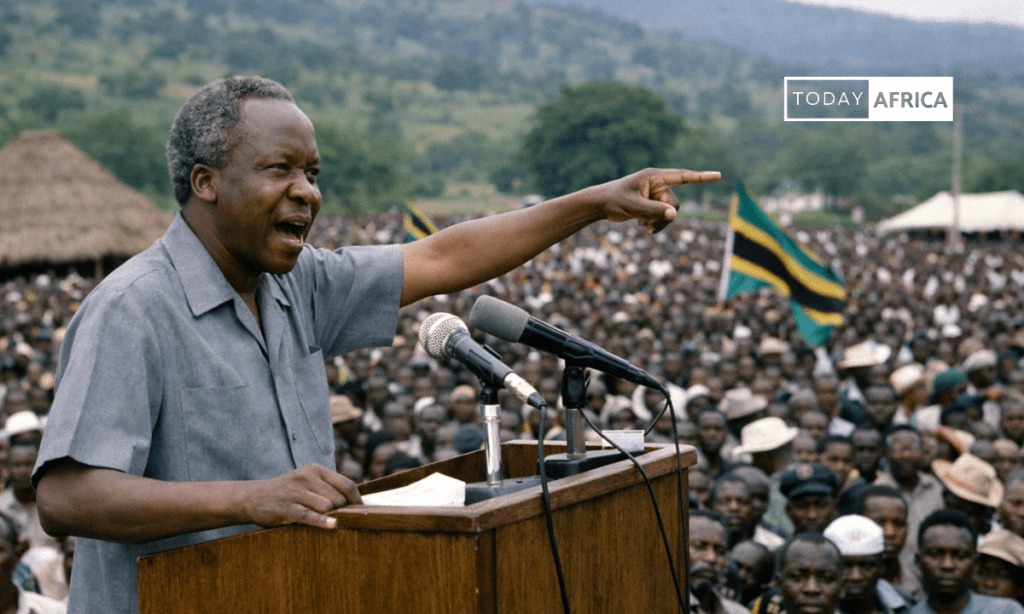
In 1954, Nyerere transformed the Tanganyika African Association into the Tanganyika African National Union (TANU), which became the principal vehicle for anti-colonial mobilization.
Unlike liberation struggles in Algeria, Kenya, or Angola, Tanganyika’s independence movement was relatively peaceful. Through strategic negotiations and broad-based grassroots organization, TANU secured constitutional reforms that culminated in independence on December 9, 1961.
Nyerere became Prime Minister at independence and later President when Tanganyika became a republic in 1962. His leadership emphasized national unity over ethnic fragmentation.
Tanzania today comprises over 120 ethnic groups, yet it has largely avoided the ethno-political conflicts that destabilized several post-colonial African states.
Scholars frequently attribute this cohesion to Nyerere’s deliberate promotion of Kiswahili as a national language and his emphasis on a shared civic identity.
Read Also: Biography on Abraham Lincoln & his impact on American leadership
The Union with Zanzibar
In January 1964, the Zanzibar Revolution overthrew the Arab-dominated Sultanate. Shortly thereafter, Tanganyika and Zanzibar merged to form the United Republic of Tanzania in April 1964. Julius Nyerere became President of the new union, while Zanzibar retained a semi-autonomous status.
The union was strategically significant. It prevented potential Cold War escalation in the region and consolidated political stability on the East African coast. The durability of this union, now over six decades, remains one of Nyerere’s most consequential state-building decisions.
The Arusha Declaration and Ujamaa Socialism
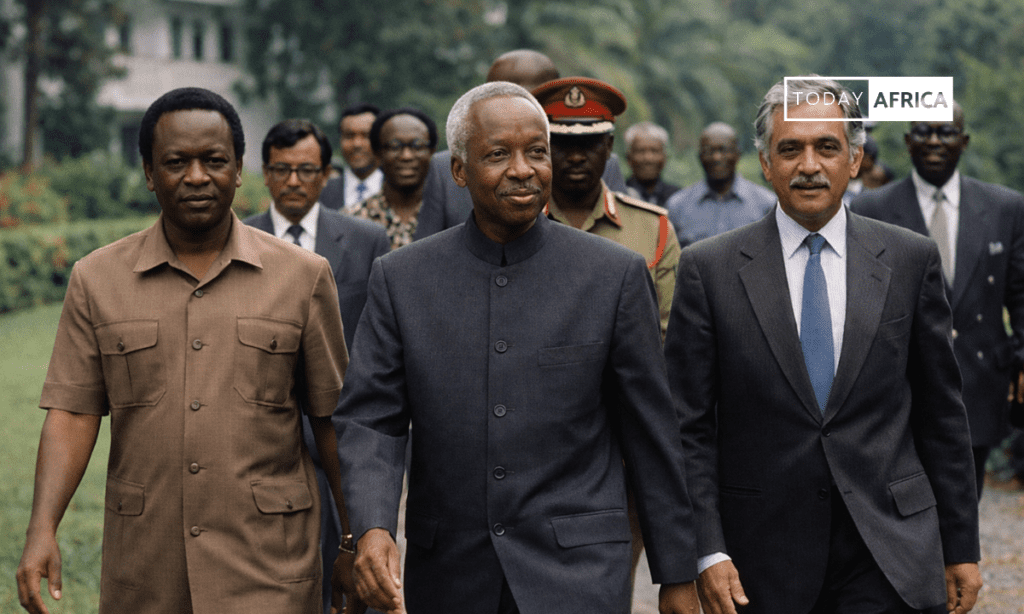
In 1967, Julius Nyerere issued the Arusha Declaration, a defining policy framework that committed Tanzania to Ujamaa, an African socialist model emphasizing collective agriculture, state ownership, self-reliance, and egalitarian distribution.
The Arusha Declaration nationalized major banks, industries, and plantations. It restricted party and government officials from owning rental property or shares in companies, aiming to curb elite enrichment.
Ujamaa villages were established to reorganize rural production into cooperative settlements.
The ideological rationale was clear: colonial economies were structured for extraction, not domestic development. Nyerere believed that centralized planning and communal agriculture would accelerate rural transformation and reduce inequality.
Read Also: The biography of Malcolm X: Power, race, & black consciousness
Economic performance and structural constraints
Assessing Ujamaa requires contextual analysis. Tanzania inherited limited infrastructure, low industrial capacity, and heavy reliance on agricultural exports such as coffee, sisal, and cotton.
External shocks in the 1970s, including the oil crisis and declining commodity prices, further strained the economy.
By the early 1980s, Tanzania faced severe fiscal deficits, foreign exchange shortages, and declining per capita income.
According to World Bank data, Tanzania’s GDP per capita stagnated during much of the 1970s and early 1980s, while inflation and external debt increased.
Agricultural collectivization under Ujamaa often disrupted productivity. Forced villagization, particularly during the early 1970s, generated resistance and logistical inefficiencies. Food production declined in some regions, and Tanzania increasingly relied on food imports.
By 1986, shortly after Nyerere stepped down, Tanzania entered a structural adjustment program with the International Monetary Fund and the World Bank. Market liberalization gradually reversed many socialist policies.
However, economic indicators alone do not capture the broader social outcomes of Nyerere’s governance.
Social development achievements
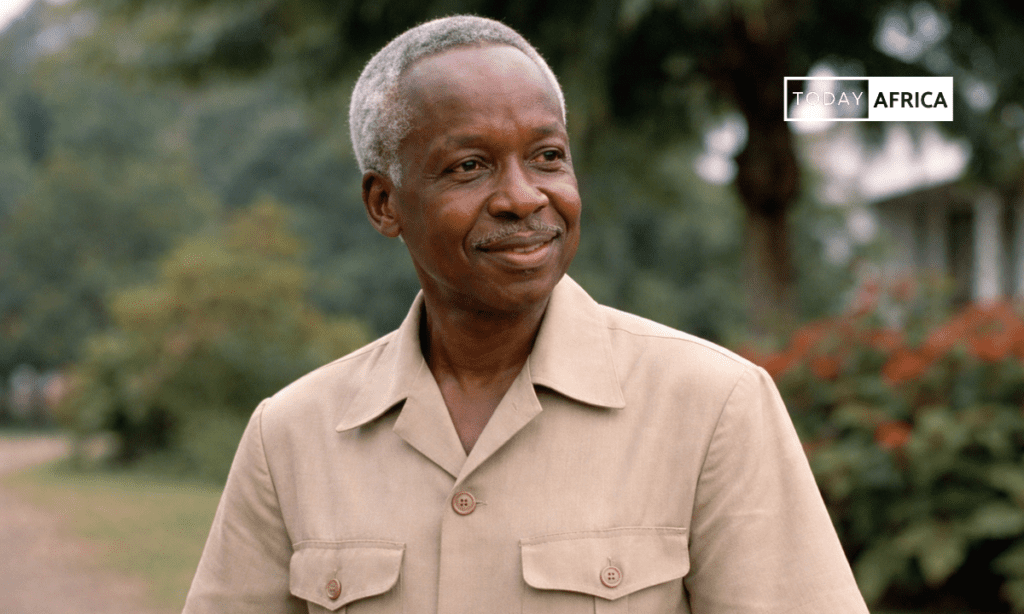
Under Nyerere’s leadership, Tanzania achieved significant gains in literacy and primary education.
The national literacy rate reportedly rose from roughly 10–15% at independence to over 80% by the mid-1980s, according to UNESCO estimates. Universal primary education became a core policy objective.
Healthcare access expanded substantially, particularly in rural areas. The number of dispensaries and health centers increased during the 1970s, contributing to improvements in life expectancy compared to immediate post-independence levels.
Importantly, Tanzania avoided the extreme corruption, military coups, and prolonged civil wars that afflicted several neighboring states during the same period.
While it was a one-party state, Nyerere’s administration was generally regarded as comparatively less repressive than many contemporaneous regimes.
Read Also: 25 recommended biography books for the voracious reader in you
Foreign policy and Pan-Africanism
Julius Nyerere was a committed Pan-Africanist and played an active role in regional diplomacy.
He supported liberation movements in southern Africa, offering assistance to anti-colonial struggles in Mozambique, Zimbabwe, and South Africa.
He maintained a non-aligned stance during the Cold War but received aid from both Western and Eastern bloc countries. Tanzania became a diplomatic hub for liberation movements and a respected voice within the Organization of African Unity (OAU).
In 1979, Tanzania intervened militarily to overthrow Idi Amin of Uganda after cross-border hostilities.
The removal of Amin, widely considered one of Africa’s most brutal dictators, enhanced Nyerere’s regional standing, though the war placed additional strain on Tanzania’s economy.
Voluntary retirement and democratic precedent
In 1985, Nyerere voluntarily stepped down from the presidency, transferring power to Ali Hassan Mwinyi. This decision was historically significant in a region where leaders frequently extended tenure through constitutional manipulation or military force.
Although Tanzania remained a one-party state until 1992, Nyerere’s peaceful exit established an early precedent for leadership transition in sub-Saharan Africa. He continued to influence political discourse until his death in 1999.
Read Also: Captain Ibrahim Traoré: The Transitional Leader Transforming Burkina Faso
Intellectual legacy and moral authority
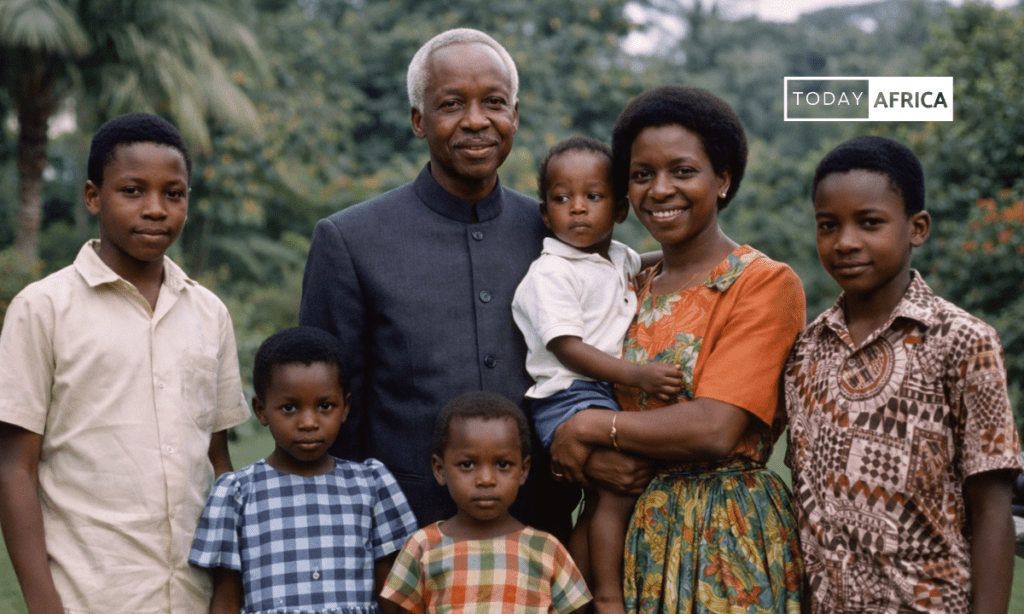
Nyerere’s political philosophy rested on three pillars: national unity, social equality, and ethical leadership. He consistently lived modestly, rejecting personal wealth accumulation.
After retirement, he returned to his rural home in Butiama rather than maintaining an elaborate presidential estate.
Critics argue that his economic policies constrained private enterprise and delayed industrial diversification. Supporters counter that he prioritized human development and national cohesion over rapid but unequal growth.
Contemporary Tanzania’s political and economic reforms reflect a pragmatic departure from strict Ujamaa principles, yet Nyerere’s symbolic authority remains strong.
He is widely regarded as the “Father of the Nation,” and his image continues to shape Tanzanian political rhetoric.
Comparative perspective
Within the broader African context, Nyerere’s leadership contrasts with figures such as:
- Kwame Nkrumah, who pursued rapid industrialization but was overthrown in a military coup.
- Robert Mugabe, whose long tenure became associated with economic collapse and authoritarian entrenchment.
- Nelson Mandela, who similarly prioritized reconciliation and institutional stability but governed in a different economic and geopolitical context.
Nyerere’s distinctive feature was his willingness to relinquish power voluntarily and his sustained personal austerity. While his economic strategy remains debated, his commitment to nation-building through language policy, education, and anti-corruption norms had durable effects.
Read Also: Ibukun Awosika: First Female Chairman of First Bank of Nigeria
Death and posthumous recognition
Nyerere died on October 14, 1999, in London while receiving treatment for leukemia. His death prompted national mourning in Tanzania and widespread tributes across Africa.
Institutions, universities, and public spaces in Tanzania bear his name. International observers continue to reference his governance model in debates about ethical leadership and development strategy in post-colonial states.
Conclusion
Julius Nyerere’s biography cannot be reduced to a binary assessment of success or failure.
His presidency embodied the aspirations and structural dilemmas of early post-independence Africa: the pursuit of economic sovereignty, social equity, and political unity within a global system shaped by Cold War rivalry and commodity dependence.
Economically, Ujamaa underperformed relative to its transformative ambitions, and Tanzania ultimately transitioned toward market-oriented reforms.
Socially and politically, however, Nyerere laid foundations of literacy, national cohesion, and comparatively stable governance that have endured.
In evaluating his legacy, it is essential to distinguish between ideological ambition and structural constraint.
Nyerere remains one of Africa’s most consequential state-builders, not because he delivered rapid economic growth, but because he prioritized institutional integrity, social investment, and peaceful leadership transition at a time when such commitments were rare.
His record offers both caution and instruction: ambitious development models require administrative capacity and economic realism, yet ethical leadership and national cohesion remain indispensable assets in long-term state formation.
Leave a comment below and follow us on social media for update:
- Facebook: Today Africa
- Instagram: Today Africa
- Twitter: Today Africa
- LinkedIn: Today Africa
- YouTube: Today Africa Studio





![Biography of Tony Elumelu [Investor, Entrepreneur, & Philanthropist]](https://todayafrica.co/wp-content/uploads/2023/12/Blue-Simple-Dad-Appreciation-Facebook-Post-1200-×-720-px-7-1.png)