

This blog post is about the first 12 months where a founder tries to move from idea to traction without burning out, running out of cash, or building something nobody truly needs.
So, if you are early, unsure, or somewhere in the messy middle, this article is meant to help you see the year ahead with a bit more clarity, and maybe fewer illusions.
What ‘from idea to traction’ really means
Moving from idea to traction is not about hitting a milestone and relaxing. It changes the questions you face. The questions move from “does anyone care” to “how do we do this sustainably.” From “will this work” to “what will break if we grow.”
The first year does not guarantee success. But it dramatically improves your odds if you focus on the right problems at the right time.
In African startup ecosystems that are still evolving, this kind of disciplined, grounded approach matters even more. Because capital is scarcer, margins are thinner, and mistakes are more expensive.
So, clarity, not speed, is often the real advantage.
Month 0 – 2: Clarifying the problem before the product
Why ideas are cheap and clarity is not
Most founders start with a solution in their head: an app, a platform, or a tool. The problem often comes later, reverse-engineered to fit the solution. This feels productive, but it is usually where things go wrong.
In the first two months, your real job is not building anything. It is becoming increasingly clear that a problem actually exists and is worth solving. In African markets, especially, this means resisting the temptation to copy ideas that worked elsewhere without understanding local behavior.
Ride hailing, fintech wallets, logistics platforms. These ideas did not fail in Africa because they were bad ideas. Many failed because founders misunderstood how people already solved these problems offline.
Learning from how people already cope
A useful question early on is simple. How do people solve this problem today without you.
If you are building for small traders, watch how they track sales. If you are building for logistics, ride along with dispatch riders. If you are building for payments, stand behind a shop counter for a few hours.
In Nigeria, for example, many informal businesses run on trust, notebooks, and WhatsApp. Any product that ignores this reality will struggle, no matter how polished it looks.
The insight here is not to romanticize informality. It is to understand it well enough to know what should change and what should stay.
Narrowing your initial user ruthlessly
Early traction rarely comes from serving everyone. It comes from serving a very specific group unusually well.
Instead of “small businesses in Africa,” think “pharmacies in Ghana” or “grain traders in northern Nigeria.” Narrowing your focus helps you learn faster and waste less money.
Founders often fear that narrowing the user limits growth. In practice, it does the opposite. It gives you a beachhead where you can actually win.
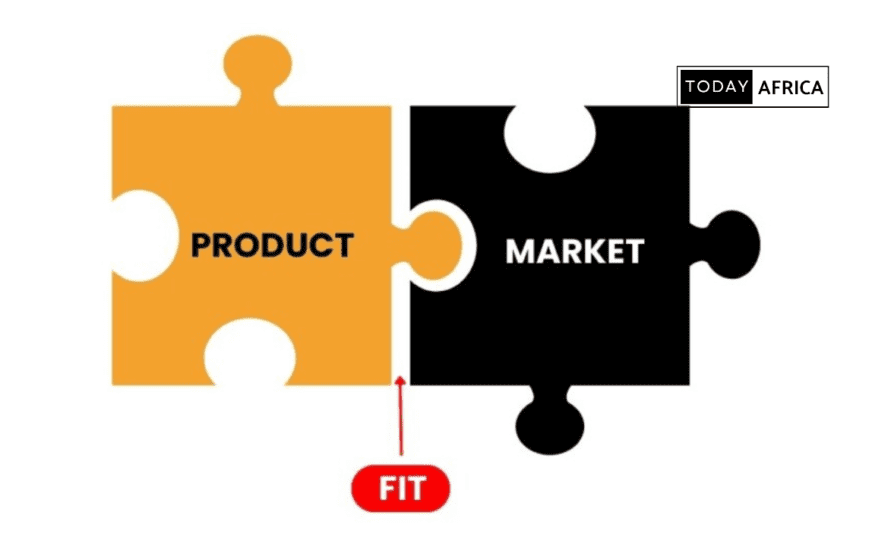
Read Also: How to find product market fit for your product
Defining success for the first 90 days
Before you move on, be clear about what progress looks like in this phase. It is not downloads, and it is not revenue.
Progress looks like being able to explain, in one or two sentences, who you are building for, what painful problem you are solving, and why existing alternatives fall short.
If you cannot do that convincingly by the end of month two, it is usually a signal to slow down, not speed up.

Month 3 – 4: Validating demand without burning cash
The difference between interest and commitment
Many founders confuse polite interest with real demand. People will tell you an idea is “nice” or “interesting” because it costs them nothing to say so.
Demand shows up when users give up something. Time. Data. Money. Attention. In these months, your goal is to test whether anyone is willing to make that trade.
Pre-selling before building
One underrated approach is pre-selling. This does not always mean collecting full payment. It can mean signed letters of intent, deposits, or agreements to pilot under clear terms.
For B2B startups across Africa, pilots are common. What matters is whether the pilot is structured, has clear timelines, clear outcomes, and clear expectations. A vague “let’s test it” rarely leads to traction.
Using manual solutions as prototypes
You do not need software to validate many ideas. Spreadsheets, WhatsApp, phone calls, and human effort can stand in for technology early on.
Several logistics and commerce startups started by manually matching supply and demand before automating anything. This helped them learn where the real friction was. If the manual version does not work, software will not magically fix it.
Listening for resistance, not praise
Feedback that matters often sounds negative. “This is too expensive.” “This adds more work.” “I already do this another way.”
These objections are not setbacks. They are data, and they tell you what actually stands between you and adoption. So, by the end of month four, you should know whether people are just being kind or whether they genuinely want what you are offering.
Read Also: From employee to entrepreneur: What no one warns you about
Month 5 – 6: Building the smallest useful version
MVPs are about learning, not impressing
The idea of an MVP is widely misunderstood. It is not a stripped-down version of your dream product. It is the smallest version that allows you to learn something important.
In African markets, overbuilding is especially dangerous. Engineering time is expensive, and users are unforgiving of complexity. Your MVP should solve one core problem clearly. If users ask for five features, pick the one that directly addresses the pain you observed earlier.
Choosing what not to build
Every feature you add has a cost, which includes development time, maintenance, and user confusion. A helpful rule is this. If a feature does not directly help you answer a key question about demand, pricing, or behavior, it can probably wait.
Many founders delay launch because the product is not “ready.” Often, what they mean is that it is not perfect. Perfection is rarely the right goal at this stage.
Testing usability in real conditions
Testing your MVP in ideal conditions is misleading because this includes poor network, older phones, and distracted users. These are normal, not edge cases. If your product only works when everything goes right, it will struggle to gain traction.
Watch users interact with the product. Where do they hesitate, ask questions, and where do they drop off? These moments matter more than feature lists.
Early signs you are on the right track
You are not looking for scale yet. You are looking for signals like users are coming back without reminders, recommending it to others, and they are complaining when something breaks. These are small but meaningful indicators that you are solving a real problem.
Read Also: Profit vs social impact… Why should businesses care?
Month 7 – 9: Finding early traction and repeat usage
Understanding traction beyond vanity metrics
Traction is often reduced to numbers, users, revenue, or growth rates.
Early on, traction is better understood as momentum in behavior. Are people using the product more naturally over time? Are use cases becoming clearer? And are patterns emerging?
In many African startups, early traction looks uneven. A few highly engaged users and many inactive ones. This is normal. Focus on the engaged few. They are telling you something important.
Pricing as a learning tool
Pricing is not just about revenue. It is a signal of value. If users refuse to pay anything, it may mean the problem is not painful enough. Or it may mean your pricing model does not match how they think about money.
For example, daily or transaction based pricing often works better than monthly subscriptions for informal businesses. Experiment carefully. Changing prices later is harder than founders expect.
Distribution is part of the product
How users discover and start using your product matters as much as the product itself.
In Africa, distribution often relies on trust and relationships. Partnerships, referrals, and offline touchpoints can outperform digital ads, especially early on.
Ask yourself. If this product disappeared tomorrow, how would users even notice. If the answer is “they would not,” traction is still fragile.
Knowing when to say no to growth
This sounds counterintuitive, but premature growth can hurt. Scaling before you understand why your early users stay can amplify problems, support issues, churn, and bad unit economics. By month nine, your focus should still be on deepening usage among a defined group, not expanding recklessly.
Read Also: How to balance impact with profit in your business
Month 10 – 12: Turning momentum into a real business
Moving from experiments to systems
As patterns emerge, your job shifts from less exploration to more execution. This is where processes start to matter: onboarding flows, customer support routines, and basic financial tracking. You are not building a large company yet. But you are laying foundations that will either support growth or limit it.
Hiring slowly and deliberately
Many founders hire too early, often to compensate for unclear priorities. Before hiring, ask what problem this role actually solves. Can it be solved with better tools or clearer focus instead. When you do hire, cultural fit and adaptability often matter more than perfect resumes, especially in early stage African startups.

Preparing for external capital or revenue growth
Not every startup needs venture funding. Some can grow sustainably through revenue. What matters is clarity. Investors and partners look for founders who understand their numbers, even at a basic level. If you choose to raise capital, traction at this stage should tell a clear story. Not just growth, but learning.
Reflecting honestly on the first year
The end of the first year is a good time to pause. Not to celebrate blindly, but to reflect. What assumptions were wrong, surprised you, and what would you do differently if you started again? Founders who build this habit early tend to make better decisions over time.
Conclusion
The first 12 months of a startup are less about brilliance and more about judgment. Knowing when to build and when to wait. When to listen and when to decide. When to push and when to pull back.
A clear roadmap does not remove uncertainty. But it helps you avoid solving the wrong problems too early.
From idea to traction is not a straight line. It is a sequence of trade-offs. If you understand why each phase matters, you are better equipped to navigate what comes next, even when the path bends in unexpected ways.
Read Also: When to outsource and when to in-house: A founder’s decision tree
FAQs
How long does it really take to get traction?
It varies widely. Some founders see early traction within months. Others take longer. What matters is steady learning and improvement, not arbitrary timelines.
Can I skip the validation stage if I am confident in my idea?
Confidence is useful, but evidence is better. Skipping validation often leads to building something no one adopts, especially in complex markets.
Is traction the same as profitability?
No. Traction is about usage and demand. Profitability is about economics. One can exist without the other, especially early on.
Should African founders follow global startup playbooks?
They can be helpful as references, but local context matters deeply. Adaptation is not optional.
What is the biggest mistake founders make in the first year?
Rushing to scale before understanding their users. Speed feels productive, but clarity compounds faster in the long run.
Leave a comment and follow us on social media for more tips:
- Facebook: Today Africa
- Instagram: Today Africa
- Twitter: Today Africa
- LinkedIn: Today Africa
- YouTube: Today Africa Studio