
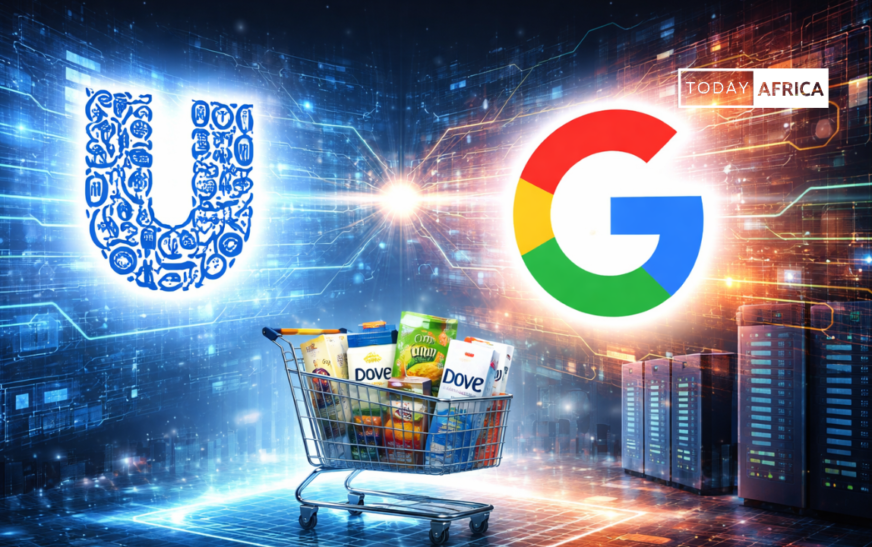
Unilever, one of the world’s largest CPG companies, this week formalised a five‑year partnership with Google Cloud that will see it migrate key enterprise applications and data platforms onto Google’s infrastructure and adopt tools including Vertex AI and Gemini models to build what it terms an “AI‑first digital backbone.”
The programme is intended to support advanced analytics, marketing intelligence, and what Google and Unilever describe as “agentic commerce,” where autonomous systems can assist with brand discovery and workflow execution across marketing, supply chain, and consumer engagement.
At a fundamental level, this development reflects three concurrent trends in global markets: the rapid adoption of AI‑mediated interaction layers, the cloud‑enabled consolidation of enterprise data, and the redefinition of brand value in algorithmically organised ecosystems.
For Unilever, which manages more than 400 brands globally, the deal with Google Cloud is designed to help it generate insights more quickly, respond to shifts in consumer behaviour with greater agility, and embed AI into decision‑making processes across its organisation.
However, this same trajectory raises questions about how these platforms redistribute competitive opportunity.
In early 2026, regulators in both the United States and the European Union are actively examining concerns around “algorithmic foreclosure”, situations where dominant platforms and their most resourced partners effectively capture visibility and recommendation pipelines, making it harder for smaller, independent brands to be surfaced in AI‑mediated discovery systems.
Critics argue that without machine‑readable data profiles, real‑time inventory signals, and the integrated systems that large incumbents are building, startups and local producers may not appear in system recommendations or autonomous commerce workflows, even without being explicitly excluded from those networks.
This tension intersects with ongoing regulatory debates over “agent neutrality,” a proposed standard akin to net neutrality, which would require AI systems to remain brand‑agnostic in their recommendations unless a user explicitly specifies a preference.
It also amplifies broader discussions about transparency and auditability in AI recommendation engines, elements now being incorporated into emerging legislation like parts of the Colorado AI Act.
For African markets in particular, where a diverse array of SMEs and local brands compete within informal and formal retail channels, these dynamics introduce both urgency and uncertainty.
On the one hand, cloud and AI technologies could streamline supply chain functions, data reporting, and market access; on the other, the resource‑intensive nature of building compatible machine‑readable systems could widen gaps between multinational brands and regional producers.
Read Also: Access Bank’s proposed acquisition of South Africa’s Bidvest Bank collapses
What remains to be seen is how regulatory frameworks adapt to ensure that AI‑mediated marketplaces do not become de facto gated ecosystems, and whether tools and standards evolve that allow smaller entrants to participate effectively in these emerging digital commerce layers.
In the near term, tracking how agentic commerce standards, platform policies, and data interoperability initiatives develop will be critical for stakeholders across the African CPG and retail sectors.
Leave a comment and follow us on social media for more tips:
- YouTube: Today Africa Studio
- Facebook: Today Africa
- Instagram: Today Africa
- Twitter: Today Africa
- LinkedIn: Today Africa