


Equity funding is a way for a business to raise money by selling a share of ownership to investors. Instead of borrowing money and making monthly repayments, the company gives investors a stake in the business.
Those investors hope the company grows, becomes more valuable, and gives them a strong return later.
This is why equity funding is common among startups, expanding small businesses, technology companies, consumer brands, and fast-growing service firms.
How equity capital works
Equity capital works by turning part of a company’s ownership into investment value. A founder may own the whole business at the start.
Once an investor invests in the company, that investor receives shares or membership units. The exact structure depends on the company type, legal setup, and investment terms.
For example, a business may raise $250,000 from investors in exchange for 10% ownership. That means the founder still owns most of the company, but the investor now has a real stake.
If the business grows and becomes worth millions, the investor’s share becomes more valuable. If the business struggles, the investor may lose money because equity funding usually doesn’t guarantee repayment.
This is different from a loan. A lender wants repayment with interest. An equity investor wants growth, value, and eventually an exit opportunity.
That exit may occur through a sale of the company, a future buyback, dividends, or a public offering. For most small businesses, the exit is usually a sale, a buyout, or long-term profit sharing.
Why founders choose investors over loans
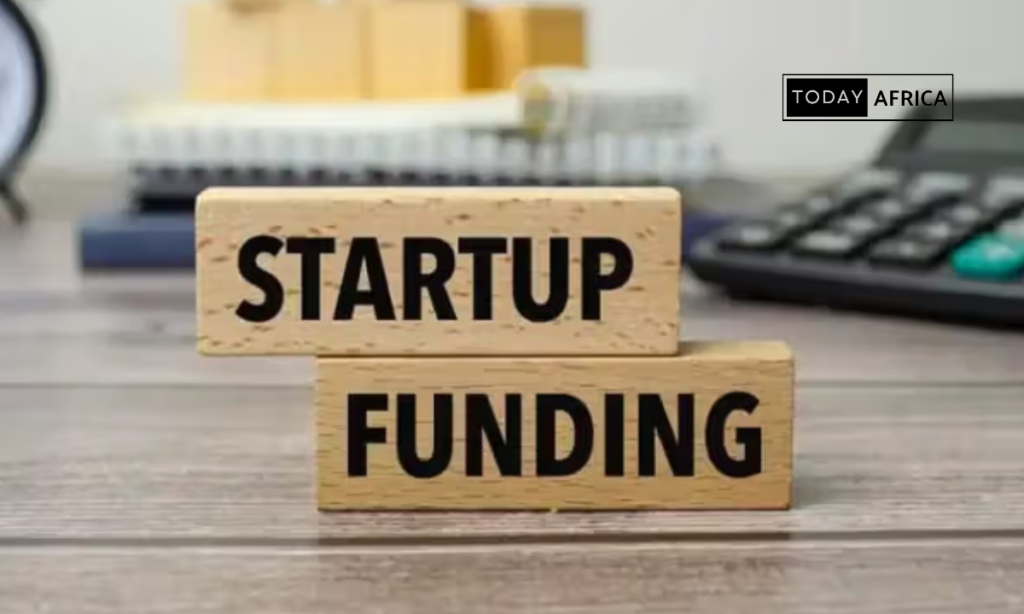
Many founders choose equity funding because they need money without immediate repayment pressure. A loan can be useful, but it adds fixed monthly costs.
A young company with uneven revenue may struggle to repay debt on time. Equity funding gives the business more room to test, hire, market, build products, and enter new markets.
Another reason founders choose investors is the value beyond money. Strong investors often bring advice, industry contacts, hiring support, credibility, and strategic guidance.
A good angel investor may introduce the founder to future funders. A venture capital firm may help with hiring executives, building sales systems, or preparing for larger funding rounds. And a strategic investor may open distribution channels or customer relationships.
Still, equity funding is not free money. It costs ownership. It may also cost some control. Investors often want updates, voting rights, board seats, approval rights, or a say in major decisions.
That doesn’t make equity funding bad. It simply means founders must enter the process with open eyes.
Meaning of dilution
Dilution means a founder owns a smaller percentage of the company after new shares are issued. The founder may still own a valuable business, but their percentage stake may change. This is a normal part of equity funding.
Here’s a simple example.
| Stage | Founder Ownership | Investor Ownership | Business Value |
| Before funding | 100% | 0% | $500,000 |
| After funding | 80% | 20% | $1,000,000 |
| After growth | 80% | 20% | $5,000,000 |
In this example, the founder’s ownership percentage drops from 100% to 80%. However, 80% of a $5 million company is worth more than 100% of a $500,000 company.
That is the optimistic side of equity funding. The goal is not to keep every slice of a small pie. The goal is to build a bigger pie with the right partners.
Read also: What they hide from you about the Airbnb startup cost
Major types of equity funding available today

Equity funding comes in several forms, and each one fits a different type of business. Some options work best for early-stage startups.
Others suit growing companies with revenue, strong teams, and proven markets. The right choice depends on the company’s stage, risk level, growth goals, industry, and investor appeal.
Angel investors
Angel investors are individuals who invest their own money into early-stage businesses. They often support companies before banks, venture capital firms, or large funds are ready to step in.
Many angel investors are experienced entrepreneurs, executives, professionals, or wealthy individuals who understand business risk.
Angel investors can be helpful because they may move faster than institutions. They may also take a personal interest in the founder. Some invest because they believe in the mission.
Others invest because they see a large market opportunity. The best angel investors provide advice without trying to control every decision.
Angel funding works well for businesses with a clear idea, early traction, and a founder who can explain the opportunity simply. It may also work for companies that need a modest amount of money to build a product, test demand, or reach the next milestone.
Venture capital firms
Venture capital firms invest pooled money into companies with high growth potential. They usually look for businesses that can scale quickly and become very valuable.
This is why venture capital is common in software, health technology, fintech, artificial intelligence, marketplaces, climate technology, and other fast-moving sectors.
Venture capital can provide large checks, strong networks, and professional support. However, it also comes with high expectations. Venture capital investors usually want rapid growth.
They want the company to capture a large market. They may expect future funding rounds, aggressive hiring, and a clear path to a major exit.
This type of equity funding is not ideal for every business. A profitable family business may not need venture capital. A founder who wants slow, steady control may feel pressured by venture expectations.
However, for a company with a big market, a scalable model, and a strong team, venture capital can be a powerful growth tool.
Equity crowdfunding
Equity crowdfunding allows companies to raise money from many investors online. Instead of relying only on wealthy investors or institutions, a business can invite smaller investors to buy a stake.
This can be useful for consumer brands, local businesses, creative companies, and mission-driven startups with strong communities.
In the United States, equity crowdfunding must comply with securities laws. Companies using Regulation Crowdfunding must raise funds through an SEC-registered intermediary, such as a broker-dealer or funding portal.
The SEC explains that companies may raise up to $5 million in a 12-month period under Regulation Crowdfunding. You can review the official SEC guidance on Regulation Crowdfunding.
Equity crowdfunding can build capital and customer loyalty simultaneously. Investors may become brand ambassadors. They may buy products, share campaigns, and help spread the story.
Still, crowdfunding also requires strong communication, legal compliance, public disclosure, and ongoing investor management.
Private equity and strategic investors
Private equity firms usually invest in more mature companies. They may buy significant ownership, help restructure operations, or support expansion.
Private equity is more common for businesses with revenue, cash flow, and a clear growth or improvement plan.
Strategic investors are companies or industry players that invest because the business aligns with their broader goals.
For example, a food manufacturer may invest in a promising snack brand. A logistics company may invest in a delivery technology startup. A healthcare company may invest in a medical software firm.
These investors can bring more than capital. They may offer distribution, supply chains, industry knowledge, customers, or technical support.
However, founders must be careful. A strategic investor may have goals that differ from the founder’s long-term plan. Legal advice is important before accepting this type of equity funding.
| Funding Type | Best For | Main Benefit | Main Risk |
| Angel investors | Early-stage businesses | Flexible support | Informal expectations can become unclear |
| Venture capital | High-growth startups | Large capital and networks | Pressure for rapid scaling |
| Equity crowdfunding | Community-driven brands | Public support and visibility | Compliance and investor communication |
| Private equity | Mature companies | Expansion and operational support | Loss of control |
| Strategic investors | Industry-connected businesses | Market access and expertise | Conflicting business interests |
How to prepare your business for equity funding
Preparing for equity funding takes more than creating a nice pitch deck. Investors want proof that the founder understands the market, the customer, the numbers, and the growth plan.
They also want to see discipline. A messy business may scare away serious investors, even if the idea is exciting.
Good preparation makes the funding process smoother. It helps founders answer tough questions. It also shows investors that the company can handle capital responsibly.
Nobody wants to put money into a business where the founder can’t explain revenue, costs, customer demand, or future use of funds.
Build a strong business case
A strong business case explains why the company deserves investment. It should answer a few simple questions.
- What problem does the business solve?
- Who has this problem?
- Why does the solution matter now?
- How does the company make money?
- Why can this business grow faster or better than its competitors?
Investors often look for traction. Traction can include sales, users, letters of intent, partnerships, repeat customers, waitlists, strong margins, or market testing.
A company doesn’t need to be perfect, but it must show progress. Ideas are interesting. Evidence is better.
A good business case also shows market size. Investors want to know that the opportunity is large enough to support meaningful growth.
A small niche may still attract investors if the company can profitably dominate it. However, a business seeking venture capital usually needs a much larger market.
Prepare financial documents
Financial preparation is one of the most important parts of equity funding. Investors want clean records.
They may ask for income statements, balance sheets, cash flow statements, tax filings, revenue reports, customer acquisition costs, payroll details, debt schedules, and financial projections.
A startup with limited revenue should still prepare a financial model. That model should show expected income, costs, hiring plans, marketing spend, and cash runway.
Cash runway means how long the business can operate before needing more money. A founder who understands runway looks more serious and more trustworthy.
Financial projections should be optimistic but reasonable. Investors don’t expect perfect predictions.
They do expect logical assumptions. If a founder says revenue will jump from $50,000 to $5 million in one year, they must explain exactly how that will happen. Hope is not a strategy. A clear plan is.
Create a clear pitch deck
A pitch deck is a short presentation that explains the business opportunity. It should be simple, visual, and focused. The goal is not to tell every detail. The goal is to make investors want a deeper conversation.
A strong pitch deck usually includes the problem, solution, market size, product, business model, traction, competition, team, financials, funding ask, and use of funds.
Each slide should answer one major question. The writing should be direct. The design should be clean. The story should flow.
The funding ask must be specific. A founder should not simply say, “We need money.”
A better version is, “We’re raising $750,000 to hire three salespeople, expand production, improve our platform, and reach 18 months of runway.” Specific use of funds builds confidence.
Read also: These are 7 ways to get free money to start a small business
Benefits and risks of equity funding

Equity funding can help a business grow faster than it could through revenue alone. It can support hiring, product development, marketing, technology, research, inventory, expansion, and partnerships.
It can also reduce the pressure that comes with debt repayment. This is especially helpful when a business needs time to build.
However, equity funding also changes the company. Once investors come in, the founder is no longer the only person with an economic interest.
That can be healthy when the investors are supportive. It can be difficult when expectations are unclear. The key is to understand both sides before signing any agreement.
Benefits for startups and small businesses
The first major benefit is access to capital without required monthly repayment. This can help businesses invest in growth before profits are stable.
A company can hire talent, improve products, test marketing channels, and build systems without draining early cash flow.
The second benefit is expertise. Good investors can help founders avoid mistakes.
They may have seen similar companies grow, fail, pivot, or exit. That experience can save time and money. A founder doesn’t have to learn every lesson the hard way.
The third benefit is credibility. A respected investor can make other people take the company more seriously.
Future investors, lenders, partners, and customers may see the investment as a vote of confidence. This can open doors that were closed before.
The fourth benefit is network access. Investors may introduce founders to customers, suppliers, executives, consultants, lawyers, accountants, and other investors.
In business, the right introduction can be worth a lot. Sometimes one strong connection can change the direction of a company.
Risks founders should understand
The biggest risk is ownership dilution. Every time a company sells equity, the founder owns less of the business.
This may be fine if the company grows. It may feel painful if the founder gives away too much too early.
Another risk is loss of control. Investors may require voting rights, board seats, approval rights, or special protections. These terms can affect future decisions.
A founder may need investor approval before selling the company, raising more capital, taking on debt, or changing major business plans.
There is also pressure to grow. Some investors want fast returns. They may push the company toward aggressive expansion. That can be exciting, but it can also create stress.
Growth without systems can break a business. More money doesn’t automatically solve weak operations.
Legal complexity is another concern. Equity deals involve securities laws, contracts, shareholder agreements, valuation terms, and investor rights.
Founders should work with qualified legal and financial advisers before closing a deal. A cheap shortcut can become expensive later.
Read also: Before you use AI again, understand these 9 different types of agents in AI
9 smart steps to secure equity funding
Getting equity funding is a process. It usually takes planning, outreach, conversations, review, negotiation, and legal work. Founders who treat it like a serious project often perform better than those who rush into random investor meetings.
Here are steps 1 through 3
- Step 1 – Define the funding goal: The founder should know how much money is needed and why. A vague funding request weakens the pitch. A clear request shows discipline. The business should connect the funding amount to specific outcomes, such as launching a product, hiring a sales team, opening a new location, or reaching profitability.
- Step 2 – Prove market demand: Investors want evidence that customers care. This proof may come from sales, user growth, preorders, contracts, pilot programs, customer interviews, or strong engagement. The more proof a founder has, the stronger the funding story becomes.
- Step 3 – Identify the right investor type: Not every investor fits every business. Angel investors may fit early-stage companies. Venture capital may fit fast-scaling startups. Equity crowdfunding may fit community-powered brands. Strategic investors may fit companies aligned with their industry. Targeting the wrong investor wastes time.
Step 4 through step 6
- Step 4 – Understand valuation: the estimated worth of the company. It affects how much ownership the investor gets. If the valuation is too low, the founder gives away too much. If it is too high, investors may walk away. A fair valuation reflects traction, market size, risk, revenue, team strength, and growth potential.
- Step 5 – Prepare documents: This includes the pitch deck, financial model, business plan, cap table, legal documents, customer data, and use-of-funds plan. A prepared founder can move quickly when investors ask questions. This signals professionalism.
- Step 6 – Practice the pitch: A strong pitch sounds clear, calm, and confident. The founder should explain the business in simple language. Investors should understand the problem, solution, market, money model, traction, and ask within minutes. If the pitch feels confusing, investors may assume the business is confusing, too.
Step 7 through step 9
- Step 7 – Build investor relationships before asking for money: Warm relationships often work better than cold pitches. Founders can attend industry events, join startup communities, ask for introductions, share progress updates, and build credibility over time.
- Step 8 – Negotiate terms carefully: The headline investment amount is not the only important detail. Founders must review valuation, ownership, board rights, liquidation preferences, voting rights, anti-dilution terms, information rights, and exit expectations. A deal can look good on the surface and still carry difficult terms.
- Step 9 – Manage investors after the raise: Equity funding does not end when the money arrives. Founders should send updates, track milestones, communicate honestly, and use the capital responsibly. Investors don’t expect every month to be perfect. They do expect transparency and effort.
Equity funding can be a powerful path for businesses that need capital, guidance, credibility, and room to grow. It gives founders a way to build faster without the immediate burden of loan payments.
It can also bring experienced investors who open doors, sharpen strategy, and help the company reach bigger opportunities.
Still, equity funding requires careful thinking. Founders must understand dilution, control, investor rights, valuation, legal duties, and long-term expectations.
A good investor can become a valuable partner. A poor investor fit can create stress, conflict, and regret.
Leave a comment and follow us on social media for more tips:
- Facebook: Today Africa
- Instagram: Today Africa
- Twitter: Today Africa
- LinkedIn: Today Africa
- YouTube: Today Africa Studio