
Businesses in Africa, like in any other continent, aim to make a profit. However, there has been a growing concern about the impact that businesses have on society.
In Africa, the debate is even more significant due to the continent’s socio-economic challenges. This debate comes up in almost every serious conversation about business in Africa.
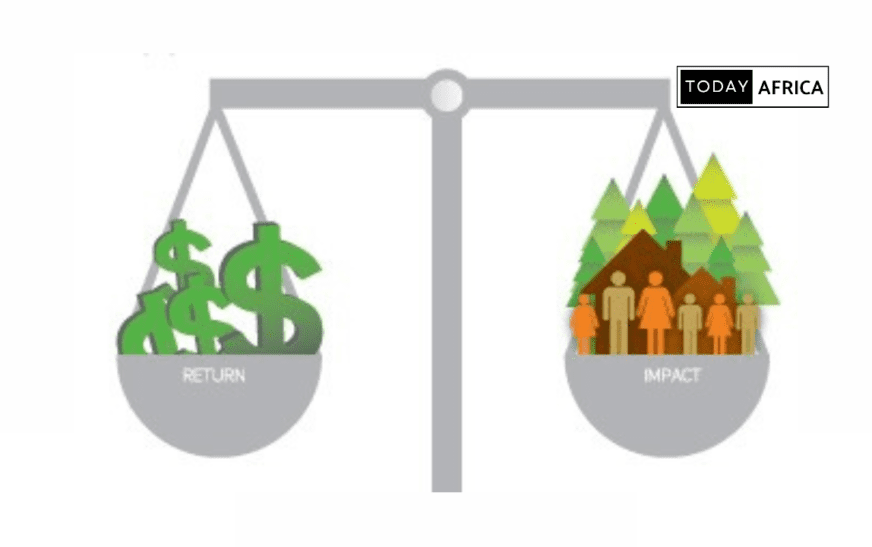
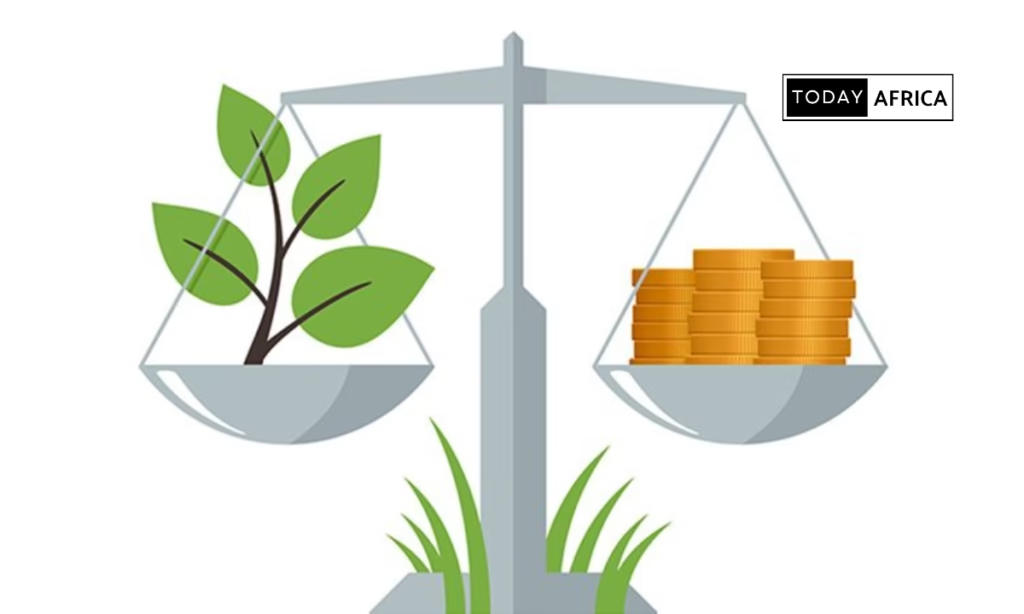
Should companies focus on profit, or should they focus on social impact?
People ask it as if the two are naturally opposed. As if one must suffer for the other to exist, and as if caring about communities automatically weakens a business, or chasing revenue automatically strips it of conscience.
This article looks at the profit vs social impact debate in Africa not as a moral argument, but as a practical one.
But is it a case of either/or?
Let’s dive into this complex dynamic and explore how some of Africa’s most innovative startups navigate this balancing act.
First, let’s address the elephant in the room: Africa’s unique challenges. From poor infrastructure to limited access to capital, African startups face hurdles that their counterparts in more developed ecosystems might never encounter.
Yet, precisely these challenges often spark the most impactful innovations.
Take M-KOPA, for example. This Kenyan company recognised that millions of Africans lacked access to electricity. Instead of viewing this as an insurmountable problem, they saw an opportunity.
By combining solar technology with mobile payments, M-KOPA created a pay-as-you-go model that’s brought clean energy to over a million homes. They’ve managed to turn a profit while significantly improving lives – a prime example of impact and profit coexisting harmoniously.
The false dichotomy
It’s easy to fall into the trap of thinking that impact and profit are mutually exclusive. But my experiences, and those of many African entrepreneurs I’ve spoken with, suggest otherwise.
In fact, in the African context, the most sustainable and scalable businesses are often those that address critical societal needs.
Consider Zipline, the drone delivery company that started in Rwanda.
By solving the critical problem of delivering blood and medical supplies to remote areas, Zipline not only saves lives but has also built a profitable business model that’s now expanding globally.
Their success shows that when you solve real problems, profit often follows.
The Andela approach
Andela offers another interesting perspective on this balance. They set out to address the global tech talent shortage while simultaneously creating opportunities for African developers.
Initially, their model was heavily focused on impact–training developers at no upfront cost to the individuals.
However, as they’ve evolved, Andela has had to make tough decisions to ensure sustainability. They’ve shifted from training junior developers to focusing on placing more experienced talent.
While this move was met with some criticism, it allowed Andela to move towards profitability without abandoning its core mission of connecting African talent with global opportunities.
The lesson here? Sometimes, the path to balancing impact and profit requires difficult pivots and a willingness to evolve your model.
What profit and social impact really mean
Profit as survival, not greed
Profit is often talked about as if it is a dirty word, especially in conversations about development. But for most African businesses, profit is not about excess; it is about survival.
Margins are thin, costs are unpredictable, currency swings can erase months of planning, and access to capital is limited and expensive. In that environment, profit is what keeps the lights on and salaries paid.
A business that does not make profit cannot create jobs, cannot pay taxes, and cannot invest in better products or services. There is nothing noble about sustainability without sustainability.
So when founders insist on focusing on profit, many are not rejecting social good. They are responding to a reality where failure has very real consequences.
Social impact beyond charity and slogans
Social impact, on the other hand, is often misunderstood. It is not the same thing as philanthropy. It is not a donation page on a website or a once-a-year CSR project.
Real impact is about how a company’s core operations change lives over time. Who gets access to services. Who is included in markets. Whose problems are being solved, and at what cost.
In Africa, this can be as basic as lowering the price of essential goods, creating stable employment, improving access to finance, or building infrastructure where none existed. Sometimes impact looks quiet.
It shows up in reduced travel time, fewer middlemen, or a farmer earning slightly more per harvest. That kind of impact does not always photograph well. But it is often more meaningful than big announcements.
Why the tension exists in the first place
The tension between impact vs profit exists because trade-offs are real. Serving low-income customers often means lower margins, building inclusive systems takes time, and measuring impact is messy and rarely immediate.
Many businesses have also abused the language of impact while behaving no differently from extractive companies. That has created cynicism, and understandably so. Still, throwing the entire idea away misses something important.
Read Also: How to balance impact with profit in your business
Why businesses in Africa cannot afford to ignore social impact
Markets are shaped by social realities
African markets are not just economic spaces. They are social ecosystems.
- A payments startup is affected by financial literacy
- A healthtech company depends on trust in local clinics
- An agribusiness must navigate land rights, weather patterns, and community power structures
Ignoring these realities does not make them disappear. It usually makes growth harder and riskier.
Businesses that understand the social environment in which they operate often design better products. They price more intelligently, communicate more clearly, and over time, that understanding turns into a competitive advantage.
Trust is currency, and it is scarce
Trust is one of the most undervalued assets in African business. Consumers are cautious, and for good reason. They have seen companies overpromise and disappear. They have experienced systems that fail without warning. In many sectors, trust has been broken repeatedly.
Businesses that demonstrate consistency, fairness, and some level of social responsibility tend to earn loyalty. Not overnight, but gradually.
This is especially true in sectors like fintech, health, education, and logistics. Once trust is lost, it is expensive to rebuild. Impact-driven practices, when genuine, help reduce that risk.
Regulation often follows social pressure
In many African countries, regulation does not emerge in a vacuum. It often follows public outcry, social movements, or visible harm.
Companies that ignore their social footprint sometimes invite regulatory backlash later. Higher taxes, stricter rules, or outright bans can follow scandals around exploitation, data misuse, or environmental damage.
Being proactive about impact is not just ethical. It can be a form of risk management.
When social impact actually drives profit
Solving real problems creates durable demand
Some of Africa’s most successful companies did not start by chasing impact. They started by solving painful, widespread problems.
These businesses addressed gaps that governments and traditional institutions struggled to fill. The social impact was not an add-on. It was embedded in the value proposition.
When you solve a problem that affects millions, demand tends to be resilient. Even during downturns, people continue to pay for what genuinely improves their lives.
Inclusion expands the market itself
Many African businesses underestimate how much growth comes from inclusion. Lowering barriers for women, informal workers, rural users, or first-time internet customers does not just feel good. It expands the addressable market.
Fintech companies that design for informal incomes often discover entire segments competitors ignored. Education platforms that price flexibly reach users who later become long-term customers. In this sense, impact is not a cost center. It is market development.
Long-term thinking beats short-term extraction
Extractive models can be profitable in the short term. Underpay labour, overcharge customers, and cut corners on quality. But in environments with limited purchasing power and high scrutiny, these strategies tend to backfire. Businesses that take a longer view, even at the cost of slower early growth, often build stronger brands and more predictable revenue over time.
Read Also: When to outsource and when to in-house: A founder’s decision tree
When profit and impact genuinely conflict
Serving the poorest is hard to monetize
There is no point pretending this is always easy. Serving the very poorest populations is often expensive, infrastructure costs are high, and returns are uncertain.
Some services simply do not generate enough revenue without subsidies. This is where blended finance, partnerships with governments, or donor support sometimes play a role.
Not every impact-driven initiative should be forced into a pure venture model. Honesty matters here. Dressing up unprofitable services as scalable startups helps no one.
Growth pressure can distort impact goals
As companies scale, incentives change, investors want returns, teams want speed, and metrics become simplified. In that process, original impact goals can get diluted or quietly abandoned.
This is not unique to Africa, but the consequences can be sharper where social safety nets are weaker. Founders who care about impact need to be clear-eyed about the trade-offs that come with rapid growth and external capital.
Measuring impact is complex and imperfect
Profit is easy to measure. Impact is not. How do you quantify improved dignity, reduced stress, or time saved? Even income gains can be hard to attribute directly to one intervention.
This makes it tempting to focus only on what can be easily tracked, even if it misses the bigger picture. Businesses that care about impact need to accept some ambiguity. Perfection is not the goal. Learning is.
African investor perspective is shifting slowly
From charity to viability
There was a time when impact investing in Africa leaned heavily toward charity in disguise. Grants with lofty language and limited accountability.
That is changing, slowly.
More investors now ask hard questions about unit economics, governance, and scalability. They still care about social outcomes, but they want to see a path to sustainability.
This shift has forced founders to be more disciplined. It has also helped separate serious businesses from well-branded experiments.
Local capital brings different priorities
Local investors often have a different relationship with impact. They live with the consequences of business decisions, understand the context intuitively, and they are sometimes more patient, sometimes more demanding.
As local capital deepens across the continent, the conversation around impact vs profit becomes more grounded. Less theoretical. More practical.
Read Also: A playbook for launching an MVP with less than $500
What this means for African founders and operators
Be honest about your primary driver
Not every business needs to be impact-first. That is fine. What matters is clarity. Are you solving a social problem as your core business, or are you building a profitable product that happens to have social effects. Confusion usually leads to poor decisions and mismatched expectations.

Design impact into operations, not marketing
If impact lives only on your website, it will eventually collapse under scrutiny. Real impact shows up in pricing models, supply chains, hiring practices, and customer support. It influences trade-offs, not just messaging. That kind of integration is harder, but also more defensible.
Think in decades, not funding rounds
Africa rewards patience, even if it tests it constantly. Businesses that survive and matter tend to think beyond the next raise or exit. They invest in relationships, adapt to slow-moving realities, and they accept uneven progress. Impact, in this sense, is not a separate goal. It is a byproduct of staying relevant and trusted over time.
Read Also: How to use customer discovery to avoid premature scaling
Conclusion
The debate around impact vs profit is often framed as a choice. In reality, it is more of a negotiation. In the African context, profit without impact is usually fragile. Impact without profit is usually unsustainable.
The most interesting businesses sit in the uncomfortable middle. They wrestle with trade-offs, adjust as they learn, and they make mistakes, then correct them.
Caring about social impact is not about moral superiority. It is about understanding where you operate, who you serve, and how value is created over the long term.
For businesses willing to engage with that complexity, the rewards are not just financial. They are structural. And they tend to last.
Frequently asked questions
Is social impact only relevant for startups and NGOs?
No. Large corporations often have a bigger footprint and therefore a bigger responsibility. Their choices shape entire industries and labour markets.
Can a business focus only on profit and still succeed in Africa?
Yes, in the short term. Long-term success is harder without considering social realities, especially in consumer-facing sectors.
Does impact always reduce profitability?
Not always. In many cases, it expands markets, builds trust, and reduces risk. The effect depends on how impact is integrated.
How can founders measure social impact realistically?
Start small. Focus on outcomes directly linked to your product or service. Combine quantitative data with qualitative feedback.
Leave a comment and follow us on social media for more tips:
- Facebook: Today Africa
- Instagram: Today Africa
- Twitter: Today Africa
- LinkedIn: Today Africa
- YouTube: Today Africa Studio