

On March 23, 2026, Moniepoint announced that it had acquired Orda Africa, a restaurant management platform built for food businesses.
The acquisition folds Orda into Moniebook, Moniepoint’s business management product, with the restaurant-focused offering set to become Moniebook for Restaurants.
The deal value was not disclosed, Orda’s Nigerian operations are the ones being acquired, and the Kenyan arm is expected to continue independently.
We should read this as far more than a payments company buying a niche software tool.
Moniepoint has been expanding from merchant acquiring and banking into the deeper operating layer of small business commerce, and Orda gives it a ready-made product for one of the most transaction-heavy categories in the market.
In practical terms, Moniepoint is no longer content to sit at the cash register; it wants to sit inside the workflow that creates the sale in the first place.
Moniepoint/Orda deal is about workflow control, not just payment volume
The central logic of the acquisition is simple: restaurants do not only need a terminal to collect money, they need software that tracks orders, stock, staff, pricing, reporting, and customer demand in real time.
Moniepoint’s own announcement says Orda brings payments, inventory management, microsites, reporting, staff tools, and access to credit into a single platform, while TechCabal reports that Orda will be integrated into Moniebook over the coming months and temporarily continue as a standalone business during the transition.
That is the blueprint of an operating system strategy, not a loose product partnership.
This matters because the closer a fintech gets to the merchant’s daily operations, the harder it becomes to replace. A terminal can be swapped. A bank account can be moved.
But once a restaurant is using one system to manage menu items, sales, inventory, reconciliation, reporting, and financing, the provider is no longer just processing payments; it is embedded in the business model itself.
That makes customer retention stronger and monetisation broader, especially in sectors where margins are tight and operational mistakes are expensive.
This is an inference from the product architecture Moniepoint and Orda are building, and it is strongly supported by the announced integration path.
Read Also: Africa lost $1.11 Billion to govt-imposed internet shutdowns in 2025
Why Orda was the right restaurant software target
Orda was not a random pickup. Founded in 2020, the startup built software specifically for restaurant operators in Nigeria and Kenya, covering point of sale, inventory, website tools, credit services, and analytics.
TechCabal reports that Orda served major chains in Nigeria and said in its 2024 tracker that more than 1,075 restaurants used the platform, with over 31,600 menu items listed and more than 5.2 million transactions processed in 2024.
The company had previously raised a total of $4.5 million in 2022, according to TechCrunch. What made Orda strategically valuable is that it was built around restaurant-specific complexity.
Generic merchant software works well enough for straightforward retail, but restaurants live on ingredient-level inventory, combo pricing, kitchen coordination, online and offline orders, wastage control, and constantly shifting demand.
TechCabal’s reporting captures that gap clearly: restaurant businesses require software built for menus and recipes, not just item lists and simple stock counts.
By buying Orda instead of building from zero, Moniepoint saves time and buys domain expertise, implementation experience, and a live customer base in one move.
Nigeria’s restaurant market gives the deal real economic weight
The timing is not accidental. Mordor Intelligence says Nigeria’s foodservice market is expected to grow from $11.09 billion in 2025 to $12.37 billion in 2026, and then to $21.38 billion by 2031, implying an 11.55% CAGR over 2026 to 2031.
That is a large and expanding market where digitisation, delivery, and rising urban demand are all reinforcing the case for better operating software.
Moniepoint’s own data suggests restaurants are already meaningful on its network. TechCabal reports that Nigerians spent more than ₦8 billion daily at restaurants in 2025 using Moniepoint’s payment infrastructure.
In other words, Moniepoint was already seeing the cash flow; the Orda acquisition gives it a way to capture the operational layer behind that cash flow as well.
That changes the economics of the relationship from transaction processing to full merchant enablement.
Moniebook becomes more dangerous with Orda inside it
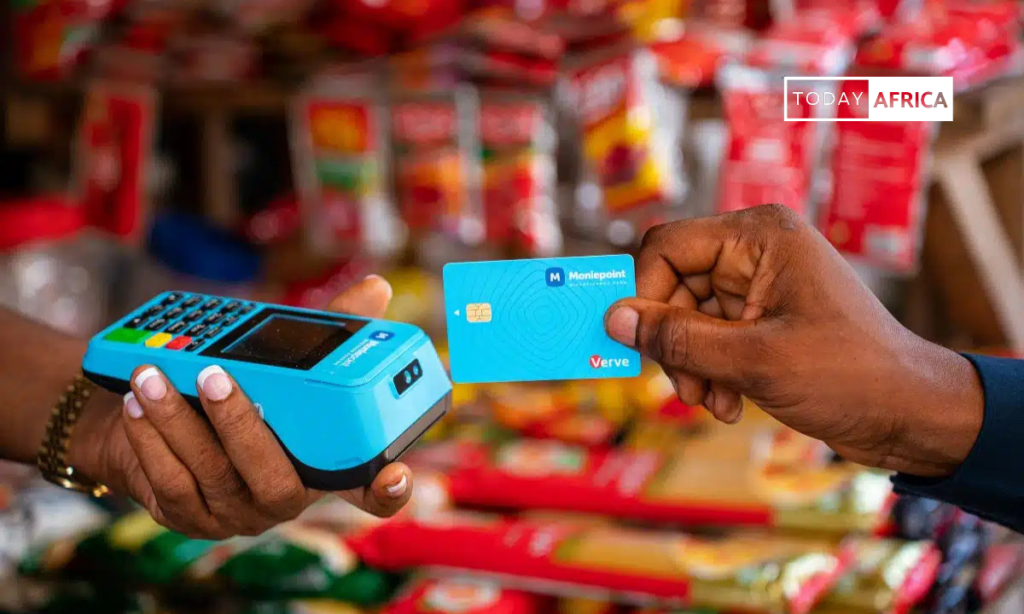
Moniebook is still a relatively young product. TechCabal reports it launched in 2025, and Moniepoint says it helps businesses manage payments, sales, and inventory on one platform.
TechCabal also says Moniebook has already processed more than 12.6 million sales transactions, while people close to the deal estimated that adding Orda could increase the number of unique businesses using Moniebook by close to 50%.
Even if that last figure remains unofficial and should be treated cautiously, the direction is obvious: Moniepoint is trying to scale Moniebook faster by plugging in a proven vertical product.
Moniepoint also has the balance sheet and distribution to give Orda more room than it had as a standalone startup. In October 2025, Moniepoint announced a Series C round of over $200 million, with investors including DPI, LeapFrog, Google’s Africa Investment Fund, Visa, IFC, and others.
The company said it serves more than 10 million active businesses and personal banking customers and processes over $250 billion in annual digital payments.
That scale gives Moniepoint the capital, merchant reach, and payment rails to push restaurant software deeper into the market than a smaller venture-backed startup could manage alone.
What restaurants can expect from Moniebook for Restaurants
For merchants, the immediate appeal is operational unification. Moniepoint says the integrated platform will let food businesses combine payments with inventory monitoring, automated reordering, branded microsites, sales reporting, category performance tracking, and staff access controls.
It also says Orda users will gain embedded access to performance-based financing supported by Moniepoint Microfinance Bank. That last point may prove especially important because restaurants often need short-cycle working capital but lack the formal records traditional lenders want.
The hidden power is reconciliation. TechCabal reports that Moniepoint wants payment records and sales records linked directly so reconciliation can happen automatically and transactions can flow straight into merchant accounts instead of being routed through informal side channels.
For restaurant owners, that means fewer leaks, cleaner books, faster reporting, and potentially better eligibility for credit because the lender can see actual business performance rather than fragmented evidence.
In a market where manual processes still slow growth, that is a serious operational advantage.
Read Also: Inside Moniepoint’s Journey: From POS Terminals to Africa’s Fintech Powerhouse
This acquisition signals a bigger African fintech shift
We are also seeing a broader pattern in African technology: stronger, better-capitalised companies are using acquisitions to speed up product expansion.
TechCabal notes that Flutterwave acquired Mono in January 2026, and Techpoint says Chowdeck acquired restaurant software startup Mira in 2025. Moniepoint’s Orda acquisition fits that same shift away from growth-by-slog and toward growth-by-consolidation.
In tougher funding conditions, buying capability can be faster, cheaper, and less risky than building everything in-house.
That broader context matters because it changes how we should think about competition. The next serious fight in African fintech may not be over who has the loudest wallet app or the largest terminal fleet.
It may be over who owns the software stack that runs the merchant’s day. Payments, bookkeeping, inventory, lending, staff management, analytics, and vertical workflows are converging.
The company that can unify them with the least friction will be hardest to displace. Moniepoint’s move on Orda looks like a deliberate attempt to win that race in food service before rivals lock up the same category.
Read Also: How AI and algorithms could shape Nigeria’s 2027 general elections
The risks Moniepoint still has to manage
The strategy is strong, but integration risk is real. Restaurant operators hate downtime, clumsy migrations, broken menu data, and changes that slow service during peak hours.
Moniepoint will have to prove that rebranding Orda into Moniebook for Restaurants does not dilute the product’s restaurant-first identity or disrupt the workflows that existing users depend on.
The fact that Orda is staying standalone during the transition suggests Moniepoint understands that the migration has to be phased carefully.
There is also the challenge of focus. Moniepoint now spans payments, banking, credit, remittance, and business management, and success in restaurant software requires deep vertical attention rather than broad generic ambition.
If it executes well, this acquisition could become one of the clearest examples of a fintech successfully moving from payment infrastructure to industry-specific operating software in Africa.
If execution slips, it risks becoming another promising integration that looked smarter on paper than it felt in a busy kitchen at lunch rush.
That assessment is an inference, but it follows directly from the structure and ambition of the deal.
Leave a comment and follow us on social media for more tips:
- YouTube: Today Africa Studio
- Facebook: Today Africa
- Instagram: Today Africa
- Twitter: Today Africa
- LinkedIn: Today Africa