
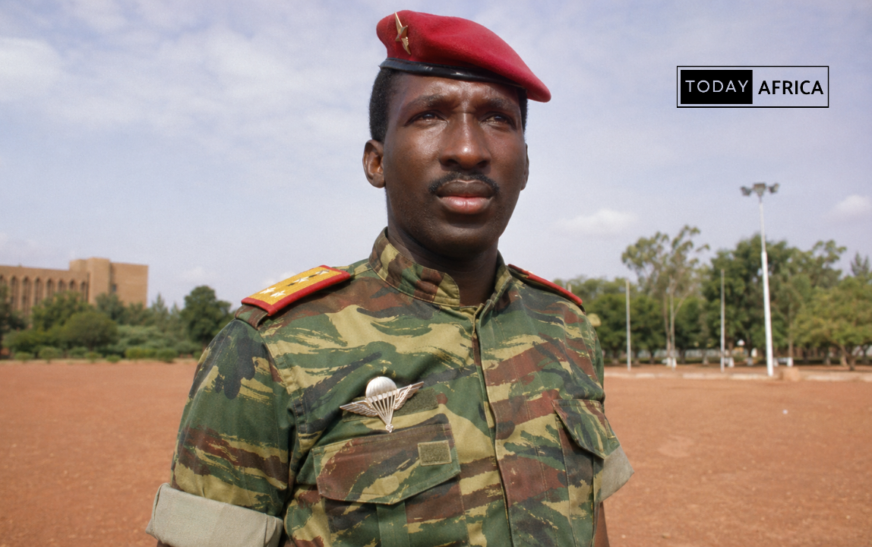
Thomas Sankara’s biography often begins with the same striking fact: he became president of Upper Volta at 33 and led the country, later renamed Burkina Faso, from 1983 until his assassination in 1987.
Yet that short timeline doesn’t fully explain why his name still carries such force. Sankara was a military officer, a Pan-African thinker, a reformer, and a leader who tried to prove that a poor nation could stand tall with discipline, courage, and self-belief.
Britannica describes him as a military officer and Pan-Africanist supporter who became president after a 1983 coup and was killed during another coup in 1987.
His story is powerful because it blends hope and warning.
On one hand, Sankara promoted anti-corruption, women’s rights, education, public health, and national pride. On the other hand, his rule also drew criticism over political pressure, revolutionary courts, and limits on dissent.
That mix makes him more than a symbol. It makes him a serious historical figure whose life deserves careful study, not blind praise or lazy dismissal.
Who was Thomas Sankara?
Thomas Isidore Noël Sankara was born on December 21, 1949, in Yako, Upper Volta, which is now Burkina Faso. He died on October 15, 1987, in Ouagadougou, the capital of Burkina Faso.
In less than four years as president, he became one of Africa’s most discussed post-independence leaders, largely because his politics focused on dignity, independence, and practical reform.
His leadership style was direct, energetic, and deeply symbolic. He wanted public officials to live simply, citizens to believe in national production, and the state to serve ordinary people rather than elites.
A quick profile of Thomas Sankara
| Detail | Information |
|---|---|
| Full name | Thomas Isidore Noël Sankara |
| Born | December 21, 1949 |
| Birthplace | Yako, Upper Volta |
| Died | October 15, 1987 |
| Place of death | Ouagadougou, Burkina Faso |
| Role | Military officer and president |
| Presidency | 1983 to 1987 |
| Known for | Pan-Africanism, anti-corruption, self-reliance, social reform |
| Country renamed under him | Upper Volta became Burkina Faso |
Sankara’s importance comes from the way he joined ideas with action. He didn’t simply speak about pride; he renamed the country. He didn’t simply condemn corruption; he pushed public discipline and reduced official luxury.
Thomas didn’t simply praise women; he made women’s empowerment part of his national project. His government became known for vaccination projects, housing efforts, tree planting, support for women’s rights, and cuts to government waste.
Why his story still matters
A Thomas Sankara biography is still relevant because many of the questions he raised haven’t gone away.
- How can African countries build stronger local economies?
- How can leaders fight corruption without becoming harsh or intolerant?
- And how can a nation balance national pride with human rights?
- How can young people believe in public service again?
Sankara didn’t answer every question perfectly, but he asked them with rare boldness. His legacy also matters because it challenges the idea that leadership must be flashy to be effective.
Sankara promoted a lean image of power. He wanted leaders to look less like rulers and more like servants. That message still rings loudly in countries where citizens often feel abandoned by expensive politics, weak services, and widening inequality.
Read Also: Captain Ibrahim Traoré: The Transitional Leader Transforming Burkina Faso
Early life, education, and military formation
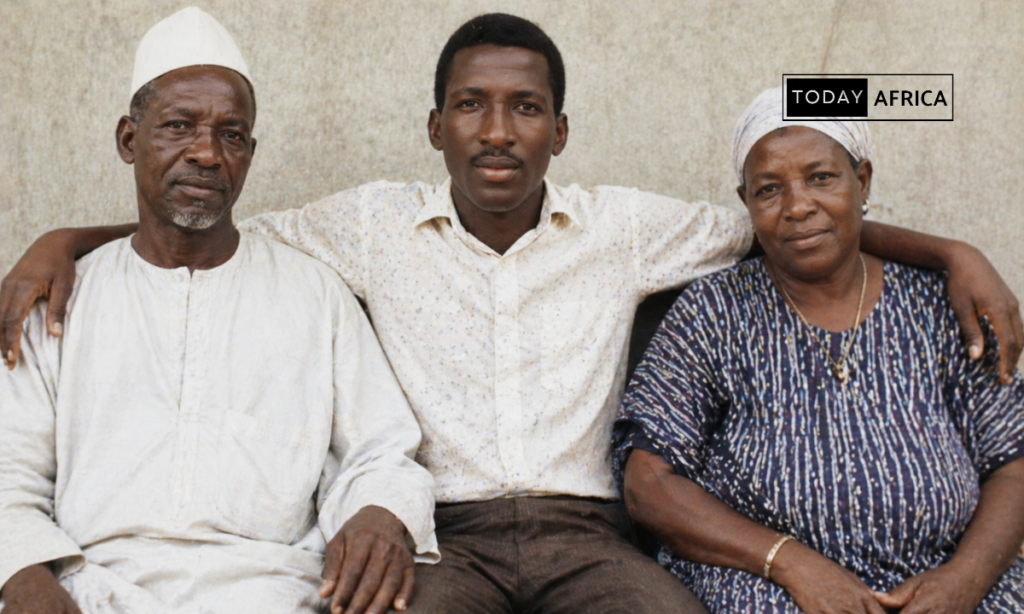
Thomas Sankara grew up in Upper Volta during a period shaped by colonial history, poverty, and political change. Like many African countries after independence, Upper Volta faced the tough task of building a strong state with limited resources.
Roads, schools, hospitals, and public systems needed major improvement. For a young Sankara, this environment created a clear view of hardship. It also helped form his belief that a nation couldn’t wait forever for outsiders to solve its problems.
His early years didn’t point to a quiet life. Sankara entered military life young and developed a reputation for discipline, intelligence, and personal courage. Military training gave him structure, but it also exposed him to politics.
Across Africa in the 1960s and 1970s, soldiers often became political actors because many civilian governments were unstable, weak, or accused of corruption.
This doesn’t mean military rule was automatically good. It means the barracks often became one of the few places where ambitious young men debated national direction.
Military training and political awareness
Sankara’s military path took him beyond Upper Volta. He received training abroad, including in Madagascar, where he witnessed political unrest and student-led movements. That period mattered because it exposed him to debates about inequality, imperialism, class, and national liberation.
BlackPast notes that Sankara was born in Yako in 1949 and became an important political leader in Burkina Faso during the 1980s. As he rose through the military, Sankara became known as more than a conventional officer.
He played guitar, rode motorcycles, spoke with sharp clarity, and had a gift for public messaging. That blend made him unusual. He wasn’t just a man in uniform. He was a communicator who understood that politics lives in symbols, slogans, habits, and daily choices.
The making of a young officer
Sankara’s development as an officer gave him three tools that later shaped his leadership. First, he learned discipline. Second, he learned how institutions work. Third, he learned how quickly power can shift. Those lessons helped him move through the political storms of Upper Volta, where coups and rival factions shaped public life.
From soldier to national voice
By the early 1980s, Sankara had become a rising figure in national politics. His speeches and public conduct appealed to young people, workers, students, and citizens tired of corruption. He spoke like someone who believed ordinary people could build a new society. That optimism became one of his greatest strengths. It also made him a threat to older power networks.
Read Also: Assassination of Patrice Lumumba and the Collapse of Congo’s First Government
Rise to power and the birth of Burkina Faso
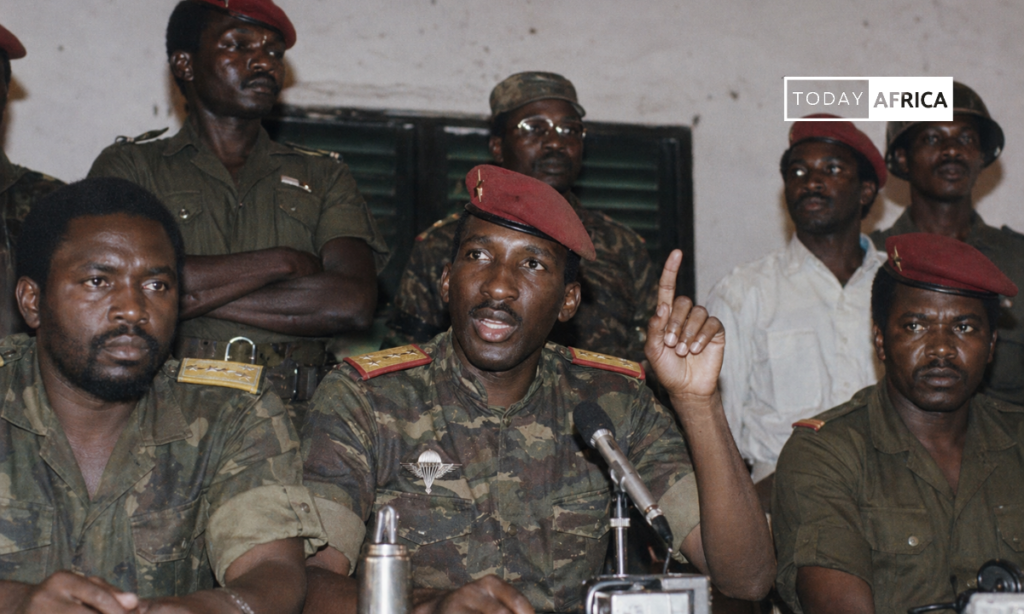
Thomas Sankara came to power in 1983 after political conflict and a military coup. At just 33, he became one of the youngest leaders in modern African history. His age mattered because it gave his presidency a sense of urgency.
He didn’t speak like a caretaker. He spoke like a man racing against time. Britannica states that Sankara became president of Upper Volta in 1983 after a military coup and remained in office until he was killed in 1987.
Once in power, he framed his government as a democratic and popular revolution. The phrase sounds grand, but his message was direct: the country had to break from dependency, corruption, waste, and elite comfort.
He believed political independence meant little without economic confidence and social change. So, he pushed citizens to produce locally, eat locally, dress locally, and think of national dignity as a daily habit rather than a speech-day slogan.
Renaming Upper Volta
One of Sankara’s most famous actions came in 1984, when Upper Volta was renamed Burkina Faso. The new name is widely translated as “land of upright people” or “land of incorruptible people.”
This wasn’t a small branding choice. It was a political statement. Sankara wanted the country’s name to reflect dignity, honesty, and a break from colonial identity.
Britannica’s history of Burkina Faso notes that Sankara renamed the country a year after taking power and ordered public officials, including himself, to open their bank accounts to public scrutiny.
The renaming also showed Sankara’s understanding of morale. Poor countries are often described by what they lack: money, roads, hospitals, food security, or military strength.
Sankara flipped that script. He wanted Burkina Faso to be known by character. That idea had emotional power because it told citizens that poverty didn’t erase dignity.
A government built on self-reliance
Self-reliance sat at the center of Sankara’s national project. He argued that a country that depended too heavily on outside aid could lose control over its choices.
This didn’t mean isolation from the world. It meant he wanted Burkina Faso to build confidence from within. Local production, modest public service, and citizen mobilization became major themes of his rule.
His approach was optimistic but demanding. Sankara asked people to sacrifice comfort for a larger dream. Government officials were expected to reduce waste.
Citizens were pushed to participate in development campaigns. Farmers, women, students, soldiers, and workers were all addressed as builders of the nation. That’s why his story still attracts young readers today. He made politics feel like a shared project, not a private club.
Major reforms under Thomas Sankara
Anti-corruption and public discipline
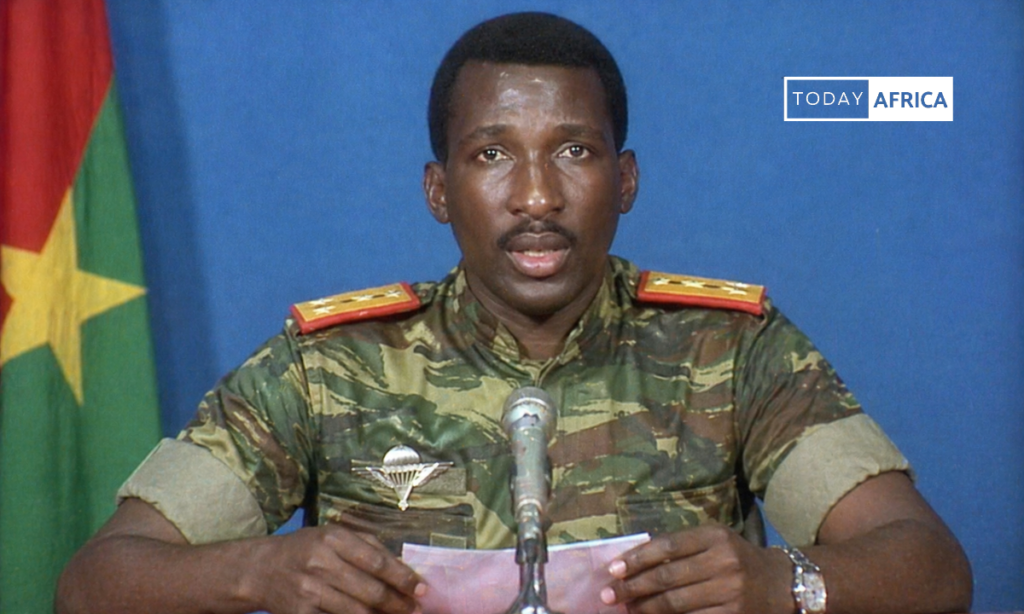
Sankara’s anti-corruption message was one of the strongest parts of his leadership. He attacked the culture of official privilege and tried to make public office look less glamorous. This was not just about saving money.
It was about changing the moral tone of government. When leaders live far above the people they serve, public trust takes a beating. Sankara seemed to understand that clearly.
His government became associated with cuts to official luxury, public accountability, and symbolic acts that showed leaders should not treat the state like a personal wallet. His government was known for curbing waste in government alongside vaccination, housing, tree planting, and women’s rights projects.
Health, education, and social programs
Sankara’s government placed strong emphasis on public health and education. Health campaigns became part of his effort to prove that even a poor country could act with speed and organization.
Vaccination drives, local clinics, and public mobilization were tied to a bigger belief: development should reach the village, not stop at the capital city.
Education also mattered because Sankara saw literacy as a path to freedom. A citizen who can read, question, and understand public life is harder to mislead. That’s still true today.
For Burkina Faso, where poverty and rural isolation created major barriers, education was not just a classroom issue. It was a national survival issue.
Women’s rights and social change
Sankara’s support for women’s rights remains one of the most admired parts of his legacy. He argued that a revolution couldn’t be complete while women remained oppressed.
His government promoted women’s participation in public life and challenged practices that limited women’s dignity. This part of Sankara’s work still feels fresh because many societies continue to treat women’s rights as a side issue.
Sankara placed it near the center. He understood that a country wastes its own strength when girls are denied education, women are blocked from leadership, and harmful customs are defended as untouchable traditions.
That was a bold position for the 1980s, and it remains powerful today.
Read Also: Julius Nyerere Biography: Leadership and the Making of Modern Tanzania
Environment, agriculture, and local production
Sankara also treated the environment as a development issue. He promoted tree planting and local production, especially in a country affected by Sahelian environmental stress. His government’s tree-planting efforts were linked to the fight against desertification and the need to protect rural livelihoods.
His agricultural thinking was also tied to national pride. Food self-sufficiency was not just an economic goal. It was political. A country that can feed itself has more room to make independent choices.
That idea is still relevant in today’s world, where food prices, climate shocks, and supply chains can put pressure on vulnerable nations.
Controversies, criticism, and limits of his rule
Revolutionary courts and political pressure
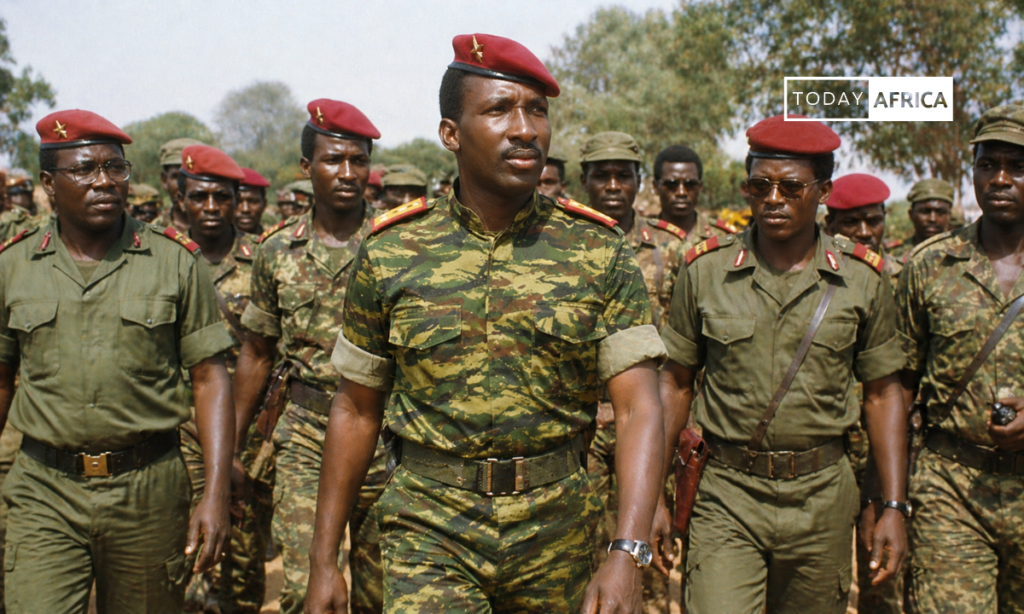
A fair Thomas Sankara biography must include criticism. Sankara’s government was admired for bold reforms, but it also faced serious concerns over political freedoms, revolutionary courts, and pressure on opponents.
Some critics argued that his administration moved too fast, treated disagreement as disloyalty, and relied on structures that could become harsh.
The African Studies Centre Leiden notes that Sankara’s revolutionary tribunals and related systems drew criticism from Amnesty International and other groups over alleged human rights violations, including arbitrary detention of political opponents.
This doesn’t erase his achievements, but it complicates them. Good history has to hold two truths at once. Sankara inspired millions with his courage and vision.
At the same time, revolutionary governments can create fear when they concentrate power and weaken safeguards. That tension is part of why scholars, activists, and citizens still debate him.
Why balanced history matters
Balanced history matters because hero worship can flatten real people. Sankara was neither a cartoon saint nor a simple dictator. He was a young revolutionary leader working in a poor, fragile country under intense internal and external pressure.
His reforms were ambitious, his words were magnetic, and his impatience with corruption was refreshing. Yet his government also showed how difficult it is to pursue rapid change while protecting civil liberties.
That balance makes his life more useful, not less. If we only praise him, we miss the warnings. If we only criticize him, we miss the courage.
Read Also: Biography on Abraham Lincoln & his impact on American leadership
Assassination, trial, and legacy
The 1987 coup
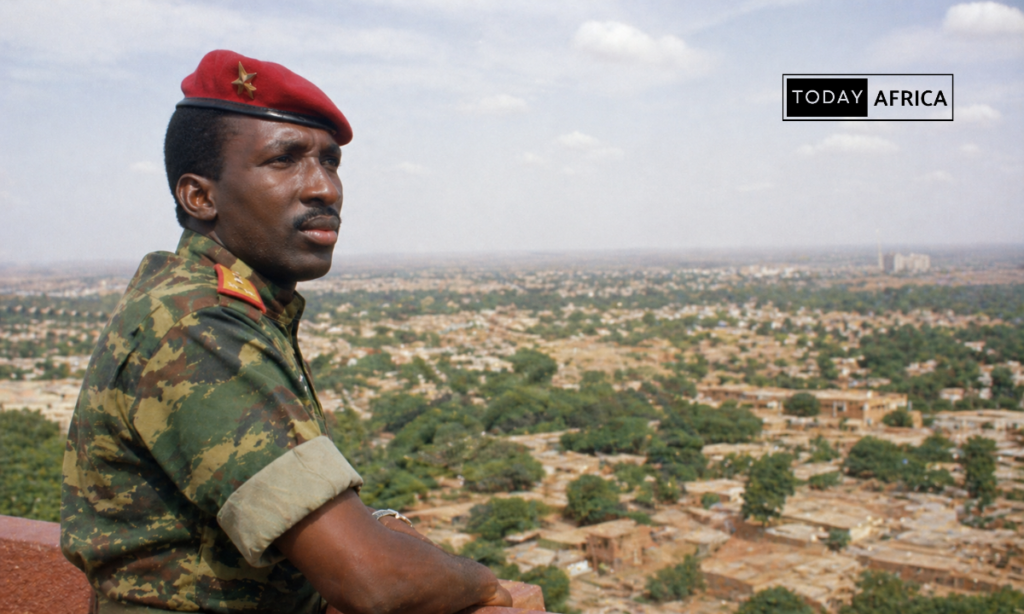
Thomas Sankara was assassinated on October 15, 1987, during a coup in Ouagadougou. He was 37 years old. His death shocked supporters and ended one of the most intense political experiments in post-independence Africa.
His former ally Blaise Compaoré then became the dominant political figure in Burkina Faso for decades.
The Guardian describes Sankara as president from 1983 until his assassination in 1987 and notes that Compaoré remained in power for 27 years afterwards.
Sankara’s death helped turn him into a legend. Leaders who die young often become symbols because people imagine what they might have done with more time.
In Sankara’s case, that question is especially strong. Would his reforms have matured? Would his government have become more open? And would his opponents have weakened him?
History can’t answer those questions fully, but they keep his memory alive.
Justice decades later
For many years, Sankara’s assassination remained a painful wound. Then, in 2022, a military tribunal in Burkina Faso sentenced former president Blaise Compaoré to life imprisonment in absentia over Sankara’s murder.
Reuters reported that Compaoré was found guilty of an attack on state security, complicity in murder, and concealment of a corpse.
That verdict mattered because it showed that historical crimes can return to court even after many years. Justice delayed is painful, but it can still carry meaning. For Sankara’s supporters, the ruling didn’t bring him back, but it gave official weight to a long demand for truth.
Memorials and renewed interest
In 2023, Sankara was reburied in Ouagadougou after his body had been exhumed years earlier as part of an investigation. AP News reported that Sankara and twelve others were killed during the 1987 coup and that his remains were reburied at the assassination site.
His memory has also been renewed through memorial projects.
The Guardian reported that architect Francis Kéré was designing a mausoleum as part of the Thomas Sankara Memorial, with features including an 87-meter tower, an amphitheater, and public spaces meant to create a place of learning and vitality.
That modern interest proves something important. Sankara’s legacy is not trapped in the 1980s.
It speaks to current debates about African sovereignty, youth leadership, corruption, gender justice, public service, and national identity. His life reminds us that even short leadership can leave a long shadow.
7 powerful lessons from Thomas Sankara’s life
| Lesson | Meaning Today |
|---|---|
| Leadership should serve, not show off | Public office should be about responsibility, not luxury |
| National pride needs action | Symbols matter, but reform matters more |
| Youth can lead serious change | Age isn’t a barrier when discipline and vision are present |
| Women’s rights strengthen nations | Development fails when half the population is held back |
| Health and education are freedom tools | Public services help citizens live with dignity |
| Environmental care is national security | Land, trees, water, and food systems shape the future |
| Reform needs accountability | Good intentions still need human rights and open debate |
Read Also: The biography of Malcolm X: Power, race, & black consciousness
FAQs
Who was Thomas Sankara?
Thomas Sankara was a Burkinabé military officer and political leader who served as president of Upper Volta, later Burkina Faso, from 1983 until his assassination in 1987. He became known for Pan-Africanism, anti-corruption reforms, women’s rights advocacy, and a strong push for national self-reliance.
Why is Thomas Sankara famous?
He’s famous because he tried to transform Burkina Faso through bold reforms in health, education, women’s rights, environmental protection, and government discipline. He also renamed Upper Volta as Burkina Faso, a name tied to dignity and upright character.
What does Burkina Faso mean?
Burkina Faso is widely translated as “land of upright people” or “land of incorruptible people.” Sankara introduced the name in 1984 to replace Upper Volta and give the country a stronger post-colonial identity.
How old was Thomas Sankara when he became president?
Thomas Sankara was 33 years old when he became president in 1983. His youth became part of his political image because he represented energy, urgency, and a break from older political habits.
How did Thomas Sankara die?
Thomas Sankara was assassinated on October 15, 1987, during a coup in Ouagadougou. He was killed along with others, and his death remains one of the most important political events in Burkina Faso’s modern history.
Was anyone convicted for Thomas Sankara’s assassination?
Yes. In 2022, former Burkina Faso president Blaise Compaoré was sentenced to life imprisonment in absentia over Sankara’s murder. Reuters reported that he was found guilty of attack on state security, complicity in murder, and concealment of a corpse.
Why do many young Africans admire Thomas Sankara?
Many young Africans admire him because he spoke about dignity, self-reliance, clean government, and African independence in a direct and fearless way. His simple lifestyle and bold reforms made him stand out from leaders who used power mainly for comfort.
Conclusion
Thomas Sankara’s life was short, but his impact was large. He led Burkina Faso for less than four years, yet his name still carries weight across Africa and beyond.
That happened because he offered something rare: a vision of leadership rooted in discipline, dignity, and national self-belief. He wanted his country to stand upright in more than name. He wanted citizens to feel that honesty, labor, equality, and courage could build a stronger future.
Still, the best way to remember Sankara is honestly. His reforms were bold, his message was powerful, and his example still inspires. At the same time, his government shows that even noble revolutions must respect rights, protect disagreement, and build institutions that outlive one leader.
Thomas Sankara biography is not just the story of a president who died young. It is the story of a leader who dared to ask what Africa could become if public service had more courage, more discipline, and a lot less greed.
Leave a comment and follow us on social media for more tips:
- YouTube: Today Africa Studio
- Facebook: Today Africa
- Instagram: Today Africa
- Twitter: Today Africa
- LinkedIn: Today Africa


![Biography of Tony Elumelu [Investor, Entrepreneur, & Philanthropist]](https://todayafrica.co/wp-content/uploads/2023/12/Blue-Simple-Dad-Appreciation-Facebook-Post-1200-×-720-px-7-1.png)