

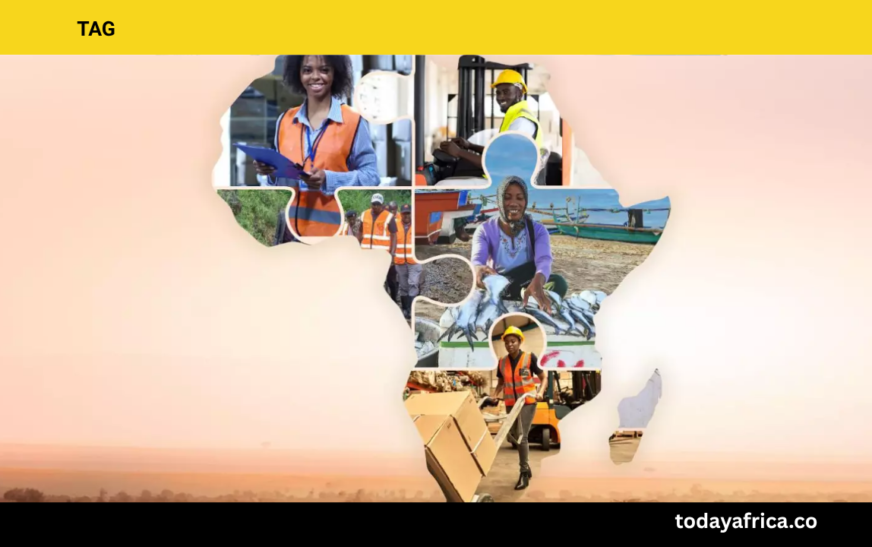
Africa is moving closer to a single continental market, but fragmented infrastructure, expensive cross-border payments, limited industrial capacity, and persistent regulatory barriers continue to prevent African businesses from trading more with one another.
Africa has one of the world’s most ambitious regional integration projects. Yet a fundamental contradiction remains at the center of its economic development: African countries often find it easier to participate in global supply chains than to build commercial relationships with their immediate neighbors.
According to the African Export-Import Bank’s 2025 African Trade Report, intra-African trade reached $220.3 billion in 2024, an increase of 12.4% from the previous year. Despite that growth, trade between African countries accounted for just 14.4% of the continent’s total trade, compared with 14.7% in 2023.
The contrast with other regions is striking. The African Development Bank reported in 2025 that intra-regional trade accounted for approximately 68% of Europe’s trade and 59% of Asia’s, compared with roughly 15% to 18% in Africa, depending on the measurement used.
This difference reveals more than a trade deficit. It exposes a deeper structural weakness in how African markets produce goods, finance businesses, connect infrastructure, and coordinate economic policies.
The African Continental Free Trade Area (AfCFTA) is designed to address this fragmentation. However, the challenge has shifted from negotiating a continental trade agreement to building the economic systems required to make it function.
For African businesses, investors, and policymakers, understanding this gap is essential. The future of intra-African trade will depend not simply on eliminating tariffs, but on changing the economic incentives and infrastructure that shape where African companies buy, sell, manufacture, and invest.
Africa has a free trade agreement, but not yet a fully integrated market
The introduction of the AfCFTA represented a fundamental shift in Africa’s economic strategy.
Rather than relying predominantly on exports to established international markets, African governments agreed to pursue a more integrated continental economy through progressively reduced tariffs, common trade rules, and improved market access.
The agreement creates a framework for businesses to sell across national borders while encouraging the development of regional production networks. But signing an agreement and changing commercial behavior are two different things.
In July 2026, the AfCFTA Council of Ministers met in Abuja, Nigeria, and placed greater emphasis on implementation. With much of the agreement’s legal framework established, attention turned toward delivering measurable commercial outcomes.
This policy transition matters because the central obstacle is no longer the absence of a continental trade vision. It is the difficulty of converting that vision into practical advantages for businesses.
A manufacturer in Ghana may gain preferential tariff access to another African market but still encounter unfamiliar product standards, expensive transport, unpredictable customs procedures, and currency-conversion costs.
These barriers can eliminate the commercial benefit of lower tariffs.
Consequently, Africa’s trade integration challenge is increasingly about reducing the total cost of doing business across borders, rather than relying exclusively on trade liberalization.
The historical structure of African economies still shapes trade

Africa’s low level of regional trade is closely connected to the structure of its production systems. Many African economies developed around exporting primary commodities to markets outside the continent.
Colonial-era infrastructure frequently linked resource-producing areas to ports, reinforcing outward-facing trade routes rather than networks connecting neighboring economies.
Although infrastructure and trade relationships have evolved significantly since independence, elements of this historical structure remain embedded in African supply chains.
The consequences are visible in the continent’s industrial composition.
Countries that primarily export unprocessed commodities have fewer opportunities to exchange intermediate manufactured goods, industrial components, and specialized production inputs with neighboring countries.
This limits the development of regional value chains.
In a more integrated manufacturing system, different countries can specialize in separate stages of production. Components cross borders for processing, assembly, and distribution, creating repeated trade relationships between businesses.
Much of Africa still lacks the industrial depth, supplier networks, and production coordination required to support such exchanges at scale.
The African Development Bank’s 2025 Africa Industrialization Index identifies fragmented regulations, inefficient customs procedures, and persistent non-tariff barriers as major constraints on regional industrial value chains.
The implication is that increasing intra-African trade requires more than creating additional buyers. It requires African economies to produce a wider range of goods that other African economies can competitively purchase.
Read also: A Family’s Water Scarcity Story Became a Business Now Crossing African Borders
Infrastructure is turning geography into an economic disadvantage
One of the most persistent obstacles to intra-African trade is the cost of moving goods. Physical proximity does not automatically translate into commercial accessibility.
Two neighboring countries may share a border while lacking reliable highways, efficient rail connections, modern storage infrastructure, or predictable customs processing.
That creates a significant economic disadvantage for regional trade.
According to the African Development Bank, roads carry approximately 80% of goods and 90% of passenger traffic across Africa. Yet the continent’s road infrastructure deficit continues to increase transaction costs and restrict regional market access.
For businesses, logistics expenses directly affect competitiveness.
A company exporting agricultural products, construction materials, consumer goods, or manufactured components must account for transportation, warehousing, border clearance, and potential delays.
When these costs become excessive, a geographically closer supplier may not be the cheapest or most reliable option.
The problem also extends beyond roads.
Ports, railways, electricity networks, cold storage facilities, and digital customs systems all influence whether regional supply chains can operate efficiently.
Recent investment offers evidence of what can change.
The African Development Bank’s 2026 Annual Development Effectiveness Review reports that improvements associated with the Trans-Gambia Corridor reduced river crossing times from 34 minutes to less than two minutes and border crossing times from approximately four hours to two hours.
These improvements demonstrate an important economic principle: reducing delays can effectively bring markets closer together without changing their physical distance.
For policymakers, the lesson is clear. Continental integration depends on infrastructure that connects production centers, border crossings, and consumer markets rather than simply expanding transport networks within individual countries.
Fragmented payment systems make regional trade more expensive
Trade cannot expand efficiently when businesses struggle to settle transactions.
Africa’s multiple currencies, differences in banking regulations, foreign exchange restrictions, and uneven access to international payment networks create additional complications for regional commerce.
Historically, some cross-border transactions between African countries have relied on intermediary banks and foreign currencies, even where neither trading partner operates in the United States or Europe.
This can introduce conversion expenses, settlement delays, and additional liquidity requirements. For smaller businesses operating with limited working capital, these costs can be particularly restrictive.
Financial institutions face similar constraints. The African Development Bank’s 2025 Trade Finance Report, released in May 2026, estimates that unmet trade finance demand ranged from $74 billion to $92 billion in 2024.
It also found that 36% of surveyed banks identified limited foreign exchange liquidity as their principal constraint on trade finance growth over the 2020–2024 period, compared with 18% during 2015–2019.
This financing gap limits the ability of businesses to purchase inventory, extend credit, fulfill export orders, and expand into additional markets. However, payments infrastructure is beginning to change.
The Pan-African Payment and Settlement System (PAPSS), developed through an initiative involving Afreximbank, the African Union, and the AfCFTA Secretariat, is designed to enable cross-border payments in African currencies.
In July 2026, the Bank of Central African States joined PAPSS, extending its network into the six-member Central African Economic and Monetary Community. Ethiopia’s central bank also joined in October 2026, highlighting the system’s continuing expansion.
These developments suggest a gradual shift toward stronger continental financial infrastructure.
Nevertheless, broader participation alone does not guarantee frictionless payments. Bank-level integration, liquidity availability, transaction pricing, and commercial adoption will ultimately determine the system’s impact.
Related: The missing links holding back African supply chains
Why small businesses bear the cost of trade fragmentation

Africa’s fragmented trading system affects companies differently depending on their size and financial capacity.
Large corporations may have the resources to establish regional subsidiaries, negotiate logistics contracts, employ customs specialists, and access international trade finance.
Small and medium-sized enterprises often operate without these advantages. For an SME attempting to sell into another African country, every additional administrative requirement can become a material expense.
Import documentation, border procedures, foreign exchange access, and product certification requirements can increase the financial burden of entering a new market.
This creates a structural imbalance. Businesses capable of absorbing high transaction costs are more likely to expand regionally, while smaller firms may remain concentrated in domestic markets.
The result is a continental marketplace where potential demand exists but is difficult for many businesses to access profitably. Informal trade adds another dimension.
The African Development Bank has acknowledged that significant informal cross-border commerce, particularly involving women and young people, is not fully reflected in official trade statistics.
Therefore, Africa’s reported intra-regional trade share does not capture every commercial exchange taking place across its borders.
For policymakers, formalizing trade should not mean simply imposing additional requirements on existing traders.
It should involve making formal participation more attractive through simpler procedures, affordable financial services, and more predictable border operations.
Without these improvements, regulatory integration may produce fewer benefits than anticipated.
The AfCFTA is creating new opportunities for African startups
Africa’s fragmented markets also create opportunities for startups developing solutions to cross-border commercial problems. The most compelling opportunities are emerging where businesses can remove measurable sources of friction.
Consider trade finance.
When companies struggle to obtain working capital for cross-border transactions, financial technology providers have an opportunity to develop services supporting invoice financing, transaction verification, credit assessment, and supplier payments.
Cross-border logistics presents another opportunity.
Digital freight marketplaces, shipment tracking systems, warehouse management platforms, and customs technology can help businesses coordinate regional distribution more efficiently.
A third opportunity involves business intelligence.
African companies expanding into unfamiliar markets often face fragmented information about potential distributors, local competitors, regulatory requirements, customer demand, and commercial partners.
Startups capable of collecting and organizing reliable market information can reduce the uncertainty associated with regional expansion.
These opportunities are connected by a common economic principle: the companies that make regional commerce cheaper, faster, or more predictable can create value even before the AfCFTA becomes fully operational.
However, investors should distinguish between the size of the continental opportunity and the revenue realistically accessible to an individual business. A startup may address a continent-wide problem while initially serving only a narrow trade corridor or customer segment.
Its commercial success will depend on distribution, regulatory permissions, pricing, transaction volumes, and customer retention.
Investors are beginning to see regional integration as an infrastructure opportunity
The next stage of African integration could reshape how investors evaluate infrastructure, industrial development, and digital services.
Rather than treating each African country as a separate investment destination, investors can increasingly assess connected markets through regional economic corridors.
This approach is particularly relevant for logistics, industrial processing, warehousing, energy infrastructure, and financial services.
In 2025, the African Development Bank, AfCFTA Secretariat, and Africa50 announced a partnership to strengthen infrastructure supporting continental trade. The agreement prioritizes transport corridors, logistics hubs, ports, airports, and digital infrastructure.
Such initiatives reflect a broader recognition that trade policy alone cannot deliver regional integration.
Capital must also flow into the physical and financial systems supporting commercial activity.
One example is the Lobito Corridor, which is intended to improve transport connections between mineral-producing areas of Zambia and the Democratic Republic of Congo and Angola’s Atlantic coast.
Another is the Nacala Corridor, linking Mozambique and Malawi through rail and port infrastructure.
Both illustrate how infrastructure investments can improve regional connectivity, although the scale of their long-term trade benefits will depend on project execution and complementary investment.
For investors, these corridors create opportunities beyond their underlying transport assets.
More reliable freight routes could strengthen demand for processing facilities, industrial parks, specialized logistics services, storage infrastructure, and regional distribution businesses.
But the investment case requires careful assessment.
Infrastructure projects can face construction delays, financing constraints, policy changes, and lower-than-expected commercial utilization.
Consequently, understanding how specific corridors connect productive industries to paying customers is more useful than relying on broad projections about Africa’s potential market size.
Related: The structure of wealth creation in African markets
Where the next wave of Intra-African trade growth could emerge

The strongest opportunities are likely to develop where infrastructure investment, industrial capacity, and policy coordination reinforce one another.
East Africa: Regional logistics and payments
Cross-border transport and payment integration could support more efficient trade among East African businesses. The expansion of PAPSS through banks in Kenya and Rwanda provides an example of financial infrastructure developing alongside regional commerce.
West Africa: Consumer goods and distribution
Improved customs processes, payments infrastructure, and regional transport could strengthen distribution networks linking manufacturing and consumer markets. Nigeria’s 2025 changes to PAPSS documentation requirements illustrate one attempt to reduce transaction friction for smaller traders.
Southern Africa: Industrial supply chains
Existing manufacturing capacity and cross-border trading relationships provide a foundation for regional industrial integration. Improved transport corridors could support greater trade in industrial inputs, machinery, and processed goods.
Central Africa: Financial connectivity
The integration of the regional central bank BEAC into PAPSS could support new cross-border payment services and improve financial connectivity between Central Africa and other participating markets, provided commercial access expands.
Across these regions, agribusiness processing, manufacturing, financial technology, logistics, and trade-related business services could benefit from stronger integration.
The opportunity is not uniform. Markets with dependable infrastructure, productive industrial clusters, and effective regulatory coordination are more likely to realize benefits earlier than those where implementation challenges remain severe.
Better market intelligence will become a competitive advantage
As Africa’s regional markets become more connected, businesses will require better information to decide where to expand and invest.
The challenge is not simply identifying growing economies.
Companies must understand sector-specific demand, regulatory differences, competitive conditions, infrastructure quality, and the commercial networks that connect countries.
A promising opportunity in one market may be difficult to replicate in another because of payment restrictions, customs procedures, or differences in distribution infrastructure.
This makes market intelligence an increasingly important component of regional expansion.
For founders, investors, and organizations evaluating cross-border opportunities, Today Africa’s Market Intelligence Studio provides custom research, country briefs, sector deep dives, market maps, and startup ecosystem analysis.
Such research can help decision-makers move beyond broad narratives about Africa’s economic potential and evaluate opportunities using more specific market evidence.
As regional integration advances, the ability to distinguish attractive markets from commercially accessible ones will become particularly valuable.
Africa’s trade future depends on execution, not agreements alone
The economic case for deeper intra-African trade is strong.
A more integrated continental market could help African businesses access larger customer bases, support regional manufacturing networks, diversify supply chains, and reduce some of the vulnerabilities associated with concentrated export destinations.
But those outcomes are not automatic.
AfCFTA implementation must be accompanied by investments in infrastructure, industrial production, financial connectivity, and regulatory coordination.
The World Bank and African development institutions have long emphasized that regional integration can generate significant economic benefits, but those benefits depend on complementary reforms that reduce the practical cost of trade.
Recent developments suggest that parts of this transition are underway.
Cross-border payment networks are expanding. Regional infrastructure corridors are receiving renewed attention. Trade policy discussions are increasingly focused on implementation rather than negotiation.
Yet the central question remains whether these changes can produce commercially meaningful reductions in transaction costs.
Africa does not lack demand for greater regional trade. It lacks a sufficiently connected economic system to convert that demand into sustained commercial exchange.
The next stage of continental integration will therefore be measured less by the number of agreements signed and more by how easily an African business can produce goods in one country, transport them into another, receive payment, and reinvest its earnings.
That is the real test of the AfCFTA. And it is where Africa’s most consequential trade opportunities are likely to emerge.
Leave a comment and follow us on social media for more tips:
- Facebook: Today Africa
- Instagram: Today Africa
- Twitter: Today Africa
- LinkedIn: Today Africa
- YouTube: Today Africa Studio