

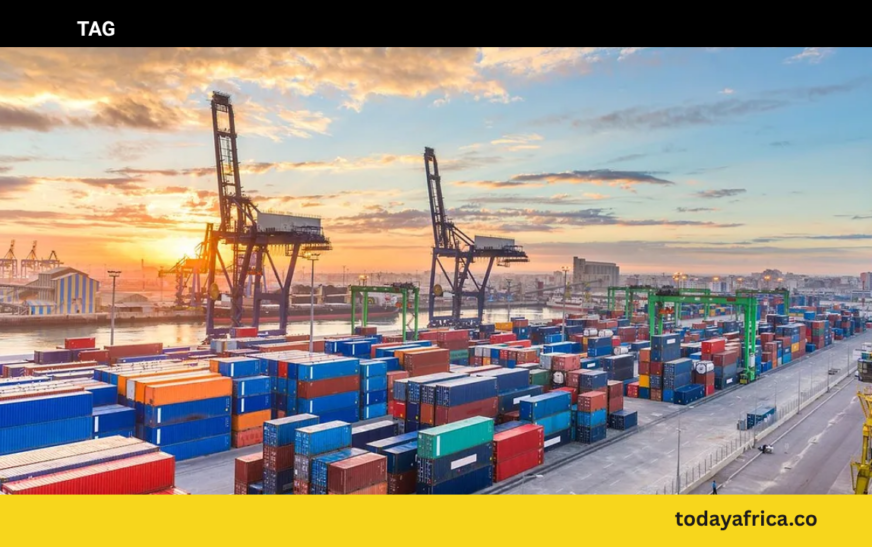
Africa has the raw materials, expanding consumer markets, and growing industrial ambitions to become a major force in global supply chains. Yet, moving goods between African countries remains one of the continent’s most persistent economic challenges.
A manufacturer in Nigeria may find it easier to source certain inputs from overseas than from a neighboring African country. An agricultural exporter in East Africa may have buyers across the region but struggle with unreliable transport, customs procedures, and inadequate storage facilities.
Meanwhile, businesses trying to expand across borders face payment difficulties, inconsistent regulations, and logistics costs that can undermine their competitiveness.
These are more than operational inconveniences. They expose structural weaknesses that continue to limit Africa’s industrial development and economic integration.
According to the African Export-Import Bank’s 2025 African Trade Report, intra-African trade reached $220.3 billion in 2024, growing by 12.4%. However, trade between African countries accounted for only 14.4% of the continent’s total merchandise trade.
The figures reveal an important contradiction: African economies are trading more with one another, but their supply chains remain insufficiently integrated.
As governments accelerate regional trade reforms and global investors reassess their sourcing strategies, the central question is shifting from whether Africa can produce more to whether it can move, process, finance, and distribute what it produces efficiently.
Africa’s trade ambitions are outpacing its infrastructure
The African Continental Free Trade Area (AfCFTA) represents one of the most significant attempts to transform Africa’s fragmented markets into a more connected economic system.
By reducing trade barriers and encouraging regional integration, the agreement is intended to make it easier for African businesses to access customers and suppliers across national borders.
However, removing tariffs does not automatically create functioning supply chains.
A manufacturer can benefit from preferential trade rules while still facing expensive transportation, delayed border clearance, or insufficient electricity for production.
The economic problem is therefore broader than trade policy. It involves the physical, financial, and institutional systems required to support cross-border commerce.
The pressure to resolve these weaknesses is increasing.
In its October 2026 economic outlook, the World Bank raised its growth forecast for Sub-Saharan Africa to 4.3% for 2026. Yet stronger economic growth alone will not guarantee industrial transformation if businesses cannot efficiently connect production with demand.
Africa’s challenge is increasingly one of coordination. Countries are pursuing industrialization, regional trade agreements are advancing, and private investment is entering strategic sectors. But progress across these areas is uneven.
The result is a continent with growing commercial opportunities and persistent difficulties converting those opportunities into competitive regional value chains.
The infrastructure gaps behind Africa’s supply chain problems
Transport infrastructure remains one of the clearest examples of how structural weaknesses undermine African trade.
Road networks, rail connections, ports, and border facilities determine how quickly products reach consumers and how much businesses spend getting them there.
Where these systems are unreliable, transportation becomes a major component of production and distribution costs.
A May 2025 World Bank report estimated that 37% of locally produced food in Africa is lost in transit because of transportation delays, infrastructure deficiencies, and non-tariff barriers.
The report identified 50 priority transportation bottlenecks, including 10 ports, 20 border crossings, and 20 road segments, where targeted improvements could strengthen food supply chains.
This illustrates why simply increasing agricultural output cannot solve Africa’s food distribution challenges.
Without reliable roads, temperature-controlled storage, processing facilities, and efficient distribution systems, additional production can translate into greater losses rather than higher commercial returns.
The same problem affects manufacturing.
Factories depend on predictable deliveries of raw materials, spare parts, packaging, and intermediate goods. When shipments are delayed, production schedules become less reliable, and companies may have to hold additional inventory.
These requirements raise operating costs and tie up working capital that could otherwise support expansion.
Historically, many African transport networks were developed primarily to connect resource-producing areas with export ports. Regional connections between neighboring production centers received comparatively less investment.
That legacy continues to influence the continent’s trade geography.
For Africa to become a stronger manufacturing and distribution hub, infrastructure investment must increasingly connect African producers with other African producers, not simply move commodities toward international markets.
Also Read: The structure of wealth creation in African markets
Why border delays and fragmented regulations matter

Infrastructure explains only part of the problem. African supply chains also operate within a complicated regulatory environment.
Different customs procedures, product standards, licensing requirements, and documentation systems can create uncertainty for businesses moving goods across borders.
These non-tariff barriers increase the administrative burden of international trade, particularly for smaller companies with limited compliance resources.
For businesses operating on tight margins, uncertainty can be as damaging as a direct increase in transportation costs.
A shipment delayed at a border may disrupt factory operations, prevent retailers from replenishing inventory, or cause agricultural products to deteriorate.
The economic consequences extend beyond individual businesses.
When regional suppliers become unreliable, manufacturers may favor imported inputs from established international supply networks, even when suitable alternatives exist closer to home.
This reinforces dependence on external markets and slows the development of African industrial ecosystems.
The AfCFTA offers a framework for addressing these problems, but its success depends on implementation at national and regional levels.
Trade agreements can establish common objectives. Customs agencies, regulators, transport operators, and businesses must translate those objectives into practical improvements.
Cross-border payments are another missing link
Even when suppliers and buyers successfully connect, completing transactions can create additional difficulties.
African businesses trading across multiple currencies may encounter foreign-exchange constraints, settlement delays, and transaction costs associated with international payment systems.
For SMEs, these challenges can restrict access to regional markets.
A business may identify a profitable supplier in another African country but struggle to arrange affordable, timely payment.
The development of the Pan-African Payment and Settlement System (PAPSS) represents an attempt to address this weakness.
The platform is designed to facilitate cross-border payments in African currencies, reducing reliance on traditional international settlement arrangements.
In July 2026, the Bank of Central African States joined PAPSS, extending the initiative’s institutional reach to the six countries of the Central African Economic and Monetary Community.
The development highlights an important structural shift.
Africa’s trade integration is no longer focused exclusively on roads, ports, and tariffs. Financial infrastructure is increasingly recognized as an essential component of supply chain efficiency.
However, the practical benefits will depend on the availability of participating financial institutions, accessible payment services, and broader adoption by businesses.
Better payment infrastructure cannot eliminate every currency or liquidity challenge, but it can remove some friction from regional transactions.
What broken supply chains mean for African SMEs and startups
Large corporations generally have greater capacity to absorb supply chain disruptions.
They may negotiate favorable freight rates, maintain substantial inventories, operate dedicated distribution networks, or access financing that smaller businesses cannot obtain.
For SMEs, the same disruptions can threaten commercial viability.
A small manufacturer may struggle to finance imported machinery while waiting for locally sourced materials. A food processor may lose potential buyers because delivery schedules are uncertain. A retailer may be forced to increase prices to recover transportation and distribution expenses.
These pressures reduce competitiveness and make regional expansion more difficult.
Startups face a different but related challenge.
Technology companies developing logistics platforms, supply chain software, procurement marketplaces, and financial services are entering markets where fragmented infrastructure creates both demand and operational complexity.
A digital platform can improve shipment visibility or connect buyers with suppliers. It cannot independently repair damaged roads, eliminate customs delays, or guarantee reliable electricity.
This distinction matters for investors.
Startups operating in African supply chains must demonstrate that their business models can function within existing infrastructure constraints rather than depend entirely on future improvements.
Their long-term value may come from solving specific coordination problems, such as reducing empty truck journeys, improving inventory management, facilitating payments, or connecting fragmented supplier networks.
For investors, the opportunity lies not merely in financing businesses that move goods, but in identifying companies capable of improving the efficiency of the wider system.
Also Read: What Africa’s $3.4 trillion economic opportunity means for the future of African markets
The investment opportunity is moving toward regional corridors
Across Africa, infrastructure development is increasingly being organized around strategic trade corridors.
These corridors connect ports, industrial centers, agricultural regions, and inland markets, creating opportunities to improve commercial activity across multiple countries.
One major initiative is the proposed Abidjan-Lagos corridor.
The African Development Bank describes the planned 1,028-kilometer motorway as a connection between Côte d’Ivoire, Ghana, Togo, Benin, and Nigeria.
In 2025, the bank reported that the project had attracted up to $15.6 billion in investment interest, with construction scheduled to begin in 2026 and completion targeted for 2030.
If successfully delivered, improved connectivity could strengthen trade between some of West Africa’s largest urban and commercial markets.
However, corridor development creates opportunities beyond road construction.
Warehousing, distribution centers, freight services, industrial parks, vehicle maintenance, and trade financing can all benefit from more reliable transport networks.
Central and Southern Africa are also attracting attention as global demand for critical minerals reshapes investment priorities.
In October 2026, Reuters reported that the US International Development Finance Corporation was expanding its emphasis on equity investments in Africa, including critical minerals and infrastructure associated with supply chain diversification.
The agency’s African portfolio exceeded $14 billion, with more than $3 billion focused on critical minerals.
Projects such as the Lobito Corridor illustrate how mineral production, railway infrastructure, and access to international markets are becoming increasingly interconnected.
Yet the deeper economic opportunity is not limited to transporting raw materials.
African economies could capture greater value by developing local processing capacity, industrial services, manufacturing inputs, and supporting logistics businesses around these corridors.
Where the next supply chain opportunities could emerge

Several sectors are positioned to benefit as governments and private investors work to improve regional connectivity.
Agricultural logistics and cold storage represent one of the most immediate areas of opportunity. Better storage, processing, and transportation systems could reduce losses and improve market access for producers.
Regional manufacturing and industrial inputs could benefit from stronger supplier networks. Industries such as packaging, construction materials, automotive components, and consumer goods manufacturing may find opportunities in serving nearby African markets.
Trade finance and cross-border payments offer another growth area as businesses seek easier ways to settle transactions and manage working capital.
Digital logistics and procurement platforms may help companies improve shipment visibility, coordinate transport, and identify reliable suppliers.
Industrial infrastructure and energy services will also remain important. Manufacturers require dependable electricity, functioning industrial facilities, and supporting services to compete effectively.
These opportunities will not develop uniformly across the continent.
West Africa’s coastal trade corridors, East Africa’s agricultural and manufacturing networks, North Africa’s industrial connections, and Southern Africa’s mining and manufacturing ecosystems each present different commercial conditions.
Understanding those differences is essential.
An opportunity that appears attractive at the continental level may be difficult to execute within a particular country because of regulatory restrictions, infrastructure limitations, or insufficient customer demand.
This is where reliable market intelligence becomes commercially valuable.
For businesses and investors evaluating cross-border expansion, Market Intelligence Studio provides custom research to help identify opportunities and understand the conditions shaping African markets.
As supply chains become more regionally interconnected, decisions about where to invest, establish operations, or build partnerships will increasingly depend on understanding the systems behind individual markets.
Also Read: How governance impacts business growth in Africa
Africa’s next competitive advantage will be connectivity
Africa’s supply chain challenge is not simply a shortage of infrastructure. It is a problem of incomplete economic connections.
Roads must connect productive regions to commercial markets. Customs systems must support efficient movement across borders. Payment networks must allow businesses to transact more easily.
Industrial policies must encourage local value addition, while financing must reach the businesses capable of linking these activities.
Progress in one area without corresponding improvements elsewhere will deliver limited results.
A new highway can shorten travel distances, but unresolved border delays may undermine its economic value. A new factory can increase production, but inadequate logistics can prevent products from reaching customers competitively.
For African governments, the priority is therefore to align infrastructure investment, trade regulation, industrial development, and financial integration.
For businesses, the opportunity is to develop solutions that address measurable weaknesses in regional value chains.
And for investors, the most promising opportunities may be found where improvements in connectivity unlock wider economic activity rather than benefit a single company.
Africa does not need to build every component of its supply chains from the beginning. Many of the essential elements already exist.
The larger challenge is connecting them into reliable, competitive, and scalable systems.
The future of African trade will depend not only on what the continent produces, but on how effectively its economies connect what they already have.
Leave a comment and follow us on social media for more tips:
- Facebook: Today Africa
- Instagram: Today Africa
- Twitter: Today Africa
- LinkedIn: Today Africa
- YouTube: Today Africa Studio