
Walk through Stone Town in Zanzibar, and you quickly notice that people are there for very different reasons. International tourists weave through narrow streets alongside local residents, photographers pause outside historic doors, restaurant tables fill as evening approaches, and travelers move between the old city and the island’s wider hospitality scene.
A similar pattern appears elsewhere across the continent. Visitors arrive at Ghana’s coastal forts to explore the history of the African diaspora. Travelers head to Lalibela for its centuries-old churches and living religious traditions. In Marrakesh, heritage is woven into a much larger network of hotels, restaurants, cultural businesses and international travel.
Africa’s UNESCO heritage sites are therefore becoming more than places to see. They are points where tourism, history, diaspora movement, hospitality and local business increasingly intersect.
The question is not simply which sites are worth visiting. It is what the people moving through these destinations reveal about where African travel is heading, and what new opportunities that movement is creating.
Stone Town of Zanzibar, Tanzania
Stone Town is perhaps one of the clearest examples of heritage and tourism operating inside the same urban space.
The UNESCO-listed district retains the urban fabric of a Swahili trading town, with architectural influences from Africa, the Arab world, India and Europe. UNESCO describes it as an urban cultural unit formed through more than a millennium of interaction.
That history is now part of Zanzibar’s visitor economy.
Travelers do not experience Stone Town as an isolated archaeological site. They move through a living neighborhood, eating, shopping, staying in accommodation, and connecting the heritage district with Zanzibar’s wider coastal tourism economy.
But the popularity creates pressure. UNESCO specifically identifies tourism development since 1990 as an important source of development pressure and has called for integrated conservation and tourism strategies.
That creates an important business signal.
The opportunity is not simply to build more accommodation. It is to develop better heritage interpretation, locally owned experiences, cultural retail, food businesses, walking tours, preservation services and digital products that allow visitors to understand the city without reducing it to a backdrop for tourism.
Medina of Marrakesh, Morocco
Marrakesh demonstrates what happens when heritage becomes part of a major international tourism ecosystem.
The Medina dates to the Almoravid period beginning in the 11th century and contains major landmarks including the Koutoubia Mosque, historic palaces, gates, gardens, and Jamaâ El Fna. UNESCO describes the square as an open-air theatre and recognizes the Medina’s continuing architectural and cultural significance.
But travelers are not arriving in Marrakesh simply to look at old buildings. The heritage district sits within a broader city economy of hotels, restaurants, riads, shopping, events, creative businesses and international hospitality.
This makes Marrakesh particularly useful as a model for African cities trying to convert cultural assets into wider economic activity.
The lesson is that heritage becomes commercially powerful when it is connected to an ecosystem rather than treated as a standalone attraction.
Related: How December travel became a business season in Ghana, Nigeria, and South Africa
Island of Gorée, Senegal
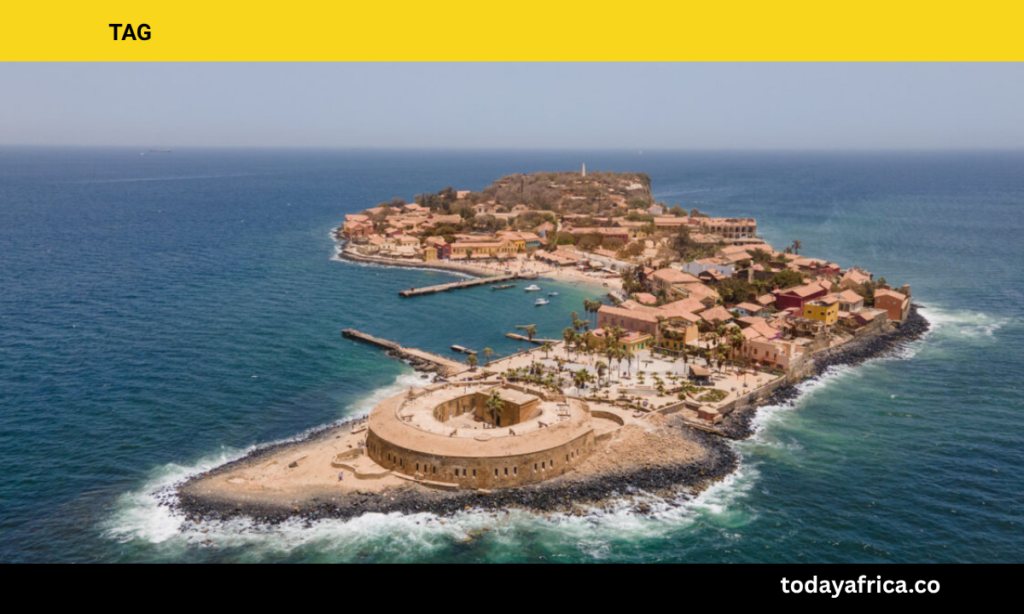
A short distance from Dakar, Gorée carries a different kind of travel significance.
The island’s 28 hectares contain buildings and public spaces associated with the history of the Atlantic slave trade. UNESCO describes Gorée as a “memory island” and identifies it as a pilgrimage destination for the African diaspora and a space for contact between Africa and the wider world.
That diaspora dimension makes Gorée particularly significant in contemporary African travel.
For some visitors, the journey is tourism. For others, it is an encounter with family history, African identity and the legacy of forced migration.
That changes the commercial possibilities around the destination.
Heritage interpretation, museums, archival services, guided experiences, educational travel, documentary production, and diaspora-focused tourism can all become part of the ecosystem around a place like Gorée.
The bigger signal is that African heritage travel increasingly intersects with identity travel. People are not always traveling merely to see Africa. Some are traveling to understand their relationship with it.
Rock-Hewn Churches of Lalibela, Ethiopia
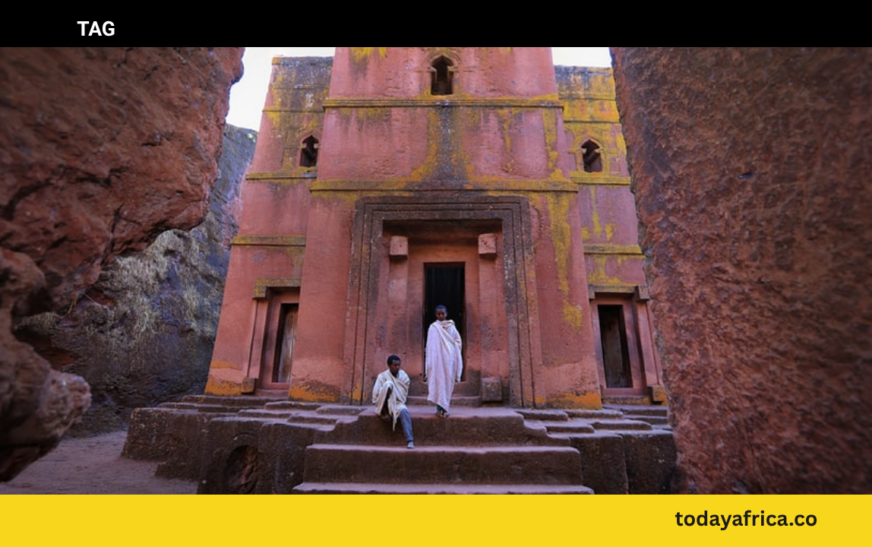
Lalibela offers another version of heritage travel: pilgrimage combined with cultural tourism.
The UNESCO site contains 11 medieval monolithic churches carved from rock. The churches were created as a symbolic “New Jerusalem” and remain an important center of Ethiopian Christianity and pilgrimage.
In July 2026, UNESCO brought more than 70 representatives from over 40 embassies, United Nations organizations and development partners to Lalibela, underscoring its continuing role in cultural diplomacy as well as heritage conservation.
The commercial opportunity here is different from Marrakesh.
Lalibela’s value lies in the intersection of spirituality, history, architecture and cultural identity. That creates room for specialist travel companies, heritage guides, cultural documentation, locally produced crafts, hospitality and digital storytelling.
The destination also illustrates why heritage tourism requires investment beyond marketing. Preservation, transport, visitor management and local services determine whether growing interest can translate into sustainable economic activity.
Great Zimbabwe National Monument, Zimbabwe
Great Zimbabwe challenges one of the most persistent assumptions about African heritage: that the continent’s historic importance must be explained through colonial encounters.
The stone-built city developed between roughly 1100 and 1450 and was an important trading center associated with Shona civilization. The UNESCO property covers a large landscape containing the Hill Ruins, Great Enclosure and Valley Ruins.
Its significance is therefore both archaeological and commercial.
Great Zimbabwe can anchor cultural itineraries connecting visitors with Zimbabwean history, architecture, archaeology, craft traditions and contemporary creative industries.
It also shows why heritage destinations outside capital cities deserve closer attention.
A visitor traveling to a site such as Great Zimbabwe does not only generate spending at the monument. The journey can support transportation, accommodation, restaurants, guides, artisans, and other local services.
Robben Island, South Africa
Robben Island sits within one of Africa’s most developed tourism cities, Cape Town, but its attraction is not conventional leisure.
The island was used at different times as a prison, hospital, and military base. Its most internationally recognized history is connected to political imprisonment during apartheid and the eventual transition toward democracy. UNESCO describes the site as a testimony to the triumph of democracy and freedom over oppression and racism.
This makes Robben Island an important example of memory tourism.
Visitors arrive with historical questions rather than simply seeking scenery. The experience connects Cape Town’s hospitality economy with museums, education, history, and political heritage.
The broader opportunity is significant for African destinations with difficult histories. Well-designed heritage tourism can create economic activity while preserving stories that might otherwise become disconnected from younger generations.
Related: Travel tech startups building Africa’s next era of movement
The Forts and Castles of Ghana
Along Ghana’s coast, the UNESCO-listed Forts and Castles stretch for approximately 500 kilometers between Keta and Beyin.
The property includes Cape Coast Castle, Elmina Castle, and numerous forts built between 1482 and 1786. UNESCO describes the network as a record of centuries of Afro-European commerce, including the gold trade and the transatlantic slave trade.
For today’s traveler, this is more than a collection of historic buildings.
It is one of the strongest examples of heritage tourism intersecting with the African diaspora.
Ghana’s heritage sites have become part of a wider travel conversation involving ancestry, identity, and reconnection. That creates demand for experiences that extend beyond a guided tour: archival research, genealogy, cultural education, food, storytelling, photography and diaspora-oriented travel services.
UNESCO’s records also show that the property continues to receive conservation attention, including a 2024-2029 integrated management plan.
The lesson is straightforward: cultural tourism needs infrastructure and preservation if demand is going to remain economically valuable.
Aksum, Ethiopia
Aksum offers a different picture of African heritage: the remains of a once-powerful international trading civilization.
UNESCO describes ancient Aksum as the center of a kingdom that connected Africa, Arabia and the Greco-Roman world. Its surviving monuments include massive stelae, royal tombs and ancient palace ruins.
That history makes Aksum relevant to travelers interested in archaeology, religion, trade and the history of African states.
It also points toward an underdeveloped opportunity across the continent: building tourism products around African history that existed long before European colonialism.
The commercial opportunity extends beyond hotels. Researchers, educational travel companies, documentary producers, cultural platforms and specialist tour operators can all participate in building a stronger market around these narratives.
Historic Center of Agadez, Niger
Agadez demonstrates both the potential and the limitations of African heritage tourism.
The historic center developed as a major trans-Saharan trading crossroads and retains mudbrick architecture, traditional neighborhoods, and a 27-meter mudbrick minaret. UNESCO describes it as a living historic center with about 20,000 residents.
Its significance is therefore not simply archaeological. Agadez represents a living urban heritage system in which architecture, craft, commerce and traditional institutions remain connected.
For investors and entrepreneurs, that makes the destination interesting in theory. But travel intelligence requires acknowledging the difference between cultural value and immediate commercial accessibility.
Not every UNESCO site is currently an appropriate leisure destination for every traveler. Security conditions, transport infrastructure, conservation requirements, and local operating conditions can determine whether tourism potential becomes actual visitor demand.
That distinction is particularly important when assessing destinations such as Agadez and Timbuktu.
Timbuktu, Mali
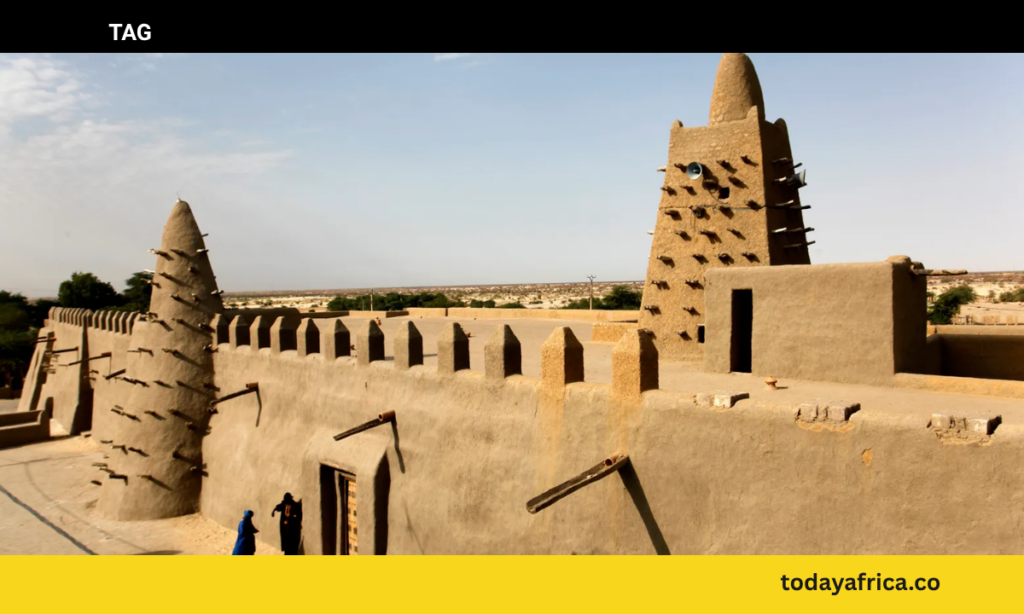
Timbuktu has long occupied a powerful place in the global imagination, but its real history is more substantial than the myth surrounding its name.
UNESCO records its importance as an intellectual and spiritual center during the 15th and 16th centuries, with Sankore University, Islamic schools, manuscripts and major mosques forming part of its historic role.
The city also demonstrates how vulnerable heritage can become during political instability.
Fourteen of the site’s 16 mausoleums were destroyed during the 2012 conflict, while thousands of manuscripts were burned or stolen. UNESCO later documented reconstruction and restoration efforts using traditional knowledge.
Timbuktu therefore represents another emerging opportunity: heritage preservation itself can become part of the tourism economy.
Conservation specialists, cultural researchers, archivists, educators, and technology companies all have roles to play in preserving and interpreting heritage. The travel opportunity comes after the preservation challenge, not before it.
Related: Why African cities are emerging as tourism investment hubs
What these UNESCO sites reveal about African travel
The most interesting story is not that Africa has historic places worth visiting. That has always been true.
The change is in why people travel and what happens around that movement.
Sub-Saharan Africa recorded about 42 million tourism arrivals in 2024, compared with 45 million in 2019, according to World Bank analysis using UN Tourism data. Tourism’s direct contribution to the region’s GDP was estimated at about $52 billion in 2024.
The same analysis points to growing opportunities from domestic and intra-African tourism, as well as cultural, ecological and adventure travel. Across Africa, heritage destinations can therefore become part of a larger movement economy.
A traveler who books a heritage tour may also need a hotel. The hotel creates demand for food suppliers. The visitor needs transportation. Local guides earn income. Artisans gain another market. Creators document the experience. Diaspora travelers may extend their stay or connect the journey with family or business activity.
The World Bank estimates that every new hotel room in Sub-Saharan Africa can create between 1.5 and three direct jobs, while its tourism work identifies substantial potential for further hospitality investment across the region.
That is why UNESCO sites should not be viewed only as monuments. They are potential nodes in much larger local economies.
The opportunity is bigger than the heritage site
For entrepreneurs, the opportunity is increasingly in the layer around the attraction.
That includes booking and mobility platforms, specialist guides, heritage interpretation, local food experiences, cultural retail, accommodation, travel content, photography, genealogy services, events and digital storytelling.
For investors, the question should be more sophisticated than “How many tourists visit?”
The better questions are: How long do visitors stay? What do they spend on? What infrastructure limits growth? Which businesses capture that spending? Where are local communities participating? What happens outside peak travel periods?
For diaspora Africans, heritage destinations can also become part of a broader return-to-origin economy.
Gorée and Ghana’s coastal forts show how historical memory can influence movement. Zanzibar shows how heritage can sit inside a global leisure economy. Lalibela demonstrates the power of pilgrimage. Great Zimbabwe and Aksum show the potential of African-centered historical narratives.
For creators and travel brands, the opportunity is equally significant.
The strongest stories may no longer be about simply arriving somewhere. They can explain how a destination connects history, people, capital, culture, and contemporary business.
That is where travel intelligence becomes useful. Market Intelligence Studio is designed for organizations that need market maps, sector research, country briefs, and opportunity analysis rather than surface-level reporting.
Our broader intelligence products also include Today Africa Atlas and the Visibility Engine, which help African businesses and ecosystem organizations turn their work into credible, investor-ready stories.
The bigger travel story across Africa is therefore not simply where visitors are going. It is what their movement makes possible.
As heritage becomes increasingly connected to diaspora identity, hospitality, cultural production, investment and urban development, Africa’s UNESCO sites are becoming more than destinations on a map.
They are signals of where culture, movement and economic opportunity meet.
Leave a comment and follow us on social media for more tips:
- Facebook: Today Africa
- Instagram: Today Africa
- Twitter: Today Africa
- LinkedIn: Today Africa
- YouTube: Today Africa Studio





![15 Best Beaches in Morocco to See This Year [& Essential Packing List]](https://todayafrica.co/wp-content/uploads/2023/12/Blue-Simple-Dad-Appreciation-Facebook-Post-1200-×-720-px-6-9.png)