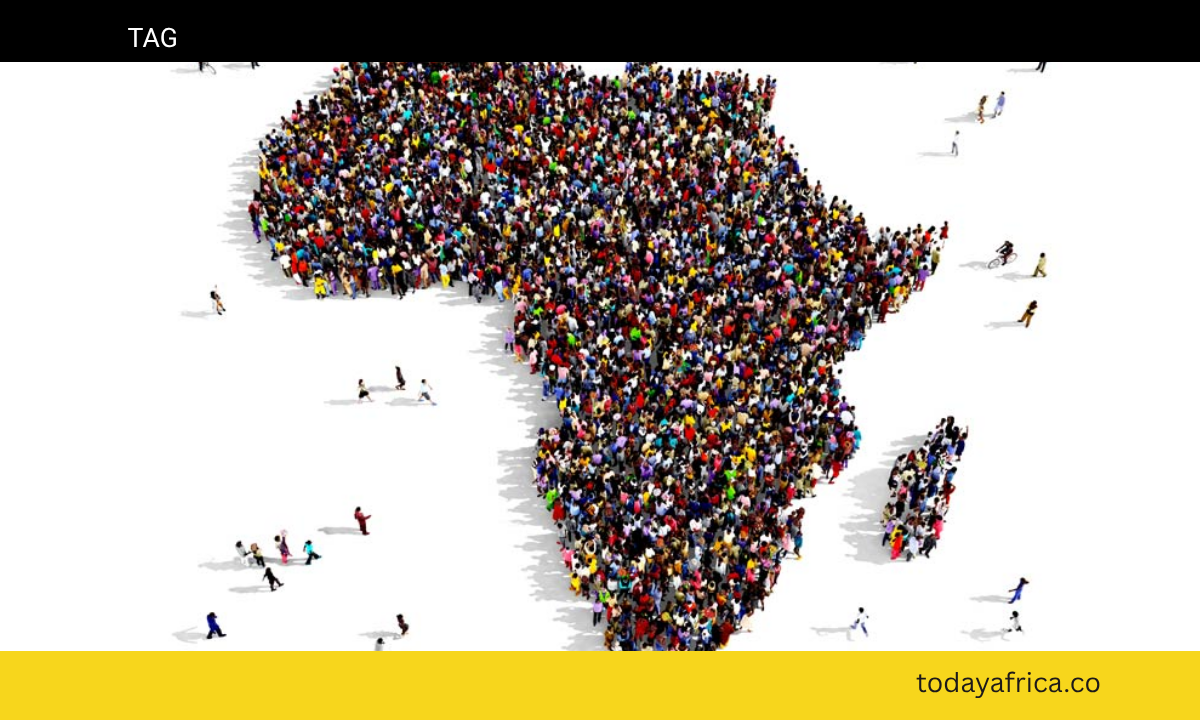


Africa’s diaspora is no longer shaping the continent’s economy only through family remittances. A deeper shift is taking place across global cities, digital networks, investment groups, and startup communities.
Africans abroad are moving from senders of support to builders of opportunity. They are funding businesses, opening foreign markets, advising founders, testing products, and helping African startups think beyond local borders from the beginning.
For decades, money sent home by Africans abroad has helped pay school fees, medical bills, housing costs, funerals, and daily family needs. Those flows still matter deeply. They keep households stable and communities alive.
But today, diaspora money is doing more than filling urgent gaps. It is entering Africa’s business ecosystem as patient capital, early trust, market access, and global knowledge. Quietly, diaspora Africans are becoming investors, first customers, mentors, market scouts, and risk-takers in Africa’s startup economy.
The numbers show why this matters. The World Bank estimated that Sub-Saharan Africa received about $56 billion in remittances in 2024. Across low- and middle-income countries, remittances have surpassed the combined total of foreign direct investment and official aid.
That means African families abroad are not just emotional anchors. They are part of one of the most reliable financial systems connected to the continent.
Startups are beginning to understand this
Fintech companies such as LemFi, NALA, Flutterwave, Chipper Cash, and others have built products around the simple but powerful reality that Africans abroad move money, solve problems across borders, and often think economically in two places at once.
In 2025, Semafor reported that LemFi had raised $53 million after crossing $1 billion in monthly transactions, while NALA had previously raised $40 million as it expanded beyond African corridors. These are not small signals. They show that the diaspora is no longer only a customer group. It is becoming a market category.
Central banks and governments are also watching. Nigeria’s central bank governor, Olayemi Cardoso, told Reuters that Nigerians abroad “really want to invest … beyond just financially,” as the country explored a possible diaspora bond and targeted $1 billion in monthly remittances.
That quote captures the wider mood. The diaspora wants more than nostalgia. It wants access, trust, returns, and a credible path into Africa’s growth story.
Read also: Equity funding: Ultimate guide with 9 smart steps
Diaspora capital connects African markets to global experience, trust, and opportunity

The African diaspora sits at the intersection of three forces: capital, exposure, and trust.
Capital is the most visible. Money moves from New York to Accra, from London to Lagos, from Berlin to Nairobi, from Dubai to Addis Ababa. Some of it arrives as family support, some arrive as school fees, and some goes into land, houses, farming, restaurants, transport, fashion, media, and now digital companies.
Even when these flows are informal, they create demand. They pay salaries, fund inventory, finance equipment, and keep small businesses open.
Exposure is the second force. Africans abroad often live inside advanced financial systems, stronger consumer-protection regimes, mature e-commerce markets, and highly competitive professional environments.
They see what works elsewhere, then ask why a version of it cannot work in Africa. That question has helped shape business models in payments, logistics, telemedicine, online education, creative exports, and digital banking.
The third force is trust, and it may be the most important. Many founders struggle to raise early capital because local banks see startups as too risky, and global investors do not always understand African markets. A diaspora investor may not have unlimited funds, but they may understand the problem, the culture, the founder, and the market gap more quickly than a traditional foreign investor.
That gives diaspora capital a special role. It can enter before big institutional money arrives. It can fund prototypes, first hires, compliance costs, market testing, and early customer acquisition. Also, it can help founders speak the language of global investors because many diaspora professionals work in finance, technology, medicine, law, academia, consulting, logistics, and media.
This is how global exposure shapes local business. A founder in Lagos may build a payments tool for small merchants, but a cousin in Atlanta may help test the product with Nigerian-owned stores in the U.S.
A fashion brand in Accra may gain its first global customers through diaspora communities on TikTok and Instagram, as well as pop-up events. A clean-energy startup in Kenya may find its first angel cheque from a Kenyan engineer in Germany who understands both climate technology and local electricity problems.
The diaspora does not replace local knowledge. The best businesses combine both: the founder who understands the street-level pain point and the diaspora partner who understands global capital, branding, regulation, or scaling.
Diaspora funding is reshaping the startup system beyond individual investments
The effect on African startups is bigger than individual cheques.
Diaspora capital can widen the early-stage funding base
Africa’s startup ecosystem has gone through a difficult funding cycle, with global investors becoming more selective after the 2021 and 2022 boom years. Partech reported that African tech funding rebounded to about $4.1 billion in 2025, up from $3.25 billion in 2024, but much of the capital remains concentrated in major hubs such as Kenya, South Africa, Egypt, and Nigeria. That leaves many promising founders in smaller markets still fighting for attention.
Diaspora investors can help fill that gap. They can back founders from overlooked cities and sectors that mainstream venture capital overlooks. They can invest in small-ticket rounds and can join angel syndicates. And they can support women-led businesses, creative businesses, agribusinesses, health ventures, and local service companies that may not fit the Silicon Valley idea of scale but still create jobs and solve real problems.
Diaspora engagement can improve market access
A startup with diaspora links does not only raise money. It gains a bridge. That bridge may lead to customers in the U.S., Canada, the U.K., Europe, the Gulf, or the Caribbean. For African brands, especially in fashion, food, music, beauty, tourism, media, and fintech, diaspora communities are often the first global audience.
Diaspora money can create opportunities beyond tech
The phrase “startup” often makes people think only of apps and venture capital. But Africa’s next wave of entrepreneurship will also include food processing, logistics, export businesses, property technology, digital health, care services, education, manufacturing, and climate adaptation. These sectors need patient capital, local partnerships, and practical business support. The diaspora can provide all three.
Diaspora engagement creates a psychological effect
It tells founders that Africa’s opportunity is not isolated. A business built in Kigali can speak to customers in Brussels. A product tested in Nairobi can raise funds from investors in London. A founder in Lagos can build for African users at home and diaspora users abroad at the same time.
That is powerful because entrepreneurship depends on belief as much as capital. When diaspora Africans invest, mentor, buy, share, and return, they expand the imagination of what African businesses can become.
Read also: What they hide from you about the Airbnb startup cost
The next opportunity is building stronger pathways between founders and diaspora investors

For founders, the opportunity is clear: stop treating the diaspora only as a donation channel. Treat it as a serious market, investment class, and knowledge network. A founder seeking diaspora capital should start with clarity.
- What problem are you solving?
- What traction do you have?
- How will the investor make money?
- What legal structure protects them?
- How often will you report progress?
Many diaspora investors have previously lost money due to unclear land deals, family pressure, fake businesses, or poor governance. Trust must be built deliberately.
Founders should create simple investor updates, maintain clean financial records, develop realistic projections, and establish transparent ownership agreements.
They should use diaspora networks, alumni groups, professional associations, faith communities, LinkedIn, pitch events, and angel syndicates. They should also make it easy for a small investor to participate without needing to understand every detail of African regulation.
For diaspora Africans, the opportunity is also changing. Engagement no longer has to mean sending money blindly or waiting until retirement to build a house back home.
It can mean joining an angel group, backing a vetted founder, investing through a regulated fund, mentoring a startup, buying African products, opening distribution channels, or helping a local company understand foreign customers.
But caution matters. Diaspora investment should not be driven only by emotion. Investors need due diligence, legal advice, clear documentation, and realistic expectations. Africa is full of opportunity, but it is not risk-free.
Currency swings, weak regulation, political uncertainty, poor reporting, and founder inexperience can destroy good intentions.
The future belongs to a more disciplined model: diaspora capital with structure, local founders with accountability, and African markets with better investment pathways.
The next wave of African startups may not be funded only from boardrooms in Silicon Valley, London, or Dubai. It may be quietly funded by nurses, engineers, drivers, doctors, accountants, creators, students, and small-business owners abroad who still see Africa as home and the next great market.
That is the real story. The diaspora is not standing outside Africa’s economy. It is already inside it, wiring money, opening doors, testing products, shaping demand, and financing ambition one transaction at a time.
Comment and follow us on social media for more tips:
- Facebook: Today Africa
- Instagram: Today Africa
- Twitter: Today Africa
- LinkedIn: Today Africa
- YouTube: Today Africa Studio