
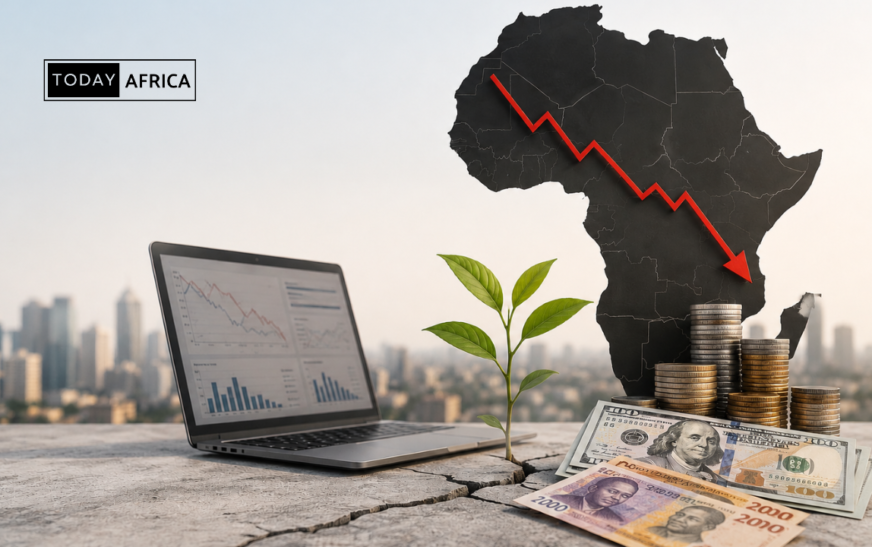
Across Africa, currency instability has moved from being a background macroeconomic concern to a frontline business survival issue.
For years, founders treated exchange-rate pressure as one more cost of operating in emerging markets. But the past few years have changed the scale of the problem.
Currency reforms, dollar shortages, inflation shocks, subsidy removals, rising import costs, and tighter global capital have forced African startups to think less like growth companies and more like macro-risk managers.
The shift is not only about one currency falling against the dollar. It is about uncertainty. A startup can plan around a weak exchange rate if the weakness is predictable.
What destroys business confidence is when the costs of cloud services, imported hardware, medicine, fuel, logistics, repayment obligations, and investor expectations change faster than revenue can adjust to.
And the wider dollar funding squeeze all point to the same structural lesson: African businesses are increasingly being tested by the gap between local-currency revenue and foreign-currency costs.
That gap now sits at the center of startup survival.
This is why currency instability matters so deeply. It does not simply reduce profit. It changes the rules of growth. In a stable-currency environment, a startup can scale by acquiring customers, improving margins, and raising capital at the right time.
In a volatile currency environment, the same startup must also defend its balance sheet, reprice frequently, protect cash reserves, negotiate supplier terms, and explain to investors why revenue growth in local currency may appear weaker when converted into dollars.
As one African investor might put it, the first question is no longer only, “How fast is the company growing?” It is also, “In what currency is that growth real?”
The deeper system driving Africa’s currency pressure
Currency instability in African markets is not accidental. It is the result of deeper structural forces.
Many African economies remain heavily dependent on imports for fuel, refined petroleum products, machinery, medicines, wheat, fertilizer, vehicles, technology hardware, and industrial inputs.
When global prices rise, or the local currency weakens, the import bill climbs quickly. That pressure feeds into inflation, drains foreign reserves, and increases demand for dollars.
At the same time, many governments carry debt obligations linked to foreign currency. When a local currency weakens, the domestic cost of servicing external debt rises.
That can push governments toward higher taxes, spending cuts, domestic borrowing, or tighter monetary policy. Each of those choices has a direct business effect.
If interest rates rise, startups face more expensive credit. And if governments borrow heavily from domestic banks, private businesses can be crowded out. If taxes increase, consumer spending may soften.
And if fuel prices rise, logistics and production costs jump. If inflation stays high, workers will need higher wages even as companies try to preserve cash.
This is the system behind the startup squeeze.
There is also a capital-market problem. Many African startups raise money in dollars, especially from international investors, but earn revenue in local currencies. That creates a valuation mismatch.
A company may double local revenue, but if the local currency falls sharply, dollar-denominated performance can look flat or even negative. This affects investor confidence, follow-on funding, acquisition pricing, and the company’s ability to meet debt obligations.
The same mismatch affects venture debt. Debt financing has become more important in African tech, especially for asset-heavy sectors such as mobility, climate, energy, logistics, and embedded finance.
But debt is only helpful when repayment currency matches revenue currency. Dollar debt can become dangerous when the borrower earns mainly in local currency.
Egypt’s experience shows the risk of heavily managed exchange rates. When currencies are held artificially steady for too long, pressure can build beneath the surface. Once the adjustment arrives, it can do so suddenly, fueling inflation and weakening investor confidence.
Nigeria’s reforms show a similar tension from another angle: exchange-rate flexibility can improve transparency and attract capital over time, but the short-term pain for households and businesses can be severe.
That is the hard policy balance African governments now face. Too much control can create shortages and parallel markets. Too much volatility can frighten investors and punish businesses.
The goal is not a permanently strong currency. The goal is a credible currency system that businesses can plan around.
Read also: Why African economies are quietly rewiring through SMEs
How currency instability hits SMEs, startups, and investors
How currency instability hits SMEs
For SMEs, currency instability is often immediate and brutal. A small manufacturer importing packaging materials may wake up to find that the next shipment costs 20% more in local currency. A pharmacy may need to raise prices on imported drugs, even when customers are already stretched.
And a food processor may face higher costs for fertilizer, transport, spare parts, and power. A retailer may choose between protecting margins and losing customers.
The problem is worse because many SMEs lack hedging tools, treasury departments, or access to affordable working capital. They operate close to the edge. When currency volatility hits, they respond by reducing stock, delaying expansion, cutting staff, raising prices, or switching to cheaper inputs.
Ways currency instability hits startups
Startups face a more complex version of the same problem.
- High-growth companies are built on assumptions.
- Customer acquisition cost.
- Gross margin.
- Burn rate. Runway.
- Pricing. Salary structure.
- Cloud cost. Hardware cost.
- Revenue growth.
- Investor timelines.
- Currency instability attacks all of those assumptions at once.
A startup that raised $2 million may think it has 18 months of runway. But if imported costs jump, salaries rise with inflation, and dollar-linked tools become more expensive, that runway can shrink quickly.
A founder who planned to expand into three markets may be forced to defend the core market instead. A company preparing for a Series A may discover that investors are discounting local-currency revenue more aggressively.
Ways currency instability hits investors
The investor implications are clear.
First, investors are paying more attention to currency quality. Revenue is no longer judged only by volume but by convertibility, stability, and margin protection. Dollar-linked revenue, export revenue, diaspora payments, cross-border settlement income, and hard-currency contracts are increasingly attractive.
Second, capital is becoming more disciplined. The rebound in African tech funding does not mean investors are returning to the old growth-at-all-costs model. More funding is now flowing into companies that can show resilience, cash discipline, and clearer paths to profitability.
Third, debt is becoming both an opportunity and a warning signal. Debt can help startups scale without heavy dilution. But in unstable currency environments, poor debt structure can destroy a company faster than slow customer growth. The key question is whether the startup’s repayment obligation matches its revenue base.
This is why founders now need a currency strategy as much as a product strategy.
That strategy may include pricing in shorter cycles, negotiating supplier contracts in local currency, building dollar revenue streams, keeping part of reserves in hard currency where legally possible, reducing dependence on imports, using local infrastructure providers, or expanding into markets with more stable currency conditions.
The best African startups are no longer just solving customer problems. They are designing business models that can survive macro shocks.
Read also: 12 grants for African entrepreneurs and students
Where new growth opens in a volatile currency era
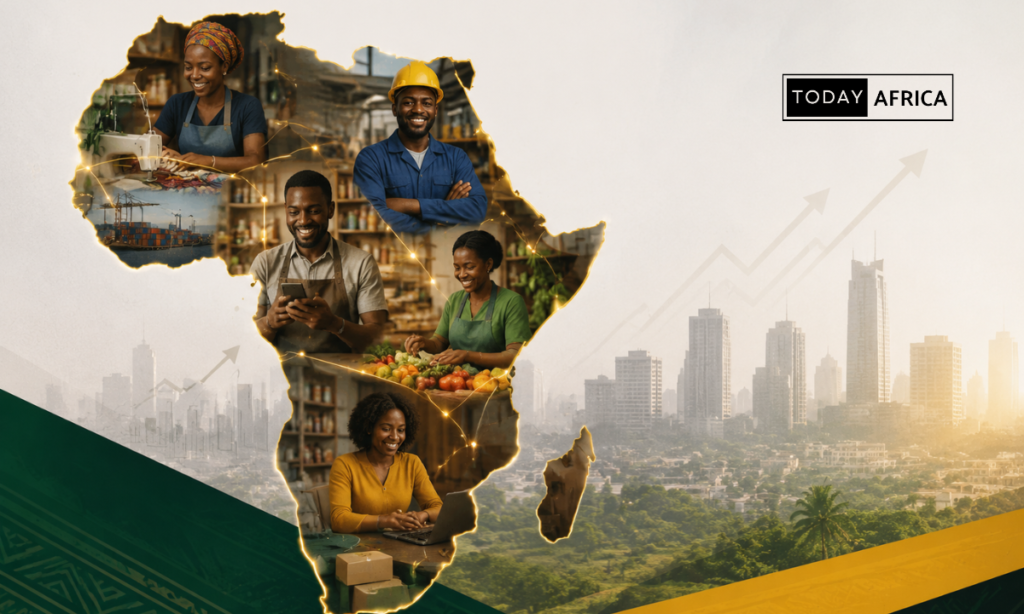
Currency instability is painful, but it is also creating new markets.
Local-currency financing
The first opportunity is in local-currency financing. As dollar debt becomes riskier, demand is rising for financing products that match the realities of African cash flows.
Banks, fintech lenders, development finance institutions, and private credit funds that can provide local-currency working capital will become increasingly important.
This is especially valuable for SMEs in agriculture, logistics, manufacturing, retail, and healthcare. These businesses need credit that does not penalize them when the exchange rate moves.
Treasury and risk-management tools for African businesses
The second opportunity is in treasury and risk-management tools for African businesses. Most SMEs still manage currency risk informally.
That creates room for fintech platforms offering better FX visibility, invoice timing, supplier payment tools, hedging access, multi-currency wallets, cash-flow forecasting, and automated repricing intelligence.
Export-oriented startups
The third opportunity is in export-oriented startups. Companies that earn in dollars, euros, or other hard currencies while operating with part of their cost base in local currency may become more attractive.
This includes business process outsourcing, software services, creative exports, professional services, digital talent platforms, remote work infrastructure, and cross-border trade platforms.
Import substitution
The fourth opportunity is in import substitution. Currency weakness makes imported goods more expensive, but it can also improve the case for local production.
Startups and SMEs in agro-processing, local manufacturing, renewable energy components, packaging, repair services, logistics technology, and industrial inputs may benefit if policy support, financing, and infrastructure align.
Regional diversification
The fifth opportunity is regional diversification. A startup dependent on one unstable currency is exposed. A startup operating across multiple African markets can better balance risk, especially when revenue comes from countries with different currency cycles.
This is not easy because Africa’s markets remain fragmented by regulations, payment systems, languages, tax rules, and logistics. But the direction is clear: the regional scale is becoming a risk-management tool.
East Africa may benefit from stronger growth dynamics and comparatively deeper mobile-money ecosystems. North Africa can attract capital when reforms enhance exchange-rate credibility and export competitiveness.
West Africa remains a major opportunity because of its market size, urbanization, and fintech depth, but founders must design carefully around currency risk and inflationary pressures.
South Africa, Kenya, Egypt, Nigeria, Ghana, Morocco, and Rwanda will remain important, but the winners will not simply be the biggest markets. They will be the markets that combine demand with policy credibility, payment reliability, and access to capital.
The big picture is simple: currency instability is forcing African startups to mature.
It is ending the illusion that market size alone is enough. It is pushing founders to understand macroeconomics, investors to price risk more intelligently, and policymakers to see currency credibility as a private-sector development tool.
For African startups, survival will increasingly depend on three questions.
- Can the company protect margins when the currency moves?
- Can it earn revenue in a currency stronger than its cost base?
- Can it raise capital in a way that matches how its customers actually pay?
The next wave of African startup success will not only come from companies with bold ideas. It will come from companies built for unstable systems.
In Africa’s new economy, the strongest startup is not always the fastest-growing one. It is the one that can keep growing when the currency moves against it.
Leave a comment and follow us on social media for more tips:
- Facebook: Today Africa
- Instagram: Today Africa
- Twitter: Today Africa
- LinkedIn: Today Africa
- YouTube: Today Africa Studio