
Last week offered another reminder that Africa’s digital future will not be built only around consumer apps, flashy launches, or short-term growth stories.
The strongest signals came from companies building deeper foundations: financial infrastructure, employment platforms, climate solutions, artificial intelligence, healthcare access, and connectivity.
The investors paying attention are looking beyond the next viral product. They are searching for businesses capable of becoming essential parts of Africa’s economic engine.
Key moves last week
Funding continued to flow into practical, high-impact startups
African startup funding activity remained focused on companies building solutions tied to everyday economic needs.
Kenyan startups Fuzu and Kyosk secured funding from the Jobtech Alliance, reinforcing investor interest in employment technology and digital marketplaces connecting workers, businesses, and consumers.
The funding momentum extended beyond early-stage ventures. TechCabal’s weekly funding tracker highlighted a:
- $20.3 million raised by South African fintech startup Bridgement.
- Kenyan HRtech company Fuzu announced a $3.86 million Series A round backed by investors including Sparkmind.vc, Finnfund, Seedstars International, and Kepple Africa Ventures.
- South African AI startup HyperDev also secured $1 million in seed funding.
The broader picture remains positive. African startups raised $1.44 billion in the first half of 2026, slightly above the $1.42 billion recorded during the same period in 2025.
However, the nature of funding has changed, with fewer deals but larger rounds going toward companies with stronger infrastructure and revenue potential.
Climate technology gained fresh investor attention
Climate innovation remained one of the strongest investment themes of the week.
Katapult Africa opened applications for its latest climate-focused accelerator, targeting startups working across agritech, climate-smart agriculture, and resilient food systems.
Selected companies will have access to investment opportunities ranging from $150,000 to $500,000.
This reflects a broader shift in African venture capital, where investors are increasingly looking beyond consumer applications to businesses addressing energy, food security, mobility, and environmental challenges.
Digital policy and infrastructure debates accelerated
Technology policy also featured prominently during the week. Nigeria moved toward a more coordinated digital policy approach, with discussions around pausing new internet platform rules while developing a unified framework for digital regulation.
Meanwhile, Kenya’s digital infrastructure market continued to show strong demand.
Starlink paused new subscriptions in parts of Kenya after experiencing a surge in demand, highlighting the growing appetite for alternative connectivity solutions across African markets.
New startups targeted healthcare, safety, and AI opportunities
African founders continued applying technology to social challenges. Nigerian startup Andrea Aid emerged as a healthcare crowdfunding platform designed to improve trust and transparency in medical fundraising, addressing concerns around verification and fraud in online donation systems.
Artificial intelligence also gained momentum. A South Africa-founded startup launched an AI model with a 10-million-token memory capacity, reflecting the growing competition among African companies developing advanced AI capabilities.
The pattern behind the week
Investors are moving from growth stories to infrastructure plays
The strongest pattern this week was a continued shift away from purely consumer-focused startups toward businesses that support economic systems.
Fintech remains important, but investors are increasingly interested in companies improving payments, credit access, workforce participation, logistics, healthcare delivery, and industrial efficiency.
The funding data from the first half of 2026 shows that larger rounds are concentrating around companies with clearer paths to scale.
This represents a more mature African technology market. The question is no longer simply whether a startup can acquire users. Investors are asking whether businesses can build lasting infrastructure around Africa’s growing digital economy.
Employment technology is becoming a strategic sector
The continued backing of job platforms signals growing recognition of Africa’s workforce challenge.
With millions of young Africans entering the labor market every year, technology platforms that improve hiring, skills development, and income opportunities are becoming increasingly important.
The Fuzu funding round and Jobtech Alliance investments show that employment technology is moving from a social-impact category to a commercial opportunity.
AI is shifting from experimentation to deployment
Artificial intelligence remained a major theme, but the conversation is becoming more practical. African companies are increasingly building AI tools designed for local business needs rather than simply adopting imported solutions.
The emergence of AI startups, combined with initiatives supporting African AI development, suggests the continent is entering a phase where local data, language capabilities, and market understanding could become competitive advantages.
What it signals
Africa’s next technology wave will be built around essential services
The week’s activity suggests that African markets are entering a period in which technology companies will be judged by their ability to solve fundamental problems.
Payments, healthcare access, employment, agriculture, mobility, and connectivity are gaining attention because they address large underserved markets. Companies operating in these areas may have stronger long-term opportunities than businesses that rely solely on consumer growth.
Venture capital is becoming more disciplined
The funding environment is improving, but investors are showing greater caution.
The era of raising large amounts based only on market potential appears to be fading. Startups with strong operational models, measurable revenue, and clear expansion strategies are attracting more confidence.
The $1.44 billion raised during the first half of 2026 demonstrates that capital is available, but it is increasingly concentrated among companies that can prove durability.
Regional hubs continue strengthening
East Africa remained particularly active during the week, with Kenya featured in discussions on funding, connectivity, and technology.
At the same time, Nigeria maintained its position as a major innovation hub, especially in fintech, healthcare technology, and AI development.
What to watch next
The next wave of climate-tech funding
Climate technology will likely remain a major investment category as African markets deal with energy reliability, food security, and environmental pressure. Accelerator programs and new climate funds could become important pipelines for the next generation of startups.
AI companies moving toward commercial adoption
The next stage for African AI startups will be proving business value. Companies developing tools for customer service, healthcare, education, finance, and enterprise operations will be closely watched as adoption expands.
Digital regulation across major markets
As governments introduce new technology policies, regulatory clarity will become a major factor influencing startup growth. Nigeria’s digital policy discussions and Kenya’s technology developments show that governments are increasingly shaping the environment in which startups operate.
Bigger infrastructure investments
Connectivity, payments, logistics, and mobility remain critical areas. Companies building the foundation of Africa’s digital economy could attract more attention as investors look for businesses capable of serving millions of users across multiple countries.
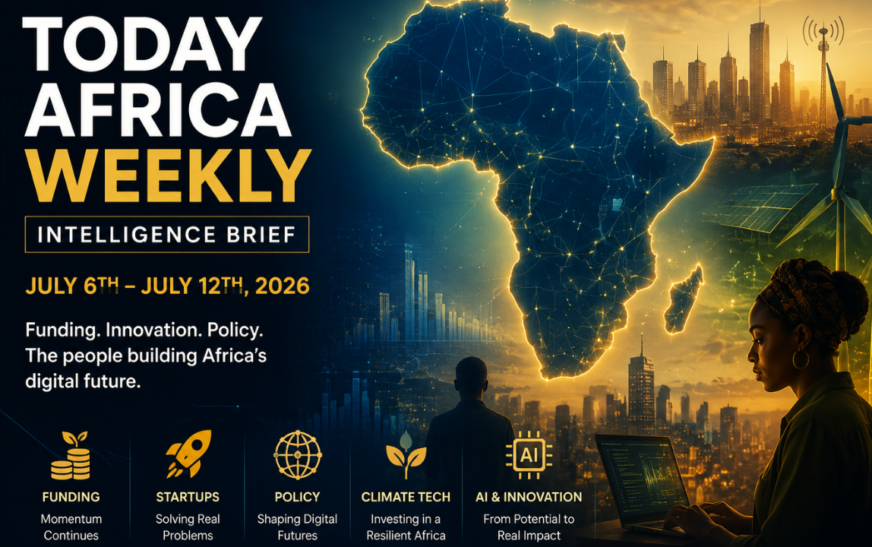
July 6th – July 12th, 2026, reinforced a clear message: Africa’s technology market is entering a more mature phase.
Capital remains available, but the winners will likely be companies that solve essential problems with scalable infrastructure, strong execution, and measurable economic impact.
Leave a comment and follow us on social media for more tips:
- Facebook: Today Africa
- Instagram: Today Africa
- Twitter: Today Africa
- LinkedIn: Today Africa
- YouTube: Today Africa Studio