
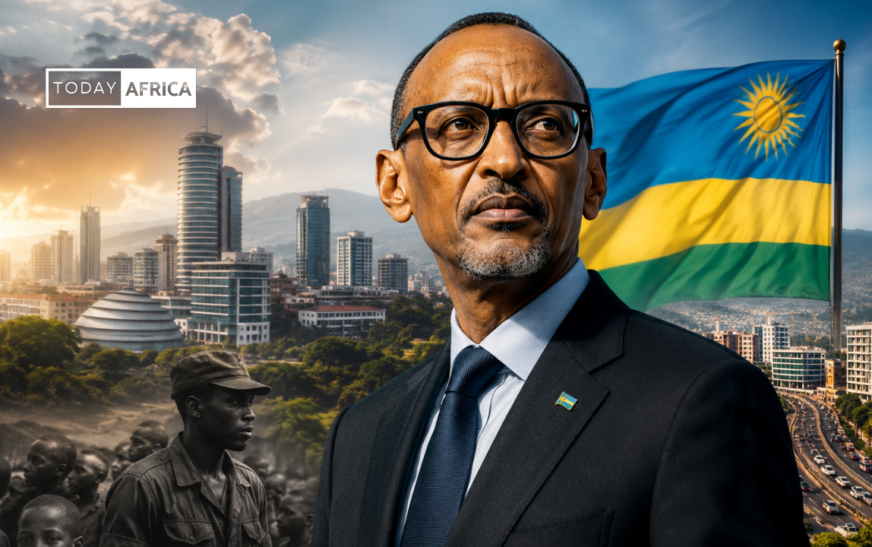
Paul Kagame’s journey from refugee child to one of Africa’s most influential leaders is more than a political biography.
It is a study of how long-term vision, institutional discipline, and relentless execution can reshape a nation, as well as a warning about the risks posed when transformation becomes inseparable from a single powerful leader.
Paul Kagame did not inherit an ordinary leadership assignment. He emerged at the center of a country devastated by genocide, displacement, institutional collapse, and profound social mistrust.
Rwanda needed more than a new government. It needed a new national operating system.
Under Kagame’s leadership, the country became known for security, administrative efficiency, ambitious development plans, digital public services, women’s political representation and sustained economic growth.
Yet Rwanda’s tightly controlled political environment, the restriction of serious opposition and unresolved questions about regional conduct complicate any attempt to present Kagame as a simple development hero.
His life, therefore, offers African builders something more useful than praise or condemnation.
It offers a case study in how transformation is designed, how power accelerates execution, and why strong institutions must eventually become stronger than the individual who built them.
From refugee life to a national mission
Paul Kagame was born in Rwanda’s Southern Province on October 23, 1957. His family fled ethnic violence in 1960, crossing into neighboring Uganda when he was still a young child.
He grew up among Rwandan refugees who lived outside their homeland without certainty that they would ever be allowed to return.
That experience was not a minor chapter in his childhood. Exile became the environment in which his political consciousness was formed.
A child raised in a stable country may see government as a permanent structure. A refugee child often sees the state differently. The state can be a protector, but it can also disappear, exclude, or turn violently against sections of its own population.
Kagame’s later emphasis on national security, unity, order and state control cannot be separated from this early experience. He grew up learning that weak institutions and manipulated identities could have fatal consequences.
As a young man, he joined the rebel movement led by Yoweri Museveni in Uganda. Kagame developed experience in military organization and intelligence as Museveni’s forces fought their way to power in 1986.
He later became one of the leading figures in the Rwandan Patriotic Front, an organization formed largely by Rwandan exiles seeking the right to return home.
When the RPF began its military campaign in Rwanda in 1990, Kagame eventually assumed command.
The form you have selected does not exist.
In 1994, following the genocide against the Tutsi and the murder of moderate Hutu, RPF forces defeated the government responsible for the mass killings and took control of the country.
The refugee had returned, but not simply as a citizen. He returned as the commander of the force that would shape Rwanda’s post-genocide political order.
Read also: Jason Njoku: iROKOtv and African streaming revolution
The soldier who became a state-builder
After the genocide, Kagame served as vice president and defense minister under President Pasteur Bizimungu. He became president in 2000 and has remained Rwanda’s central political figure ever since.
The transition from military command to national administration required a different kind of leadership.
Winning a war depends heavily on command, coordination, and discipline.
Rebuilding a country requires those qualities, but it also demands schools, hospitals, courts, roads, investment systems, public servants, and a national story capable of holding a wounded society together.
Kagame’s government approached reconstruction as a long-term strategic project rather than a collection of temporary programs. ~
Rwanda’s Vision 2020 identified six connected pillars, including capable governance, skilled human capital, private-sector development, modern agriculture and physical infrastructure. The strategy was later followed by the National Strategy for Transformation and Vision 2050.
This sequence reveals an important feature of Kagame’s leadership: he thinks in systems.
Rwanda did not announce one grand national vision and leave it hanging on government walls. Long-term targets were divided into medium-term strategies, sector plans, district objectives, and annual measurements.
The country’s Imihigo system demonstrates this operating philosophy. Introduced nationally in 2006, Imihigo uses performance contracts to establish measurable commitments for public institutions and local leaders.
The system is designed to connect planning, delivery, and accountability across ministries and districts.
For African entrepreneurs and professionals, this offers a powerful lesson: ambition is useful only when it is translated into routines, ownership, deadlines, and measurable results.
Read also: Inside the mind of the founder of Ingressive Capital, Maya Horgan Famodu
The decisions that changed Rwanda’s trajectory
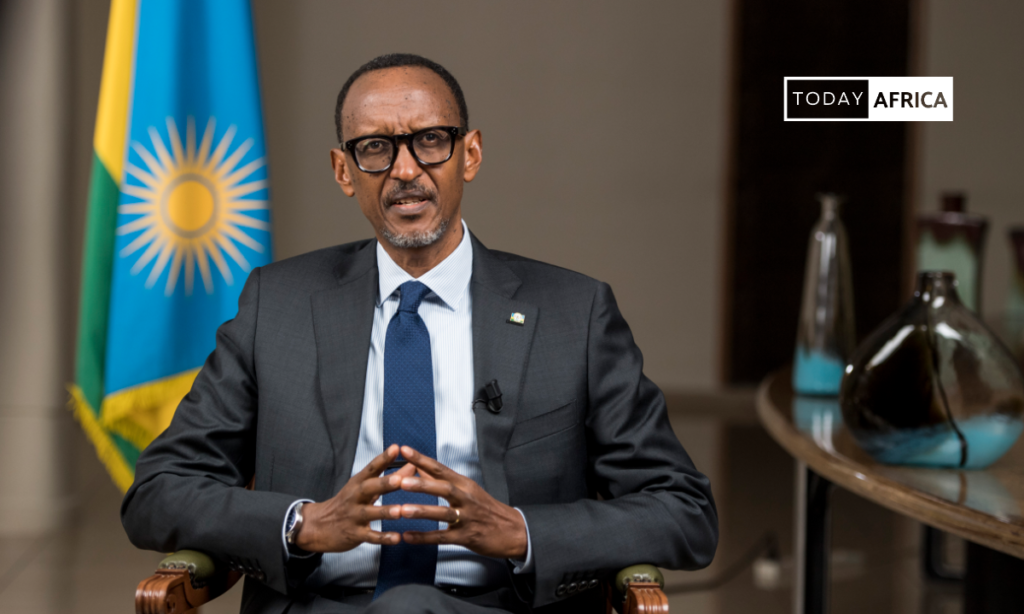
Kagame’s rise cannot be explained by ambition alone. Many leaders have promised transformation. Far fewer have constructed machinery capable of pursuing it for decades.
Several defining decisions separated Rwanda’s model from conventional development politics.
He treated security as economic infrastructure
Kagame’s government placed security and social order at the foundation of reconstruction. The underlying argument was simple: investors, tourists, entrepreneurs, and families cannot plan for the future when daily life is dominated by instability.
This helped Rwanda establish a reputation for safety, predictability, and administrative control. That reputation became part of the country’s economic offer.
The broader lesson is not that every institution should adopt military discipline. It is that growth depends on a dependable operating environment. A brilliant strategy cannot survive permanent disorder.
For a founder, that environment may mean reliable financial records, clear contracts, and consistent product delivery. For a government, it means enforceable rules, secure communities, and institutions that function beyond ceremonial announcements.
He turned national vision into an execution chain
Many African development plans contain impressive language but weak connections between national goals and daily public-sector work.
Rwanda attempted to close that gap. Vision 2020 was followed by implementation strategies, district plans, institutional targets, and performance reviews.
The current National Strategy for Transformation covers 2024 to 2029 and connects Rwanda’s immediate priorities to its ambitions of attaining upper-middle-income status by 2035 and high-income status by 2050.
Kagame’s most transferable leadership lesson may therefore be operational rather than ideological: every vision needs a chain of execution.
A continental ambition must become a national policy, a national policy must become a sector target, and a sector target must become an institutional responsibility.
Institutional responsibility must become a weekly action. Without that chain, vision remains performance.
He made competence part of Rwanda’s brand
Rwanda is small, densely populated, and landlocked. It does not possess the market size of Nigeria, the mineral wealth of the Democratic Republic of Congo, or the industrial base of South Africa.
Kagame’s government therefore pursued another competitive advantage: the perception of competence.
Investment promotion was centralized under the Rwanda Development Board, which provides investors access to registration, permits, and related services through a one-stop service.
Rwanda also invested in platforms such as Irembo to move public services online and reduce dependence on fragmented physical processes.
This was partly administrative reform and partly strategic storytelling. Rwanda wanted the world to associate the country with efficiency, cleanliness, technology, conferences, and serious execution rather than genocide and humanitarian catastrophe.
Builders can learn from this. Reputation is not decoration. It is economic infrastructure.
A company known for reliability attracts partnerships more easily. A professional known for finishing difficult work gains access to larger opportunities.
And a country known for predictable execution receives attention beyond what its population or natural resources might ordinarily command.
The form you have selected does not exist.
He invested in visible social systems
Rwanda’s transformation strategy did not focus entirely on skyscrapers, tourism campaigns or international conferences.
The country expanded community-based health insurance, strengthened local health delivery, and built systems intended to make basic care more accessible.
A 2025 African Health Observatory policy brief estimated that Rwanda’s community-based health insurance coverage had reached 93.1%, while out-of-pocket health expenditure fell substantially between 2000 and 2020.
Rwanda also became a global leader in women’s political representation. Women held 63.75% of seats in the Chamber of Deputies after the 2024 elections.
These outcomes illustrate a wider principle: transformation becomes credible when ordinary people can see it inside institutions that affect their daily lives.
A national brand cannot survive indefinitely if it exists only at airports, government summits, and luxury developments. In the same way, a company’s mission means little when customers and employees cannot experience it in the product.
Read also: Fred Swaniker: Building Africa’s leadership pipeline
Rwanda’s transformation was designed, not improvised
The economic results have been substantial.
Rwanda’s economy grew by 9.4% in 2025, after averaging 8.5% growth between 2022 and 2024. Services, transport, trade, construction, and agriculture contributed to the expansion.
This performance did not emerge from a single breakthrough industry. Rwanda constructed a portfolio of national bets: tourism, digital services, infrastructure, agriculture, financial services, aviation, investment promotion, health, and conference hosting.
That portfolio mindset is valuable for African builders.
Overdependence on a single client, commodity, investor, or distribution platform creates fragility. Rwanda’s development model underscores the importance of building multiple reinforcing engines rather than relying on a single miracle sector.
The country’s transformation also demonstrates the value of compounding.
A digital government platform may initially save citizens a few hours. Over several years, it can reduce transaction costs, improve data collection, discourage petty corruption, and make formal participation easier.
A one-stop investment agency may begin as an administrative reform. Over time, it can become part of a country’s international reputation.
Builders studying complex African markets need this same ability to connect scattered signals.
Our Market Intelligence Studio helps organizations understand what is actually changing beneath the headlines. That kind of structured intelligence matters because strong decisions are rarely made from isolated facts.
The hard question: transformation at what political cost?
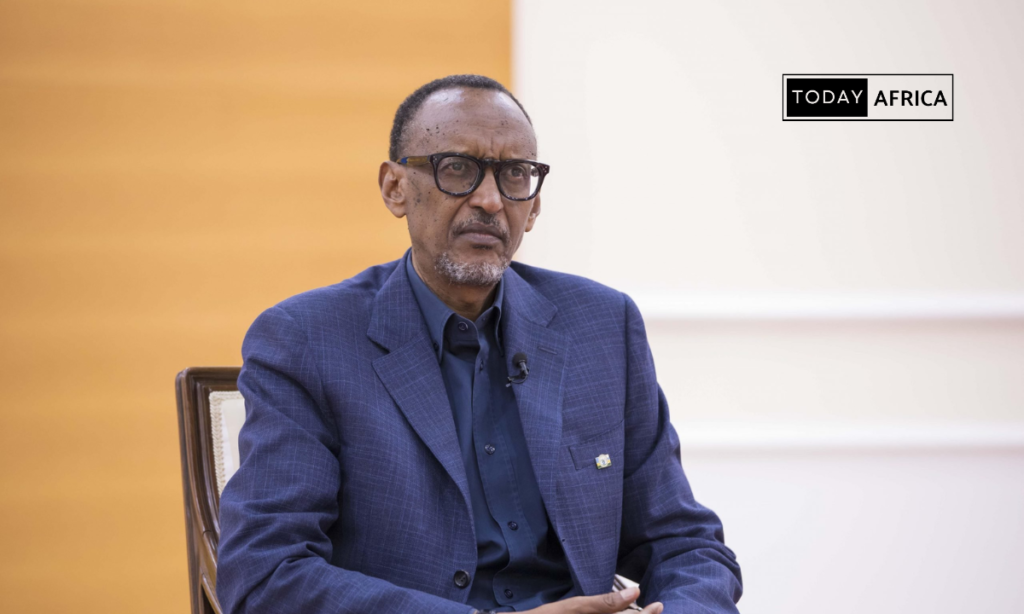
Any serious analysis of Kagame must confront the central contradiction of his record.
Rwanda’s model has delivered stability, policy consistency and measurable development. It has also concentrated political power around Kagame and the RPF.
Kagame won another five-year term in the July 2024 presidential election with 99.18% of the vote. Eight other prospective candidates, including prominent government critics, were barred from contesting, leaving only two challengers on the final ballot.
Human Rights Watch described the election as taking place against a background of repression, while Freedom House has documented restrictions involving opposition activity, surveillance, detention, and political dissent.
Rwanda’s government rejects characterizations that reduce its political system to repression and argues that its approach protects unity and stability after genocide.
Regional policy has also drawn scrutiny.
In 2025, the United Nations Security Council called on Rwanda to stop supporting the M23 armed group and withdraw its forces from the Democratic Republic of Congo.
Rwanda has repeatedly disputed allegations surrounding its role, framing its actions as responses to cross-border security threats.
These issues are not side notes. They are part of the leadership blueprint.
A system capable of moving rapidly because authority is highly centralized may also struggle to tolerate disagreement, distribute decision-making, or prepare for succession. The same concentration of power that produces coordination can create institutional dependence.
That is the warning inside Kagame’s achievement.
Builders should study how he created focus, discipline, and continuity. They should not conclude that accountability, open debate, or independent institutions are obstacles to execution.
Leadership becomes most durable when the system can survive criticism, transition, and the departure of its founder.
Read also: Kwame Nkrumah biography – A teacher who became Ghana’s first leader
What Kagame’s journey reveals about African success
Kagame’s life challenges the belief that African transformation must wait for perfect conditions. Rwanda began its reconstruction without a large domestic market, coastline, or major petroleum reserves.
Its most important initial resources were strategic clarity, social discipline, international partnerships, and a government determined to build administrative capacity.
State capacity is itself a competitive advantage
Countries do not advance through vision alone. They advance when institutions can collect information, make decisions, coordinate people, and complete projects.
Narrative power shapes economic possibility
Rwanda could have remained internationally defined by tragedy. Its leadership deliberately promoted a different identity centered on recovery, safety, technology, and ambition. That new story attracted visitors, investors, conferences, and diplomatic attention.
Consistency compounds
A reform repeated across 20 years becomes an institution. An institution repeated across sectors becomes a national culture. A national culture, when recognized externally, becomes a form of influence.
Development does not remove the need for political legitimacy
Economic growth, efficient services, and attractive cities cannot permanently answer questions about participation, civil liberties, institutional independence, and succession. Development and freedom should not be treated as rival products from which African societies must choose only one.
Read also: Thomas Sankara biography: The man who dared to dream of a self-reliant Africa
The blueprint for African entrepreneurs
Kagame’s journey should not be copied as a complete model. It should be examined for principles that can be separated from personality and applied responsibly.
Begin with a precise diagnosis
Kagame’s Rwanda was built around a clear understanding of the country’s vulnerabilities: division, insecurity, weak institutions, limited resources and a damaged international identity. African founders should begin the same way. Do not build from excitement alone. Define the exact problem, the people affected, the structural cause and the reason existing solutions have failed. Precision creates strategic focus.
Convert the vision into an operating system
A 10-year ambition must become an annual target. An annual target must become a quarterly priority. A quarterly priority must become a weekly responsibility. Every important goal needs an owner, a deadline, a measurement, and a review process. This is the organizational equivalent of Rwanda’s development plans and performance contracts. Dreams become institutions through cadence.
Build institutions before chasing scale
A founder can sometimes manage every decision during the early stage of a company. That becomes dangerous as the organization grows. Document the process. Train another leader. Establish clear financial controls. Create systems that produce the expected result without requiring the founder’s constant intervention. The true test of institution-building is not what happens when the leader is present. It is what continues in the leader’s absence.
Make reliability part of the brand
Rwanda used order and administrative competence to distinguish itself. African businesses can do the same by providing fast communication, honest pricing, clear documentation, dependable delivery, and professional customer care. A smaller company that consistently keeps its promises can outperform a larger competitor that creates uncertainty.
Measure outcomes, not activity
Meetings held, reports written, and social posts published are activity metrics. They do not necessarily represent progress. Measure the change created.
- Did revenue improve?
- Did delivery become faster?
- Did customer retention rise?
- Did the product reduce a real cost?
- Did the program improve people’s lives?
Execution without measurement can become organized motion without meaningful movement.
Create several engines of growth
Rwanda pursued tourism, technology, finance, services, infrastructure,, and investment rather than relying on a single economic sector. Builders should apply the same logic. Develop more than one customer-acquisition channel. Avoid relying entirely on a single platform. Build recurring revenue alongside project income. Strengthen the core product while testing adjacent opportunities. Resilience comes from connected engines.
Design succession while influence is still growing
This may be the most important lesson. Founders often treat succession as a conversation for a distant future. By then, the organization may have become too dependent on their personality, relationships, and private knowledge. Train leaders early. Distribute authority deliberately. Make information accessible. Allow systems to challenge the founder. The ultimate achievement is not remaining indispensable. It is building something important that no longer depends entirely on one person.
The transformation leader and the unfinished test
Paul Kagame’s biography cannot be reduced to a refugee who became president, a soldier who won a war, or a leader who improved a country’s economic image.
His deeper story is about construction.
He helped construct a military movement, a post-genocide political order, a national development strategy, a disciplined public administration, and a new international identity for Rwanda.
The results are visible. So are the tensions.
Rwanda’s economic growth remains strong, yet the World Bank warns that job creation is insufficient, productivity remains low, poverty reduction has weakened, and public debt is projected to exceed 77 percent of GDP by the end of 2026.
This means the transformation is real, but unfinished.
Kagame’s final leadership test will not be another election victory, another growth figure or another international summit. It will be a test of whether Rwanda’s institutions can preserve progress, expand opportunity, tolerate meaningful accountability, and operate successfully beyond the era of his personal command.
For African builders, that is the complete blueprint.
See the problem clearly. Built for decades. Create disciplined systems. Protect the mission. Measure real outcomes. Tell a stronger story. But never allow the institution to become smaller than its founder.
The form you have selected does not exist.
Leave a comment and follow us on social media for more tips:
- Facebook: Today Africa
- Instagram: Today Africa
- Twitter: Today Africa
- LinkedIn: Today Africa
- YouTube: Today Africa Studio



![Biography of Tony Elumelu [Investor, Entrepreneur, & Philanthropist]](https://todayafrica.co/wp-content/uploads/2023/12/Blue-Simple-Dad-Appreciation-Facebook-Post-1200-×-720-px-7-1.png)