
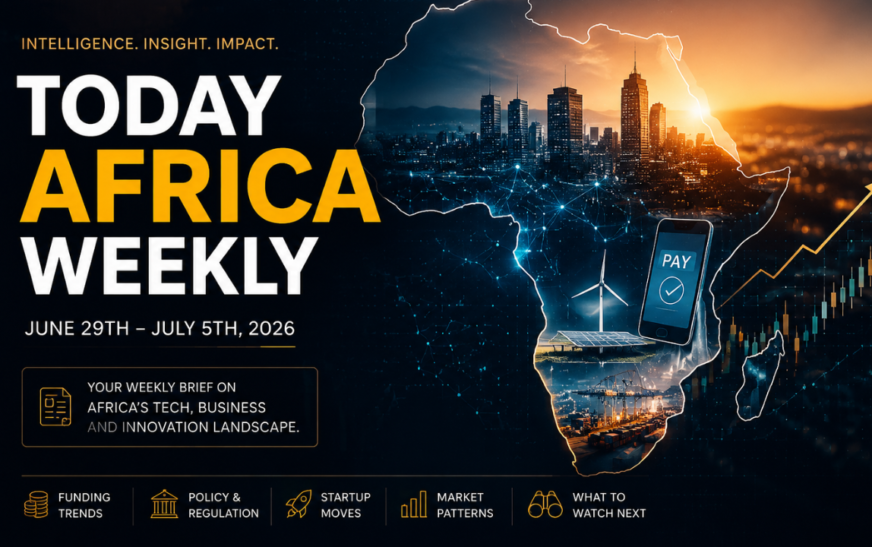
Africa’s tech market moved with unusual clarity last week, June 29th – July 5th, 2026. The biggest signal was not one single mega-round, product launch, or policy fight.
It was the way capital, regulation, infrastructure, and artificial intelligence all moved toward the same conclusion: the continent’s digital economy is becoming more serious, more selective, and far less forgiving.
Key moves this week
Funding activity showed two faces of the market.
On one side, Catalyst Fund announced a $30 million second close to back African climate resilience startups, with new commitments from IFC, FASA, Shell Foundation, Trafigura Foundation, Speedinvest, Blink Impact, and We-Fi.
The fund is targeting a $40 million final close and says it has already backed 28 startups across 10 African markets.
Disrupt Africa also reported that Village Capital distributed $500,000 in grants to 32 climate startups across Ghana, Kenya, Malawi, Mozambique, and Tanzania.
Climate adaptation companies received the largest share at $225,000, followed by food security, blue economy, and renewable energy startups.
The week also brought smaller but telling startup deals.
Egypt’s BrainsMingle raised $400,000 in seed funding from BasharSoft Group to build an AI-driven, video-first professional network for experts and professionals.
TechCabal’s weekly funding tracker also noted that Nigerian fintech Stabyl raised $2.7 million in a pre-seed round led by KongaPay.
On the startup launch front, AI and infrastructure dominated.
Kenya’s Fikra launched an OpenAI-compatible inference API built for African developers, with M-Pesa payments and local pricing designed to reduce the dollar cost barrier to using global AI tools.
South Africa’s Supascale launched what it described as Africa’s first GPU cloud marketplace, allowing businesses and developers to access AI models through idle GPU capacity.
Fintech infrastructure kept widening.
Paga partnered with TBook to offer tokenized real-world assets through its payment and compliance infrastructure, positioning Paga Engine as a channel for embedded investment products.
Techpoint also reported that Visa, M-Pesa, and Onafriq launched a stablecoin settlement pilot in the Democratic Republic of Congo for cross-border mobile money transactions.
Policy pressure rose sharply.
Nigeria’s new NIMC Act, signed on June 26 and reported during the week, turns digital identity into critical infrastructure by expanding NIMC’s authority over digital identity, Public Key Infrastructure, Digital Public Infrastructure, and data protection.
Nigeria’s central bank also revoked the licenses of 46 microfinance banks, including fintech-linked NowNow, Sycamore, and OurPass.
Telecoms also stayed at the center of the week.
Vodacom completed its $2.1 billion acquisition of the Kenyan government’s 15% stake in Safaricom, increasing its shareholding from 35% to 55% and giving it majority control of East Africa’s largest telecom operator.
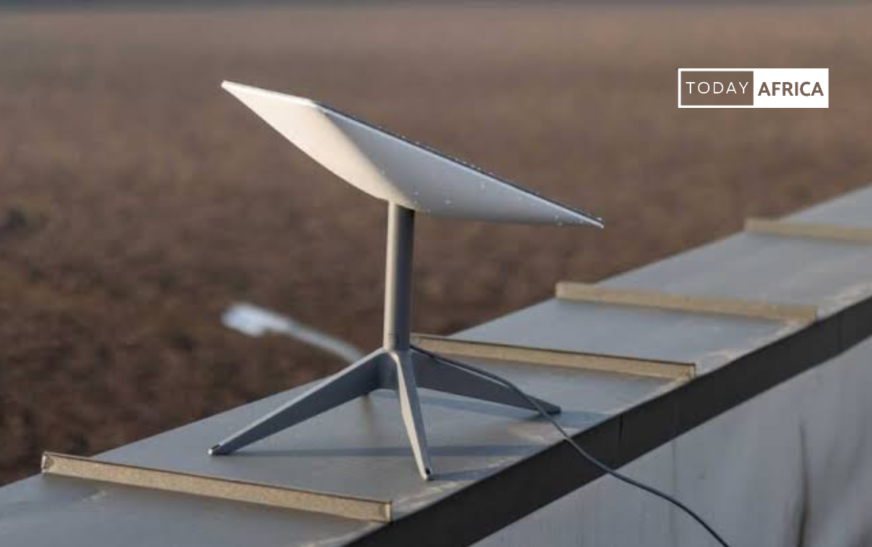
In South Africa, ICASA clarified that Starlink and other satellite internet operators must obtain the required communications and spectrum licenses before operating legally.
Click Here to Read Nigeria Fintech H1 2026 Report
The pattern behind the week
The strongest pattern was capital concentration.
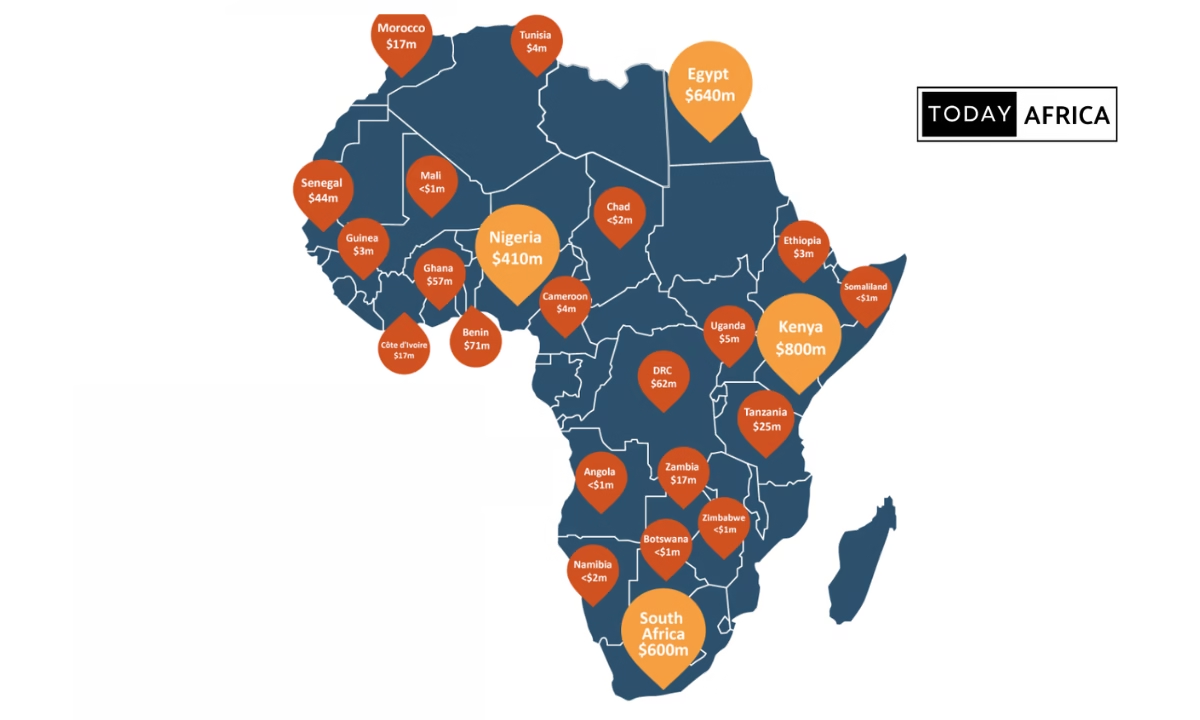
Disrupt Africa reported that 38 African tech startups raised $260 million in Q2 2026, down 40% from the same period in 2025.
African startups raised $1.44 billion in H1 2026, slightly above H1 2025, but across only 146 disclosed deals compared with 252 a year earlier (read the full report here).
The shared message is clear: fewer companies are attracting serious money, and investors are becoming more selective.
Climate and hard infrastructure are winning investor confidence.
The Catalyst Fund close, Village Capital grants, Spiro’s earlier clean mobility raise, and the rise of energy and battery models point to a funding market that increasingly rewards infrastructure-like businesses with measurable demand.
TechCabal’s H1 analysis also showed debt becoming a major financing tool, with startups raising $818 million in equity, $614 million in debt, and $9 million in grants across the first half.
AI moved from hype into operating infrastructure.
The form you have selected does not exist.
Google used its first Cloud Summit on African soil to announce an applied AI lab, a South African AI accelerator, expanded university programs, a new South African Digital Exchange point linked to its Umoja subsea cable, and access to AI tools for more than one million eligible university students across six African countries.
Novastar, 4DX Ventures, Norrsken22, and Ventures Platform are also working with Google’s Africa Applied AI Lab to identify and support startups building AI products for African markets.
The second pattern was regulatory tightening.
Nigeria’s digital identity overhaul, CBN microfinance license revocations, FCCPC pressure around digital lenders, Kenya’s proposed telco service penalties, and South Africa’s Starlink licensing clarity all point to governments trying to bring fast-moving digital sectors back inside formal rules.
The era of “launch first, negotiate later” is narrowing.
What it signals
African markets are moving toward infrastructure depth.
Payments, identity, connectivity, cloud, AI compute, and climate adaptation are now the backbone sectors attracting capital, policy attention, and strategic partnerships.
This is no longer a market story built only around consumer apps and growth-at-all-costs expansion.
Fintech remains strong, but the winners are changing.
The momentum is shifting from simple wallets and lending apps toward regulated rails, tokenized assets, stablecoin settlement, embedded finance, and compliance-heavy infrastructure.
Paga’s TBook partnership and the M-Pesa stablecoin pilot show that the next fintech cycle may be less about consumer acquisition and more about moving value across borders with greater speed, better settlement, and higher yield.
AI is gaining strength, but it is also becoming a labor and competitiveness story.
TechCabal Insights reported more than 1,000 layoffs across the continent so far in 2026, compared with 698 in the same period in 2025, with companies increasingly citing AI-driven restructuring as part of their cost-cutting rationale.
That means AI will create new startups, but it will also force older companies to redesign teams, margins, and operating models.
Consumer startups remain under pressure.
TechCabal’s reporting on FoodCourt’s paused operations showed how unpaid salaries, vendor debts, and delayed funding can quickly weaken even visible consumer brands.
The warning is blunt: in 2026, revenue claims are not enough. Investors and operators are watching cash flow, unit economics, debt discipline, and operational resilience more closely.
What to watch next
Watch climate adaptation as the next serious capital lane.
The week’s funding flow suggests that investors are no longer treating climate as a soft impact category.
They are treating it as essential infrastructure for agriculture, energy, mobility, water, and household resilience.
Watch AI infrastructure, not just AI apps.
Fikra, Supascale, Google’s AI lab, and the new accelerator activity show the market moving toward compute, model access, developer tools, training, and applied AI systems.
The startups that reduce the cost of building AI products in African markets may become more important than the apps built on top of them.
Watch digital identity and compliance in Nigeria.
The NIMC Act could become a foundation for stronger digital public infrastructure, but it also raises the stakes for privacy, enforcement, and interoperability.
Fintechs, banks, telcos, and government platforms will need to understand how the new trust layer reshapes onboarding, fraud prevention, digital signatures, and secure transactions.
Watch telecom consolidation and satellite internet rules.
Vodacom’s control of Safaricom gives it greater influence over M-Pesa, its Ethiopia expansion, and its East African telecom strategy.
South Africa’s Starlink process will test how far governments are willing to bend licensing and empowerment rules for global connectivity providers.
The week’s bottom line is sharp: African tech is not slowing down, but it is hardening.
Capital is still available, but it is flowing toward infrastructure, climate, AI, and regulated platforms.
Governments are no longer passive observers. Investors want proof, not promises. Founders who build for resilience, compliance, and real economic pressure will define the next phase.
The form you have selected does not exist.
Leave a comment and follow us on social media for more tips:
- Facebook: Today Africa
- Instagram: Today Africa
- Twitter: Today Africa
- LinkedIn: Today Africa
- YouTube: Today Africa Studio