


Across Africa, the next major economic story is not only being written by oil exporters, mining giants, central banks, or billion-dollar infrastructure deals.
It is also being written by small traders, local manufacturers, logistics firms, agribusinesses, fintech operators, digital merchants, neighborhood suppliers, and family-owned enterprises that are slowly becoming the connective tissue of African markets.
For years, small and medium-sized enterprises were treated as the informal edge of the economy. They were seen as survival businesses, job absorbers, or local service providers operating outside the center of national development plans. That view is becoming outdated.
A quiet rewiring is taking place. African economies are beginning to depend on SMEs not simply as employers but as distribution networks, production nodes, payment users, tax entry points, and regional trade connectors.
The shift is structural. It is being driven by digital payments, currency pressures, rising import costs, the implementation of the AfCFTA, youth employment needs, supply chain disruptions, and the search for growth that does not rely solely on commodities.
The result is a new economic map where the most important question is no longer just how fast African economies are growing. It is how deeply growth can permeate smaller businesses.
“SMEs are no longer informal actors; they are becoming Africa’s primary economic infrastructure.”
What is the African SMEs economy?
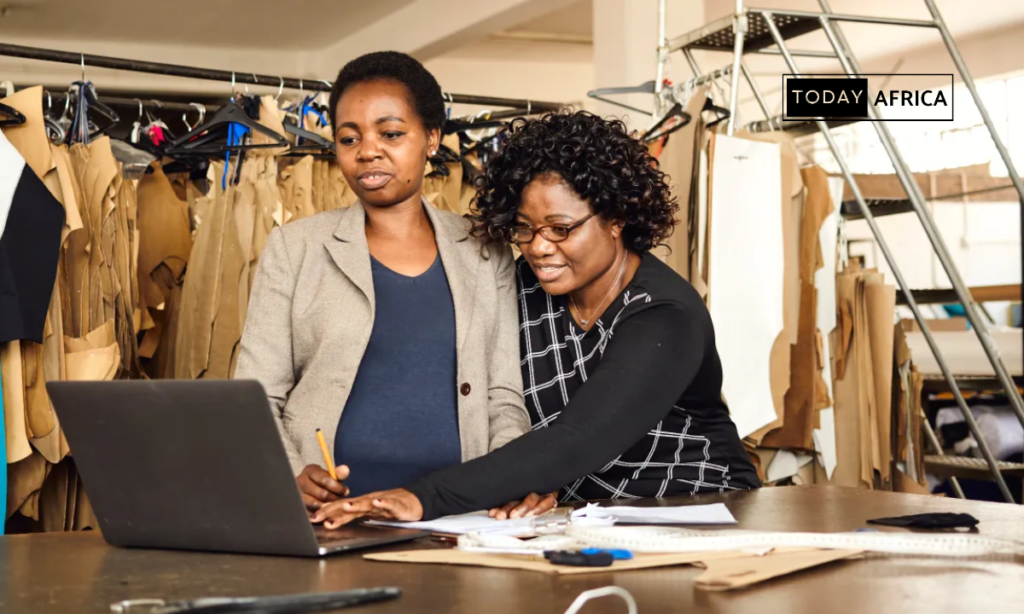
The African SMEs economy refers to the growing economic system in which small and medium-sized enterprises (SMEs) form the backbone of production, trade, employment, and distribution across African markets.
It describes a structural shift where economic activity is no longer dominated only by large corporations, commodity exports, or government spending, but increasingly driven by millions of small businesses operating in both formal and informal sectors.
In this economy, SMEs in Africa are becoming critical infrastructure. They power local manufacturing, retail distribution, agriculture processing, logistics networks, and increasingly digital commerce through mobile money and fintech platforms.
As a result, the African SMEs economy represents a transition toward a more decentralized, adaptive, and locally driven growth model that responds to real market demand rather than top-down planning.
Why SMEs are driving African growth
SMEs are driving African growth because they operate at the most active and flexible level of the economy, close to consumers, communities, and local supply chains. Unlike large corporations, SMEs can quickly adapt to price changes, shifting demand, and infrastructure limitations, making them highly resilient in volatile markets.
Across Africa, SMEs also account for the majority of employment and business activity, meaning they are directly linked to household incomes and consumption patterns. With the expansion of digital payments, mobile banking, and regional trade under AfCFTA, SMEs are now more connected to formal financial systems than ever before.
This growing visibility allows SMEs to access credit, scale operations, and integrate into regional value chains. In effect, SMEs are not just participating in African growth, they are actively shaping it by driving innovation, job creation, and local production across multiple sectors of the economy.
Read also: 12 problems facing small businesses in Africa & why they matter
From commodity dependence to SME-driven economic realignment across African markets
The big change is that African economies are shifting from a model built around large import channels, public spending, and commodity exports toward a more distributed model in which smaller businesses bear more of the real economic load.
This shift did not happen overnight. It came from pressure.
Many African countries have faced higher debt costs, weaker currencies, tighter access to foreign exchange, and rising prices for imported fuel, food, machinery, and consumer goods. For businesses, this has made the old model more expensive. Importing finished goods, pricing them in unstable currencies, and passing costs to consumers is becoming harder.
That pressure is forcing markets to localize. Businesses are looking for nearby suppliers. Governments are talking more about local production. Banks and fintechs are seeking smaller borrowers using transaction data. Retailers are building regional supply chains. Consumers are moving toward affordable local substitutes when imported goods become too costly.
At the same time, policy is changing. The African Continental Free Trade Area is pushing countries to think beyond national borders.
Digital trade rules, cross-border payment systems, and regional market access are slowly creating a framework where a business in Lagos, Nairobi, Accra, Kigali, or Abidjan can imagine selling beyond its home market without becoming a multinational corporation.
This is where SMEs become central. They are no longer just small players inside domestic economies. They are becoming the practical machinery through which regional integration can actually happen.
A trade agreement does not move goods by itself. A policy document does not deliver food, process payments, repair trucks, package cocoa, move textiles, sell cosmetics, or manage last-mile delivery. SMEs do.
That is the structural shift. Africa’s economic future is being rewired from the bottom and middle of the market, not only from the top.
“Africa’s real economy is no longer concentrated at the top; it is distributed through millions of small business networks.”
Why infrastructure gaps, digital payments, and trade integration are reshaping the system

The deeper force behind this transition is a mismatch between Africa’s economic potential and its old infrastructure.
Africa has a young population, fast-growing cities, expanding mobile connectivity, rising consumer demand, and large informal markets.
According to the African Development Bank, SMEs account for over 90% of businesses in Africa and nearly 80% of employment across the continent.
But it also faces high logistics costs, unreliable electricity supply, limited long-term credit availability, fragmented regulations, expensive cross-border payments, and narrow manufacturing bases.
That gap has created a strange economic pattern. Demand is huge, but production is often thin. Talent is abundant, but formal jobs are limited. Trade potential is enormous, but borders remain costly. Digital adoption is rising, but financing remains difficult.
SMEs sit directly inside this tension.
They are close enough to consumers to understand demand and flexible enough to adapt when prices change. And they are embedded in local communities. They can move faster than large corporations in fragmented markets.
But they are also the first to feel infrastructure failure. A power outage can destroy inventory, a currency swing can wipe out margins, and a delayed border process can ruin a delivery contract. A rejected loan can stop expansion for a year.
This is why the SME story is not just a business story. It is a systems story.
For decades, many African economies were structured around extraction and importation. Raw materials moved out. Finished goods moved in. Local businesses often operated as distributors, retailers, or informal service providers rather than as producers within deeper value chains.
That model created growth, but not enough broad-based industrial depth. It left many economies exposed to external shocks. When the dollar strengthened, fuel prices rose, or global supply chains tightened, local businesses paid the price.
Now, the system is being forced to adjust. The new priority is not simply to sell more commodities. It is to capture more value locally and regionally. That means processing agricultural products before export.
It means building packaging capacity, digital records to qualify small businesses for credit, and connecting local manufacturers to regional buyers. Also, it means turning informal trade routes into more formal, financeable, and scalable corridors.
Technology is accelerating this adjustment. Mobile money, digital wallets, merchant payments, e-commerce platforms, inventory tools, and alternative credit scoring are making it easier to see business activity that was previously invisible.
Once a small business starts receiving digital payments, paying suppliers electronically, recording stock, or selling through an online marketplace, it begins to leave a data trail.
That data trail matters. It can help banks assess risk, help governments understand economic activity, and help logistics providers forecast demand. It can help investors identify clusters of growth.
In a continent where many businesses have historically operated outside formal financial systems, visibility itself becomes infrastructure.
“The most important shift in African markets is not digitization alone, but the financial visibility of small businesses.”
IFC estimates a multi-billion-dollar SME financing gap across African markets, limiting how fast small businesses can scale.
How SMEs and startups are being repositioned at the center of growth and investment

For SMEs, this rewiring creates both pressure and possibility. The pressure is immediate. Costs remain high. Credit is still difficult.
Many small businesses operate with thin margins and little protection against inflation, tax changes, currency volatility, or supply disruptions. Formalization can also feel risky when it brings tax obligations before it brings financing, market access, or reliable public services.
But the opportunity is becoming harder to ignore.
SMEs that can professionalize their operations are better positioned than before. A small food processor with proper packaging, digital bookkeeping, and knowledge of regional compliance can move from serving one city to supplying multiple markets.
A local fashion producer can use online channels to reach diaspora buyers, a transport operator can join a regional logistics chain, and a small agribusiness can connect farmers, storage providers, processors, and retailers into a more reliable supply system.
Startups are also being affected. The strongest startup opportunities are shifting from pure consumer convenience toward infrastructure for the SME economy.
The next wave of African startups may not only be apps that sell directly to consumers. They may be platforms that help SMEs accept payments, access working capital, manage taxes, buy inventory, verify suppliers, insure shipments, digitize records, and sell across borders.
This changes the investor story.
For investors, the SME economy is not neat. It is fragmented, local, operationally messy, and often difficult to underwrite. But it is also where the volume sits. Africa’s consumer economy does not move only through shopping malls and formal retail chains.
It moves through kiosks, open markets, wholesalers, informal distributors, social commerce sellers, repair shops, pharmacies, food vendors, local factories, transport unions, and thousands of small service businesses.
The investor who understands African SMEs is not only looking for the next unicorn. They are looking for the rails beneath the market.
Those rails include payments, credit, logistics, energy access, business software, cold storage, trade finance, compliance tools, and sector-specific marketplaces.
In other words, the opportunity is not just to invest in small businesses one by one. It is about investing in the systems that enable millions of small businesses to become more productive.
This is where development finance, banks, fintechs, insurers, telecoms, and venture capital may increasingly overlap. The SME is becoming the nexus among financial inclusion, industrial policy, digital transformation, and job creation.
“SME-led growth is not a trend; it is the structural foundation of Africa’s next economic cycle.”
Where the next wave of SME-led opportunities is emerging across sectors and regions
The clearest opportunities are emerging in sectors where local demand is strong, import dependence is costly, and smaller businesses can plug into larger value chains.
Agribusiness is one of the biggest windows. Africa has food demand, farmland, labor, and urban markets, yet it still loses value due to weak storage, limited processing, poor logistics, and fragmented supply chains.
SMEs that handle milling, packaging, cold storage, animal feed, food distribution, and local processing can become critical players in food security and regional trade.
Light manufacturing is another opening. Textiles, furniture, household goods, cosmetics, building materials, packaging, and basic consumer products all benefit when import costs rise and local producers become more competitive.
The winners will not be limited to factories. They will be the suppliers, repair firms, designers, distributors, and logistics businesses around those factories.
Digital financial services remain central. The market still needs better SME lending, merchant payments, invoice finance, credit scoring, insurance, payroll tools, and cross-border settlement.
A business that can help small firms convert daily transactions into trusted financial records will be at the heart of the new African economy.
Energy is also a major SME opportunity. Unreliable power remains one of the biggest hidden taxes on small businesses. Solar mini-grids, productive-use energy systems, cold rooms, electric mobility for delivery, and energy-as-a-service models can directly improve business survival and productivity.
Regional trade services may be the most underestimated opportunity. As AfCFTA implementation deepens, businesses will need help with documentation, customs, standards, labeling, payments, currency conversion, warehousing, and cross-border delivery. SMEs that understand these trade corridors can become the practical operators of African integration.
The regional winners may include East Africa’s trade and logistics corridors, West Africa’s large consumer markets, North Africa’s manufacturing links, and smaller economies that position themselves as service, finance, or logistics hubs. Countries that combine better roads, clearer regulations, digital payment adoption, and SME finance will have an advantage.
But the opportunity window will not stay open automatically. African governments still need to reduce the cost of doing business. Banks need to move beyond collateral-heavy lending.
Regulators need to make formalization worthwhile. Infrastructure investment must reach the smaller firms that actually move goods and employ people. Tax systems must avoid punishing businesses before they grow.
The real lesson is simple: Africa’s next growth story may not look like the old one.
It may be less about one giant discovery, one mega-project, or one export boom. It may be about millions of smaller businesses becoming more connected, more visible, more financeable, and more regional.
That is why SMEs matter now. They are not just surviving inside African economies. They are quietly rewiring them.
Leave a comment and follow us on social media for more tips:
- Facebook: Today Africa
- Instagram: Today Africa
- Twitter: Today Africa
- LinkedIn: Today Africa
- YouTube: Today Africa Studio