
Some entrepreneurs become famous for one company. Others build a career around one industry.
Rapelang Rabana has done something more instructive. She has carried a single question through telecommunications, workplace learning, venture building, corporate leadership, and public education:
How can technology expand what Africans can know, create, and become?
Her journey began before Africa’s startup ecosystem had accelerators in every major city, before investors regularly spoke about African technology, and before building a mobile application sounded like a respectable career plan.
Rabana’s story is therefore not only about professional success. It is about learning to see opportunities before a market has developed the language to describe them.
It is about moving from products to platforms, from personal achievement to institution-building, and from being celebrated as a young founder to helping solve problems that affect entire education systems.
For African builders, that evolution may be the most valuable part of the Rapelang Rabana biography.
A child who questioned the systems around her
Rapelang Rabana was born in Gaborone, Botswana, and later moved to South Africa. She studied in Johannesburg before attending the University of Cape Town, where she completed a Business Science degree specializing in computer science in 2005.
She later earned a master’s degree from the same university. But the intellectual roots of her career appeared long before university.
Rabana has recalled sitting in a geography class as a child and questioning the structures around her. She did not want her future to be decided by systems that placed people into predictable boxes.
That early discomfort with predetermined paths became a powerful instinct: when a system appears fixed, examine who designed it and whether it can be rebuilt.
Her family offered another form of education. Rabana has said that her parents grew up in severe poverty but became the first university graduates in their families.
Her father became an architect, while her mother became an electrical engineer. They pursued businesses and professional projects, lost what they had built, and started again.
That experience taught her something business books often struggle to explain. Resilience is not merely the ability to survive difficulty. It is the confidence that value can be created again.
By the time she finished university, Rabana had seen her parents build from almost nothing twice. Failure could still hurt, but it no longer looked final.
Building before the ecosystem was ready

After university, Rabana faced a choice familiar to many talented African graduates. She could follow the recognized route into a stable and well-paid career, or attempt something that had almost no supporting infrastructure.
She rejected lucrative employment opportunities and persuaded her parents to support her while she pursued entrepreneurship. It was a decision that involved privilege, sacrifice, and risk. It also gave her the time required to build without pretending that the process would produce immediate income.
Together with two former UCT classmates, she developed Yeigo, an early mobile Voice over Internet Protocol platform. The team worked around a dining-room table in a small apartment, teaching themselves how to build software and operate an internet business.
“We literally googled our way to success,” Rabana later told UCT graduates.
When Yeigo launched in February 2007, Rabana said only a small number of companies worldwide were launching comparable mobile technologies.
The African team had far less capital than competitors in places such as Israel and the United Kingdom, yet the internet allowed them to enter the same technological race. A local telecommunications operator acquired Yeigo in 2009.
The easy interpretation is that Yeigo was an early startup success. The deeper lesson is that the company was built before South Africa had a mature technology ecosystem around it.
Rabana and her co-founders could not depend on an established playbook. They had to learn product development, business operations, digital distribution, and customer behavior while building the company itself.
That is an important distinction. Founders working in established markets often execute within systems that already exist. African founders frequently have to build the company and parts of the surrounding system at the same time.
Yeigo proved that a team in Africa could create globally relevant technology with limited resources. It also gave Rabana the operating experience that would shape the next phase of her career.
Read also: Jason Njoku: iROKOtv and African streaming revolution
From connecting voices to expanding knowledge
After Yeigo, Rabana moved toward a problem that would become central to her work: learning.
She founded Rekindle Learning, a South African learning technology company focused on helping organizations capture knowledge, train their people, and respond to changes in the workplace.
Its mobile-first products use interactive content and data to support continuous learning rather than treating training as an occasional event. Rabana remains the company’s founder and chairperson.
At first glance, telecommunications and education may appear to be separate industries. In Rabana’s career, however, they belong to the same story.
Yeigo attempted to reduce the barriers preventing people from communicating. Rekindle Learning attempts to reduce the barriers preventing people and organizations from acquiring useful knowledge.
Both businesses were built around access.
This is one of the defining patterns in Rabana’s journey. She has not simply followed fashionable sectors. She has repeatedly examined the systems that control participation.
- Who can make an affordable call?
- Who can gain a new skill?
- Who can access knowledge?
- Who gets left behind when technology changes the nature of work?
Her influence later expanded beyond entrepreneurship. She became Chief Digital Officer at BCX, one of South Africa’s largest information technology companies, and worked through FFWD Innovation, a digital advisory firm.
She has also provided technical insight connected to early-stage investment and venture development.
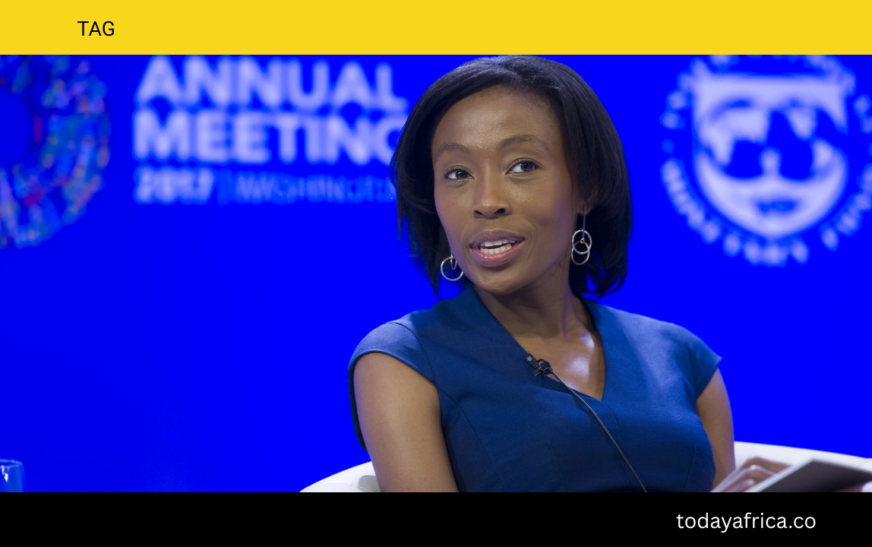
The recognition followed. Rabana appeared on the cover of Forbes Africa, was included among the publication’s young African entrepreneurs, and was selected for the World Economic Forum’s 2017 class of Young Global Leaders.
Yet the most significant evolution in her career was not the accumulation of titles. It was the movement from building individual companies to helping build institutions capable of operating at national scale.
Read also: Inside the mind of the founder of Ingressive Capital, Maya Horgan Famodu
The move from startup success to systemic impact
In 2023, Rabana became Co-CEO of Imagine Worldwide, an education technology nonprofit working to improve foundational literacy and numeracy across sub-Saharan Africa.
She did not arrive as an outsider hired only for her public profile. Before becoming Co-CEO, she had served the organization as a board member, board chair, and head of technology.
Her appointment placed an African technology leader at the center of an organization working directly with African governments, educators, and communities.
Imagine Worldwide supports tablet-based, child-directed learning programs designed for environments where electricity, connectivity, teachers, and learning materials may be limited. Its model combines software, hardware, solar power, implementation partnerships, evidence, training, and government participation.
The organization reports that its programs currently serve more than 708,000 children. It has piloted work in seven African countries, while pursuing larger-scale implementation in Malawi, Sierra Leone, and Tanzania.
When Rabana accepted the Co-CEO role, she said education and skills development were challenges she wanted to spend her life addressing.
That statement connects the different stages of her career.
Yeigo was about access to communication. Rekindle was about access to workplace knowledge. Imagine Worldwide is about access to the foundational skills that determine whether a child can participate fully in education and, eventually, the economy.
The scale changed, but the underlying mission did not.
The decisions that shaped Rapelang Rabana’s journey

Rabana’s path was not created by one dramatic breakthrough. It was produced by a series of choices that reinforced one another.
She chose uncertainty before she had social proof. Leaving stable job opportunities for an untested startup meant acting before entrepreneurship had become a celebrated career path across Africa. Builders often wait for evidence that their idea is respectable. Rabana built the evidence.
She treated learning as infrastructure. The Yeigo team did not wait to acquire every qualification before beginning. They used available information, taught themselves, experimented, and developed competence through execution. Formal education gave Rabana a technical foundation, but continuous self-education helped turn that foundation into a company.
She built from lived problems. Her ventures were not copies of businesses disconnected from African realities. High communication costs, skills gaps, institutional knowledge loss, and weak educational outcomes are structural constraints. Her work converted those constraints into design questions.
She allowed her mission to outgrow her original product. Some founders become trapped by the company that first made them visible. Rabana expanded from telecommunications into learning, investment, corporate innovation, and education systems. She remained consistent in purpose without remaining fixed in format.
She moved closer to institutions. Startups can prove that a solution works. Institutions help determine whether it reaches millions. Her move into Imagine Worldwide reflects an understanding that continental impact often requires government cooperation, operational systems, evidence, long-term funding, and local ownership.
She combined self-awareness with execution. Rabana has repeatedly argued that innovation grows from accumulated knowledge, a distinctive point of view, shared value, and action. Her approach rejects the myth that founders receive fully formed ideas. They notice patterns, begin, collect information, and improve through repeated decisions.
Read also: Fred Swaniker: Building Africa’s leadership pipeline
What her journey reveals about African success
The standard story of African entrepreneurship often focuses on scarcity. Founders lack funding, infrastructure, experienced talent, supportive regulations, and access to large markets.
Those constraints are real. Rabana’s career does not make them disappear.
What it shows is that scarcity can produce a different kind of strategic ability. Builders learn to combine functions, operate across sectors, teach themselves quickly, and create solutions that work within difficult environments.
The strongest African innovations are often not simplified versions of foreign products. They are systems designed around conditions that global companies ignored.
Her story also challenges the idea that success must mean leaving African problems behind.
Rabana’s career grew more influential as she moved deeper into questions of African learning, skills, and institutional capacity. Her global visibility emerged from engaging seriously with local and continental challenges, not from distancing herself from them.
There is another lesson here about power.
A founder may begin by owning a product. Over time, the larger opportunity is to influence how capital, knowledge, technology, and public systems are organized.
This is the difference between building a successful venture and helping build an ecosystem. Africa needs both. It needs founders who can launch companies quickly.
It also needs leaders who remain long enough to develop standards, talent pipelines, research, distribution networks, investment knowledge, and partnerships with public institutions.
Read also: Kwame Nkrumah biography – A teacher who became Ghana’s first leader
A practical blueprint for African builders
Begin with a problem that will still matter in ten years. Trends can create attention, but structural problems create durable demand. Communication, education, financial access, logistics, energy, healthcare, and workforce development remain large because they shape how economies function.
Use your environment as research. The problems people experience every day contain business intelligence. Pay attention to where time, money, trust, and human potential are being lost. A founder’s advantage may come from understanding a frustration that distant competitors cannot see clearly.
Build your learning system before building your reputation. Rabana and her co-founders learned while developing Yeigo. Modern builders have access to online courses, open-source software, artificial intelligence tools, technical communities, and remote experts. Access to information is no longer the main excuse. The challenge is converting information into repeated action.
Do not confuse visibility with value, but do not neglect visibility. Good work needs evidence, positioning, and distribution before investors, customers, partners, or policymakers can understand it. Our Founder & Ecosystem Visibility Engine is designed to help African founders and organizations turn their work into credible, investor-ready stories that explain what they are building, why it matters, and where it fits within the continent’s wider business ecosystem.
Design for the full system. A good application may fail because distribution is weak. A strong educational product may fail without teacher support, electricity, government participation, or reliable monitoring. African builders should map every condition required for their solution to work, including the conditions outside their direct control.
Let the vehicle change while the mission deepens. Your first startup may not be your final institution. A product may lead to an investment firm, research platform, public partnership, training organization, or industry network. Do not protect an old identity at the expense of a larger contribution.
Measure success by capability created. Revenue and funding matter, but institution-builders ask broader questions. Did the company create skilled people? Did it preserve useful knowledge? And did it improve how decisions are made? Can the system continue without the founder controlling every detail?
Rapelang Rabana’s journey has moved from a dining-room table to work involving governments, businesses, investors, educators, and hundreds of thousands of children.
That expansion did not require abandoning her original curiosity. It required following it further.
The most useful lesson from her biography is not that every African builder should enter technology or education. It is that builders should learn to recognize the thread connecting their experiences, skills, frustrations, and ambitions.
Rabana found hers in access to knowledge and human potential. The task for the next generation is to identify its own thread, build around it with discipline, and stay with the problem long enough to create something larger than personal success.
Leave a comment and follow us on social media for more tips:
- Facebook: Today Africa
- Instagram: Today Africa
- Twitter: Today Africa
- LinkedIn: Today Africa
- YouTube: Today Africa Studio






![Biography of Tony Elumelu [Investor, Entrepreneur, & Philanthropist]](https://todayafrica.co/wp-content/uploads/2023/12/Blue-Simple-Dad-Appreciation-Facebook-Post-1200-×-720-px-7-1.png)