

The continent is home to one of the world’s youngest and fastest-growing populations, yet millions of students still struggle to access high-quality learning.
Overcrowded classrooms, teacher shortages, uneven educational standards, limited learning resources, and persistent infrastructure challenges continue to shape the academic experience of many children.
At the same time, rapid smartphone adoption and expanding internet access have created an opportunity to rethink how education is delivered.
Against this backdrop, uLesson emerged with an ambitious mission to make quality education accessible to every African learner through technology.
Founded by a serial entrepreneur, the company combined curriculum-aligned video lessons, interactive quizzes, personalized learning tools, and offline capabilities into a mobile-first platform designed for students across the continent.
This is an inside uLesson’s journey, tracing the company’s evolution from a bold idea into one of Africa’s most recognized edtech startups.
Founding story of uLesson
uLesson began quietly in 2019 when Nigerian tech veteran Sim Shagaya pivoted from e‑commerce to education.
Shagaya was already well known; he founded the billboard-ad firm E-Motion (sold in 2019) and online marketplaces DealDey and Konga, and he had spent time as Google’s head for Africa.
But having witnessed firsthand the schooling gaps in Nigeria and beyond, he decided it was time to try something new. In his own words, uLesson is meant to replicate the “lesson‑teacher‑meets‑the‑smartphone” experience.
The basic idea was to take a private tutor’s guidance, that iterative loop of lessons, feedback and improvement – and make it available via video and app.
From the start, uLesson’s mission was clear: help students learn better where schools and teachers are scarce. Shagaya and his team obsessively studied existing education solutions (even posting about similar companies abroad) and realized nobody had scaled this in Africa yet.
In early tests, even before a public launch, the team experimented with animated video lessons and quizzes tailored to Nigerian curricula, delivering them on affordable media like SD cards or USB sticks (since many homes lacked internet).
When Nigeria’s schools shut in March 2020, Sim recalled, the conditions were suddenly “right for an education revolution”. uLesson officially launched its learning app that spring, just weeks before COVID lockdowns.
Within months, thousands of students were downloading animated math and science lessons onto their phones, sometimes even buying cheap data plans and handsets just to use the service.
The need was urgent. Africa’s classrooms often have dozens of pupils per teacher, up to 58:1 in primary schools, and 43:1 in secondary schools in some regions, and exam outcomes are weak.
Nigeria’s exam boards (WAEC, NECO) have long grappled with low pass rates and widespread malpractice.
Millions of children go without a single year of school. Rural communities have no tutors to spare. Sim Shagaya saw these problems with fresh eyes.
As a Nigerian schooled partly abroad, he knew what quality education looked like and was determined to “make things better” and leave a legacy beyond profit.
To solve this, uLesson bet heavily on mobile. Instead of classrooms or desktop computers, the company delivered lessons on Android phones and even on low‑cost iPads.
Rich, animated videos could replace absent teachers; locally stored content (on SD cards or uLesson’s “Education Tab” tablet) meant students could watch without internet.
The app’s early vision was pan-African: aligned with national curricula from West to East Africa, covering core subjects and exam prep.
In pilot runs and feedback sessions, parents and kids praised the combination of clear explanations and practice quizzes, a stark contrast to crowded classrooms.
Shagaya noted his inbox filling daily with requests from all over the continent. By 2021, uLesson had already built 5,000 video lessons and 30,000 quizzes spanning junior and senior classes in Nigeria, Ghana, Sierra Leone, Liberia and Gambia.
Read also: Inside Stitch’s journey: Building Africa’s modern payments infrastructure
Funding history, investors, year, and purpose

uLesson’s growth was fueled by rapid fundraising rounds. In November 2019, even before product launch, the company closed a $3.1 million seed round led by TLcom Capital (with participation from Founder Collective and others). This seed funding helped uLesson build its initial content library and tech team.
The next big jump came in January 2021, when uLesson raised $7.5 million in Series A. This round was led by Owl Ventures (a major global edtech VC) with follow-on from TLcom Capital, Founder Collective and a new investor, LocalGlobe.
At that point, uLesson had just reached 1 million downloads since its March 2020 launch. Owl’s backing brought not only capital but board-level support to scale the product.
The Series A funds were explicitly earmarked for expansion and product development: uLesson used it to push into East and Southern Africa, recruit top engineers and content producers, and strengthen the app’s infrastructure.
Within a year, investor confidence grew. In December 2021, uLesson announced a $15 million Series B round led by Nielsen Ventures and Tencent, alongside existing backers Owl, TLcom, and Founder Collective. (Other participants included tech luminaries and VC funds.)
In press releases, uLesson called this “the largest investment in an African edtech company.” The capital was intended to deepen uLesson’s tech and content: the company planned to enrich its library (adding subjects like biology and financial accounting to secondary classes) and roll out new features such as cohort-based learning and enhanced live classes.
The Series B also supported the launch of uLesson’s own tablet hardware (“Education Tab”) and the localization of content across multiple African curricula.
Below is a timeline of the key funding rounds:
- Nov 2019, Seed ($3.1M): Led by TLcom Capital, plus Founder Collective and others. Seed funds built the first mobile app and video content for Nigeria’s curriculum.
- Jan 2021, Series A ($7.5M): Led by Owl Ventures (joined by TLcom, Founder Collective, LocalGlobe). Enabled rapid scale: 1M downloads reached, expansion to Ghana/Sierra Leone, hiring, and development of new features (e.g., tutoring chat).
- Dec 2021, Series B ($15M): Led by Nielsen Ventures and Tencent, with Owl, TLcom, Founder Collective, etc. Funds went into product development (more subjects, AI features, live lessons) and broader expansion. uLesson reported its user base had surged 430% over 2021, with the app hitting 2 million downloads.
Each round built on the last: investors repeatedly came back, signaling confidence in uLesson’s traction and market.
Funds were systematically deployed, from creating thousands of animated videos and quizzes to subsidizing hardware distribution and subsidized data plans for students.
Notably, uLesson leveraged strategic partnerships (e.g., with telecom operators and even the Nigerian government) to stretch this capital further.
By the end of 2021, uLesson had amassed roughly $25–26 million in funding, positioning it among the best‑financed edtech startups in Africa.
Business model of uLesson
uLesson’s business model combines subscriptions with hardware bundles and institutional partnerships.
At its core is a freemium learning app: basic video lessons and quizzes are free, while premium content (live classes, one‑on‑one tutoring, advanced exam prep) requires a paid plan. Users can subscribe on a monthly or annual basis.
For example, early pricing was about $50 per year (roughly ₦18,000), or around ₦7,500 ($18) per month.
uLesson observed that many parents prefer a device+plan bundle for convenience: at one point, the company offered a 2-year plan plus a smartphone for ₦137,000 ($334), effectively spreading the cost.
Half of uLesson’s students actually used a parent’s existing phone and paid just for the data subscription.
To help affordability, uLesson later introduced fintech options (buy-now-pay-later on the uLesson Tablet) so that low-income families could pay in installments.
On the B2B side, uLesson also partners with schools and government programs. Schools can adopt the “Classboard” system (a tablet and app suite) to supplement teaching, or bundle uLesson content into their curriculum.
The Niger Delta Development Commission’s distribution of 45,000 uLesson tablets in 2024 (with preloaded content and offline access) is a prime example of leveraging institutional channels.
Corporate and non-profit customers have likewise used uLesson for teacher training and e-learning programs.
These bulk deals not only generate revenue, but also fulfill uLesson’s mission to reach underserved communities: Sim Shagaya noted that without partners like NDDC, uLesson was mostly reaching affluent students who could afford smartphones.
Key revenue drivers are subscriptions and hardware sales.
Subscriptions (monthly or annual) from families still constitute most of the income; customers pay for ongoing access to the video library, live classes, and AI‑powered features.
Hardware bundles (tablets with preloaded lessons) are a smaller but strategic line, priced higher but opening new customers.
Notably, uLesson’s annual subscriber churn has not been publicly disclosed, but investor presentations suggest students often stay on multi-year plans thanks to continuous content updates.
On the cost side, video production is expensive: creating thousands of animated lessons involves writers, teachers, animators, and studio costs.
But digital scalability helps: the same lesson can serve millions once made. Also, uLesson keeps costs down by focusing on mobile (no need for physical classrooms) and by leveraging online marketing.
Importantly, uLesson is not a school replacement but a supplement. Its value proposition vs. traditional schools and tutors is affordability and convenience. A private tutor can cost hundreds of dollars per subject; uLesson’s entire library is a flat monthly fee.
Against free YouTube, uLesson emphasizes curriculum alignment, quality control, and interactive features (for example, quizzes that track student performance).
Versus lower-tech methods (print books or classroom cram schools), uLesson offers on-demand, personalized pacing; a student can replay a lesson any time, something impossible in a live class.
This blended revenue approach, consumer subscriptions plus occasional institutional sales, has allowed uLesson to balance affordability with sustainability.
The company repeatedly points out that about 25–50% of African household income can go to education in some countries, so uLesson tries to undercut traditional costs while still funding content creation.
Strategies fueling growth of uLesson
Several strategic choices powered uLesson’s rise. Foremost was product quality: all video lessons use professional teachers, clear animations, and local examples, making learning engaging.
Sim Shagaya insisted on curriculum localization: math taught in the Nigerian context and science examples drawn from local environments, which resonated far more than generic content.
The library covers each grade comprehensively, so students stay within the uLesson ecosystem rather than patching holes with YouTube or rival apps.
The introduction of live classes and “Homework Help” gave stickiness: by late 2023, students were collectively spending 57 minutes per day on the app.
In year-end reports, uLesson touted over one million live-lesson sessions completed in 2023, with students solving 115,000 homework questions via tutors.
This data-driven approach, tracking which videos are most watched and which questions are most missed, enabled constant improvement of content and features.
uLesson also bet on mobile-first, offline-capable delivery. Recognizing that many learners have intermittent internet, the app allows full downloads of lessons; later, the company even launched the uLesson Tab 2, a tablet with all lessons stored locally.
Aggressive marketing and partnerships were key as well. The founder’s background in e-commerce gave insight: uLesson ran targeted digital ads and school activations to build brand awareness. By late 2021, the company claimed 2 million downloads across Africa.
Media and investor interest amplified this: global outlets like TechCrunch and Time began featuring uLesson, giving “free PR” in new markets.
Strategic hires further fueled growth; for instance, bringing in an executive who led the launch of Miva Open University in 2023 broadened uLesson’s reach into tertiary education.
The timing also played in uLesson’s favor. COVID-19 massively accelerated adoption. Sim Shagaya noted that lockdowns “opened the data networks” and changed attitudes toward remote learning.
In 2021, uLesson’s daily active users jumped by 430%, and parents were forced to look for alternatives to idle classrooms. The company reports that after 2020, many Nigerian families prioritized equipping children with smartphones (or uLesson tablets) to continue schooling at home.
This meant downloads soared, as did engagement: by May 2025, uLesson was listed among Time’s “Top EdTech Rising Stars” for outstanding user growth and impact.
Behind these outcomes were deliberate leadership decisions. Shagaya kept uLesson lean, focusing spending on core education rather than flashy tech bells and whistles.
Investors credit his founder‑market fit: having built large consumer platforms, he knew how to iterate and scale across Africa’s diverse markets.
He also built a diverse leadership team spread across Nigeria and beyond, ensuring local insights (as he put it, “Africa is not one place”). The culture emphasized feedback; early on, uLesson sent content teams to villages and listened closely.
All this contributed to a virtuous cycle: better products attracted users, user data improved the product, and hype/lionization brought in more capital and talent.
Read also: Inside Crunchies’ Journey: From one outlet in Aba to a national fast-food powerhouse
Competition in Africa’s edtech ecosystem
uLesson operates in a growing but fragmented edtech landscape. Its closest competitors are local startups focusing on K‑12 learning, as well as global platforms entering African markets.
For example, Eneza Education (Kenya) reaches millions with SMS-based revision quizzes and has shown tangible learning gains, but its model (feature-phone-based) limits content depth.
M‑Shule (Kenya) similarly uses SMS/USSD learning. Ubongo (Tanzania) creates animated educational TV and mobile content for children, but skews younger. Tuteria (Nigeria) and Foondamate (South Africa) both connect students to tutors, Tuteria through a marketplace, Foondamate via a WhatsApp chatbot, offering education more through human interaction than curriculum videos.
Among pan‑African rivals, AltSchool Africa (Nigeria/Kenya) moved into tech upskilling with bootcamps, recently raising over $4m, but it targets career training rather than school subjects.
Snapplify (South Africa) and Craydel (Nigeria) provide digital reading platforms and school management, not direct video lessons.
Major global players are also in the mix: Khan Academy offers free video lessons (largely in English/Swahili and not always exam-aligned), while YouTube is an alternative content source.
EdX/Coursera focus on higher education, so they’re less direct threats. Indian giant Byju’s had eyed Africa but faced local adaptation challenges. Language apps like Duolingo have some user base but don’t overlap much with core math/science tutoring.
What makes uLesson stand out is its specifically African focus: it tailors every lesson to local exams and uses culturally relevant examples.
Investors note that global platforms often flounder in Africa: as one analysis put it, Coursera or Khan fail here because they assume everyone has reliable internet and speaks fluent English.
uLesson, by contrast, is designed around low-bandwidth phones and built-in exam prep. Moreover, uLesson’s blend of on‑demand videos, live classes, and in-depth analytics is still unique in Africa.
A local education official even praised uLesson’s approach as more engaging than traditional classrooms.
That said, competition is real. Free video channels and piracy can undercut paid subscriptions, and new startups keep emerging.
ULesson’s strategic advantage is its head start and deep content library (over 5,000 lessons, 30,000 quizzes). It’s also built local relationships that a global app might lack.
Barriers to entry remain high: producing localized educational videos at scale is costly, and building credibility with parents takes time. uLesson’s track record (TIME recognition, millions of hours learned) lends it a reputation edge.
But it cannot afford to rest: as more tech companies eye Africa’s billion+ schoolchildren, uLesson will need to continually innovate (for instance, integrating AI tutors) to fend off both homegrown and international challengers.
Read also: Inside Chicken Republic’s Journey: A homegrown QSR phenomenon
Impact on society
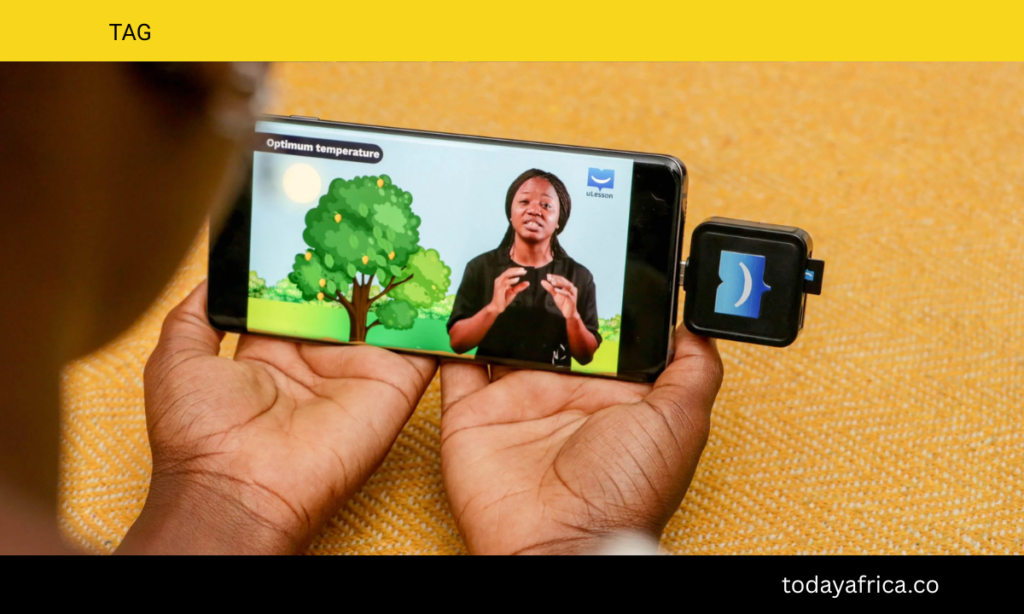
uLesson’s impact on African education is already visible. By late 2023, the platform counted over 400,000 active learners in that year alone, and since launch it has reached millions across Nigeria, Ghana, Rwanda, Kenya and beyond.
In real terms, students are watching tens of millions of lessons: by 2021, uLesson reported 12.3 million videos watched, and 25.6 million quiz questions answered. Those interactions have correlated with improved outcomes.
For example, one user story highlighted a student moving from C grades to A1 in WAEC by using uLesson’s economics lessons and mocks.
Independent surveys (conducted by uLesson and partners) consistently find that students score significantly higher on national exams after using the app, echoing broader findings that EdTech can lift learning by 20%.
Beyond raw numbers, uLesson has expanded access and equity. Girls and boys across urban and rural areas can all tap the same content via smartphones or distributed tablets.
As Sim Shagaya remarked at an NDDC launch, it was striking that at first only wealthy families could afford uLesson devices, prompting government collaboration to get them to every child.
By partnering with educational agencies, uLesson helps bring STEM learning to under-resourced communities: for instance, thousands of Niger Delta students began using their new uLesson Tabs in 2024, with teachers trained on the content.
This initiative alone will expose tens of thousands of youth to quality STEM materials they otherwise lacked.
Testimonials abound. One pastoralist father from Northern Nigeria commented that uLesson “opened his children’s eyes” to subjects they never had anyone to teach.
Ugandan teachers report using uLesson videos as lesson supplements. An Owl Ventures interview quotes a mother whose son’s math interest soared after uLesson lessons made tough topics “fun and clear”.
Even World Economic Forum panels on African education cite uLesson as a positive case of technology improving learning equity.
Statistically, uLesson’s contribution to digital literacy and education is substantial. The company claims to have served 10+ million learners across Africa (counting each time a student engages with content).
Media reports note that during the pandemic, uLesson’s usage exploded: one tech writer pointed out that in a single mock WAEC session, uLesson had over 100,000 students participating simultaneously (an unprecedented scale).
Internally, uLesson logs show students completing 1.5 million quizzes in 2023, an immense volume of self-study hours. Surveys suggest parents overwhelmingly find uLesson affordable and effective; they report improved exam grades and higher confidence in STEM subjects.
uLesson is filling critical gaps in African schooling. By making high‑quality tutorials and exam prep widely available, it complements formal schools and tutors to raise overall educational outcomes.
It directly addresses inequity by putting rich learning content on devices, a step toward the continent’s digital transformation. Of course, the long-term societal impact will depend on sustained usage and integration into broader systems.
But so far, uLesson has become a case study in how tech can democratize learning. Its vision, to empower every African learner with “knowledge and skills for success”, is backed by concrete progress in regions where before there were no alternatives to an under-funded classroom.
Read also: Inside Glovo’s Journey: From Barcelona errand app to Pan-African delivery powerhouse
Challenges uLesson faced
uLesson’s journey hasn’t been smooth sailing. In fact, every strategy spawned its own obstacles. A perennial issue is access and affordability. Nigeria’s internet penetration was only about 45% as of the early 2020s, and many families still share a single phone among siblings.
That meant a lot of initial demand from wealthier students; Sim Shagaya admitted he “started to see that people buying these products were children of the wealthy”.
To fix this, uLesson needed deep pockets (hence their fundraising), government subsidies (like the NDDC tablets), or creative payment plans. Despite those measures, smartphone and data costs still lock out the poorest students in rural areas.
Another challenge is customer acquisition cost (CAC). Early on, uLesson spent heavily on TV and radio ads, school partnerships, and promotions to educate the market.
This drove subscriber growth, but also meant high acquisition costs per student. Coupled with the low price point of $50/year, unit economics are tight.
uLesson has never revealed its exact CAC or payback, but analysts suspect it’s substantial given Africa’s fragmentary media landscape. Sustaining growth thus requires constant marketing spend or subsidies.
Payment barriers are significant too. Many African customers lack credit cards or stable banking, so uLesson had to work through mobile money and airtime billing.
Late payments or connectivity issues in payment systems can disrupt subscription renewals.
There’s also “subscription fatigue”: as more digital services pop up (streaming video, music, etc.), some families may cut back on educational subscriptions.
Retaining users through multi-year plans (or gamified engagement) has been crucial to prevent churn.
Content production itself is costly and time-consuming. Every new country or curriculum requires hiring educators and animators. For example, expanding to Kenya and Uganda meant adapting to new exam syllabi and languages, stretching the content team.
Ensuring quality at scale is an ongoing task; one misinformed lesson can undermine trust. Training and recruiting the right teachers/voice-over talent in each region is non-trivial, especially amid fierce competition for tech and creative staff.
Externally, competition and market volatility are threats. Global education tech companies or new startups could jump into African markets (as Byju’s briefly did) with deep pockets.
Economic factors matter too: Nigeria’s currency has depreciated, inflation has spiked, and household budgets are tight. In hard times, parents may deprioritize supplemental learning apps.
On top of that, issues like content piracy (sharing login details or SD cards) and exam cheating in the wider system put pressure on uLesson to prove value.
Scaling operations is a big internal challenge. Managing thousands of 4‑minute videos, student support tickets, and partnerships across many countries requires robust processes.
Mistakes happen; at launch, uLesson once had to recall some tablets due to software bugs.
Training enough support staff (like the NDDC hotline agents) took time. Regulatory differences also loom: while Nigeria embraces tech in classrooms, some governments have stricter rules around digital content or tutoring.
Lessons for African entrepreneurs
uLesson’s story offers many takeaways. One clear lesson is founder-market fit: Shagaya had deep knowledge of Nigeria’s consumer tech scene, so he understood distribution, local needs, and investor networks.
Entrepreneurs can’t just import Silicon Valley models wholesale; uLesson’s offline-first approach shows the value of adapting to African realities.
This highlights another lesson: timing matters. uLesson waited until smartphones and mobile internet reached a critical mass; they had actually toyed with the idea in 2009, but only launched when infrastructure caught up.
Product-market fit is the core lesson. uLesson obsessively aligned content to national exams, which almost forces students to use it (if they want good WAEC scores). African entrepreneurs should note: solving a real, widespread pain point, here, lack of quality schooling, is what drives adoption.
uLesson also balanced depth and breadth: it started with strong video content and only later branched into live tutoring and tablets. This step-by-step expansion is instructive: trying to do everything at once often fails in this region.
From a business perspective, the importance of scaling responsibly stands out. uLesson raised substantial capital, but invested it in measurable assets (content and tech) rather than hype. This prudence may keep it viable long-term.
Entrepreneurs should learn that long-term thinking trumps short-term blitz; uLesson’s multi-year strategy of building an ecosystem (K‑12 app plus a university) is meant to create enduring value.
Investors and founders alike can learn about global vs local balance. uLesson attracted big-name backers by showing traction in its niche; it then brought on strategic investors (Tencent, Owl, Founder Collective) who could help with technology and networks.
Sim Shagaya’s communications (e.g., regular growth reports, success stories) built transparency and credibility; a good PR move for raising money.
For product managers, uLesson is a case of data-driven iteration. They monitor which subjects are hardest for students and rapidly develop new lessons, much like A/B testing. This keeps the platform sticky.
It also demonstrates customer obsession: every new feature (say, AI homework help) is framed as directly solving student frustrations. That relentless focus on the user, coupled with an ability to pivot (dropping or improving features that didn’t work), is a key lesson.
Finally, there is a lesson in resilience. uLesson has weathered unpredictable economies and a crowded market. The co-founder’s own mantra, “build a lasting legacy”, reflects a mindset of weathering storms.
African startup founders should take from this the importance of adaptability and not abandoning vision under pressure.
Leave a comment and follow us on social media for more tips:
- Facebook: Today Africa
- Instagram: Today Africa
- Twitter: Today Africa
- LinkedIn: Today Africa
- YouTube: Today Africa Studio