

Africa’s technology sector is entering a more disciplined growth era. The strongest companies are no longer simply chasing digital adoption; they are building infrastructure that supports commerce, healthcare, finance, and economic development.
This week’s activity showed investors becoming more selective, governments becoming more involved, and founders increasingly focused on solving Africa’s deepest operational challenges.
The next phase of African technology growth will likely be defined by companies that become essential infrastructure for millions of businesses and consumers across the continent.
Key moves last week
Investors continue backing early-stage African founders
One of the strongest signals this week came from Launch Africa Ventures, which highlighted its continued commitment to early-stage investments despite a more selective funding environment.
The venture firm revealed that it completed 15 new investments in 2026, focusing on startups operating across areas including artificial intelligence, future of work, B2B commerce, supply chains, and embedded finance.
The move is significant because African startup funding has become more disciplined. Investors are increasingly prioritizing companies with clear revenue pathways, strong infrastructure value, and solutions tied to everyday economic challenges rather than purely high-growth consumer models.
Launch Africa’s approach reflects a wider market adjustment: fewer speculative bets, more attention on operational businesses capable of surviving tougher capital conditions.
Ghanaian startups secure $500,000 to build climate and economic solutions
Three Ghanaian startups, Built, GrowForMe, and SAYeTECH, secured a combined $500,000 investment from the Africa Ecosystem Catalysts Facility.
The funding comes through a $4 million pilot investment program managed by Village Capital with support from the Dutch Entrepreneurial Development Bank and the Netherlands Enterprise Agency. The program targets early-stage companies in Ghana, Nigeria, and Tanzania working on climate resilience and economic mobility.
The investment highlights growing interest in African startups that connect technology with agriculture, sustainability, and economic development.
Rather than chasing purely digital consumer opportunities, investors are increasingly looking at companies that improve productivity and solve structural challenges.
Egyptian health startup raises $1.45 million to expand diagnostics
Egyptian e-health company Reme-D raised $1.45 million in pre-Series A funding to expand manufacturing capacity, regional operations, and its diagnostic product portfolio.
Founded in 2023, the company develops molecular diagnostic tests for diseases including tuberculosis, HIV, hepatitis, and HPV. Its focus is producing affordable, temperature-resilient healthcare solutions suitable for markets where medical infrastructure remains limited.
The investment reflects a growing healthcare technology trend across Africa: building locally produced medical solutions instead of relying entirely on imported systems.
Stablecoin infrastructure gains more institutional attention
Digital finance remained a major theme during the week, with companies pushing deeper into cross-border payment infrastructure.
Busha Business announced a collaboration with Tether to expand stablecoin infrastructure for African businesses, focusing on faster international payments, treasury management, and improved liquidity access.
The development comes as businesses across Africa continue searching for alternatives to slow and expensive traditional banking channels, especially for international trade.
Stablecoins are increasingly being positioned as financial infrastructure rather than simply cryptocurrency products.
African governments push digital policy forward
Nigeria hosted African ICT policymakers during the African Telecommunications Union Conference of Plenipotentiaries in Abuja from July 23 to July 24.
The meeting brought together regulators, government officials, industry leaders, and development partners to discuss the continent’s telecommunications and digital economy agenda for the coming years.
The gathering reflects a growing recognition that Africa’s next digital growth phase depends heavily on policy coordination, connectivity expansion, and stronger technology regulation.
The pattern behind the Week
The funding market is becoming more selective
The biggest theme emerging from the week is a more mature African venture ecosystem.
The era of aggressive funding rounds based mainly on growth expectations has slowed. Investors are now focusing on startups that demonstrate efficiency, market understanding, and long-term economic value.
TechCabal’s State of Tech in Africa H1 2026 analysis highlighted concerns around declining early-stage capital availability while pointing toward consolidation as a defining feature of the ecosystem.
This environment rewards founders building essential businesses rather than temporary trends.
Financial infrastructure remains Africa’s strongest technology opportunity
From stablecoins to fintech regulation, financial technology continues dominating African innovation.
The reason is simple: many African markets still face challenges around cross-border payments, banking access, business financing, and currency volatility.
This creates opportunities for companies building payment rails, financial tools, and business infrastructure.
The next generation of African fintech growth appears less focused on creating another wallet or payment app and more focused on rebuilding the financial systems underneath commerce.
AI moves from experimentation toward practical applications
Artificial intelligence continued appearing across multiple sectors, including healthcare, education, and business operations.
The shift is important. African startups are increasingly applying AI to local challenges rather than simply adapting global products.
Healthcare diagnostics, education platforms, customer service automation, and business intelligence are becoming key areas where AI adoption is gaining momentum.
What it signals
The week’s developments suggest that African technology markets are moving toward deeper infrastructure development.
The strongest opportunities appear to be emerging in sectors where technology can improve existing systems:
- Financial infrastructure
- Healthcare delivery
- Supply chain management
- Artificial intelligence applications
- Climate and agricultural technology
- Digital identity and connectivity
Consumer technology remains important, but investors increasingly appear interested in companies that strengthen the foundation of African economies.
Investors are looking beyond the largest markets
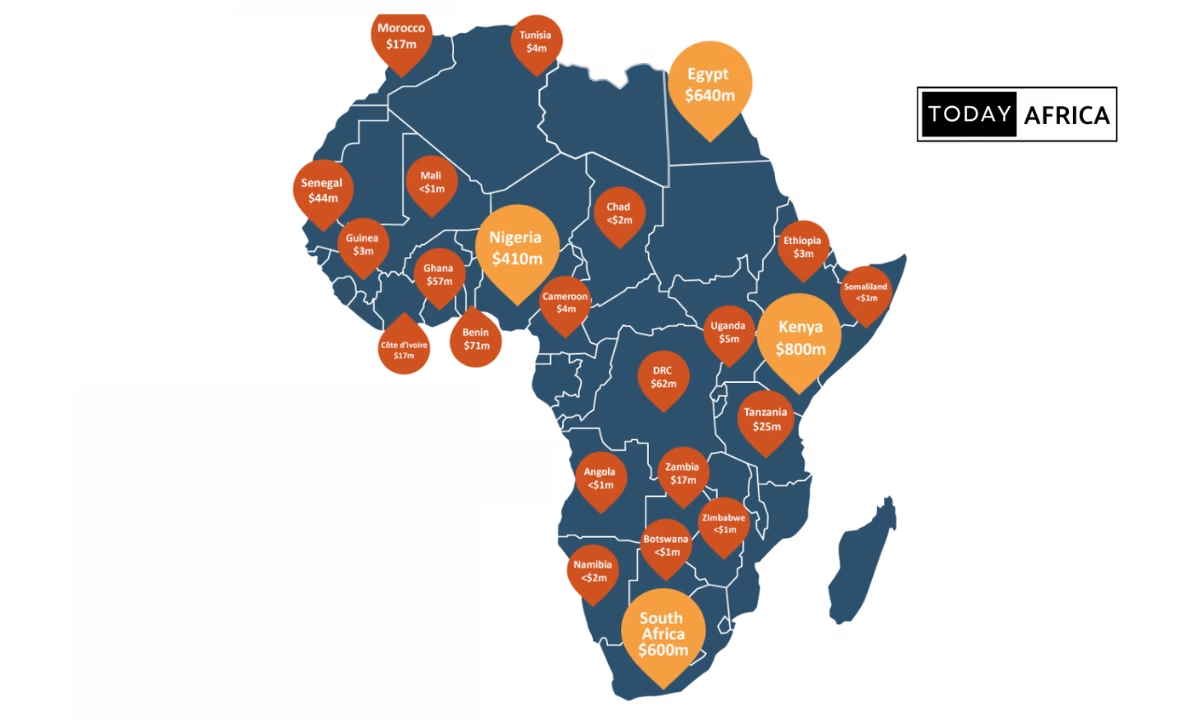
Nigeria, Egypt, South Africa, and Kenya continue attracting significant attention, but this week showed stronger interest in emerging ecosystems.
Ghana’s startup funding activity and broader regional investments demonstrate that investors are expanding their search for overlooked founders and markets.
The next wave of African technology companies may come from smaller ecosystems where entrepreneurs are solving highly specific local problems.
Regulation will shape the next growth cycle
As digital adoption increases, governments are becoming more involved in shaping technology markets.
Telecommunications policy, fintech regulation, digital identity systems, and artificial intelligence governance will likely become major factors determining which companies scale successfully.
The companies that can operate effectively within changing regulatory environments may gain a significant advantage.
What to watch next
More infrastructure deals are likely
Investors will continue watching companies building the foundations of digital economies.
Areas such as payment infrastructure, logistics technology, cloud services, and business software are likely to attract more attention as African businesses digitize.
Healthcare technology could become a major investment category
Reme-D’s funding round shows increasing confidence in African healthcare innovation.
More investors may look toward companies developing locally relevant medical technologies, diagnostics, and healthcare delivery platforms.
The combination of large healthcare needs and improving technical talent creates significant opportunity.
Stablecoin and cross-border payment adoption will remain a key trend
African businesses continue searching for faster ways to move money across borders.
Stablecoin infrastructure, digital banking tools, and alternative settlement systems will remain important sectors to monitor as companies attempt to solve long-standing payment challenges.
Leave a comment and follow us on social media for more tips:
- Facebook: Today Africa
- Instagram: Today Africa
- Twitter: Today Africa
- LinkedIn: Today Africa
- YouTube: Today Africa Studio