
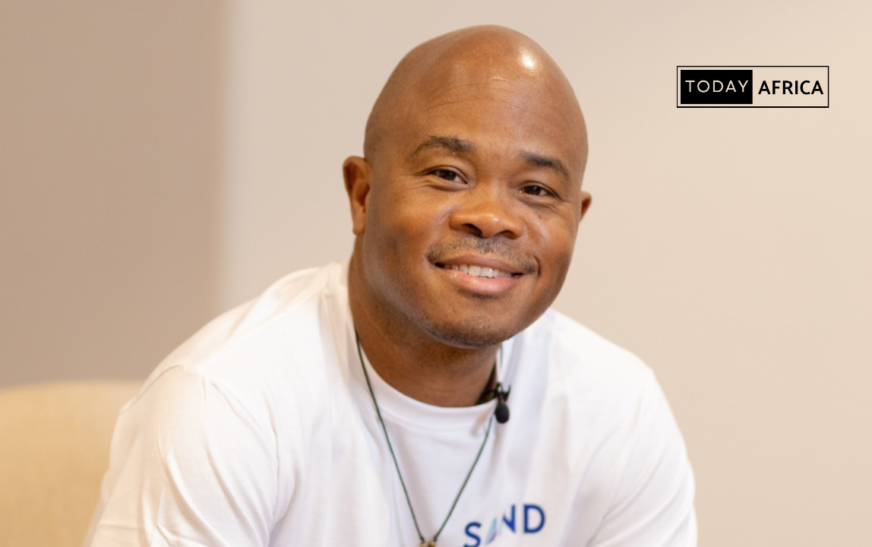
Fred Swaniker was born in Accra, Ghana, in 1976. He was four years old when his first lesson in leadership arrived, not from a classroom, but from the barrel of a gun.
In 1980, a military coup convulsed Ghana. Soldiers roamed the streets of his neighborhood. Bullets cracked through the air. The young Swaniker hid under his bed, listening.
His family, his father, a lawyer and magistrate, and his mother, Edna, an educator, made the decision to flee. It was the first of many uprootings.
By the time Swaniker was 18, he had lived in four African countries: Ghana, The Gambia, Botswana, and Zimbabwe. Each move arrived without invitation, without social scaffolding, without an established identity waiting on the other side.
He had to begin again, repeatedly, building friendships from scratch, reading unfamiliar cultures, earning trust in rooms where no one knew his name.
Most people would describe that kind of childhood as difficult. Swaniker has described it as clarifying.
“I realised that not all of Africa is chaotic and unsafe and unstable,” he told The CEO Magazine. “But if that initial instability hadn’t forced me to leave Ghana and The Gambia, I wouldn’t have seen that side of Africa and developed a life mission to transform the continent.”
Then came a loss that accelerated everything. While the family was in Botswana, Swaniker’s father died. His mother, left to run a household and a small church-affiliated primary school she had founded, needed help.
Swaniker had just finished secondary school and was in his gap year before university. She asked him to run the school. He was 18 years old. The students were aged 5 to 14. He said yes.
Within that year, by focusing relentlessly on quality and leadership, the school became the top-performing institution in its area. It was not a career move. It was an accident that revealed a vocation.
Managing people, designing systems, and watching young people change under the influence of good teaching, Swaniker discovered that this work mattered to him in a way nothing else had.
He had stumbled, grief-stricken and barely an adult, into the first proof of his life’s thesis.
From Stanford to a continent-sized vision
After Botswana, Swaniker enrolled at Macalester College in Minnesota, earning a Bachelor of Arts in Economics with a minor in Mathematical Statistics. He was a good student in an unfamiliar country, building, again, from nothing.
His next move was McKinsey & Company in South Africa, where he worked as a management consultant. The firm later sponsored his MBA at Stanford Graduate School of Business, with the condition that he return to McKinsey afterward.
At Stanford, he was named an Arjay Miller Scholar, a distinction reserved for the top 10% of his graduating class. He also completed an internship in Nigeria between his first and second years, helping to establish a microfinance institution.
In Lagos, he met parents who were spending enormous sums to send their children abroad for education, and he began to worry. These students were Africa’s future leaders. They were leaving and not coming back.
He returned to Stanford with a decision: he would quit McKinsey, pay back the $124,000 in tuition fees the firm had covered, and launch a school in Africa.
He raised the money, repaid the debt, and in 2004, while still leveraging Silicon Valley networks for funding, he co-founded the African Leadership Academy (ALA) in Johannesburg, South Africa.
ALA opened its doors in 2008. It was a full-time residential boarding school drawing the continent’s most promising 16- to 19-year-olds from over 40 African countries, combining rigorous academics with leadership training, entrepreneurship, and African studies.
By 2017, it had welcomed over 1,000 students. Many received tuition waivers on one condition: return to Africa after university and drive change from within.
The model worked. And Swaniker began to see the next gap. Getting brilliant Africans through secondary school and into global universities was one thing. But many were not coming back.
The pipeline was leaking at the top. Africa needed its own world-class university, one that kept talent on the continent while training it to global standards.
In 2013, he launched the African Leadership University (ALU), with campuses in Mauritius and Rwanda.
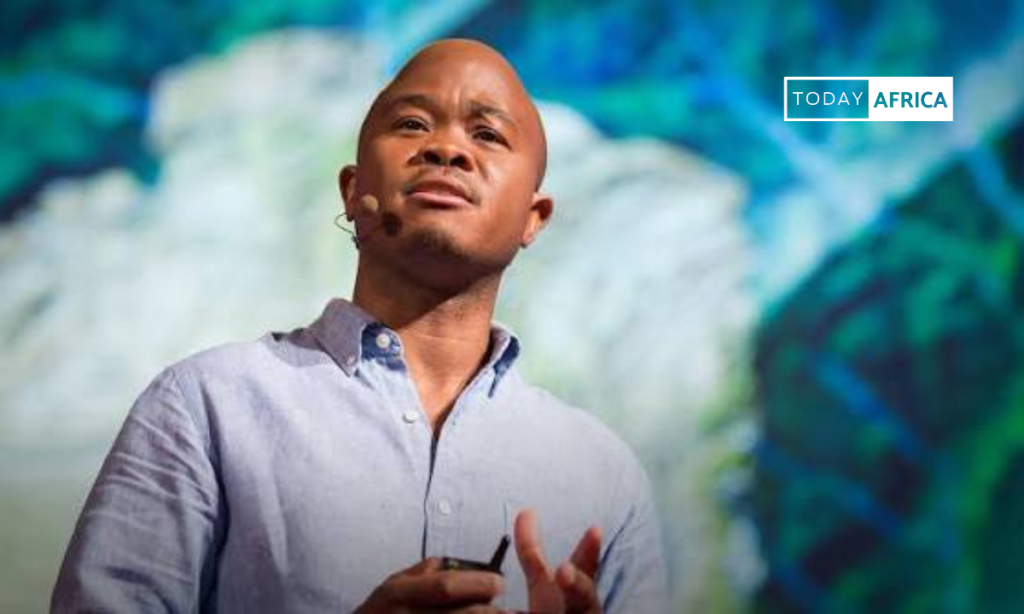
In 2014, at a TED conference in Brazil, he announced the full scope of his vision: a network of 25 African universities that would ultimately produce 3 million leaders by 2060.
Fast Company ranked ALU the 3rd most innovative company in Africa. CNN called it “the Harvard of Africa.”
Graça Machel, Nelson Mandela’s widow, became Chancellor. Donald Kaberuka, former President of the African Development Bank, became Chairman of its Global Advisory Council.
Then came ALX Africa, a rapidly scaling professional skills and technology training platform that has trained hundreds of thousands of young Africans in software engineering, data analytics, cloud computing, and business skills.
Then, The Room, a global community designed to connect Africa’s rising professionals with employers, mentors, and investors, aims to reach 5 to 10 million members within a decade.
And then Sand Technologies, a data and AI solutions company operating across Silicon Valley, Europe, and Africa.
The architecture was not accidental. It was a pipeline, from age 16 to career, designed to keep African talent on African soil and route it toward African problems.
In 2019, Time magazine named Swaniker one of the 100 Most Influential People in the World. In 2023, he received the Time 100 Impact Award.
Fast Company has included the African Leadership Group among the world’s 50 most innovative companies.
Barack Obama and Bill Gates have both publicly praised his work. He holds honorary doctorates from Middlebury College, Nelson Mandela University, and Macalester College. He was not yet 50.
The choices that made the difference
Paying back McKinsey, and the cost of real commitment
When Swaniker decided to leave McKinsey and build ALA, he did not walk away clean. He owed the firm $124,000 in tuition. He raised the money, repaid the debt, and left on his own terms.
This was not symbolism; it was a statement about the kind of founder he intended to be. Leaders who build for Africa cannot afford to begin with unresolved obligations or halfway commitments. He resolved his fully before he started.
Refusing the NGO model
From the outset, Swaniker designed ALA, ALU, and ALX as institutions with revenue models, tuition, income-share agreements, and employer partnerships, rather than grant-dependent nonprofits.
This made the early years harder and the long-term trajectory far more sustainable. It also made the institutions more accountable: when students pay, even on sliding scales, they hold the institution to a standard that charity rarely demands.
Thinking in millions, not in cohorts
When Swaniker says “3 million leaders,” he is not speaking metaphorically. He has traced backward from what Africa’s population and governance challenges actually require, the ratio of capable, ethical leaders needed to run functional societies, and built toward that number systematically.
Most schools think: How many students can we enroll this year? Swaniker thought: What does the continent need? Now build backward from that. The difference in cognitive frame produces entirely different institutions.
Staying pan-African by design, not by accident
Every institution in the African Leadership Group is deliberately continental. ALA recruits from 40+ countries. ALU campuses span two nations. ALX operates across the continent.
This was not strategic convenience; it was a philosophical commitment to refusing the nation-state fragmentation that limits most African initiatives. By operating at a continental scale, Swaniker created network effects that no single-country school could replicate.
Turning a gap year into a founding insight
The year Swaniker spent as an 18-year-old headmaster in Botswana was not part of any plan. It happened because his father died and his mother needed help.
But he extracted from it a conviction that young Africans, given real responsibility and real support, will rise to meet it, which has since animated every institution he has built.
The ability to learn from unplanned experience, and to convert personal crisis into institutional insight, is one of the defining patterns of his story.
Betting on Africa’s youth as the world’s greatest untapped asset
Swaniker has consistently made the demographic argument: Africa will be 40% of the world’s population by the end of this century, with an average age of 19, compared to 48 in Germany and Japan.
Where most institutions see that statistic as a development challenge, he has built an entire enterprise around treating it as the opportunity of the century.
“Africa’s going to be 40% of the world’s population by the end of the century,” he has said. “The most critical progress we have to make in Africa this century is to create opportunities for the youth.”
What Swaniker’s story reveals about building for Africa
Instability can be a curriculum
The child who hid under a bed during a military coup, who rebuilt his social world in four different countries before age 18, who buried his father and then took over a school in the same year, was being trained, without knowing it, for exactly the work he would later do.
For African builders who have lived across borders, navigated political disruption, or started from zero multiple times: that is not a liability. That is an education no institution offers. The question is whether you deliberately extract the lessons.
The leadership gap is real and diagnosable
Swaniker’s core thesis, that Africa’s challenges are fundamentally a leadership problem, not a resources problem, is a diagnosis, not a slogan. It is the kind of precise problem definition that makes coherent institution-building possible.
Without it, every initiative he launched would have been a school. With it, every initiative became part of a pipeline. Builders who cannot name their problem clearly cannot build solutions that hold.
Scale requires systems, not just vision
Swaniker did not simply inspire. He built curricula, governance structures, campus infrastructure, employer networks, revenue models, alumni communities, and technology platforms. The romantic version of his story focuses on the ideas.
The operational truth is that ideas without infrastructure are just speeches. Every institution he has created is built around replicable systems, which is why they can grow.
Pan-African thinking is a structural advantage
In a world where most organizations are city-level or country-level, Swaniker’s institutions operate at a continental scale.
This creates network effects, diversity of perspective, investor credibility, and a moral seriousness that single-nation institutions cannot match.
African builders who can genuinely operate across borders and have meaningful relationships in Nairobi, Lagos, Accra, Kigali, and Johannesburg simultaneously are building something structurally more valuable than those who cannot.
Generational time horizons change everything
Swaniker plays a 50-year game. This changes how he hires, how he measures success, how he handles failure, and how he makes decisions under pressure. Most startups play a 5-year game.
Most NGOs play a grant-cycle game. The length of your time horizon is not just a strategic preference; it is a cultural and psychological commitment that shapes every downstream choice.
Lessons African founders can build from Swaniker
Diagnose before you build
Swaniker spent years sharpening one diagnosis, Africa’s challenges are a leadership problem, before he launched his first institution. A sharp diagnosis is not an intellectual exercise.
It is the north star that keeps your strategy coherent across years and decades of pressure, criticism, and distraction. If you cannot state the problem your work solves in one sentence, you are not ready to scale.
Build to the scale of the real problem, not your comfort zone
If the problem is continental, a city-level solution is not ambitious; it is evasion. Swaniker built toward a 3-million-leader target because that is what the continent actually requires.
Ask yourself: Am I building something proportional to the problem I say I care about? If not, what is stopping me from thinking bigger, and is that reason legitimate?
Choose sustainability over dependency from day one
The decision to build revenue-generating institutions rather than grant-dependent ones was the most consequential structural choice Swaniker ever made. For every African founder: every product and service you build should eventually pay for itself. Donor dependency and grant reliance are not business models — they are countdown timers.
Convert your unplanned experiences into institutional insight
Swaniker did not plan to become a headmaster at 18. He did not plan to grow up in four countries. But he extracted lessons from both with extraordinary discipline.
Some of the most valuable insights available to African builders lie within their own unplanned, unscripted, painful experiences, if they are willing to examine them honestly.
Design your network as a strategic asset
ALA was, at its core, a network play: bring the best young Africans together, forge deep bonds, and release them into the world as a connected tribe. The alumni network is now 3,200+ strong across 57 countries.
For any African founder: your users, your graduates, and your community are your network. Invest in that network with the same rigor you invest in your product.
Make leadership operational, not aspirational
In every Swaniker institution, leadership is not a poster on a wall or a speech at orientation; it is the subject being studied. For founders building teams, create systems that actively develop leaders. Delegate real decisions.
Build feedback loops. Tolerate intelligent failure. Let people lead before they feel ready. The continent does not need more people who know about leadership. It needs more people who have practiced it.
Think in generations, execute in quarters
A 50-year vision does not mean vague plans. Swaniker pairs enormous long-term ambition with extremely concrete near-term execution, specific curricula, specific enrollment targets, and specific campus locations.
Hold both frames simultaneously. The long horizon protects you from short-termism. The quarterly execution keeps you from dreaming and instead builds.
Fred Swaniker did not build schools. He built a theory that if Africa gets its leadership right, everything else becomes solvable, and then spent two decades making that theory structural, scalable, and real.
His story is not primarily about one man’s extraordinary trajectory.
It is about what becomes possible when an African builder refuses to accept that the continent’s problems are too large or too entrenched to be addressed by well-designed, well-run, financially sustainable institutions.
Africa has never lacked potential. It has never lacked talent. What it has lacked, and what Swaniker has spent his life building, is the infrastructure to convert that potential into power and that talent into transformation.
“Leadership will make or break the continent of Africa,” he said.
Editor’s Note: This is a leadership profile, not a traditional biography. It draws on documented, publicly verified facts about Fred Swaniker’s life and institutions, including direct quotes, confirmed dates, and recorded events, and combines them with analytical commentary designed to extract lessons for African builders today. Sources include interviews with The CEO Magazine, Forbes, CNN, TED, and Wikipedia.
Leave a comment and follow us on social media for more tips:
- Facebook: Today Africa
- Instagram: Today Africa
- Twitter: Today Africa
- LinkedIn: Today Africa
- YouTube: Today Africa Studio






![Biography of Tony Elumelu [Investor, Entrepreneur, & Philanthropist]](https://todayafrica.co/wp-content/uploads/2023/12/Blue-Simple-Dad-Appreciation-Facebook-Post-1200-×-720-px-7-1.png)