
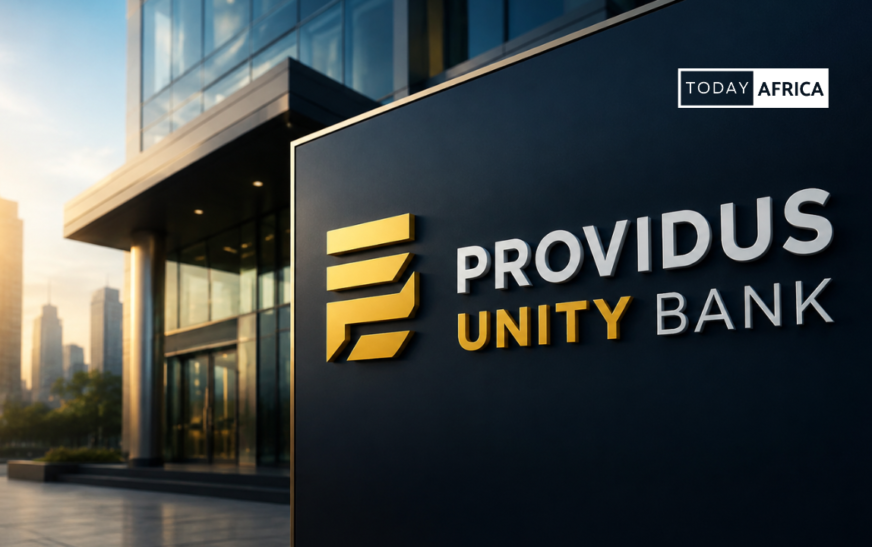
ProvidusUnity Bank has begun operations as a single banking institution, marking the completion of the merger between Providus Bank and Unity Bank after months of regulatory, shareholder, and legal processes.
The development follows the Supreme Court’s dismissal of an appeal that sought to stop the merger. A five-member panel led by Justice Tijani Abubakar ruled that the appeal lacked merit and awarded costs of N10 million against each appellant.
The case was brought by two bank customers and shareholders, Suleiman Abubakar and Mohammed Goni Modu, who had challenged an earlier Court of Appeal decision that cleared the way for the consolidation.
Supreme Court clears final legal hurdle
With the legal dispute now resolved, the combined institution will operate under the ProvidusUnity Bank name, bringing together Providus Bank’s digital banking strength and Unity Bank’s wide retail footprint.
Under the approved merger scheme, Unity Bank shareholders will receive N3.18 per share or 18 Providus Bank shares of 50 kobo each for every 17 Unity Bank shares held.
The court also ordered the transfer of Unity Bank’s assets, liabilities, and undertakings, including real property, to Providus Bank within 10 days. Unity Bank’s board has also been dissolved without winding up the company.
The new bank is expected to operate about 230 branches across Nigeria, putting it among the country’s larger banking networks in terms of physical presence.
Its asset base is projected to exceed N2 trillion, while deposits are expected to rise above N1.2 trillion.
Read also: Paystack launches AI-powered checkout for Nigerian consumers
A bigger player in Nigeria’s banking space
For Nigeria’s financial technology and digital banking space, the merger is important because it combines scale with digital capability.
Providus Bank has built a reputation for modern banking services, corporate banking, and digital-first solutions, while Unity Bank has long served customers across retail, agriculture, SMEs, and regional markets.
That combination could make ProvidusUnity Bank a more competitive player at a time when Nigerian banks are under pressure to strengthen capital, improve technology, protect customer confidence, and deepen access to digital financial services.
The merger also connects directly to the Central Bank of Nigeria’s recapitalization push.
Nigerian banks have been moving to raise fresh capital, consolidate, or restructure their licensing positions to meet new minimum capital requirements. For banks with national authorization, the required capital base is N200 billion, while international banks are subject to a N500 billion threshold.
ProvidusUnity Bank’s emergence signals one of the clearest examples yet of how consolidation may reshape Nigeria’s banking sector. Instead of competing only through branch expansion, banks are now being pushed to combine stronger balance sheets with better digital infrastructure.
For customers, the first visible change will be the new ProvidusUnity Bank identity appearing across banking apps, debit cards, transaction alerts, and customer communication channels.
The bank has assured customers that deposits, savings, and corporate funds remain intact and accessible during the integration process.
The bigger test will come in the weeks ahead as the two former banks unify accounts, backend systems, customer service processes, and product lines.
Customers will be watching for clarity on account migration, card usage, app access, branch service, loans, corporate banking support, and digital transaction reliability.
For founders, fintech operators, and investors, this merger is worth watching, as it may create a stronger banking partner with broader national reach and enhanced digital capabilities.
A larger ProvidusUnity Bank could become more relevant in payments, SME banking, embedded finance, corporate treasury, agency banking, and digital lending.
It could also increase competition among Nigerian banks seeking to serve startups, small businesses, and digitally active consumers. As more banks strengthen their capital base, the winners may be those that can combine trust, speed, technology, and distribution.
ProvidusUnity Bank has now entered the integration phase. What happens next will determine whether the merger becomes more than a balance-sheet transaction.
The key question is whether the new institution can turn its larger branch network and digital banking promise into smoother services, stronger customer retention, and deeper support for Nigeria’s business economy.
Leave a comment and follow us on social media for more tips:
- Facebook: Today Africa
- Instagram: Today Africa
- Twitter: Today Africa
- LinkedIn: Today Africa
- YouTube: Today Africa Studio