
For decades, moving money across African borders was slow, expensive, and complicated. Families struggled to send support home. Businesses struggled to trade across countries. Entrepreneurs struggled to build companies that could operate beyond one market.
Dare Okoudjou saw that problem differently. Instead of accepting Africa’s fragmented financial systems as a limitation, he saw them as an invitation to build. His journey from Benin to becoming the founder of one of Africa’s most influential digital payment infrastructure companies is a lesson in how African entrepreneurs can transform personal experiences into continent-scale solutions.
Okoudjou’s story is not simply about fintech. It is about vision, timing, resilience, and the power of building infrastructure that allows millions of others to participate in economic growth.
How Dare Okoudjou’s African perspective was formed
Dare Okoudjou was born in Benin, where his early experiences shaped his understanding of commerce, movement, and the realities of African economic life. His education and career later took him across different environments, including Morocco, France, and South Africa, exposing him to different systems, cultures, and approaches to solving problems.
That international exposure gave him something many successful African builders develop: a perspective that is both local and global.
He understood Africa not as a collection of isolated markets, but as a connected continent with shared challenges and opportunities.
His professional journey began in management consulting at PricewaterhouseCoopers in Paris before he moved into telecommunications and digital finance. He later joined MTN Group, where he helped develop and implement mobile payment strategies across 21 countries in Africa and the Middle East.
That experience became a turning point. While working in mobile payments, Okoudjou saw a major gap. Africa had millions of people using mobile money services, but those systems often operated separately.
The continent had digital wallets, but it lacked the bridges that could allow money to move easily between networks, countries, and institutions.
The problem was clear: Africa did not only need more financial services. It needed financial connections.
Building the infrastructure behind Africa’s digital payments future
In 2009, Dare Okoudjou founded MFS Africa, a company built around solving one of Africa’s most important financial challenges: interoperability between payment systems.
The idea was simple but ambitious: create a network that allowed different financial platforms, mobile operators, banks, and businesses to communicate with each other.
This was not a consumer app chasing attention. It was infrastructure. That distinction mattered.
Many entrepreneurs build products for today’s users. Okoudjou focused on building systems that would enable tomorrow’s economy.
Under his leadership, MFS Africa grew into one of Africa’s largest digital payment networks. The company connected mobile wallets, banks, merchants, and financial institutions across multiple African markets, helping expand access to digital financial services.
The company later became Onafriq, reflecting its broader ambition to build a wider financial connectivity network across Africa and beyond.
Okoudjou’s rise demonstrates a powerful entrepreneurial principle: The biggest African companies may not always be built around solving the most visible problems. They are often built around solving the hidden infrastructure problems that affect everyone.
Read also: Rapelang Rabana: The entrepreneur who turned curiosity into institutions
The choices that built the vision
Great companies are rarely created through one breakthrough moment. They are built through a series of difficult decisions.
For Dare Okoudjou, one defining choice was leaving a successful corporate career to pursue an uncertain entrepreneurial path.
At MTN, he had access to a major platform and was working on one of Africa’s emerging technology opportunities. But he believed the bigger opportunity was solving the deeper infrastructure problem behind mobile money. He chose uncertainty over comfort.
Another defining decision was focusing on interoperability rather than competing as another payment provider.
Instead of asking, “How do we build another wallet?” he asked, “How do we connect the wallets that already exist?”
That shift in thinking created a much larger opportunity. Okoudjou also faced moments when survival required discipline. During MFS Africa’s early years, the company experienced intense pressure, including funding challenges.
He has described periods where difficult decisions had to be made to keep the company alive, including focusing on scalable solutions and finding the right strategic partners.
The lesson is important for African founders: Vision matters, but execution determines survival. A founder must know when to dream bigger and when to simplify.
What Dare Okoudjou’s journey reveals about African success
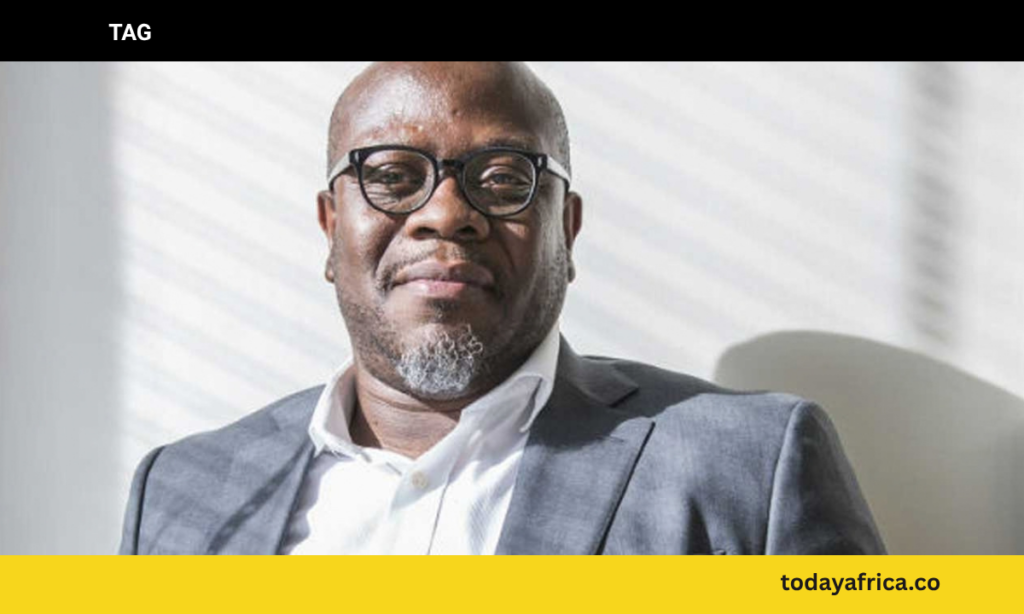
Dare Okoudjou’s journey reveals several truths about building in Africa.
African problems can become global businesses
Many entrepreneurs search for ideas by looking at trends in other markets. Okoudjou started somewhere different: lived experience.
The challenge of moving money across borders was not theoretical. It was a real problem affecting families, businesses, and communities.
The strongest African companies often emerge from founders who deeply understand the problems they are solving.
Infrastructure is a powerful form of innovation
Africa’s next generation of companies will not only be built around consumer products.
Many will come from infrastructure: payments, logistics, energy, data, artificial intelligence, healthcare systems, and financial networks.
Okoudjou’s story shows that innovation is not always creating something completely new. Sometimes it is connecting things that already exist in a better way.
Pan-African thinking creates bigger opportunities
A common limitation for African businesses is thinking too narrowly. Okoudjou built with the continent in mind. The opportunity was not one country. It was the movement of value across borders.
African founders who understand regional markets, partnerships, and continental dynamics can unlock opportunities beyond their immediate environment.
Read also: The Paul Kagame story and its lessons for Africa
Lessons from Dare Okoudjou’s journey
For African founders, entrepreneurs, investors, and creators, Dare Okoudjou’s journey offers a practical blueprint.
Start with a problem you understand deeply
The strongest businesses often begin with frustration.
Ask:
- What problem have I experienced?
- What challenge affects millions of people?
- What system is broken but necessary?
Personal insight can become market intelligence.
Build infrastructure, not just products
Products can create users. Infrastructure can create ecosystems. The next generation of African leaders should think beyond individual solutions and focus on platforms that empower thousands of businesses and millions of people.
Think beyond borders
Africa is 54 countries, but many opportunities are continental. Builders should develop partnerships, understand regional differences, and design solutions that can scale.
Stay close to the mission
Building a company in Africa often requires patience. Markets can be unpredictable. Infrastructure can be difficult. Funding environments can change. A strong mission helps founders survive moments when progress is slower than expected
Read also: Jason Njoku: iROKOtv and African streaming revolution
Make visibility part of growth
Today’s African builders need more than great ideas. They need credibility, storytelling, market positioning, and ecosystem recognition.
Our Founder & Ecosystem Visibility Engine helps founders, companies, and ecosystem leaders become more discoverable by investors, partners, and global audiences.
Because in the modern African economy, building matters, but being understood also matters.
Africa needs more builders who see connections
Dare Okoudjou’s story is ultimately about connection.
- Connecting people.
- Connecting markets.
- Connecting opportunities.
His achievement was not only creating a fintech company. It was recognizing that Africa’s fragmentation could become a foundation for innovation.
The blueprint is clear:
- Find the broken connection.
- Understand the people affected.
- Build the bridge.
- Scale the solution.
Africa’s future will be shaped by builders who do exactly that.
Leave a comment and follow us on social media for more tips:
- Facebook: Today Africa
- Instagram: Today Africa
- Twitter: Today Africa
- LinkedIn: Today Africa
- YouTube: Today Africa Studio



![Biography of Tony Elumelu [Investor, Entrepreneur, & Philanthropist]](https://todayafrica.co/wp-content/uploads/2023/12/Blue-Simple-Dad-Appreciation-Facebook-Post-1200-×-720-px-7-1.png)