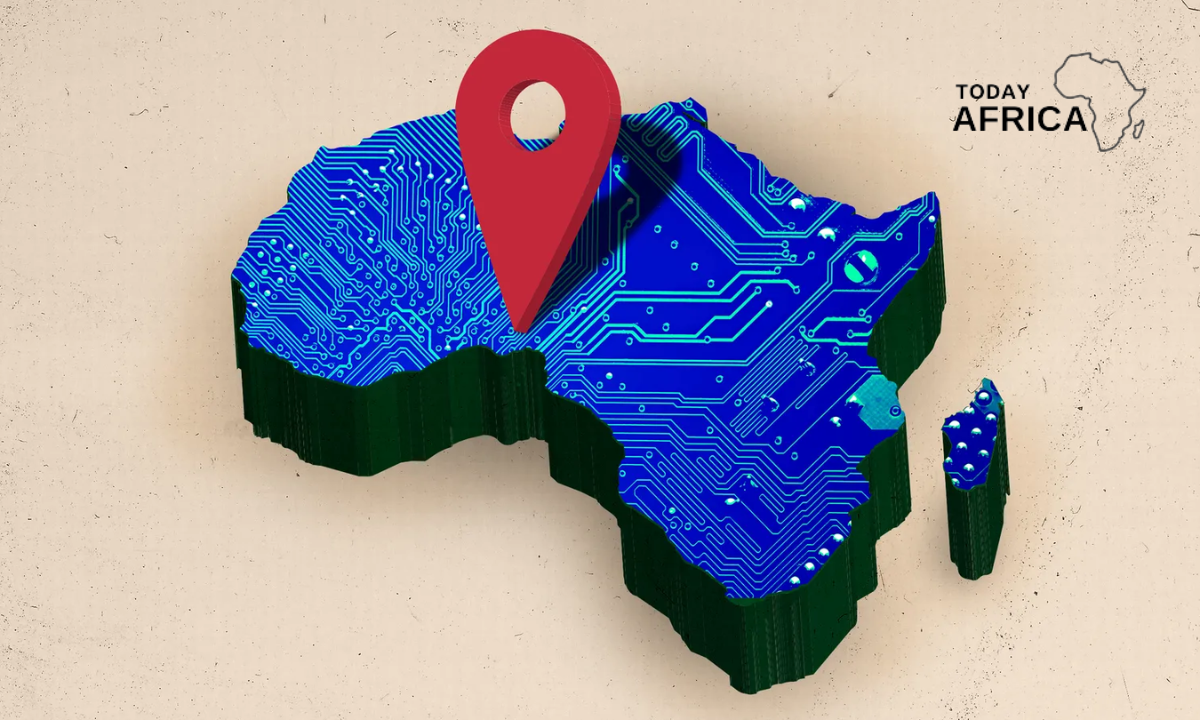


Africa is no longer a “future opportunity.” It is already one of the fastest-shifting investment frontiers in the world, where capital, population growth, and digital adoption are colliding at speed.
Recent data shows why global investors are paying attention again. Foreign direct investment into Africa surged significantly in 2024, with estimates reaching around $97 billion in inflows, even as global FDI slowed under economic pressure and geopolitical tension . At the same time, African economies continue to attract renewed investor confidence as reforms improve regulatory environments and ease market entry barriers .
But opportunity alone is not enough. Starting a business in Africa as a foreigner requires precision, timing, and a clear understanding of how the continent actually operates beneath the headlines.
Africa is growing, but not as one market
Africa is home to over 1.4 billion people across 55 countries, yet business conditions differ dramatically from one border to another. The African Continental Free Trade Area (AfCFTA), now one of the largest trade agreements in the world, is designed to connect this fragmented landscape into a unified market.
If fully implemented, it could increase intra-African trade by more than 80%, unlocking new supply chains and regional investment flows . But here is the reality: only a fraction of countries are fully operational within the system, and infrastructure gaps still slow down cross-border trade.
For foreign founders, this means one thing: you are not entering Africa; you are entering individual ecosystems that are slowly connecting.
Read also: You’ll Stay Poor If You Keep Choosing Low-cost Business Ideas, Try These 15 Instead
Foreign direct investment is rising, but highly selective

Africa is attracting more strategic capital, not just more capital.
While global FDI has declined in recent years due to rising interest rates and geopolitical instability, Africa has moved in the opposite direction in key sectors. According to UN trade data, the continent recorded record-high investment levels in 2024 before short-term volatility in 2025.
At the same time, investor behavior is changing:
- Sovereign wealth funds across Africa are nearing $1 trillion in combined assets under management
- New development finance structures are increasingly used to “de-risk” private capital
- Gulf states, Europe, and China remain dominant sources of large-scale investment inflows
This signals a shift: Africa is no longer just attracting “startup capital,” but also institutional and infrastructure-level money. For foreign entrepreneurs, this matters because it creates both competition and partnership opportunities.
Real barrier is not capital, it is market entry complexity
Many assume the biggest challenge in Africa is funding. In reality, it is market entry structure and regulation.
Research shows that reducing the cost and complexity of starting a business significantly increases foreign investment inflows,, with countries that improved business registration systems seeing FDI growth of up to 70%–160% over time in some cases .
But across many African markets, founders still face:
- Multi-layer licensing requirements
- Foreign ownership restrictions in key industries
- Currency volatility affecting profit stability
- Banking delays and compliance verification gaps
- Local incorporation rules that vary widely by country
In simple terms: Africa rewards preparation, not improvisation.
Before launching, successful foreign founders typically work through three layers:
- Legal structure (subsidiary, branch, JV)
- Regulatory approvals (sector-specific licensing)
- Financial compliance (tax, banking, FX planning)
Skipping any of these can stall even well-funded businesses.
Read also: The 20 most profitable businesses in the future, based on research
How to start a business in Africa as a foreigner in 2026

Choose the country before the business
The first decision is not your logo, your product, or your website. The first decision is the country.
Africa has different legal systems, tax rules, business cultures, customer behaviors, banking structures, and foreign ownership restrictions. A business that works beautifully in Kenya may struggle in Ghana. A model that grows fast in Rwanda may need a different structure in Nigeria, South Africa, Egypt, or Morocco.
That means the smart foreign founder starts with market selection. Look at political stability, ease of registration, currency risk, internet penetration, infrastructure, logistics, talent, import rules, tax obligations, and how easy it is to move money in and out of the country.
You should also study the customer, not just the economy. A country may look attractive on paper, but if your offer does not solve a daily problem for real people or real businesses, the market will humble you quickly.
Pick a problem that already has demand
Foreign entrepreneurs often enter Africa with ideas they think people need. The better approach is to find what people are already trying to solve.
Across many African markets, strong business opportunities often sit in practical sectors: food processing, logistics, education, digital payments, agriculture, housing, health services, beauty, clean energy, mobility, construction materials, e-commerce support, business software, childcare, and skills training.
The best opportunities are not always glamorous. Sometimes the winning business is a cold storage solution for farmers, a bookkeeping tool for small shops, a reliable delivery service, a private school support platform, or a local product packaged better for urban buyers.
Do not chase Africa as a trend. Chase a painful problem with paying customers.
Understand foreign ownership rules
Before you spend serious money, learn what foreigners are allowed to own in your target country and sector.
Some countries allow full foreign ownership in many industries. Others require local directors, local shareholders, special permits, minimum capital, investment certificates, or sector-specific licenses. Certain industries, such as mining, telecoms, land, banking, media, aviation, and energy, may have extra restrictions.
This is where many beginners make costly mistakes. They assume business registration means full legal permission to operate. It does not always mean that.
You may be able to register a company, but still need a trade license, tax registration, immigration permit, work permit, municipal approval, import license, product certification, health clearance, or industry regulator approval before operating legally.
Before launching, speak with a local business lawyer, accountant, or investment promotion agency in the country you choose. A clean start is cheaper than fixing a messy one later.
Register the right business structure
Most foreign founders will register a limited liability company, branch office, subsidiary, partnership, or representative office, depending on their plans.
A limited liability company is often the common route for entrepreneurs who want to operate locally, open a bank account, hire workers, sign contracts, and pay taxes inside the country. A branch may suit companies that already exist abroad and want a local presence. A representative office may work for market research, but it may not be allowed to trade directly.
The right structure depends on your goals. Are you selling locally? Importing goods? Exporting from Africa? Hiring staff? Raising investment? Buying land? Serving clients remotely? Opening a physical location?
Your answer changes the best legal setup.
Do not blindly copy another founder’s structure. A restaurant owner, software founder, mining consultant, fashion exporter, and real estate investor may all need very different legal paths.
Build with local partners, not just local staff
A local partner is not just someone who knows where to print flyers or find an office. A strong local partner understands trust, timing, language, pricing, family networks, government processes, supplier behavior, and customer expectations.
That knowledge can save your business.
Foreigners sometimes underestimate how much business in Africa depends on relationships. The paperwork matters, but trust often moves faster than paperwork. A supplier may answer a known local operator before replying to a foreign newcomer. A landlord may negotiate differently with someone who understands the area. A customer may need to see social proof before believing your brand is serious.
This does not mean you should hand control to the first friendly person you meet. It means you should choose partners carefully, document agreements clearly, and respect local intelligence as a serious business asset.
A good local partner can open doors. A bad one can close your business.
Open a bank account and plan for currency risk
Banking is one of the most important parts of starting a business in Africa as a foreigner.
You may need company registration documents, tax identification, proof of address, board resolutions, passport copies, local director information, business permits, and sometimes immigration documents to open a business account. Requirements vary by country and bank.
You should also think carefully about currency. Many African currencies can move sharply against the dollar, euro, or pound. If you earn in local currency but pay suppliers abroad, your profits can shrink without warning. If you import goods, exchange rates can change your pricing overnight.
Build currency movement into your financial plan. Keep clear records. Price with a buffer. Avoid promising fixed long-term prices if your costs depend on foreign exchange.
A business can be profitable on paper and still bleed cash because of currency timing.
Respect tax from day one
Taxes should not be an afterthought. Most countries will require tax registration after company formation. Depending on your activity, you may deal with corporate income tax, value-added tax, withholding tax, payroll tax, customs duties, local levies, social security contributions, or sector-specific charges.
Foreigners also need to think about tax obligations in their home country. You may owe reporting, even if the business operates abroad. Get a local accountant early. Ask about filing deadlines, invoicing rules, deductible expenses, employee obligations, and penalties. Keep clean books from the first sale.
Many businesses in Africa grow informally at first, but foreign-owned businesses should avoid that trap. If your goal is to scale, raise money, win contracts, import goods, or sell to serious clients, clean compliance becomes a competitive advantage.
Start small, then localize fast
Do not launch with arrogance. Test first. Start with a small pilot, a narrow customer segment, one city, one product line, or one service package. Watch how people respond. Listen to objections. Track what customers pay for, not just what they praise.
Then localize fast.
Your pricing may need adjustment, your packaging may need to be smaller, and your payment options may need mobile money. Also, your sales message may need less polish and more proof. Your delivery model may need pickup points instead of door-to-door logistics. Your customer support may need WhatsApp before email.
In many African markets, the winning business is not the one with the most foreign capital. It is the one that adapts the fastest.
Hire for trust, skill, and street knowledge
Hiring in Africa is not just about finding degrees. You need people who understand how the market breathes.
Your first hires may include an operations lead, accountant, sales manager, logistics coordinator, customer support person, or compliance assistant. Choose people who can move between formal systems and real-world problem solving.
Pay fairly. Train clearly. Put contracts in writing. Follow labor laws. Do not assume informal hiring protects you. It often creates bigger problems later.
A loyal local team can become your strongest moat. They will hear customer complaints before you do. They will sense market shifts before they appear in reports. They will know when a supplier is unreliable, when a neighborhood is changing, and when your pricing feels wrong.
Treat them as builders, not just workers.
Market with proof, not hype
Foreign branding can help, but it can also create distance. Customers may be curious, but they still need trust. Use proof. Show testimonials, demonstrations, local partnerships, before-and-after results, product quality, delivery reliability, and real customer stories.
Make your business visible in the places your buyers already spend time, whether that is TikTok, Instagram, WhatsApp, Facebook groups, trade fairs, church communities, school networks, local radio, market associations, or business chambers.
Do not sound like an outsider selling a fantasy. Sound like a serious operator solving a real problem. In Africa, word of mouth can build a brand faster than ads, but it can also destroy one faster than a bad review. Deliver well before you scale loudly.
Think beyond one country
One of the most exciting parts of starting a business in Africa is the possibility of regional growth.
A company may begin in Ghana and later serve Nigeria, Côte d’Ivoire, and Senegal. A Kenyan business may expand into Uganda, Tanzania, and Rwanda. A South African operation may build routes into Botswana, Namibia, Zambia, and Mozambique.
But expansion should come after discipline. Prove your model in one market first. Build systems. Understand compliance. Create supplier reliability. Make your numbers clear. Then look outward.
The African Continental Free Trade Area is part of a broader push to deepen trade and investment across the continent, but practical cross-border business still requires planning. Customs, standards, product approvals, tax rules, language, logistics, and payment systems can vary widely.
The opportunity is real, but it rewards founders who prepare.
Read also: 22 cheapest businesses women can start from home this year
The smart foreigner enters with humility
Starting a business in Africa as a foreigner is not about “discovering” a market. Africans already live there, build there, sell there, buy there, innovate there, and compete there every day.
The smart foreign founder enters with humility, capital, patience, compliance, and a willingness to learn.
Africa does not need outsiders who arrive with savior energy. It rewards outsiders who bring useful value, respect local expertise, create jobs, solve real problems, and build businesses that make sense on the ground.
If you choose the right country, respect the law, partner wisely, test carefully, and adapt quickly, Africa can become more than a business destination.
It can become the place where your idea finally learns how to grow.
Leave a comment and follow us on social media for more tips:
- Facebook: Today Africa
- Instagram: Today Africa
- Twitter: Today Africa
- LinkedIn: Today Africa
- YouTube: Today Africa Studio