
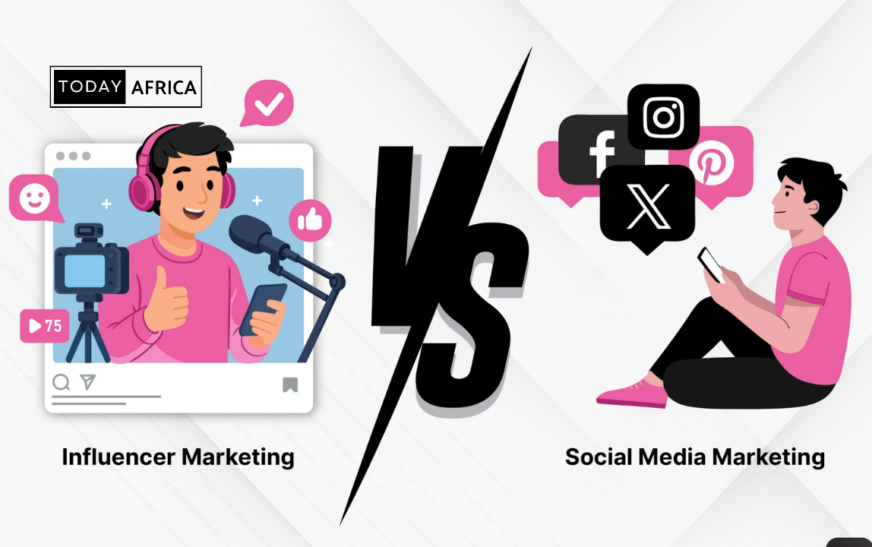
Influencer marketing and paid social ads are often treated like rivals, but they’re really two different engines. One borrows trust from real people. The other buys targeted reach from platforms.
One feels like a recommendation. The other feels like a campaign. The smartest brands don’t ask which one is “better” in every situation. They ask which one fits the goal, budget, product, timeline, and level of proof they need.
Social media is still one of the biggest marketing arenas on the planet, with 5.66 billion active social media user identities reported globally in October 2025. Social ads also remain a major discovery tool, with more than 30% of adult internet users saying they discover brands, products, and services through ads on social platforms.
At the same time, creator advertising has moved from side experiment to serious media channel, with IAB reporting $37 billion in creator ad spend in 2025 and projecting $44 billion in 2026.
Quick comparison table
| Category | Influencer Marketing | Paid Social Ads |
|---|---|---|
| Best for | Trust, storytelling, social proof, UGC, niche communities | Fast reach, testing, retargeting, conversions, scaling |
| Main strength | Human credibility | Platform precision |
| Speed | Slower to launch because of creator selection and approvals | Faster to launch once creative and tracking are ready |
| Control | Lower control because creators need creative freedom | Higher control over message, audience, budget, and timing |
| Creative style | Native, personal, lifestyle-driven | Polished, direct, offer-driven, testable |
| Measurement | Harder because influence can happen across touchpoints | Cleaner because dashboards track clicks, CPA, ROAS, and conversions |
| Cost model | Creator fees, gifting, commissions, usage rights, agency fees | CPM, CPC, CPA, daily budgets, platform spend |
| Risk | Fake followers, weak brand fit, inconsistent quality, compliance issues | Ad fatigue, rising CPMs, weak creative, platform dependency |
| Best KPI | Engagement quality, saves, comments, affiliate sales, brand lift, UGC output | CTR, CPA, ROAS, CVR, leads, purchases |
| Biggest weakness | Attribution can get messy | Ads can feel cold or easy to ignore |
What influencer marketing does better

Influencer marketing wins when trust matters more than instant scale. A strong creator can make a product feel less like an ad and more like a discovery passed from one person to another. That matters because social feeds are crowded, polished brand messaging is easy to skip, and audiences are more skeptical than ever.
Sprout Social’s influencer research notes that consumers want authentic, original content and that the right influencer strategy can help brands break through saturated networks.
It also shines when the product needs context. Skincare, fashion, fitness, food, apps, baby products, gadgets, travel experiences, and home items often perform better when people can see them being used in real life. A creator can show texture, routine, emotion, hesitation, humor, and personal payoff. That kind of content gives the product a living room, not just a landing page.
Influencer marketing also gives brands creative assets. A good creator campaign can produce videos, photos, testimonials, product demos, FAQs, unboxings, and lifestyle clips.
These assets can later be used in paid ads, landing pages, email campaigns, product pages, and TikTok Shop or Instagram content. That makes influencer marketing more than a media buy. It becomes a content machine.
What paid social ads do better
Paid social ads win on speed, control, and measurement. You can launch a campaign, test hooks, adjust audiences, change budgets, pause weak ads, scale winners, and read performance data quickly. That makes paid social powerful for brands that need direct response, lead generation, retargeting, app installs, ecommerce sales, event registrations, or traffic.
The scale is also hard to beat. IAB reported that U.S. digital advertising revenue reached $294.6 billion in 2025, with social media ad revenue hitting $117.7 billion and growing 32.6% year over year. That level of spend shows why brands still rely on paid social. It is measurable, flexible, and built for performance.
The downside is that paid ads live inside an auction. Costs rise when more brands chase the same attention. Triple Whale’s 2026 Meta Ads benchmark, based on nearly 35,000 brands and 2025 performance data, found a median CPA of $38.17, median CPM of $13.48, median ROAS of 1.93, and median CTR of 2.19% across industries. It also found that CPM increased across every industry in the dataset.
Read Also: 10 strategic ideas to grow business with precision
Cost comparison
Influencer marketing costs are less predictable. You might pay one nano creator with free product, pay a micro influencer a few hundred dollars, or pay a major creator thousands for a single post. Costs can also include product shipping, content usage rights, boosting rights, affiliate commissions, platform fees, and agency management.
Paid social costs are more structured. You set a budget, choose a campaign objective, and pay through the ad auction. The problem is that the auction gets expensive when competition rises. If your creative is weak, your targeting is messy, or your landing page converts poorly, paid social can burn money quickly.
The interesting shift is that micro influencers are becoming more valuable because brands want relatable creators and more usable content. Business Insider reported that TikTok micro creators with 15,000 to 50,000 followers saw average partnership fees rise 125% year over year in early 2026, based on Upfluence data. That means influencer marketing is no longer automatically “cheap,” especially when small creators prove they can drive attention and commerce.
Measurement comparison

Paid social has the cleaner dashboard. You can track impressions, clicks, CTR, CPC, CPM, CPA, conversions, ROAS, and audience behavior. That makes it easier to defend the budget in a performance meeting.
Influencer marketing has a messier but richer measurement picture. A viewer may see a creator’s post today, search the brand tomorrow, click a retargeting ad next week, then buy later through the website. The creator influenced the sale, but the final click may go to paid search or paid social. That’s why influencer campaigns need promo codes, affiliate links, UTM links, whitelisted ads, native shop tracking, post-purchase surveys, and brand lift signals.
This measurement issue is becoming more urgent as budgets grow. A 2026 Influencer Marketing Hub benchmark found that 87.49% of respondents expected influencer marketing budgets to increase, yet it also warned that measurement infrastructure may not be scaling at the same pace as spending.
Creative comparison
Influencer marketing usually creates warmer content. It can feel casual, imperfect, funny, personal, and believable. That is exactly why it works. People don’t always want another glossy ad. Sometimes they want to see how a real person uses a product after work, during a morning routine, in a tiny apartment, or with kids running around in the background.
Paid social ads create sharper testing opportunities. You can test five hooks, three offers, four audiences, two landing pages, and different formats. You can learn quickly which angle sells. The creative can be polished or creator-style, but the machine behind it is built for optimization.
The best approach is often to combine both. Use influencers to produce native content and social proof, then use paid social to amplify the winning posts. This gives you the credibility of creators and the scale of ads.
Read Also: 12 strategic ways to grow my business
When influencer marketing is the better choice
Choose influencer marketing when your brand needs trust, personality, storytelling, or community approval. It works especially well for new brands that need credibility, products that benefit from demonstration, and categories where people rely heavily on recommendations.
It is also a smart choice when you need content volume. One strong creator program can feed your organic social, paid ads, website, email, and product pages. If you negotiate usage rights properly, influencer content can keep working long after the original post fades.
When paid social ads are the better choice
Choose paid social ads when you need speed, scale, and measurable action. Paid social is stronger for retargeting warm audiences, promoting offers, testing hooks, collecting leads, driving traffic, and scaling proven creatives.
It is also better when you need control. You decide the headline, the offer, the audience, the budget, the landing page, and the reporting window. That level of control matters when every dollar needs a clear job.
The best strategy uses both
The strongest marketing mix is not influencer marketing versus paid social ads. It is influencer marketing feeding paid social ads.
Here’s the smarter flow. First, partner with creators who match your audience and brand voice. Second, let them create content that feels native to their platform. Third, track performance through links, codes, comments, saves, sales, and content quality. Fourth, take the best creator assets and run them as paid social ads. Fifth, keep testing until you know which creator, hook, format, product angle, and audience segment performs best.
That approach turns influencer marketing into the trust layer and paid social into the scale layer.
Conclusion
Influencer marketing is better for trust, storytelling, social proof, and content creation. Paid social ads are better for speed, targeting, testing, retargeting, and measurable scale. If the goal is credibility, start with influencers. If the goal is fast conversions, start with paid social. If the goal is serious growth, use both together. The winning formula is simple. Let creators make people care, then let paid ads make the message travel farther.
Leave a comment and follow us on social media for more tips:
- Facebook: Today Africa
- Instagram: Today Africa
- Twitter: Today Africa
- LinkedIn: Today Africa
- YouTube: Today Africa Studio