
For decades, used-car transactions in many African markets have been conducted through informal dealers, roadside lots, social networks, classified ads, WhatsApp groups, and personal referrals.
That system works when buyers know the seller, the mechanic, and the vehicle’s actual condition. It breaks down when the buyer is crossing cities, currencies, financing rules, customs systems, or dealer networks.
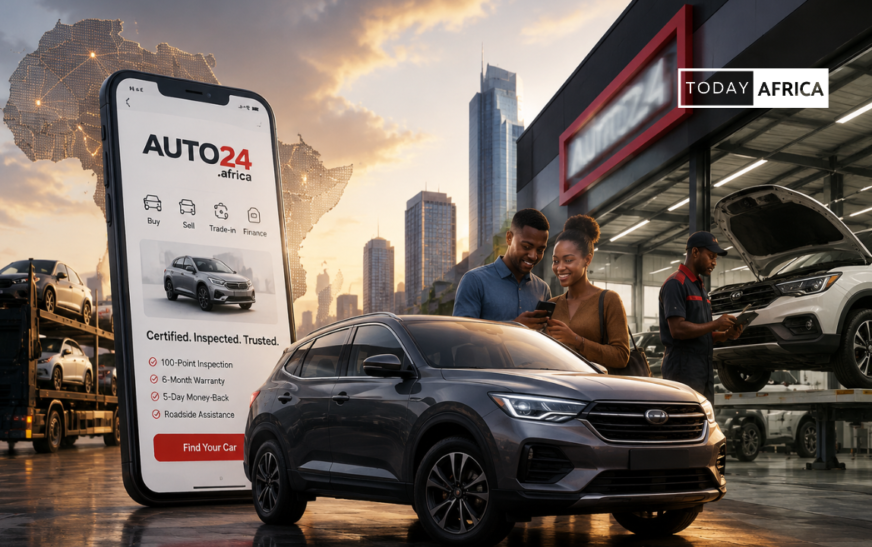
AUTO24.africa entered that gap with a bold thesis: Africa’s used-car market not only needs more listings. It needs inspection, warranties, transparent pricing, financing, after-sales support, and a trusted transaction layer.
That makes AUTO24 more than another online car marketplace. It is a case study in how an African digital business can move from classifieds to managed commerce, from traffic to transactions, and from fragmented trust to structured infrastructure.
Founding story of AUTO24.africa
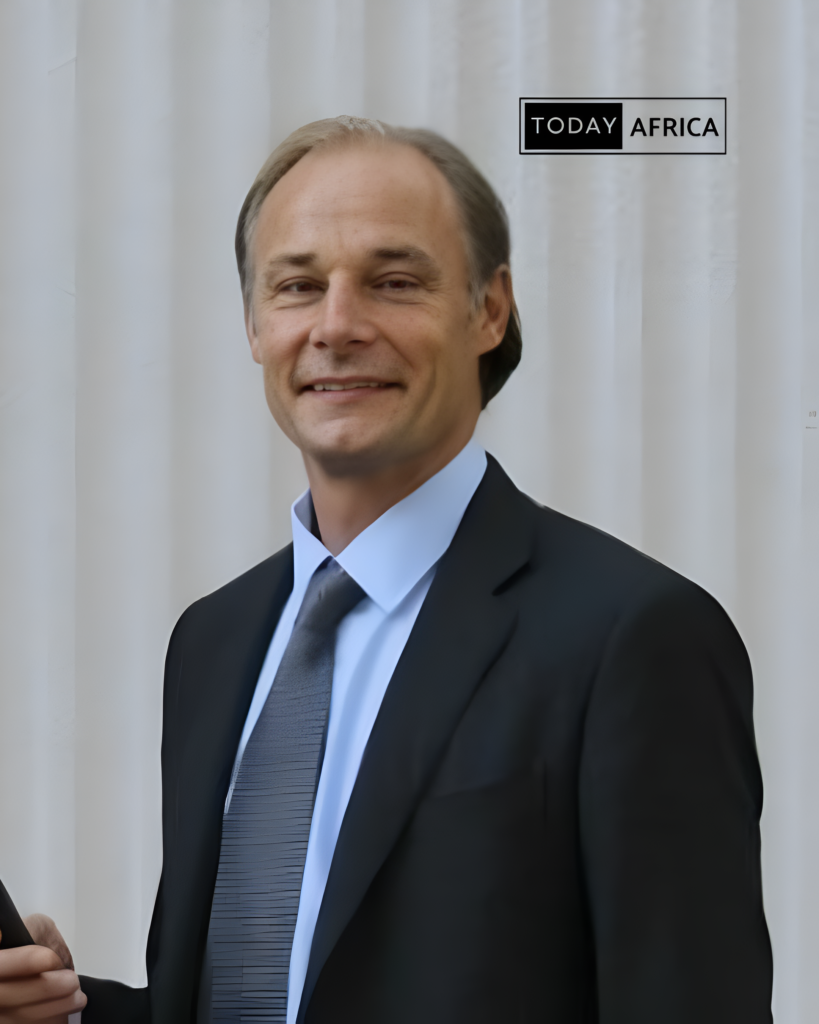
AUTO24.africa is a pan-African used-car marketplace built under Africar Group, the automotive marketplace company co-founded by Axel Peyriere and Fredrik Orrenius.
Africar Group started in 2016 with a network of automotive classified websites across Africa, built around a simple but powerful idea: bring more structure, visibility, and online discovery to a fragmented vehicle market.
The first version of the business was asset-light. Africar Group did not own cars. It operated local classified websites, helped sellers list inventory, and allowed dealers to pay for visibility.
According to Peyriere’s account in TechCabal, the company launched 45 automotive classified websites across 45 African countries, using local names to build trust in each market rather than spending heavily on a single continental brand.
The pivot came in 2022.
On September 12, 2022, Stellantis, one of the world’s largest automotive groups, invested in Africar Group to create and support AUTO24.africa.
The purpose of the investment was strategic: combine Africar Group’s digital marketplace experience and African market knowledge with Stellantis’ automotive expertise to build a trusted used-car platform designed specifically for African markets.
The investment amount was not publicly disclosed, but the strategic purpose was clear: Stellantis wanted exposure to Africa’s used-vehicle market, while Africar wanted to move closer to the transaction itself.
By September 2023, AUTO24 had expanded beyond Côte d’Ivoire into Morocco, Rwanda, Senegal, and South Africa.
Stellantis said AUTO24 was a subsidiary of Africar Group and that it held a controlling stake in Africar Group at the time.
As of 2026, AUTO24.africa lists five live country markets on its main website: Côte d’Ivoire, Morocco, Rwanda, Senegal, and South Africa.
The company positions itself as a pan-African marketplace for buying, trading, and selling used cars, with vehicles inspected and verified.
The company is still in scale-up mode. It is not yet a mass-market African automotive giant, unlike South Africa’s biggest traditional players.
But it has something many African mobility startups struggle to build: a multi-country operating footprint, automotive-sector backing, and a model designed around trust rather than pure listings.
Read also: Inside Crunchies’ Journey: From one outlet in Aba to a national fast-food powerhouse
Why the market was ready

AUTO24.africa’s timing matters. Africa’s population is projected to reach 1.7 billion by 2030, and Stellantis cited an existing vehicle park of about 50 million units when explaining its investment in Africar Group.
That gap between population and vehicle ownership tells the story of the opportunity.
Africa is under-motorized compared with richer regions, yet demand for personal mobility continues to rise as cities expand, households move farther from work, and small businesses depend on cars, pickups, vans, and ride-hailing fleets.
The used-car market is central to that demand. Mordor Intelligence estimates Africa’s used-car market at $48.58 billion in 2025, rising to $49.71 billion in 2026 and $55.75 billion by 2031.
The same analysis projects a 2.32 percent compound annual growth rate between 2026 and 2031, with digital-only retailers gaining ground as mobile penetration increases.
But size alone does not create a good business. The opportunity exists because the market has friction.
Buyers worry about tampered mileage, hidden accident history, weak title verification, poor vehicle condition, and uncertain pricing. Sellers worry about unserious buyers, unsafe payments, and slow liquidation.
Banks worry about collateral quality. Dealers worry about lead quality and working capital.
AUTO24’s answer is to wrap a service layer around the transaction.
The company offers features that are still unusual in many African used-car markets:
- a five-day refund policy
- six-month warranty
- one-year roadside assistance
- one-year maintenance package with AutoFast by CFAO
- and a 100-point inspection report for each vehicle
The above is according to Africar Group’s AUTO24 portal page.
That is the strategic heart of the model. AUTO24 is not selling “cars online” in the narrow sense; it is selling confidence.
How AUTO24.africa makes money
AUTO24’s business model sits at the intersection of a marketplace, a dealer, a transaction broker, and a mobility services platform.
The original Africar model made money through listings, boosted visibility, and premium dealer placements.
That was a classic classifieds model: low inventory risk, low capital intensity, but limited control over the transaction.
AUTO24 changed the economics by moving closer to the buyer and seller. Instead of only selling attention, it can capture value from the transaction itself.
The most likely revenue streams are:
Transaction margin
AUTO24 can buy, certify, recondition, list, and resell vehicles, or structure transactions in which it earns a margin between the acquisition and resale prices.
Africar Group itself says it moved from traditional classifieds to transactional marketplaces, allowing it to earn a margin on primary or secondary transactions in more markets.
Dealer and marketplace services
In markets where AUTO24 works with local dealers, it can earn listing fees, lead fees, dealer subscription income, or sales commissions.
Financing commissions
AUTO24 offers financing options through partners. Financing is especially important because car affordability remains one of the biggest constraints in African markets.
In many countries, car buyers face high interest rates, short loan tenors, high down payment requirements, and limited formal credit histories.
Insurance, warranty, and after-sales services
Once a platform controls the transaction, it can attach value-added services such as insurance, roadside assistance, inspections, extended warranties, maintenance packages, and trade-ins.
The form you have selected does not exist.
Data and pricing intelligence
The 2025 acquisition of Koto.ci, a Côte d’Ivoire new-car price reference platform, shows that Africar Group is building beyond transactions into market data.
The company said the acquisition strengthened its model by adding a pricing layer to the car-buying journey.
This matters because data can become a defensible asset. In fragmented markets, reliable vehicle pricing is not just content. It is infrastructure for banks, insurers, fleets, dealers, and buyers.
Read also: Inside Chicken Republic’s Journey: A homegrown QSR phenomenon
The unit economics logic behind AUTO24.africa
AUTO24.africa’s model likely carries higher costs than a pure classifieds platform.
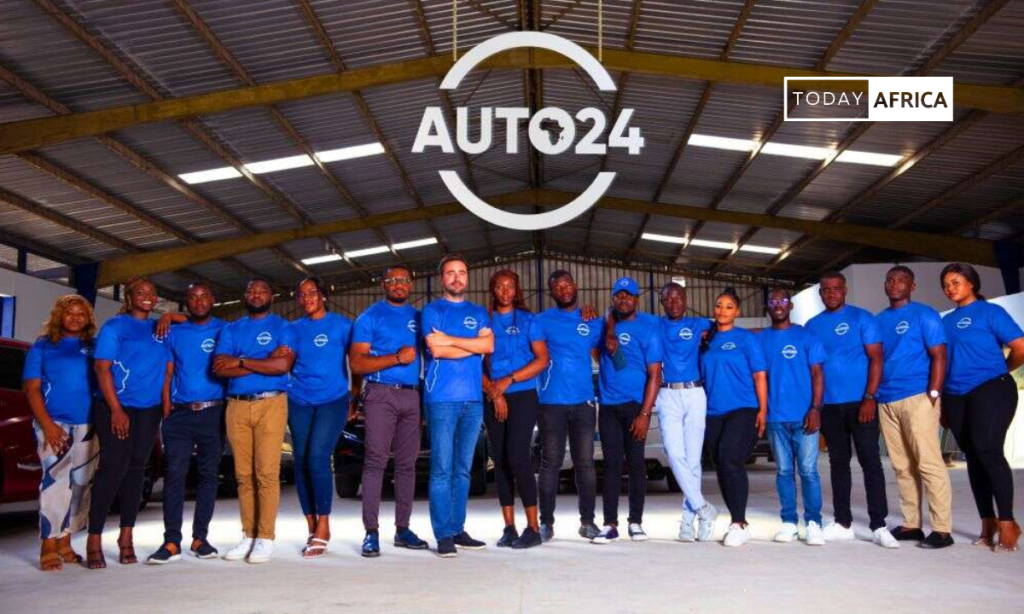
The company must manage inspection, customer service, vehicle sourcing, dealership relationships, logistics, reconditioning, marketing, technology, local teams, and after-sales support.
If it holds inventory, it also carries balance sheet risk. Cars can sit unsold. Prices can move. Currencies can weaken. Import costs can rise. Financing can become expensive.
But the heavier cost structure comes with a stronger revenue argument. A pure classifieds site earns small fees from attention. A certified used-car platform can earn a margin from the sale, plus revenue from finance, insurance, warranty, inspection, and maintenance.
The unit economics depend on four questions.
- Can AUTO24 source vehicles below the market-clearing price?
- Can it recondition and certify them efficiently?
- Can it sell quickly enough to avoid inventory drag?
- Can it attach financing and service products without making the purchase too expensive?
If the answer is yes, the model becomes powerful. If the answer is no, the business becomes trapped between startup marketing costs and dealership-level operational complexity.
The growth strategy behind AUTO24.africa
AUTO24.africa scaled by using Africar Group’s existing infrastructure rather than starting from zero.
Before AUTO24 launched, Africar Group already had automotive marketplace experience across more than 40 countries in Sub-Saharan Africa and said it had enabled more than 25 million car buyers and sellers to trade used cars through its online channels over five years.
That gave AUTO24 three advantages:
- Market knowledge: Africar had already observed buyer behavior, dealer behavior, price sensitivity, and local demand patterns across multiple markets.
- Search and demand infrastructure: A classifieds network can show where people are looking, which models move, what price bands matter, and which cities have enough liquidity.
- Credibility: Stellantis’ investment gave AUTO24 an institutional backer in an industry where trust is scarce.
The expansion path was also deliberate.
- Côte d’Ivoire gave AUTO24 a launch market in Francophone West Africa.
- Morocco provided it with a North African market and stronger automotive infrastructure.
- Rwanda offered a smaller but policy-forward East African market.
- Senegal added another Francophone West African market.
- South Africa provided entry into the continent’s most mature automotive market.
That spread creates learning across different levels of market development. It also creates complexity.
Every country has different vehicle import rules, financing conditions, dealer cultures, customer expectations, taxes, currencies, and logistics challenges.
In 2025 and 2026, Africar Group’s strategy expanded again. It acquired Koto.ci in Côte d’Ivoire in August 2025 and later launched new car price comparison platforms in Senegal, Rwanda, and South Africa.
TechMoran reported in February 2026 that the new platforms included Koto.sn, Koto.rw, and BuyNewCar.co.za, with South Africa’s platform listing more than 50 brands and over 180 models at launch.
That move reveals the broader strategy: to own more of the car ownership journey, from research and comparison to financing, insurance, purchase, and resale.
Read also: Inside Chicken Republic’s Journey: A homegrown QSR phenomenon
AUTO24.africa is a trust infrastructure business
The most important lesson from AUTO24 is that African marketplaces rarely win by being digital alone.
In high-trust markets, a platform can connect buyers and sellers and facilitate the transaction. In low-trust markets, the platform must become an institution. It must inspect, verify, certify, finance, protect, and support.
That is why AUTO24.africa’s model is more operationally demanding than a listing site. It is also why the model may be more defensible if executed well.
Competitors are attacking the same market from different angles.
- Autochek has leaned heavily into vehicle financing and dealer networks, launching Autochek Financial Services in 2022 to expand access to auto finance.
- Sylndr in Egypt has built a vertically integrated used-car model and secured a $15.7 million Series A round, followed by an EGP 370 million working-capital facility to expand its inventory, financing, and operations.
- Jiji acquired Cars45 in 2021, showing how classifieds platforms are also trying to move deeper into transactional automotive commerce.
AUTO24.africa’s difference is its combination of Africar’s multi-country marketplace DNA and Stellantis’ automotive-sector backing.
That gives it a stronger bridge between digital demand and offline automotive execution.
But competitors may have local advantages.
- Sylndr can focus deeply on Egypt.
- Autochek can build around financing.
- South African incumbents have stronger physical infrastructure.
- Chinese automakers are also reshaping the market from the new-vehicle side with lower-priced, tech-rich models and longer warranties.
Reuters reported that Chinese brands grew their share of South Africa’s passenger car market from 11.2% in 2024 to 16.8% in 2025.
That means AUTO24.africa is not only competing with other marketplaces. It is competing with every force that changes how Africans access mobility.
The form you have selected does not exist.
Impact on society and the environment
AUTO24’s social impact starts with trust and consumer protection.
A certified used-car platform can reduce information asymmetry between buyers and sellers. If inspections are rigorous and warranties are honored, customers get a safer transaction.
That matters in a market where one bad vehicle purchase can destroy household savings or cripple a small business.
The company can also support formalization. More transparent car pricing helps banks assess collateral.
Verified vehicle histories help insurers price risk. Dealer digitization helps small auto businesses manage inventory, leads, and sales more professionally.
The environmental picture is more complicated.
Africa imports a large share of the world’s used vehicles. UNEP found that African countries imported the largest number of used vehicles during the period it studied, accounting for 40% of used-vehicle imports across the regions reviewed.
UNEP also warned that many importing countries have weak policies for regulating used vehicles, which can worsen emissions and road safety outcomes.
AUTO24.africa can help improve this by promoting inspected, cleaner, better-documented vehicles. Its move into electric mobility also matters.
In 2025, Africar Group and AUTO24 launched EV24.africa, a pan-African electric vehicle marketplace offering access to more than 200 EV models from more than 25 global brands, with delivery across all 54 African countries.
Still, EV adoption in Africa faces real barriers:
- power reliability
- charging infrastructure
- import duties
- battery servicing
- affordability.
Reuters reported that unreliable power and a lack of charging infrastructure continue to hold back EV uptake across the continent.
So AUTO24.africa’s environmental opportunity is not simply to sell EVs. It is to improve the quality of mobility decisions.
Cleaner used cars, better inspection standards, transparent pricing, and gradual fleet electrification may be more realistic than expecting African markets to leap into electric transport overnight.
Read also: Inside Spiro’s journey: Electrifying Africa, one motorcycle at a time
The challenges AUTO24.africa still faces
Capital intensity
Classifieds are cheap to scale. But certified automotive retail is not. The company needs local teams, inspection capacity, customer support, dealer relationships, after-sales partners, and sometimes inventory. That can make expansion slower and more expensive.
Trust execution
AUTO24’s brand promise depends on the buyer’s belief in its inspection, warranty, refund policy, and after-sales process. One bad customer experience can travel fast, especially in markets where people already distrust used-car transactions.
Financing
Cars are expensive relative to incomes. Without accessible credit, many buyers remain locked out. But consumer financing in African markets is difficult because lenders face income verification issues, collateral risk, currency volatility, and high cost of capital.
Regulation
Import age limits, emissions standards, customs duties, foreign exchange rules, local registration processes, and tax policies vary widely across countries. A model that works in Abidjan may need heavy adaptation in Kigali, Dakar, Casablanca, or Johannesburg.
Competition from both ends of the market
Informal sellers can undercut on price because they carry fewer compliance costs. Large dealers can compete on physical presence. Digital competitors can focus on one narrow part of the value chain. New Chinese vehicle brands can shift buyer expectations on affordability and warranties.
Data quality
Vehicle histories are often incomplete. Mileage fraud, accident records, title issues, and informal repairs complicate certification. AUTO24.africa’s ability to build reliable data systems may become as important as its ability to sell cars.
What African entrepreneurs can learn from AUTO24.africa
AUTO24’s journey offers a practical playbook for African founders.
Start with the transaction problem, not the app
Africar did not pivot to AUTO24 because Africa lacked websites. It pivoted because listings alone did not solve trust. Builders should ask where customers still hesitate, where money gets stuck, and where risk blocks adoption.
Use classifieds as a learning engine
Africar’s early-classified network helped it understand demand without incurring inventory risk. Founders in other sectors can do the same: start with visibility, gather data, then move deeper into transactions once the market signals are clear.
Build trust as a product feature
AUTO24’s inspection reports, warranty, refund window, financing, and roadside assistance are not add-ons. They are the product. In African markets, trust is often the margin.
Partner where infrastructure is expensive
Stellantis gave AUTO24 industry credibility. CFAO-linked after-sales support gave it service depth. Banks and insurers can extend the platform’s value. Founders should not try to own every layer too early.
Localize country by country
AUTO24.africa’s five markets are not identical. The company’s model must adjust to language, regulation, vehicle supply, financing conditions, and consumer expectations. Africa rewards pan-African ambition, but punishes copy-and-paste expansion.
Avoid the vanity of “marketplace” language
A marketplace with traffic but no transaction control can become a thin-margin media business. AUTO24’s shift shows that real value often lies in payments, financing, logistics, verification, and after-sales service.
Follow the data layer
Africar’s Koto acquisition and price-comparison expansion demonstrate the power of market intelligence. In fragmented sectors, pricing data can become a strategic moat.
This is where tools like Today Africa Atlas and the Market Intelligence Studio are useful for founders and investors who need to track companies, sectors, funding activity, and opportunity flows before making decisions about market entry or expansion.
The mistake to avoid is overexpansion before operational discipline. Every new country adds complexity, every vehicle adds risk, and every warranty creates a promise.
Entrepreneurs should scale only as fast as their systems can protect the customer experience.
Read also: Inside Wasoko’s Journey: Transforming Access to Essential Goods and Services
AUTO24.africa is building around Africa’s most valuable gap
AUTO24.africa’s journey is a lesson in the future of African digital commerce.
The next wave of strong African platforms will not win by being websites. They will win by turning messy offline behavior into trusted, financed, insured, and supported transactions.
AUTO24 began with classifieds, learned the market, moved into certified used-car retail, expanded across five countries, added financing and service layers, entered EVs, and is now building pricing intelligence around the vehicle ownership journey.
That is not just a car marketplace story. It is a blueprint for building in African markets where trust is scarce, data is fragmented, and customers need more than access. They need assurance.
AUTO24’s biggest opportunity is also its biggest test. If it can make used-car buying feel safe, transparent, and financeable across multiple African markets, it can become one of the continent’s most important mobility commerce platforms.
But if the company underestimates the operational burden of trust, it could face the same problem that has challenged many African marketplaces before it: demand is easy to see, but hard to convert.
The winners in this sector will not simply be those with the most cars, but those who will make the buyer believe.
The form you have selected does not exist.
Leave a comment and follow us on social media for more tips:
- Facebook: Today Africa
- Instagram: Today Africa
- Twitter: Today Africa
- LinkedIn: Today Africa
- YouTube: Today Africa Studio