
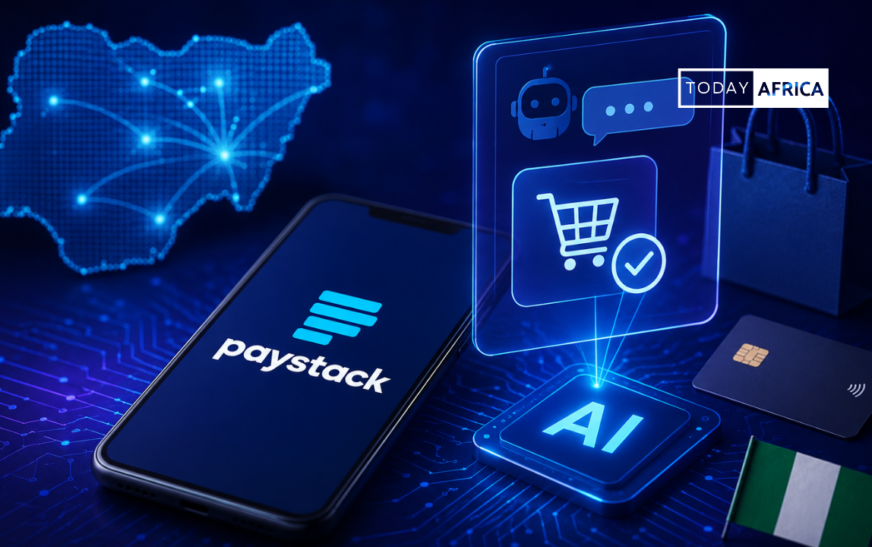
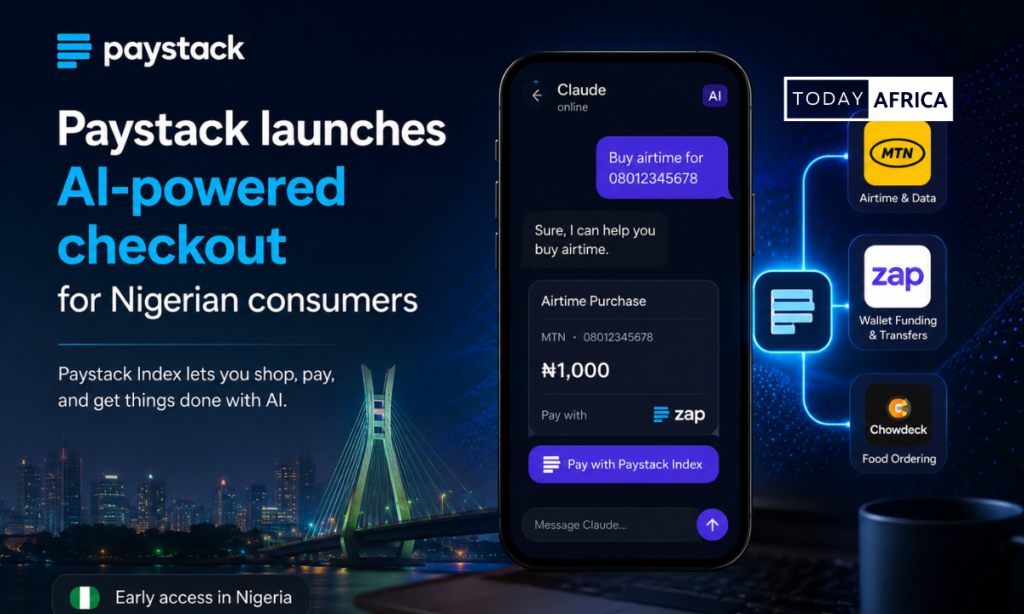
Paystack has launched Paystack Index, an experimental AI-powered checkout product that allows users in Nigeria to complete transactions with supported Paystack merchants through AI agents.
The product was developed with support from TSG Labs, the venture studio within The Stack Group, which focuses on building products around emerging technologies. Paystack Index connects with existing Paystack products, including Paystack Checkout and Zap, to help consumers move from asking an AI assistant for something to actually paying for it.
The early access rollout is starting in Nigeria with selected Zap users. According to the company, Paystack Index currently works with supported AI clients, including Claude, ChatGPT, and OpenClaw.
For now, the product supports everyday transactions such as buying airtime and mobile data across Nigeria’s major mobile networks, funding wallets, making transfers through Zap, and ordering food through Chowdeck.
Paystack says the product is being introduced through a controlled beta to understand how consumers behave when AI becomes part of the payment journey. The company plans to expand access gradually, adding more users, merchants, billers, features, and African markets over time.
Shola Akinlade, CEO of Paystack, said the company believes checkout must evolve as AI agents become a common way for people to search, decide, and take action.
Behind the scenes, Paystack Index serves as the connection layer between a user’s AI agent (Zap), supported merchants, and Paystack’s payment infrastructure.
For example, if a user asks Claude to buy airtime, the AI assistant handles the conversation, while Index interprets the request, checks if it is supported, confirms permissions, and routes the transaction to the right merchant or service provider.
Paystack says users remain in control of every authorized payment. The company also said Index does not store card numbers, CVVs, PINs, or bank account credentials, relying instead on Paystack’s existing payment infrastructure to process transactions.
Why it matters
The Paystack Index is important because it places African fintech directly at the center of the fast-growing conversation around AI agents and everyday commerce.
AI adoption in Nigeria is already rising quickly. A Google-Ipsos survey cited by the company found that 88% of Nigerians surveyed had used generative AI in the previous year, while 62% said they had used it for everyday tasks such as planning trips, meals, or workout routines.
Paystack is betting that payments could become one of the next major everyday activities to move into AI-powered experiences.
This matters for fintech because checkout has traditionally happened on websites, mobile apps, payment pages, bank apps, USSD flows, and transfer screens. The Paystack Index suggests a different future, where a consumer may initiate and complete a transaction within an AI conversation.
For merchants, the bigger question is discovery. If consumers start asking AI agents to buy food, pay bills, purchase data, or complete other tasks, merchants will need to understand how they appear inside those AI-led experiences.
That could create a new layer of competition in digital commerce. Instead of only fighting for attention on search engines, social media, marketplaces, or apps, African businesses may also need to become visible, trusted, and available inside AI agent workflows.
The launch also connects to a broader trend in African tech: fintech companies are moving beyond basic payments into infrastructure, commerce tools, consumer products, AI features, and new digital interfaces.
Paystack has already expanded its product portfolio over the past year, including Zap, its first consumer-facing pay-with-transfer product; an AI-powered merchant dashboard overhaul; the Paystack Small Business Bundle; new payment methods in South Africa and Kenya; and integrations with commerce platforms.
Index now adds another layer to that strategy. It shows Paystack is not only thinking about how businesses get paid today, but also about how consumers may discover and pay for products in the next wave of digital commerce.
Read also: Google Universal Cart explained, and what Africa’s e-commerce players should know
What to watch next
The first thing to watch is whether users actually return to AI-powered checkout after the novelty fades.
During the beta, Paystack says it wants to understand which tasks people repeat, how often they use AI agents for transactions, and whether AI can become a real commerce channel rather than just a useful assistant.
Founders and builders should also watch how Paystack handles trust, permissions, routing, and merchant selection. These issues will matter as AI agents begin to take more action on users’ behalf.
Investors should pay attention to the infrastructure layer. If AI-led checkout becomes a real habit, new opportunities may emerge in merchant discovery, payment security, identity, consent, agent commerce, consumer wallets, and AI-native fintech tools.
Merchants should watch the product closely because it may signal a new way customers find and pay for services. In the same way businesses had to learn search visibility, social commerce, and mobile payments, they may soon need to understand AI-agent visibility.
Paystack’s limited rollout also suggests the company is being careful. AI-powered payments will need strong controls, clear user consent, reliable merchant routing, and simple experiences before they can scale across markets.
The company has also highlighted stablecoins as another area of interest through TSG Labs, particularly for African businesses and consumers. That means Paystack’s next phase may include more experiments around emerging financial infrastructure, not just traditional card and transfer payments.
For now, Paystack Index is a beta product in Nigeria. But its launch sends a clear signal: African fintech companies are preparing for a future where consumers may not just search, click, and pay. They may ask, confirm, and complete transactions through AI.
Leave a comment and follow us on social media for more tips:
- YouTube: Today Africa Studio
- Facebook: Today Africa
- Instagram: Today Africa
- Twitter: Today Africa
- LinkedIn: Today Africa