
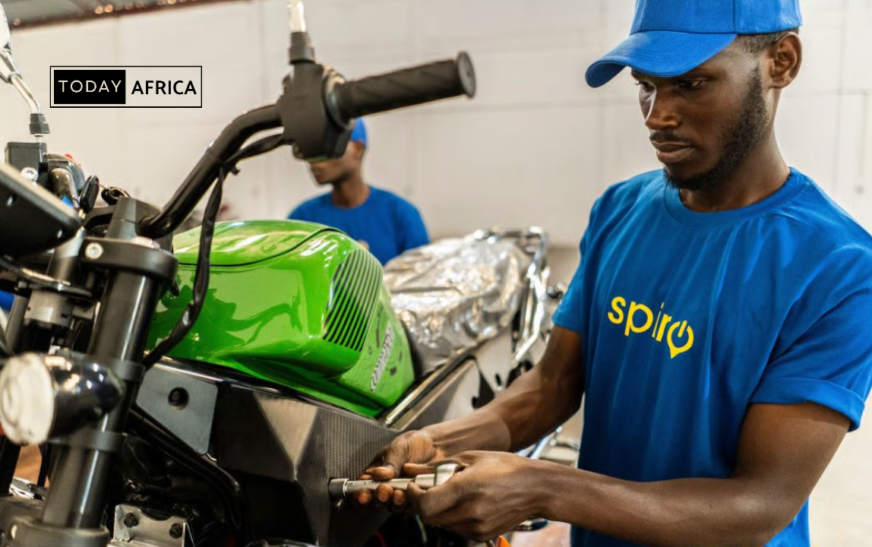
Spiro, one of Africa’s fastest-growing electric mobility players, has secured a major $215 million equity investment to accelerate the rollout of its battery-swapping network and grow its electric vehicle fleet across the continent.
The new round is supported by Impact Fund Denmark, Denmark’s state development finance institution, alongside Equitane, the long-term investment platform established by Spiro chairman Gagan Gupta.
With this latest raise, Spiro’s total funding has now climbed beyond $343 million across seven funding rounds. The deal follows a $100 million equity investment led by Afreximbank’s FEDA in October 2025 and a $50 million debt facility announced in February 2026.
Impact Fund Denmark CEO Lars Bo Bertram said the investment reflects both commercial confidence and climate ambition. He noted that Spiro sits in one of Africa’s most promising growth markets, with the potential to deliver strong business returns while cutting emissions in measurable ways.
Spiro currently operates in Kenya, Rwanda, Uganda, Nigeria, Togo, Benin, and Cameroon. The company says its electric mobility network now includes 100,000 electric motorcycles, 2,500 battery swap stations, and more than 30 million completed battery swaps.
The company has also built a growing industrial footprint on the continent. It runs manufacturing facilities in Kenya, Rwanda, and Uganda, along with a battery recycling operation in Nigeria. Spiro is now preparing to enter Ethiopia and the Democratic Republic of Congo as part of its next expansion phase.
For riders, the company says the switch from petrol-powered motorcycles to Spiro’s electric bikes can reduce daily transport costs by up to 40%. That translates to estimated savings of about $2 per day, a meaningful difference in markets where motorcycles are central to daily work, commuting, and small business activity.
Spiro also argues that its model delivers a major environmental gain. A lifecycle assessment of its operations in Kenya found that its electric motorcycles produce 72% fewer emissions than petrol alternatives, preventing roughly 19 tonnes of CO₂ per vehicle over its lifetime.
The fresh funding arrives as Africa’s electric motorcycle market gathers speed. Electric two-wheeler sales rose by nearly 40% in 2024, while Kenya has become one of the clearest signs of the shift. Electric motorcycles made up 15.3% of new registrations in Kenya in 2025, a sharp rise from just 0.5% in 2021.
Read Also: DDoS attack exposes South Africa’s cybersecurity oversight lapses
The wider African electric two-wheeler market is projected to grow from $441 million in 2023 to more than $2.6 billion by 2031, creating a major opening for companies that can solve the continent’s cost, charging, and reliability challenges.
Spiro sees even more room ahead. Africa has about 25 million motorcycles, compared with India’s 320 million, despite both regions having similar population sizes. For Spiro, that gap signals a massive long-term opportunity as more African cities, riders, and transport businesses look beyond petrol.
The company plans to use the new capital to expand its battery-swapping infrastructure, invest in new technologies, strengthen its vehicle fleet, and push into more African markets.
Leave a comment and follow us on social media for more tips:
- YouTube: Today Africa Studio
- Facebook: Today Africa
- Instagram: Today Africa
- Twitter: Today Africa
- LinkedIn: Today Africa