
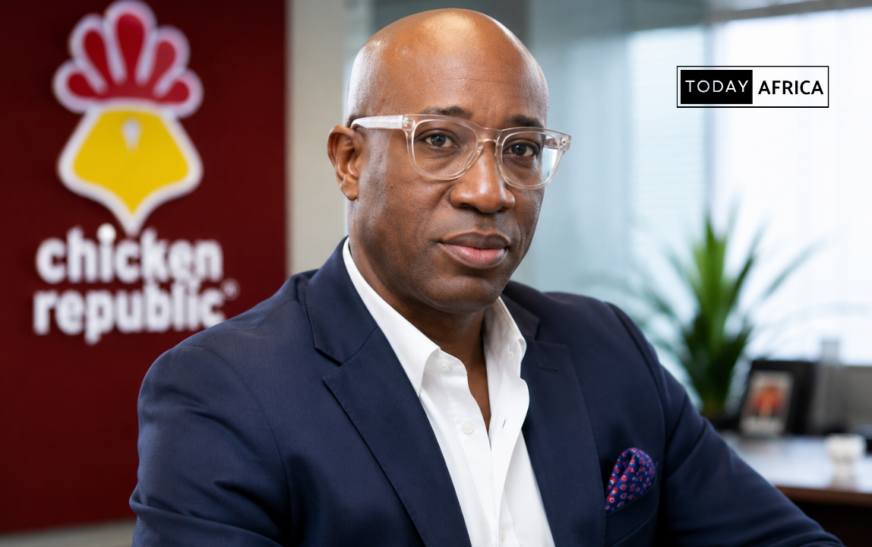
Chicken Republic’s journey is a story of bold ambition meeting Nigerian culture. The chain began humbly, a single outlet launched in Lagos, and over two decades grew into a nationwide network of hundreds of outlets.
Today it stands among Nigeria’s most recognizable fast-food brands. But how did it get there? The answer lies in a blend of strategic vision, understanding of local tastes, savvy financing, and resilience in the face of Nigeria’s economic trials.
This inside Chicken Republic’s journey traces origin, growth strategies, the competitive landscape, and its wider impact on Nigeria’s food industry and economy.
Founding story of Chicken Republic
Chicken Republic was founded in 2004 by entrepreneur Deji Akinyanju. After years abroad, Akinyanju returned to Nigeria with a mission: to build a fast-food brand rooted in Nigerian identity. At the time, Nigeria was transitioning to democracy and the economy was opening up, a backdrop that inspired him to contribute to the emerging private sector.
Food Concepts Plc, a Nigerian food-services company established in 1999, became the corporate parent for this venture. That year, in Apapa, Lagos, the first Chicken Republic restaurant opened its doors.
The idea was simple but bold: serve tasty, affordable chicken meals that celebrated West African flavors. From the outset, Chicken Republic branded itself as a “Soulfully Spiced” homegrown chain. Its menu centered on spicy fried chicken paired with Nigerian staples like jollof and fried rice, a deliberate nod to local palates.
Akinyanju invested about $2 million (roughly ₦320 million) in seed funding from friends and family to get started. This capital covered everything from kitchen equipment to initial supply contracts. For inspiration, Akinyanju briefly explored franchising a South African chicken outlet (Chicken Licken) but ultimately felt a distinctly Nigerian brand made more sense.
The Nigerian QSR landscape in 2004
When Chicken Republic launched, Nigeria’s quick-service restaurant (QSR) scene was already crowded. Pioneering local brands like Mr. Bigg’s (established in 1986 by UAC Restaurants) and Tantalizers (founded in the late 1980s) had introduced Nigerians to the fast-food concept. These chains offered generic affordable meals to the emerging middle class.
By comparison, foreign QSR chains had barely arrived, Pizza Hut was a rare foreign entrant, and KFC wouldn’t enter Nigeria until 2009. In other words, the market was divided along two tracks: local brands competing on price for average Nigerians, and a handful of high-end chains gearing up for wealthier customers.
Akinyanju saw an opportunity. He realized Nigerians wanted more than just a burger stand; they wanted a modern dining experience that still felt familiar.
Chicken Republic’s mission, therefore, was to “deliver awesome customer experiences in a friendly, safe environment, with tasty, everyday affordable meals made from local ingredients”. The first outlet reflected this vision. Located in Apapa, a bustling part of Lagos, it featured clean, brightly lit interiors unlike many old-style fast-food kiosks.
The menu was centered on a signature spicy chicken recipe with West African herbs, and prices were set deliberately low to lure middle-income families. Early customers often noted the fresh taste and value, unlike some peers, Chicken Republic insisted on sourcing ingredients from Nigerian suppliers.
In effect, from day one, Chicken Republic combined international fast-food standards (hygiene, speed, consistency) with local flavor and value.
Expansion and milestones
From its single Lagos outlet, Chicken Republic expanded cautiously at first. In its early years the chain grew outlet by outlet, mostly in Lagos State. By 2008, however, the business had reached roughly 70 outlets nationwide.
This rapid expansion was fueled by aggressive reinvestment and external funding (discussed below), but it also rested on shrewd strategy. For example, in 2016 – during Nigeria’s economic recession, Chicken Republic introduced a “Refuel Meal” combo: a portion of jollof or fried rice plus a piece of chicken for just ₦500.
This combo, targeted at budget-conscious consumers, became hugely popular and kept customers coming even as incomes shrank.
Geographically, the brand moved beyond Lagos early on. By the early 2010s Chicken Republic had outlets in Abuja and Port Harcourt, Nigeria’s other major cities, and was opening stores in Kaduna, Kano and Ibadan. Each new city brought its own twist: for instance, some northern branches began offering suya-spiced sides to suit local tastes.
Meanwhile, even outside Nigeria the brand took root, Chicken Republic launched operations in Ghana, connecting a West African menu to Accra and Kumasi diners (today over a dozen outlets). This made Food Concepts one of West Africa’s largest QSR operators.
Several strategic milestones marked this evolution
- Franchising (2007 onward): Chicken Republic began offering franchises in 2007. The franchise model let ambitious entrepreneurs open new outlets backed by Chicken Republic’s established brand and support systems. This helped the chain scale fast; by 2021, Food Concepts (the parent) reported 200 stores, up from 58 in 2015. Franchisees provided local market knowledge and capital, while Food Concepts handled site selection, training, and supply logistics.
- New concepts: In 2019 Food Concepts launched PieXpress, a mini-pastry shop often attached to Chicken Republic outlets (even pop-up kiosks in stores). And in Lagos the first Chop Box was opened, specializing in local grilled and stewed meats. These sister brands allowed the company to reach customers beyond its core chicken menu, using existing supply chains and infrastructure. Today PieXpress is growing rapidly (estimated to reach 247 kiosks by 2024), supplementing Chicken Republic’s revenue.
- Digital initiatives: In the late 2010s Chicken Republic modernized its ordering systems. It built its own online ordering platform and partnered with delivery apps. By 2021 its delivery business was growing over 140% year-on-year. During the 2020 COVID lockdowns, Chicken Republic leveraged Jumia Food and logistic companies to maintain sales, pushing its menu to customers at home. Such agility kept the chain profitable even when dine-in plummeted (Chicken Republic reported ₦1.1 billion in profits in 2021, despite the pandemic).
- Recent footprint: By 2023, under MD Kofi Abunu, Chicken Republic had crossed the 300-outlet mark across Nigeria and Ghana. This scale made it West Africa’s largest homegrown QSR franchisor. Food Concepts is reportedly aiming for about 430 outlets in the near term. It serves roughly 15 million customers per year and employs over 4,000 people directly.
Through each stage, the chain tweaked its offer. It introduced breakfast items (like the 2022 “EggStar Meal”), diversified side dishes, and even baked goods via PieXpress. But the core focus remained the same: fast, affordable chicken and rice done with consistency and local flavor. This steady execution won over Nigeria’s middle-class diners and built the brand’s reputation.
Read Also: Inside Glovo’s Journey: From Barcelona errand app to Pan-African delivery powerhouse
Funding, ownership and investors
Chicken Republic’s growth was fuelled by a mix of private funding and strategic partnerships. After the initial $2 million friends-and-family capital in 2003-04, the company attracted institutional investors as it scaled.
One early turning point came in 2011, when the International Finance Corporation (IFC), the World Bank’s private-sector arm, invested about N3.02 billion ($20 million) in Food Concepts Plc.
Half of that was equity and the rest a loan. IFC’s goal was to help Food Concepts raise standards and expand regionally. Indeed, that package funded the opening of around 40 new quick-service outlets, a doubling of pastry production, and the creation of a dedicated poultry farm.
In other words, IFC’s money sped up Chicken Republic’s nationwide rollout and jump-started backward integration into chicken supply (addressing Nigeria’s notorious poultry shortages).
The next wave of funding came from private equity. In December 2012, leading Pan-African fund Development Partners International (DPI) injected roughly £30 million into Food Concepts.
This capital (plus a follow-on in 2018) provided the resources for aggressive expansion over the 2010s. By 2015, Food Concepts had roughly 58 outlets; with DPI’s backing, it soared to over 180 by 2021. DPI’s involvement also meant corporate best practices: tighter governance, professional management and international expertise were brought in.
In September 2021, DPI partially exited by selling a 31% stake in Food Concepts to fellow private equity firm African Capital Alliance (ACA). DPI retained a majority share. Both firms announced they would jointly support Food Concepts’ next growth phase.
The deal brought fresh capital and gave Chicken Republic a strong balance sheet. As DPI noted, the chain had grown sales at over 40% annually since 2015, tripling its store base in that time. The equity infusion from IFC and DPI (and later ACA) underpinned new outlets, supply-chain upgrades, technology and staff training.
Food Concepts itself went public on the Nigerian Exchange (NGX) in the late 2010s, raising additional funds through rights issues (typical of fast-growing chains, though detailed listing dates are hard to find).
Notably, a $20 million capital package in 2013 (mostly by IFC) was explicitly tied to raising safety and corporate governance standards. This focus continued as the group listed; it strives to meet ISO certifications and transparency norms, which is quite advanced in the Nigerian restaurant industry.
Throughout these changes, ownership structure stabilized around institutional investors and the founding team.
Deji Akinyanju eventually stepped back from day-to-day operations (now serving as Executive Chairman of Food Concepts), handing the CEO role to Kofi Abunu. But Akinyanju remains a key shareholder alongside the PE backers.
Today, Food Concepts, the parent company, is the officially listed entity. Chicken Republic is its flagship brand (alongside PieXpress and Chop Box), wholly owned.
In sum, Chicken Republic leveraged a mix of founder capital, development financing and private equity to fund store roll-outs, build supply infrastructure, and professionalize operations.
Growth strategies and competitive edge

What strategy turned Chicken Republic into a market leader? In a nutshell, it pursued an aggressive value-and-localization playbook while maintaining operational discipline.
Affordable pricing and value meals
Chicken Republic has always positioned itself as a value option. It focuses on combo meals and promotions to keep prices low. For example, during the 2016 recession, it launched the ₦500 “Refuel Meal” (rice + chicken), which resonated with cash-strapped customers.
Even in 2023, the chain ran numerous deals, “buy one get one free” promotions on meals, to sustain traffic under inflationary pressure. As Euromonitor analysts noted, CR’s emphasis on combos and discounts helped it capture market share when consumers were pinching pennies.
The strategy clearly paid off: in 2023, Chicken Republic’s sales value (₦60.9 billion) dwarfed competitors like Sweet Sensation (₦4.58bn) and Mr Bigg’s (₦2.68bn). In other words, CR grew by giving customers more food for less money.
Localization and menu adaptation
Unlike foreign chains, Chicken Republic tailored its menu to Nigerian tastes. Its signature chicken seasoning uses West African spice blends, and staples like Jollof rice are front and center. The brand emphasizes “African culture and cuisine” in its marketing.
This cultural connection builds loyalty. As a Lagos Business School professor notes, CR “positions itself as chicken experts” and “understands the Nigerian palate,” ensuring customers get the same beloved taste no matter the city.
Over time CR also introduced new categories (spicy wings, local stew options) to cater to evolving preferences. Regional tweaks were made too: for instance, northern outlets added pepper soup and suya-flavored sides.
All told, Chicken Republic struck a balance between international fast-food standards (consistent packaging and service) and down-to-earth local flavor.
Aggressive network expansion
From the start, Chicken Republic believed scale would drive growth. It opened outlets rapidly in all major urban areas, often in prime locations. Unlike some peers that spread thin, CR picked high-traffic areas, malls, highways, business districts, to maximize visibility.
The decision to franchise in 2007 further accelerated rollout. Each new outlet reinforced brand presence in a given region, creating a network effect. By 2021, Food Concepts proudly noted it had disrupted the QSR sector with an “affordable value proposition,” growing “throughout economic cycles”.
Even COVID disruptions couldn’t slow it: after lockdowns ended, CR saw store traffic jump 19% with a 31% rise in sales, evidence that pent-up demand favored a strong national brand.
Brand positioning and marketing
Chicken Republic adopted cheerful, family-friendly branding. Its slogan, “Taste the Love,” and colorful stores made the chain seem wholesome and modern.
It embraced storytelling around “Nice Nice” moments of enjoying a meal with friends, tapping into Nigerians’ love for communal dining. Social media and TV ads highlight children and youth enjoying CR’s spicy chicken, reinforcing the idea that Chicken Republic is an everyday joy.
Sponsorships and partnerships (like football events) further boosted visibility. Crucially, CR stuck to its core identity rather than chasing fads. A Food Concepts director explained that the brand’s strength comes from focusing on a few mastered offerings, rather than diluting the menu.
This focus also meant rigorous training to ensure consistent food quality across outlets, so a Chicken Republic in Lagos tasted the same as one in Accra.
Technology and operations
Chicken Republic has harnessed technology to improve customer experience and efficiency. It implemented point-of-sale systems for faster service, uses digital ordering and payment in-store, and runs loyalty campaigns via mobile platforms.
Partnerships with delivery apps (notably Glovo) expanded reach, especially important during COVID. On the supply side, the company built a central kitchen and distribution network (99% sourced locally) to standardize inputs and control costs.
It even ventured into poultry farming to alleviate chicken shortages, essentially inverting the supply chain to avoid erratic imports.
Operational excellence
Behind the scenes, Chicken Republic invested heavily in staff training and quality controls. It operates a dedicated training center to teach kitchen skills and customer service.
Standards are enforced company-wide (helped by ISO certifications), so customers trust the brand’s hygiene and taste everywhere. Efficient procurement allows economies of scale, for example, buying spices and packaging in bulk.
This disciplined approach kept costs manageable. As one Chicken Republic executive put it, they drove “year-on-year profitability by growing top-line sales and managing operational expenses” across the chain. In plain terms, CR grew aggressively but never lost sight of getting the operations right.
These strategies built a powerful competitive edge. Affordable pricing and local flavor made Chicken Republic a preferred choice for Nigeria’s urban middle classes. Its rapid outlet growth created a national footprint that outpaced many rivals.
Consistent quality and friendly marketing built strong brand loyalty. In short, CR used these levers to achieve what some called “affordable mass-market ownership, delivering local tastes at scale.”
The 2024 market data confirms the outcome: Chicken Republic today is king of the hill in Nigerian QSR sales.
Read Also: Inside Spiro’s journey: Electrifying Africa, one motorcycle at a time
Nigeria’s QSR competition
Nigeria’s fast-food market is fiercely competitive. Local chains like Mr Bigg’s, Tantalizers, Tastee Fried Chicken, Sweet Sensation and the Place all vie for customers, while international brands (KFC, Domino’s Pizza, Cold Stone, others) target higher-end niches.
How does Chicken Republic stack up against these rivals?
Local rivals
Chicken Republic’s biggest domestic competitors are its fellow Nigerian chains. Mr Bigg’s, Nigeria’s longest-running QSR, operates around 100 outlets and was once the market leader. Tantalizers (mostly known for fries and local stews) and Sweet Sensation (a bakery-café chain) each have dozens of stores.
Data from Euromonitor (via BusinessDay) shows that in 2023, Chicken Republic’s sales were far higher than those of its rivals combined. For example, CR sold ₦60.9 billion worth of food, compared to Sweet Sensation’s ₦4.58 billion and Mr Bigg’s ₦2.68 billion. Even other chicken-themed chains (Tastee FC, Danmur, Chicken Hut) report much lower sales.
These figures underscore that CR has become the market share leader among local players.The reasons for CR’s dominance include its superior rollout and focus on deals.
A Lagos Business School professor notes that CR’s outlets tend to be in busier, high-income areas, whereas some competitors “just put locations everywhere” even in low-traffic zones.
In practice, this means CR cannibalizes expensive real estate for maximum visibility and volume, fueling its sales.
Moreover, CR’s marketing (as a chicken specialist) arguably appeals more than the more generic branding of, say, Sweet Sensation or Mama Cass. In terms of pricing, CR is often cheaper per meal: for example, its ₦500 combo is vastly lower than a similar offer at many peers. So on price, menu, and reach, Chicken Republic has consistently outflanked its local rivals.
International franchises
In recent years, big foreign brands have entered Nigeria. KFC (an American chain) launched in Lagos in 2009, Domino’s Pizza in 2012, and Cold Stone Creamery soon after. These chains tend to target Nigeria’s wealthy urbanites, with menus and pricing to match.
For instance, KFC’s customers are mostly those earning over $11,000/year, placing them in the top 5–8% of Nigerians by income. Even so, they have gained a foothold; KFC has 24 outlets or so now.
However, their total footprint is much smaller than Chicken Republic’s. CR’s advantage is its mass-market focus: its meals are generally more affordable and aligned with popular tastes (KFC’s menu is mostly Americanized).
Another difference is adaptation. Foreign franchises have had to tweak their concepts; Domino’s learned Nigerians prefer dine-in to delivery, and KFC had to contend with local chicken shortages. Chicken Republic, by contrast, was built from the ground up for Nigeria. It smoothly fills the gap between cheap local snacks and upscale imports.
Overall, Chicken Republic’s strengths relative to competitors include: a widely recognized brand, sharp focus on chicken and local flavours, consistent quality, and value pricing. Its weaknesses might be the flip side: relying heavily on one core menu (mostly chicken and rice) could be a risk if consumer tastes shift radically. Also, as local firms grow, competition between them increases – the QSR market is highly fragmented, forcing each brand to fight for share via promotions.
Impact on Nigeria’s economy and society
Chicken Republic’s rise has rippled across Nigeria’s economy and consumer culture. A 300-outlet chain doesn’t just feed hungry patrons; it creates jobs, supports local industries, and shapes new habits.
Employment
Food Concepts (Chicken Republic’s parent) employs over 4,000 people directly. Many more are employed indirectly, estimates suggest the chain has created around 6,000 direct and thousands more indirect jobs across its supply chain.
These include cooks, servers, delivery riders and outlet managers, as well as poultry farm workers, logistics drivers and farm suppliers. Notably, Chicken Republic has promoted diversity: about 51% of its workforce and 57% of its management are women.
Such statistics are unusually strong in Nigerian business, highlighting how the chain has also become a vehicle for women’s employment and leadership in retail.
Agricultural and supply-chain impact
By focusing on chicken and rice, Chicken Republic has become a major buyer of Nigerian farm produce. It boasts that all its inputs come from local vendors. The IFC partnership and ongoing investments allowed Food Concepts to deepen this link.
For example, by 2013, they opened a large poultry farm (200km from Lagos) to supply its own outlets. This farm sells chickens to the chain and to the general market at competitive prices.
More broadly, CR’s demand for poultry and grains gives a reliable customer to Nigerian farmers and distributors. Industry analysts believe this has improved supply-chain efficiency and even helped stabilize prices.
A former IFC official noted that strengthening local poultry capacity (via Chicken Republic’s farm) could reduce Nigeria’s “unbelievable shortage” of chicken.
Economic contributions
Chicken Republic contributes tax revenues from its outlets and profits, and attracts private investment into the food sector.
The chain and its parent company are also cited as success stories encouraging foreign capital; for instance, Food Concepts was mentioned at a G7 summit as a model for Nigerian enterprise. Its listing on the stock exchange further broadens ownership and investment in Nigeria’s economy.
Overall, by expanding the formal food industry, Chicken Republic helps shift commerce out of informal roadsides into regulated enterprises, which often improves hygiene standards and supports infrastructure (power, roads, etc.) development around outlet clusters.
Consumer impact and culture
For ordinary Nigerians, Chicken Republic made “eating out” both more accessible and aspirational. It democratized the fast-food experience.
A spicy Jollof-and-chicken meal at CR is far cheaper than a KFC bucket, yet offers a modern restaurant ambiance. This has influenced dining habits: today, even many middle-income families consider fast food an occasional treat.
The brand’s marketing also tied social experiences to food, family dinners, friendship, convenience, embedding itself in pop culture (“do you crave Nice Nice?”).
Social media reactions (both positive and negative) to new menu items like the EggStar show how the brand can go viral and unite people in conversation around Nigerian food trends.
Chicken Republic is often cited as part of Nigeria’s “restaurant revolution,” where a growing youth population tries new cuisines and dining formats. In short, Chicken Republic didn’t just feed Nigerians; it helped shape a more modern eating-out culture in Lagos, Abuja, and beyond.
Read Also: Inside Wasoko’s Journey: Transforming Access to Essential Goods and Services
Challenges and adaptation

Chicken Republic’s path hasn’t been smooth. It has weathered Nigeria’s notorious hurdles and economic swings. Key challenges included:
Economic headwinds
Nigeria’s macroeconomy has been volatile. High inflation and currency depreciation drive up food costs. For instance, the Naira’s steep fall in 2020–22 made imported cooking oil and equipment more expensive.
Chicken Republic responded by doubling down on local sourcing, buying chicken and rice from Nigerian farmers, to dampen import shocks. During the recession, it introduced budget-friendly combos (like the Refuel Meal) to keep customers coming.
More recently, in 2023 surging inflation squeezed consumer wallets, prompting CR and others to run even more meal deals (e.g. “buy one, get one free”). In general, Chicken Republic’s management has stated they aim to maintain low everyday prices, even if it means cutting margins or promoting higher-volume deals.
This pricing discipline has been critical to survive periods when average Nigerians have less spending power.
Supply and infrastructure
Persistent power outages and fuel costs plague all Nigerian businesses. For a restaurant chain, unreliable electricity means running expensive generators, which raises operating costs.
Logistics is also tough: roads and transport can be erratic, especially for perishable goods. Chicken Republic’s answer was vertical integration: building cold-chain logistics and even its own poultry farm to secure supply.
By handling more of the process (from farm to fork), it reduced vulnerability to outside disruptions. It also invested in centralized kitchens and quality control so that each outlet could rely on a steady pipeline of ingredients.
Operational scaling
Ensuring consistent quality across hundreds of restaurants is a logistical challenge. Chicken Republic struggled at times with training enough cooks and managers fast enough, and initial expansion created gaps.
In the 2010s, the company carried significant debt to finance new outlets, which led to high interest burdens. Akinyanju later admitted those were lean years where “we had strong cash flow but obligations to banks”.
However, newer equity funding (IFC/DPI) replaced much of that debt and brought more disciplined financial oversight.
Competition and market fragmentation
As noted, the QSR space is crowded. Any drop in product or service could cost market share. Chicken Republic has faced increasing competition not only from big brands, but also from informal eateries and trucks.
The company’s response has been to reinforce its niche: when customers wanted more variety, CR introduced rice-thick sauces (like stew) and regional sides.
When convenience became key, it launched smaller express kiosks (“Sell-on-the-Go” units) to capture street traffic. This pivot to lower-cost outlets reduces the overhead of running a full fast-food restaurant and meets customers wherever they are.
COVID-19 disruptions
In 2020, lockdowns shuttered dine-in restaurants. Chicken Republic quickly scaled delivery and take-away. Within months of lifting restrictions, the chain reported a 31% jump in sales volume, partly thanks to this pivot.
It also took health precautions early to reassure patrons. The ability to adapt (e.g. to-go promotions, mobile ordering) allowed Chicken Republic to emerge from the pandemic with profits intact, a rarity for the foodservice industry at the time.
Regulatory and security issues
On the regulatory side, Nigeria’s policies (like import bans on poultry) could have restricted chicken supply. But Chicken Republic turned import restrictions into an advantage by building domestic capacity.
As for security, one widely publicized 2024 robbery at a Lagos outlet showed the dangers retailers face; while this was an isolated incident, it underscores the need for robust emergency protocols.
The company’s risk management includes insurance and crisis training, given how disruption-prone Nigeria can be.
Business model, sustainability, and future outlook
Chicken Republic’s business model hinges on high-volume, low-margin sales through a mix of company-owned and franchised outlets, complemented by ancillary revenue streams.
The primary revenue stream is food and beverage sales at its restaurants. Some income also comes from franchise fees and royalties (franchisees pay to use the brand and systems) and from product sales through delivery partners.
Unit economics vary by location: downtown Lagos outlets have higher footfall (and profitability after rent) than a small kiosk. To protect margins, Food Concepts continuously fine-tunes its procurement.
Bulk buying, local sourcing (to avoid currency swings), and cost controls in operations (efficient kitchens, standardized training) keep store-level profitability positive even when selling at affordable prices. Chicken Republic rarely publishes public financials breakdown by store, but overall Food Concepts has been profitable in recent years, suggesting the model works at scale.
Looking ahead, can Chicken Republic keep expanding? The chain itself thinks so; management has talked about ultimately having 300–500 stores in Nigeria and possibly thousands across Africa.
The immediate roadmap includes many more cities within Nigeria: even with 300 stores, major population centers are still undersaturated. Smaller format outlets (like kiosks) lower the barrier to entry in new markets.
Regional growth is also on the agenda: Ghana is already established, but West African neighbors like Ivory Coast or Cameroon could be next, following the “Nigeria is a springboard” playbook Akinyanju espoused.
Technological trends will influence their strategy. Food delivery apps are here to stay; Chicken Republic already partners with Glovo and others, but likely will deepen this (e.g. loyalty apps, data analytics to personalize offers).
The rise of digital payments and e-commerce in Nigeria also opens up opportunities for meal subscriptions or mobile order-ahead, which CR could leverage.
There are also market opportunities beyond physical restaurants. The example of PieXpress shows how a core brand infrastructure can spawn related businesses. S
imilarly, Food Concepts may innovate new quick-bite formats or co-branded offerings (for instance, bundling a CR meal with a local beverage). Some analysts even speculate about multi-brand food courts operated by the company or franchising into truck stops and petrol stations for convenience dining.
However, risks remain. Nigeria’s economy still experiences volatility: another downturn could depress dining-out, forcing slimmer margins or more aggressive promotions.
Fierce competition means Chicken Republic must keep innovating; complacency could let rivals catch up. Rising costs (power, rent, wages) could squeeze profits if unchecked. International entrants like Burger King (who have expressed interest in Nigeria) may add pressure in urban areas.
Long-term sustainability will hinge on the brand’s ability to stay relevant without losing what made it popular. Its core identity, “Great-tasting, affordable local food”, should remain central.
If Chicken Republic diversifies too far, it risks diluting its appeal. But if it remains customer-focused and operationally disciplined, the fundamentals are strong. By most measures, the company is well positioned: it commands a huge base of regular customers, a skilled management team, and strong investor backing.
Read Also: Inside mPharma’s Journey: Fixing Pharmacy Supply Chains at Scale
Lessons for entrepreneurs and business leaders
Chicken Republic’s story offers several takeaways for anyone building a consumer brand in Africa:
- Combine international standards with local identity. CR showed that fast-food doesn’t have to be a foreign import. By marrying global-style operations with West African flavors, it created a product that feels both aspirational and familiar. Entrepreneurs should respect local tastes and culture when introducing new concepts.
- Focus on affordability without sacrificing quality. Nigeria’s middle-class shoppers are price-sensitive. CR’s emphasis on value meals and promotions (especially during tough times) kept customers coming back. Smart pricing, balancing margin and volume, is key in emerging markets.
- Scale through partnerships. Building 300+ stores required more than founder capital. Strategic investors like IFC, DPI and ACA not only provided money but expertise and credibility. Entrepreneurs should recognize when outside capital can catalyze growth. Franchising too can accelerate expansion while sharing risk.
- Invest in supply-chain resilience. Chicken Republic faced Nigeria’s poor logistics head-on. Setting up a local poultry farm, working with domestic farmers and creating centralized procurement reduced dependence on volatile imports. For businesses in Africa, securing inputs locally can boost reliability and support the wider economy.
- Be customer-centric and adapt. CR continuously tweaked its menu and store formats to customer needs, the affordable combos during recession, kiosks for quick service, and introduced new menu items like EggStar that viral customers love. Staying close to consumer preferences (even in downturns) is essential.
- Leverage technology wisely. Embracing online delivery and payments paid off for CR, especially in COVID lockdowns. While CR’s roots are in bricks-and-mortar restaurants, its agility in adopting digital tools proved crucial. African businesses should similarly experiment with tech solutions that fit local behaviors.
- Maintain operational excellence. Consistency across hundreds of outlets is no small feat. CR’s focus on training, quality control and standardized processes ensured customers got the same “taste of Africa” everywhere. Scaling a brand sustainably means having the right systems behind it.
- Strategic positioning matters. CR’s deliberate choice of outlet locations (high-traffic, high-value zones) shows that network design is as strategic as marketing. Where you place stores, and how you market them, can make or break a retail chain’s success.
- Inclusivity and talent development. Chicken Republic emphasized local staffing and even gender inclusion (majority of its staff are women). This approach not only opened up talent pools but also earned goodwill. Businesses can benefit from building a diverse workforce reflective of their communities.
Overall, Chicken Republic teaches that a homegrown brand can thrive by being authentic, customer-focused and operationally robust. Its journey from Lagos to 300 stores illustrates how local entrepreneurship, backed by smart investment and understanding of market dynamics, can reshape an entire industry in Africa.
Conclusion
From a modest Apapa restaurant in 2004 to a network of over 300 outlets today, Chicken Republic’s rise is a testament to strategic vision meeting local insight. Founder Deji Akinyanju and his team identified a gap for a truly Nigerian fast-food brand and filled it brilliantly.
Key decisions, low pricing, Nigerian flavors, rapid franchising and shrewd funding, created a virtuous growth cycle. The brand’s success has delivered jobs, fostered domestic supply chains, and given millions of Nigerians an affordable slice of modern dining culture.
Chicken Republic’s story also highlights the power of perseverance. Economic storms and fierce competition could have sunk a lesser company. Instead, Chicken Republic adapted and thrived, turning challenges into advantages (for example, investing in its own farm when imports faltered). Its emphasis on consistency and community has made it a beloved household name.
In Africa’s broader business landscape, Chicken Republic stands as a leading success story. It shows how an indigenous company can compete with global giants by staying true to local roots while embracing world-class practices.
For entrepreneurs across the continent, the lessons are clear: understand your market deeply, be flexible, and scale intelligently.
As Nigeria’s fastest-growing QSR, Chicken Republic has indelibly marked the country’s consumer culture. If its plans hold, it may soon leave that mark across all of West Africa. Its journey has been watched closely by investors and policymakers alike, earning mention even at G7 summits as an exemplar of female-led growth.
Sources: Analysis above draws on business news reports, industry studies and company publications. Key references include BusinessDay’s profile of Chicken Republic, Oxford Business Group’s overview of Nigeria’s fast-food sector, Food Concepts/Chicken Republic corporate releases, IFC and Vanguard reports on investment deals, and other industry analyses. These were used to verify dates, figures and strategic insights presented.
Leave a comment and follow us on social media for more tips:
- Facebook: Today Africa
- Instagram: Today Africa
- Twitter: Today Africa
- LinkedIn: Today Africa
- YouTube: Today Africa Studio