


Few African entrepreneurs have demonstrated the power of building for the long term quite like Jim Ovia.
He started his banking career as a clerk, learned the business from inside established institutions, and eventually founded a bank that would become one of Nigeria’s most significant financial institutions.
But the most important part of Jim Ovia’s story is not simply that he built Zenith Bank. It is how he approached the challenge.
He entered an industry where credibility, capital, regulation, and public trust determined survival. Instead of building a business around his personality alone, he helped create an institution capable of operating across markets and leadership generations.
In April 2026, Ovia stepped down from Zenith Bank’s board after completing his permitted tenure as chairman and non-executive director. The transition marked another milestone in a journey spanning more than five decades in banking and business.
For African founders, investors, and business leaders, his journey raises an important question: What does it take to create a company that can grow beyond the person who started it?
From Agbor to the world of banking
Jim James Ovia was born on November 4, 1951, in Agbor, in present-day Delta State, Nigeria.
His early life was shaped by financial limitations and family responsibility. His father died when he was young, and his older siblings helped support the household.
One of his elder brothers played an important role in financing his education and helping him establish himself in Lagos.
These beginnings matter because Ovia did not enter the financial industry through ownership or inherited control of a banking institution.
He entered as an employee. After completing secondary school, he began working at Barclays Bank in Nigeria during the 1970s. The position exposed him to the operations of an industry he would later help reshape.
Ovia subsequently traveled to the United States to further his education. He earned a bachelor’s degree in Business Administration from Southern University in Louisiana in 1977 and an MBA from the University of Louisiana at Monroe in 1979. He later attended an executive management program at Harvard Business School.
His academic background added formal management training to his practical banking experience.
An important detail from this period was his exposure to computers while working part-time as a computer operator in Louisiana in 1977. That experience introduced him to technology at a time when computing was far less accessible than it is today.
The combination of banking experience, business education, and technological familiarity would become relevant when he eventually founded his own institution.
For young African professionals, this stage offers an important lesson: early employment can be more than a way to earn a salary. It can provide an opportunity to understand an industry deeply enough to identify what needs to change.
Ovia’s later achievements were built on skills he had developed long before he became a business owner.
The decision that created Zenith Bank
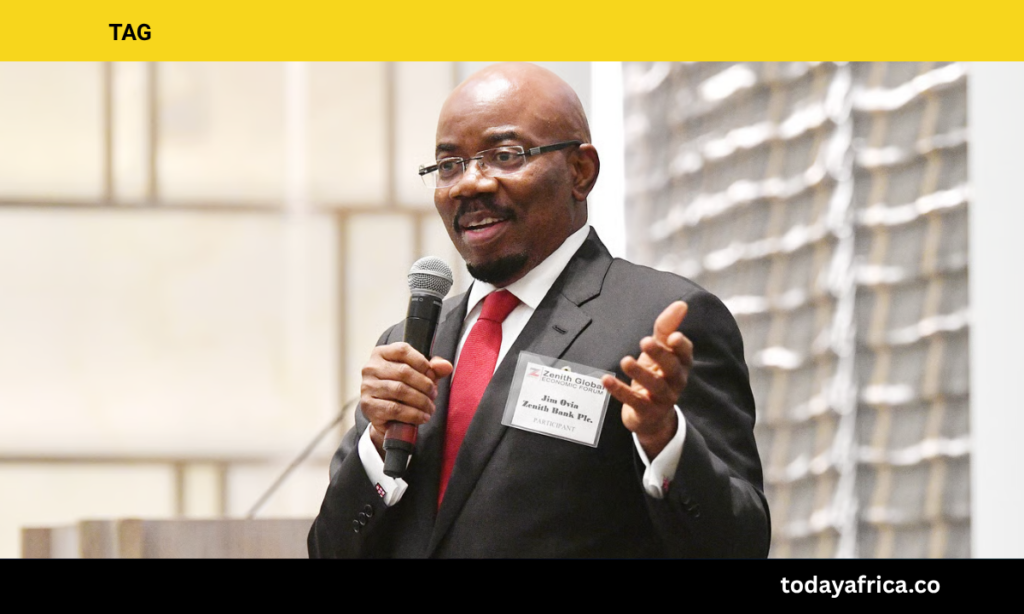
By the late 1980s, Ovia had accumulated experience in different areas of the financial services industry.
He had worked in banking, financial analysis, and corporate finance, developing an understanding of how financial institutions operated and how businesses accessed capital.
In June 1990, he founded Zenith Bank. It was a defining decision.
Starting a bank required more than identifying customers who needed financial services. It demanded regulatory approval, capital, systems, experienced employees, and the confidence of people willing to entrust their money to a new institution.
Zenith began in a converted residential property on Ajose Adeogun Street in Victoria Island, Lagos. The garage was adapted for customer service, while rooms were converted into banking spaces.
The surroundings were modest compared with what Zenith would eventually become. That contrast captures one of the most useful elements of Ovia’s entrepreneurial story.
He did not wait until the institution looked established before beginning operations. He worked with the resources available while pursuing an ambition much larger than the original premises.
However, starting small did not mean approaching banking casually.
A financial institution cannot survive on ambition alone. Customers must trust its operations, regulators must be satisfied with its conduct, and management must maintain discipline as the business grows.
Ovia served as Zenith Bank’s pioneer managing director and chief executive for 20 years, until July 2010. That period gave him direct responsibility for guiding the institution through its formative years and subsequent expansion.
The lesson for founders is not that every entrepreneur should pursue an enormous business from the beginning. It is that a small starting point and a serious long-term ambition can coexist.
Related: Dare Okoudjou, the builder who turned Africa’s payment problems into a continental opportunity
Why technology became a strategic advantage
One of the most distinctive elements of Ovia’s banking career was his early interest in technology.
For a new bank competing against established financial institutions, technology presented an opportunity to rethink how banking services could be delivered.
Ovia’s familiarity with computers predated Zenith Bank’s founding. That background made technological development a natural area of interest as the institution grew.
Zenith became an early adopter of digital infrastructure in Nigerian banking, including establishing an online presence during the 1990s.
This was significant because technology was not yet the central consumer-facing feature of banking that it would become in later decades.
Today, customers expect digital transfers, mobile applications, electronic payments, and access to financial services beyond physical branches.
But the strategic lesson from Ovia’s approach goes beyond any particular banking technology. He recognized that the way an industry operates can become as important as the products it sells.
For African entrepreneurs building in financial technology, logistics, agriculture, commerce, or healthcare, this distinction matters.
A successful business does not necessarily need to invent an entirely new market. It can create an advantage by improving the systems through which an existing market functions.
Technology becomes valuable when it supports reliability, convenience, operational efficiency, or a better customer experience.
Ovia’s story demonstrates the importance of developing capabilities before they become obvious competitive requirements.
Building a bank that could compete beyond Nigeria
Zenith Bank’s growth was not limited to expanding its customer base in Lagos. Under Ovia’s leadership, the bank developed into a publicly traded institution with operations beyond Nigeria.
In 2004, Zenith became a public limited company and listed on the Nigerian Stock Exchange following an initial public offering.
In 2007, its United Kingdom subsidiary received authorization to commence banking operations. By March 2013, Zenith had also secured a London Stock Exchange listing through global depositary receipts.
These developments represented important transitions in the bank’s institutional journey. A business controlled by its original founders operates differently from a publicly listed company.
Public ownership introduces new expectations around financial disclosure, shareholder accountability, corporate governance, and operational transparency.
For African entrepreneurs, the significance is clear. Growth requires changes in how a company is managed.
A founder who successfully oversees a small team cannot automatically manage a multinational institution using the same structures and decision-making processes.
As businesses expand, they need stronger governance systems, experienced executives, financial discipline, and mechanisms for managing risk.
Zenith’s evolution illustrates why institution-building demands more than continually increasing revenue. It also requires creating the organizational capacity to handle success.
Related: Rapelang Rabana: The entrepreneur who turned curiosity into institutions
The leadership decisions that defined his legacy
Three major decisions stand out when examining Ovia’s career.
The first was choosing to become an owner after years of developing industry expertise.
By the time he founded Zenith Bank, he understood the business environment he was entering. His previous experience gave him a stronger foundation for assessing operational challenges and identifying opportunities.
The second was treating technology as a strategic business capability.
Instead of seeing technology merely as an administrative expense, he recognized its potential relevance to banking operations.
The third was participating in the creation of a company that could operate beyond his direct executive leadership.
Ovia stepped down as Zenith Bank’s chief executive in 2010 and returned as chairman in 2014.
His final departure from the board took effect on April 29, 2026, in compliance with regulatory tenure requirements. Mustafa Bello succeeded him as chairman.
This transition offers a particularly important lesson about leadership.
Founders often become closely associated with their businesses. Their reputation can attract customers, employees, investors, and partners.
But overdependence on one individual can also create organizational vulnerability. A sustainable institution needs a structure through which authority can be transferred, and responsibilities can continue.
Ovia’s exit from Zenith’s board reflects that reality. The company he helped establish continues to operate under a leadership structure separate from its founder.
Beyond banking: Investing in the next generation
Ovia’s influence also extends into education and youth development. Through the Jim Ovia Foundation, established in 2003, he has supported educational scholarships, digital skills development, and entrepreneurship initiatives.
The foundation reports supporting thousands of young Nigerians through its programs, including university scholarships and information technology training.
He also established James Hope College in Agbor, connecting his educational investments to the community where his own journey began.
His involvement in James Hope University in Lagos further reflects his interest in developing business, management, and professional talent.
These initiatives reveal another dimension of institution-building.
Successful businesses need capable people. Financial resources alone cannot replace the knowledge and skills required to manage organizations, develop technology, and make sound decisions.
By supporting education, Ovia has invested in some of the human capabilities that future African enterprises will need.
His 2018 book, Africa Rise and Shine, also documents his experiences building Zenith Bank and presents his entrepreneurial journey as an example of what can be achieved through African enterprise.
His legacy therefore extends beyond a single financial institution into the development of future professionals and entrepreneurs.
What Jim Ovia’s biography reveals about African business success

The central insight from Ovia’s career is that Africa’s long-term economic progress depends partly on the ability to create durable institutions.
Africa has no shortage of entrepreneurial ideas. Across the continent, founders are developing solutions in finance, commerce, agriculture, transportation, energy, and technology.
The harder challenge is turning promising businesses into organizations capable of surviving economic uncertainty, leadership changes, and increasing competition.
Ovia’s journey offers three perspectives on that challenge.
- First, local knowledge can become a competitive advantage. His experience in Nigerian banking helped him understand the industry before launching his own institution.
- Second, early investment in organizational capabilities matters. Technology, management expertise, and operational systems can influence how effectively businesses compete.
- Third, leadership must evolve alongside the company. As an institution grows, its founder’s responsibility increasingly includes developing systems and people who can operate independently.
There is also an important qualification.
Zenith Bank’s success should not be reduced to the decisions of one individual. It reflects the contributions of employees, executives, investors, regulators, and successive leadership teams working across different economic conditions.
For African entrepreneurs, the practical lesson is to study the institution as carefully as the founder.
The blueprint for Africa’s next generation of builders
Ovia’s experience provides a useful framework for founders and professionals seeking to build businesses with lasting value.
Master an industry before attempting to transform it.
Ovia spent years gaining banking experience before founding Zenith. Entrepreneurs can apply this principle by studying customer behavior, industry economics, regulations, and operational weaknesses before committing major resources.
Start with available resources, but design for growth.
Zenith’s first premises were modest. What mattered was establishing operations and developing the business. Founders should distinguish between the resources needed to begin and the systems needed to expand.
Invest in capabilities before they become competitive necessities.
Ovia’s early exposure to computing provided a foundation for his interest in banking technology. Modern founders should identify emerging capabilities that could improve efficiency, service delivery, or market access.
Build governance alongside revenue.
Growth creates complexity. Clear responsibilities, reliable financial reporting, accountability, and succession planning should develop as the organization expands.
Use market intelligence to make better decisions.
Expansion requires understanding customers, competitors, regulation, and changing industry conditions.
For contemporary African builders, resources such as Today Africa’s Market Intelligence Studio can support this process through customized market research, sector analysis, country briefs, and ecosystem mapping.
The broader principle is the same one illustrated by Ovia’s professional journey: better decisions begin with a deeper understanding of the environment in which a business operates.
Create value that extends beyond personal ownership.
A founder’s influence becomes more durable when it exists through capable employees, functioning organizations, and opportunities created for others.
Ovia’s educational investments and Zenith Bank’s leadership transitions demonstrate different aspects of this principle.
Related: Jason Njoku: iROKOtv and African streaming revolution
The real legacy of Jim Ovia
Jim Ovia’s story began in Agbor, moved through banking offices and American universities, and eventually reached the boardroom of one of Nigeria’s major financial institutions.
His career illustrates what can happen when industry knowledge, calculated risk-taking, technological awareness, and long-term ambition come together.
Yet the most relevant achievement is not simply the size of Zenith Bank or the recognition attached to his name.
It is the creation of an institution that continues beyond his direct leadership. That is the challenge facing Africa’s next generation of entrepreneurs.
Building a successful business is an accomplishment. Building one that can grow, adapt, develop leaders, and survive beyond its founder is a different level of achievement.
Jim Ovia’s journey offers African builders a lasting principle: The strongest entrepreneurial legacy is not merely the wealth you accumulate, but the institutions you leave capable of creating value without you.
Leave a comment and follow us on social media for more tips:
- Facebook: Today Africa
- Instagram: Today Africa
- Twitter: Today Africa
- LinkedIn: Today Africa
- YouTube: Today Africa Studio