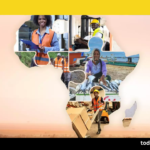


Africa’s middle class is often described through shopping malls, apartment blocks, ride-hailing apps, smartphones, private schools and supermarket shelves.
But the real engine behind it is less polished and far more powerful.
It sits in market stalls, roadside shops, mobile money wallets, informal logistics networks, diaspora transfers, social commerce pages, small farms, agent banking kiosks, and family-run businesses that rarely appear in formal economic headlines.
This is Africa’s hidden economy. It is not hidden because it is small. It is hidden because much of it operates outside traditional corporate data, formal payroll systems, and the reach of legacy banking structures.
That distinction matters more than ever. Across the continent, middle-class expansion is no longer being driven primarily by formal employment.
In many economies, wage jobs are too limited to absorb rapid population growth. Sub-Saharan Africa’s growth is projected by the World Bank to hold at 4.1% in 2026, steady from 2025, even as inflation, debt service costs, and food and fuel pressures strain household budgets.
The structural shift reshaping Africa’s middle class
The African Development Bank projects similar momentum, forecasting 4.2% growth in 2026, with potential recovery toward 4.4% in subsequent years if global shocks ease.
But growth alone does not build a middle class. What is changing is how income is created, aggregated, and converted into consumption power.
Across African markets, informal workers are increasingly linked to digital payments, platform economies, and lightweight financial infrastructure.
The result is a new middle-class formation: not always salaried, not always formally banked, but increasingly transactional, urban, networked, and commercially visible.
The shift is structural. Africa’s middle class is emerging less from corporate ladders and more from layered household income systems that combine trade, services, remittances, side businesses, and informal enterprises.
According to the International Labor Organization, informal employment accounts for 87.6% of jobs in Sub-Saharan Africa.
This defines the continent’s central economic paradox: informality is both vulnerability and vitality. It represents low productivity and limited protection, yet it is also the main arena of income generation.
The implication is clear. Consumption growth is no longer waiting for formal job creation.
Households are already moving into semi-formal consumption patterns, better housing, improved schooling, digital connectivity, healthcare access, transport services, and small financial assets.
The World Bank reinforces this pressure point, noting that wage employment remains limited at roughly 24% of total jobs in Sub-Saharan Africa, while more than 620 million people are expected to enter the labor force by 2050.
Without transformation in informal productivity, middle-class expansion risks becoming fragile and uneven. But with better systems, informality becomes a launchpad.
Read also: Why most media brands fail in Africa, and what entrepreneurs need to know
The system behind the hidden economy

Demographics as the pressure engine
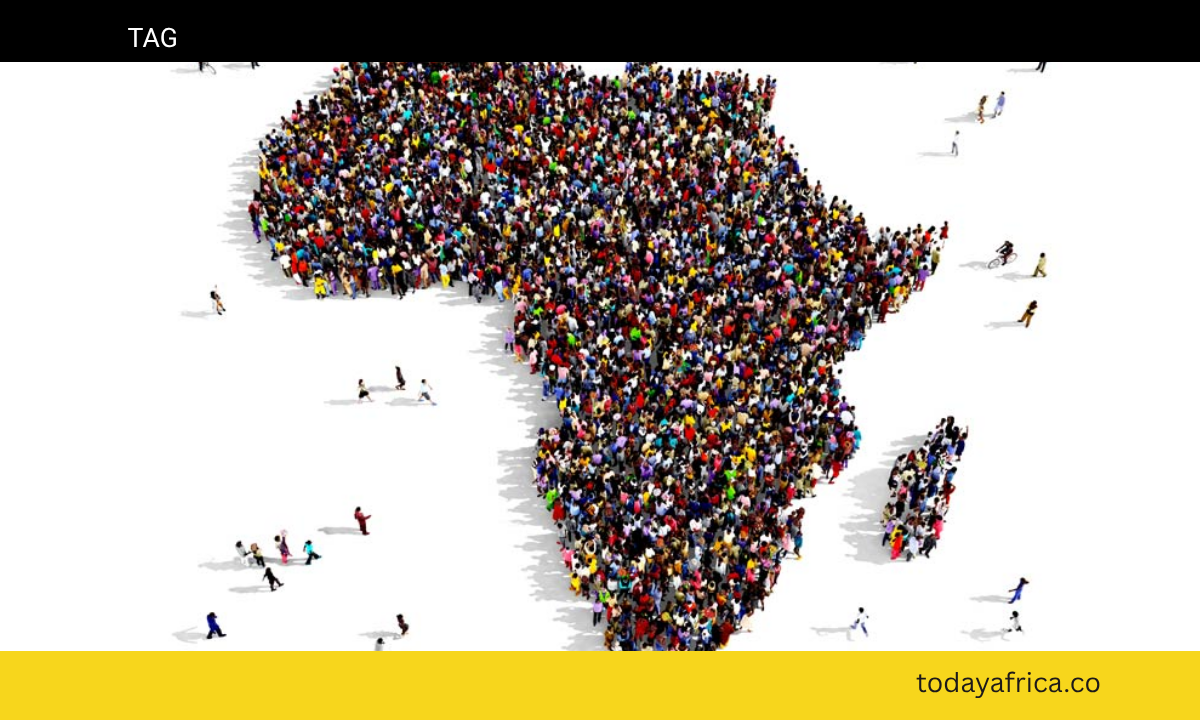
Africa’s working-age population is expanding faster than any other region globally. Millions enter labor markets annually, many without access to formal employment pathways.
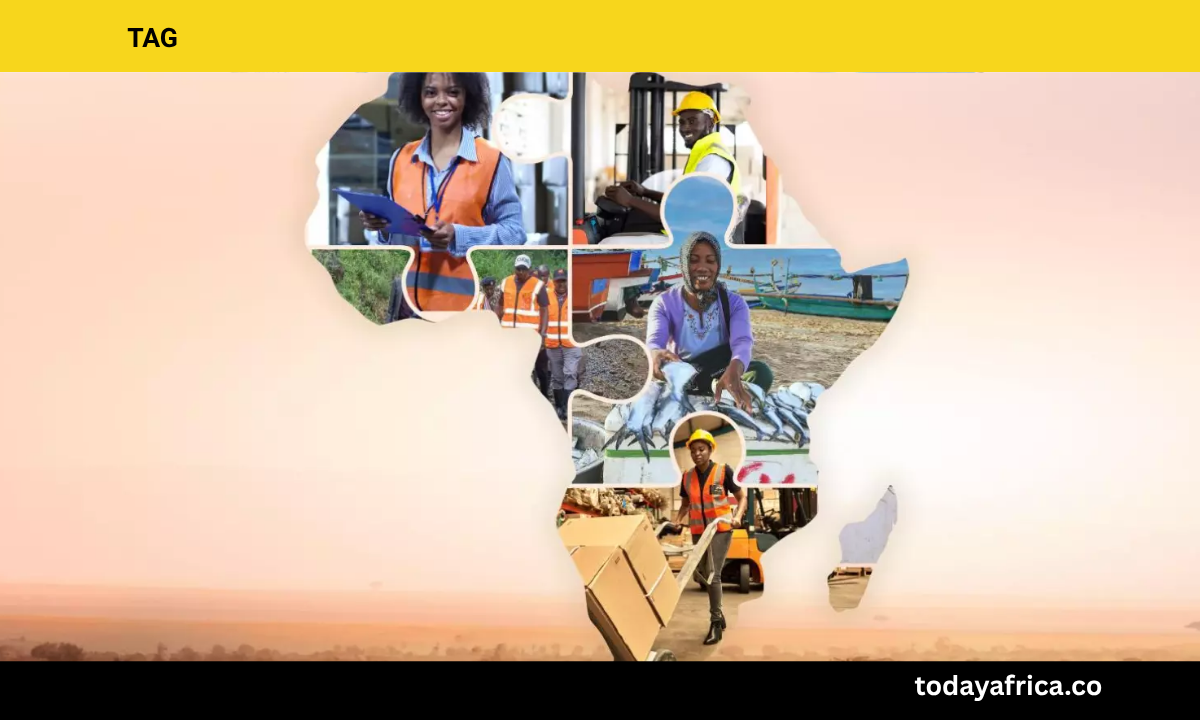
They become traders, riders, artisans, small-scale farmers, digital freelancers, and micro-entrepreneurs.
These roles may appear fragmented, but collectively they form the backbone of household income diversification and the foundation of emerging middle-class consumption.
Digital finance as economic infrastructure
Mobile money has transformed informal cash economies into structured transaction systems.
According to GSMA, mobile money platforms processed over $2 trillion in transactions in 2025, supported by 2.3 billion registered accounts globally. Merchant payments reached $155 billion, marking one of the fastest-growing segments in digital finance.
This shift is not cosmetic. It fundamentally changes visibility. A trader accepting digital payments now has a financial footprint that can be analyzed for credit, insurance, savings, and inventory financing.
Mobile money is increasingly described as core financial infrastructure rather than a payment tool. It connects informal activity to formal systems without forcing structural exclusion.
Household income layering and resilience
African households rarely rely on a single income stream. Instead, they combine salaries, informal trade, remittances, farming, rental income, and digital side work.
This diversification stabilizes consumption even during macroeconomic shocks.
Remittance flows reinforce this system. In 2024, Africa received more than $104 billion in remittances, outpacing official development assistance and directly funding housing, education, healthcare, and small business activity.
Read also: Top 10 fastest-growing companies in Africa, according to the Financial Times and Statista
The business impact on SMEs, startups, and investors

For SMEs, the hidden economy is both an opportunity accelerator and a competitive stress test.
Rising household consumption is expanding demand across food processing, logistics, retail distribution, digital payments, healthcare services, education, housing materials, and mobility solutions.
Brookings estimates Africa’s consumer spending at $2.1 trillion by 2025, rising toward $2.5 trillion by 2030, much of it still flowing through informal retail networks.
This creates a clear signal: Africa’s consumer market is not defined by formal retail structures but by distribution efficiency across informal ecosystems.
For startups, the opportunity lies in organizing fragmentation rather than eliminating it.
Fintech platforms, logistics aggregators, agricultural supply chain solutions, and B2B commerce tools are all positioned to unlock productivity in informal markets without disrupting their adaptability.
However, fiscal pressure is rising. Public debt servicing in Sub-Saharan Africa has doubled since 2017, while public investment capacity has declined significantly, constraining infrastructure expansion.
This raises a policy tension: how to expand revenue collection without weakening the informal systems driving growth.
The answer increasingly points toward “productive formalization”, simplifying registration, reducing compliance costs, and improving access to credit and infrastructure rather than forcing premature taxation.
Read also: 10 startup ideas with the highest failure risk in Africa, according to data
The opportunities in Africa’s next growth phase
Retail and distribution networks
Neighborhood shops, kiosks, and informal markets remain the dominant retail channels across Africa. Businesses that improve inventory management, payments, and last-mile logistics are effectively upgrading the continent’s core consumption layer.
Food systems and urban consumption
Urbanization is driving demand for processed foods, cold storage, packaging, logistics, and predictable supply chains. SMEs in agro-processing and distribution are becoming central to food security and middle-class consumption stability.
Housing and incremental urban growth
Middle-class expansion is often expressed through gradual housing investment, rent improvements, incremental construction, solar adoption, and household asset accumulation. This creates long-term demand for building materials, finance tools, and modular housing systems.
Human capital and digital services
Healthcare, education, and digital services remain the most resilient growth sectors. As incomes rise, households invest heavily in schooling, private healthcare, data access, and professional development.
Regional growth differentiation
East Africa benefits from mature mobile money ecosystems. West Africa offers scale and rapid fintech expansion. North Africa connects to manufacturing and remittance corridors. Southern Africa retains a stronger financial infrastructure despite uneven growth.
The hidden economy is not marginal. It is not transitional, but structural.
It defines how Africa earns, spends, saves, and grows. The real question is whether institutions adapt quickly enough to support it.
Africa’s middle class will not emerge through a single pathway. It will emerge through millions of incremental decisions, each one small, each one economic, each one quietly reshaping the continent’s consumption base.
That is the system beneath the surface. Not invisible, just overlooked.
SEO Keyword
Africa informal economy middle class growth
Leave a comment and follow us on social media for more tips:
- Facebook: Today Africa
- Instagram: Today Africa
- Twitter: Today Africa
- LinkedIn: Today Africa
- YouTube: Today Africa Studio