

Kwame Nkrumah’s biography is more than the story of one man. It’s the story of a teacher who became a freedom fighter, a politician who became Ghana’s first leader, and a Pan-African thinker who believed Africa could stand tall on its own feet.
He helped lead the Gold Coast to independence from Britain and became a central figure in the birth of modern Ghana.
His life had bright victories and hard controversies. That’s what makes it worth studying. Nkrumah wasn’t a simple hero from a clean storybook. He was bold, brilliant, ambitious, and sometimes deeply criticized.
Quick profile of Kwame Nkrumah
| Full name | Kwame Nkrumah |
| Born | Commonly listed as September 21, 1909 |
| Birthplace | Nkroful, Gold Coast, now Ghana |
| Died | April 27, 1972 |
| Place of death | Bucharest, Romania |
| Famous role | First Prime Minister and first President of Ghana |
| Political party | Convention People’s Party |
| Major idea | Pan-African unity |
Key dates in his life
| 1909 | Born in Nkroful |
| 1935 | Traveled to the United States for studies |
| 1947 | Returned to the Gold Coast and entered nationalist politics |
| 1949 | Founded the Convention People’s Party |
| 1957 | Ghana gained independence |
| 1960 | Ghana became a republic, and Nkrumah became president |
| 1966 | Overthrown in a military coup |
| 1972 | Died in Romania |
Early year
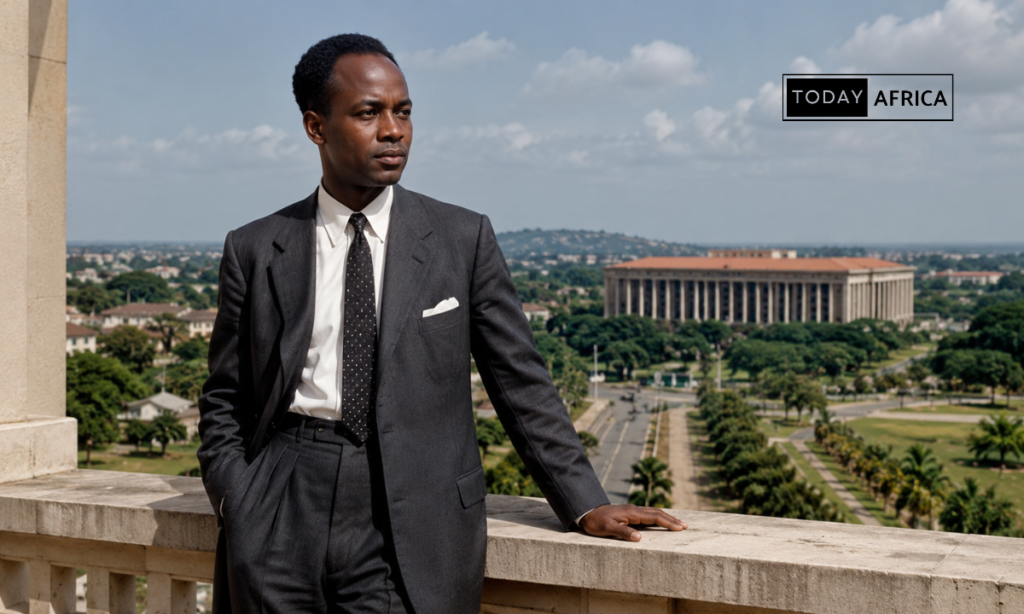
His story begins in Nkroful, a small town in the western part of what was then the British Gold Coast. He was born into a colonial world where African talent often had to push twice as hard to be seen. His early life didn’t look like the start of a world-famous political journey. Like many great lives, it began quietly, with family, school, discipline, and a young mind that kept asking bigger questions.
Childhood in the Gold Coast
Nkrumah grew up during British colonial rule of the Gold Coast. This mattered because colonial rule shaped almost every part of public life. Education, government, trade, law, and opportunity were tied to a system that placed Britain at the top. For a young African boy, success often meant learning the colonial system well enough to move through it, but Nkrumah later chose to challenge it.
His early education helped open the door. He attended local schools and later trained at Achimota, one of the most important educational institutions in the Gold Coast. Achimota exposed him to serious study, public speaking, discipline, and leadership. It also placed him near teachers and ideas that helped him think beyond village life and colonial limits.
Education and early teaching
Before politics took over his life, Nkrumah was a teacher. That’s important because teaching shaped the way he later spoke to ordinary people. He learned how to explain big ideas in simple words. He also learned how education could lift a community, one child at a time.
After training, he taught in schools in the Gold Coast. Those years gave him a close look at ordinary people’s hopes and frustrations. He saw that colonial rule didn’t just affect laws and flags. It affected wages, classrooms, farms, roads, and dignity. That experience helped turn him into a leader who could speak to workers, students, market women, farmers, and young people.
Studies in America and Britain
In 1935, Nkrumah traveled to the United States to study. He attended Lincoln University, a historically Black university in Pennsylvania, and later studied at the University of Pennsylvania. His time in America exposed him to Black intellectual life, racial politics, labor movements, and anti-colonial thinking.
America gave him more than degrees. It gave him a front-row seat to the struggles of Black people outside Africa. He saw how racism worked in another setting, and he connected that struggle to colonialism in Africa. Bit by bit, his thinking moved from personal success to collective freedom.
Later, Nkrumah spent time in Britain. London was a major meeting place for African, Caribbean, and Asian activists. There, he worked with other Pan-African thinkers and organizers. He became involved in networks that treated colonialism as a global problem, not just a Ghanaian problem.
Read Also: Thomas Sankara biography: The man who dared to dream of a self-reliant Africa
Political awakening
Nkrumah’s political awakening didn’t happen overnight. It came from school, work, travel, reading, and contact with powerful thinkers. Ideas from Marcus Garvey, W. E. B. Du Bois, George Padmore, and other Black intellectuals helped shape his belief that African freedom required unity and self-rule.
This is where the Kwame Nkrumah biography becomes bigger than one nation. He didn’t only want the Gold Coast to be free. He wanted Africa to stop moving like scattered pieces on someone else’s chessboard. Kwame believed African countries needed political confidence, economic strength, and continental cooperation.
That belief became the engine of his life. By the time he returned home in 1947, Nkrumah wasn’t just an educated man with foreign experience. He was a political organizer with a clear message. The Gold Coast had to govern itself, and it had to do so sooner rather than later.
The road to Ghana’s independence
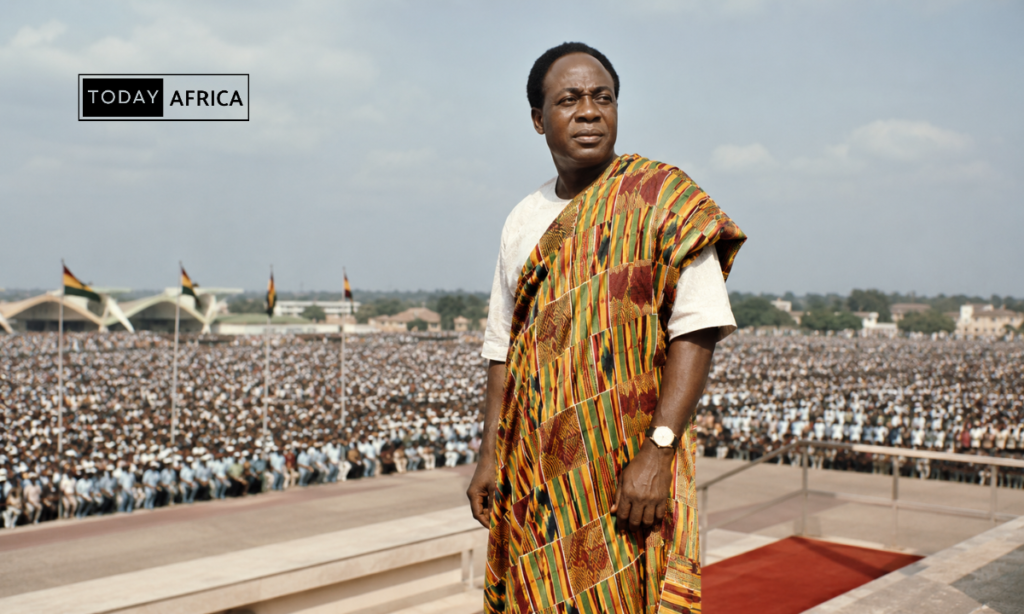
The next stage of Kwame Nkrumah’s biography moves from ideas to action. Nkrumah returned to the Gold Coast in 1947 and entered politics through the United Gold Coast Convention (UGCC). The UGCC wanted constitutional reform and greater African participation in government. Nkrumah wanted something faster, louder, and more direct.
Joining the UGCC
The UGCC brought Nkrumah home because its leaders needed a strong organizer. He became the group’s general secretary and quickly showed that he understood mass politics. He didn’t want politics to stay in elite rooms; he wanted it in the streets, workplaces, villages, and town halls.
This approach created tension. Some UGCC leaders preferred to engage in careful talks with the colonial authorities. Nkrumah believed the people had to apply pressure. To him, freedom wouldn’t arrive as a polite gift. It had to be demanded with discipline and courage.
Creating the Convention People’s Party
In 1949, Nkrumah broke away and founded the Convention People’s Party, known as the CPP. The CPP used a simple message that ordinary people could understand. It called for “self-government now,” and that slogan hit like a drumbeat across the Gold Coast.
The CPP’s strength came from its mass support. Workers, youth, market women, trade unions, and local organizers became part of the movement. Nkrumah understood something many leaders miss. People support a cause more deeply when they feel seen inside it.
The party used rallies, newspapers, symbols, songs, and public speeches. Its energy felt fresh. It turned independence from a polite debate into a national demand. In plain English, Nkrumah made politics feel like everybody’s business.
Read Also: Assassination of Patrice Lumumba and the Collapse of Congo’s First Government
Positive action and prison
Nkrumah’s strategy included what he called Positive Action. This involved peaceful protest, strikes, noncooperation, and civil pressure against colonial rule. It wasn’t random noise. It was organized pressure designed to make colonial rule harder to maintain.
The British colonial government saw him as a threat. Nkrumah was arrested and imprisoned. Yet prison didn’t end his influence. Instead, it made him even more popular among many supporters. His image grew from party leader to national symbol.
In the 1951 elections, the CPP won a major victory while Nkrumah was still in prison. He was released and became the Leader of Government Business. Later, he became Prime Minister of the Gold Coast. His rise showed that the independence movement had moved beyond speeches. It had entered government.
Prime minister and independence
On March 6, 1957, the Gold Coast became independent Ghana. Nkrumah became the first Prime Minister of the new nation. Ghana was the first sub-Saharan African country under colonial rule to gain independence in this period, and its freedom inspired liberation movements across Africa.
The name Ghana reached back to the ancient Ghana Empire, giving the new country a proud African identity. That choice mattered. It told the world that modern Ghana wasn’t born from British rule alone. It belonged to a deeper African history.
For many Africans and people of African descent, Ghana’s independence felt like a breath of fresh air after a long, locked room. It proved that colonial rule could be defeated. It also raised expectations. If Ghana could do it, others could too.
Nkrumah understood the weight of the moment. He argued that Ghana’s independence was incomplete unless it was connected to the total liberation of Africa. That line of thinking became one of his most famous contributions to political history. He saw national freedom as the first step, not the finish line.
Presidency, Pan-Africanism, and development vision
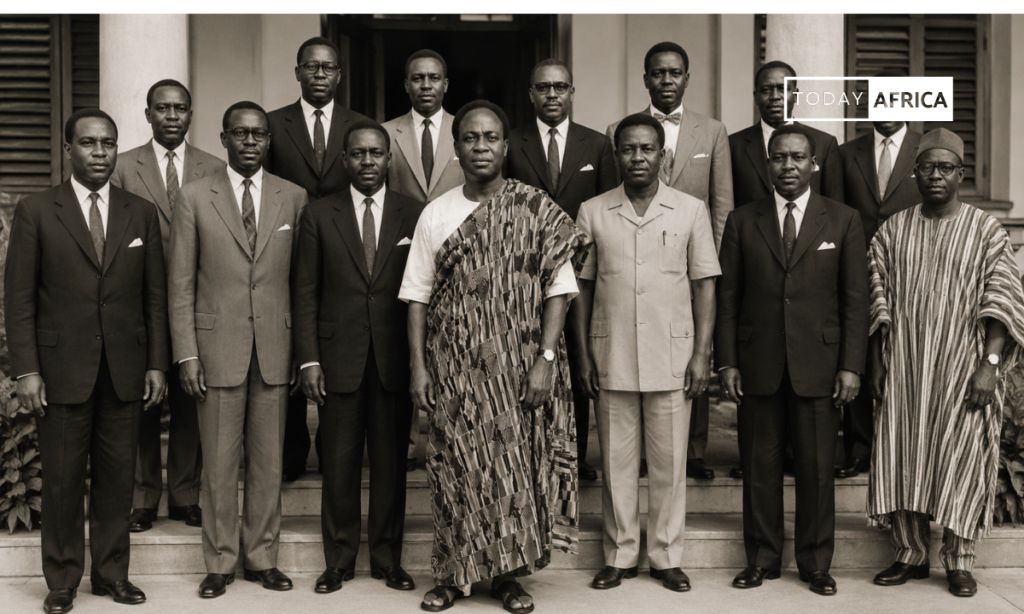
After independence, Nkrumah faced a harder test. Winning freedom was one thing. Building a strong nation was another. This part of Kwame Nkrumah’s biography shows the promise and pressure of leadership after colonial rule.
Becoming president
In 1960, Ghana became a republic, and Nkrumah became its first president. This marked a new phase in Ghana’s political life. The country had moved from colonial rule to independence, and then from a monarchy-linked system to a republic. Nkrumah now had broad power and a huge vision.
He wanted Ghana to become modern, educated, industrial, and proud. He believed political freedom had to be matched by economic freedom. In simple terms, he didn’t want Ghana to change flags and still depend on old colonial trade patterns.
His government pushed development projects, expanded education, invested in infrastructure, and pursued state-led industry. He wanted roads, factories, schools, power, and public institutions that could carry Ghana into a new age. That optimism made him popular among many people who wanted fast national progress.
Read Also: Julius Nyerere Biography: Leadership, Ujamaa, and the Making of Modern Tanzania
Education and industrial growth
Education was central to Nkrumah’s plan. He saw schools as nation-building tools. A country couldn’t run itself well if most citizens lacked access to learning. So his government expanded education and promoted training for a new generation of Ghanaian workers, teachers, civil servants, and professionals.
Nkrumah also believed in industrial growth. He wanted Ghana to process more of its own resources rather than simply export raw materials. This was a common challenge for post-colonial countries. Many had inherited economies designed to serve foreign markets rather than local development.
One of his most famous development projects was the Volta River Project, which included the Akosombo Dam. The project aimed to produce hydroelectric power and support industrial growth. The Akosombo Dam remains one of the major symbols of Nkrumah’s development vision, even though it also brought costs and debates about displacement, debt, and priorities.
African unity
Nkrumah’s Pan-African vision made him one of the most important African political thinkers of the twentieth century. He believed African countries would stay weak if they remained divided. In his view, colonial borders had split the continent into small units that could be pressured by bigger global powers.
He supported African liberation movements and called for continental unity. He helped promote conferences, alliances, and institutions that brought together African leaders and activists. The African Union lists him among the founding figures of the Organization of African Unity, which was created in 1963.
This vision made him admired far beyond Ghana. Civil rights leaders and Black freedom thinkers closely watched Ghana. Stanford’s Martin Luther King, Jr. Research and Education Institute notes that Nkrumah’s leadership inspired King, who saw Ghana’s independence as part of a wider freedom struggle.
Strengths and criticism
Still, Nkrumah’s rule wasn’t free from problems. As his power grew, critics accused him of becoming too controlling. Ghana moved toward a one-party state, and opposition voices faced pressure. This remains one of the hardest parts of his legacy.
Supporters argue that he faced real threats, a fragile new state, Cold War pressure, and the urgent task of development. Critics argue that freedom loses meaning when political competition is weakened. Both points matter. A fair Kwame Nkrumah biography has to hold both truths at once.
Nkrumah’s optimism was powerful. His belief in Africa’s future still inspires people. Yet his later rule also warns that even visionary leaders need checks, accountability, and space for dissent. Big dreams can build nations, but unchecked power can bend those dreams out of shape.
Read Also: The biography of Malcolm X: Power, race, & black consciousness
Fall from power, exile, death, and a lasting legacy
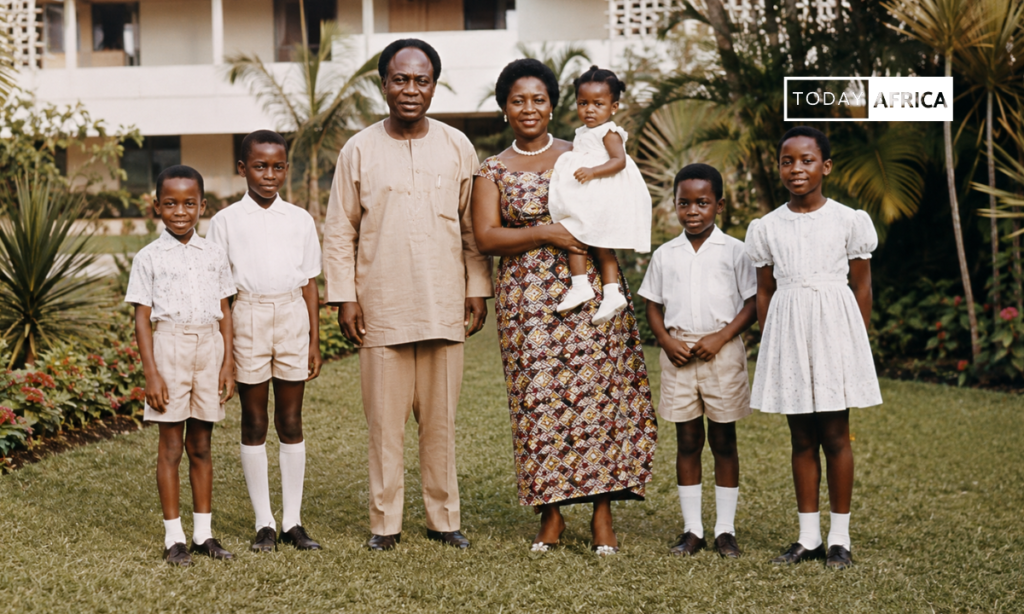
The final major part of Kwame Nkrumah’s biography is dramatic and sobering. By the mid-1960s, Ghana faced economic strain, political tension, and growing dissatisfaction within parts of the military and public service. Nkrumah’s government had built major projects, but debt and hardship put pressure on the government. Political opposition also became more difficult under his rule.
The 1966 coup
In February 1966, Nkrumah was away on a trip to North Vietnam and China when his government was overthrown in a military and police coup. The new rulers called themselves the National Liberation Council. Nkrumah never returned to power in Ghana.
The coup changed Ghana’s political path. To his opponents, it ended a government they viewed as authoritarian and economically troubled. To his supporters, he was a visionary African leader seeking to break the chains of dependency. As usual, history doesn’t fit neatly into one pocket.
Life in exile
After the coup, Nkrumah went into exile. Guinea’s President Ahmed Sékou Touré welcomed him and even gave him the symbolic title of co-president. That gesture showed how much respect Nkrumah still held among some African leaders.
Exile must have been painful for a man who had given his life to Ghana’s freedom. He could write, reflect, and continue speaking through his ideas, but he no longer held the power to shape Ghana directly. For a leader of his energy, that was no small thing.
He later became ill and traveled for medical treatment. Nkrumah died on April 27, 1972, in Bucharest, Romania. His body was eventually returned to Ghana, where his memory became part of the nation’s public story.
Death and memorials
Today, Nkrumah is remembered through monuments, schools, books, speeches, and national reflection. The Kwame Nkrumah Memorial Park in Accra stands as one of the key places connected to his memory. His name also lives through institutions such as the Kwame Nkrumah University of Science and Technology.
His legacy travels beyond Ghana. Across Africa and the African diaspora, Nkrumah remains a symbol of courage, self-rule, and continental pride. Even people who criticize his politics often admit that his impact was massive.
Read Also: 25 recommended biography books for the voracious reader in you
Conclusion
Kwame Nkrumah’s biography gives us a full picture of a man who helped change Africa’s political map. He began as a boy from Nkroful, became a teacher, traveled across the Atlantic for education, returned home as an organizer, and helped lead Ghana into independence. His story reminds us that courage often starts small before it becomes historic.
Nkrumah’s life also teaches balance. He gave Ghana and Africa a language of confidence, unity, and possibility. At the same time, his later political choices show that national dreams need freedom, accountability, and open debate to stay healthy.
In the end, Nkrumah remains one of Africa’s most important modern figures. His name still carries the sound of independence, the hope of unity, and the warning that leadership must serve the people without silencing them. That’s why his story still feels alive today.
Leave a comment and follow us on social media for more tips:
- YouTube: Today Africa Studio
- Facebook: Today Africa
- Instagram: Today Africa
- Twitter: Today Africa
- LinkedIn: Today Africa



![Biography of Tony Elumelu [Investor, Entrepreneur, & Philanthropist]](https://todayafrica.co/wp-content/uploads/2023/12/Blue-Simple-Dad-Appreciation-Facebook-Post-1200-×-720-px-7-1.png)