
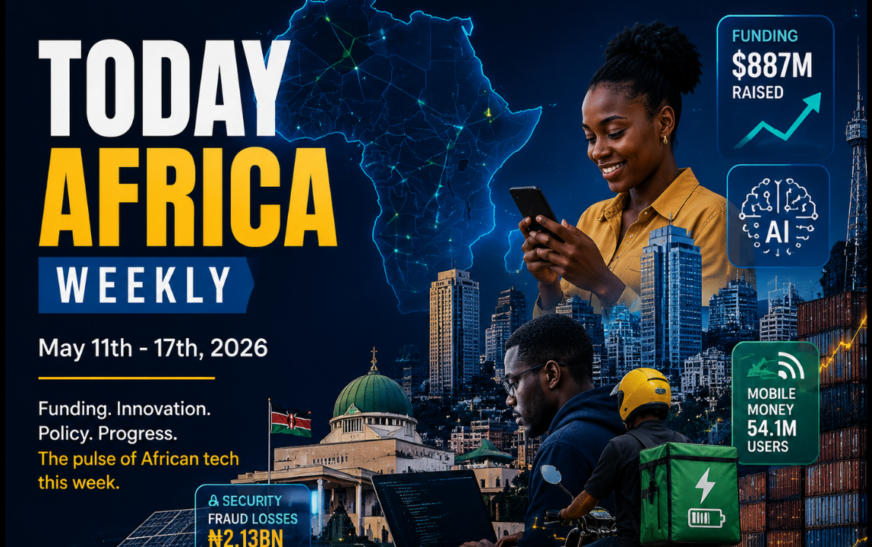
Last week behaved like a startup founder’s calendar, too many tabs open, one investor call running late, and at least three government policies arriving right when everyone thought they could breathe.
The big story was not just who raised money. It was where pressure was building. Capital is still available, but it is flowing toward infrastructure, payments, mobility, and models that look more useful than fashionable.
At the same time, governments are reaching deeper into digital finance, telecoms, crypto, EVs, and smartphone access, which means founders are no longer building only against competitors. They are building against policy risk too.
African tech news
Jumia’s AI era gets very real
Jumia had two major storylines this week. First, Techpoint reported that the company’s Q1 2026 revenue rose 39% year over year to $50.6 million, with GMV up 31% to $211.2 million and Nigeria standing out as a growth engine with physical goods GMV rising 42%. The company also ended the quarter with $62.6 million in liquidity and said it remained on track for adjusted EBITDA breakeven and positive cash flow by Q4 2026.
Then came the sharper edge of the turnaround. Jumia announced plans to cut at least 200 full-time jobs over the next two quarters as it deploys AI across logistics, customer support, finance, cybersecurity, seller management, and software development. The company’s workforce has dropped from more than 4,300 employees in 2022 to under 2,000 by March 2026, showing how aggressively the e-commerce giant is chasing a leaner operating model.
Airtel Africa delays the big fintech IPO
Airtel Africa reported a record $813 million profit after tax for the year ended March 31, 2026, up from $328 million a year earlier, with revenue climbing 29.5% to $6.41 billion. But the company also delayed the long-awaited Airtel Money IPO, which had been expected in the first half of 2026. Airtel Money now has 54.1 million users, active transacting customers jumped 74%, and annualised transaction value crossed $215 billion, yet the company is waiting for calmer global market conditions before listing.
The delayed IPO says a lot about Africa’s fintech moment. The numbers are strong, but global risk appetite still matters. Mobile money is now core infrastructure, but even infrastructure businesses have to pick the right weather before going public.
Kenya turns the Finance Bill into a digital economy stress test
Kenya’s Finance Bill 2026 became one of the week’s biggest tech stories. Techpoint reported that the bill proposes a 16% VAT on payment service providers, including M-Pesa, Airtel Money, Pesapal, and Kenswitch. M-Pesa processed KSh 41.7 trillion across 46.4 billion transactions in the year ending March 2026, making any new tax on the rails a major issue for consumers, merchants, and fintech startups.
The bill also proposes a 25% excise duty on mobile phones, on top of existing VAT and import-related charges. Techpoint noted that smartphone prices in Kenya have already risen sharply, from KSh 5,955 in 2019 to nearly KSh 19,000 by mid-2025, raising fears that the new tax could slow digital inclusion and push more buyers into the grey market.
TechCabal also reported that Kenya plans to apply 16% VAT to electric vehicles, lithium-ion batteries, and electric bicycles, reversing tax breaks that helped support the country’s e-mobility sector. That matters because startups such as BasiGo, Roam, and Ampersand rely heavily on imported batteries, vehicles, and charging equipment.
Crypto loses more anonymity in Kenya
Kenya’s tax regulator also wants deeper visibility into crypto. Techpoint reported that Finance Bill 2026 would require crypto exchanges and virtual asset service providers to submit annual reports to the Kenya Revenue Authority, including buy and sell prices, profits, wallet activity, and payments made using cryptocurrencies. False reporting could attract fines of KSh 100,000 per false entry, imprisonment of up to three years, or both.
This is bigger than taxation. Kenya appears to be moving from “crypto is risky” warnings to active surveillance and reporting. For founders in Web3 and digital assets, Nairobi may still be attractive, but the compliance bill is getting heavier.
Ghana ends its 5G monopoly experiment
Ghana moved away from its original 5G rollout model after the Next-Gen InfraCo structure failed to deliver at speed. Techpoint reported that Ghana has approved open bidding for 5G spectrum in 2026 after NGIC managed only 49 sites, fell behind on its $125 million licence payments, and lost its exclusivity in February 2026. The government now wants 70% 5G population coverage by March 2027, but the timeline is tight.
The lesson is blunt. Shared infrastructure sounds elegant in a policy memo, but execution decides everything. Ghana now has to design an auction that attracts operators without recreating a market where only one player can afford to compete.
Fraud, paytags, and the cost of cashless growth
TechCabal reported that Access Holdings, GTCO, and UBA lost a combined ₦2.13 billion, or $1.56 million, to fraud and forgery in 2025. Total fraud incidents fell 15.03%, but the amount extracted per successful attack rose, showing that fraudsters are getting more efficient even as banks improve prevention. The same report said the three banks spent ₦280.90 billion, or $206.33 million, on technology investments in 2025, including cybersecurity and fraud-monitoring systems.
Techpoint also spotlighted paytags, unique identifiers designed to let Nigerians send and receive money without publicly exposing account numbers and other sensitive details. The idea is simple: make payments fast, but stop turning every transfer into a mini data leak.
Yoco brings Apple Tap to Pay to South Africa
Disrupt Africa reported that South African fintech Yoco partnered with Apple to launch Tap to Pay on iPhone in South Africa. The feature allows merchants to accept contactless cards, Apple Pay, and other digital wallets using only an iPhone and the Yoco app. Yoco serves over 200,000 small businesses in South Africa and processes more than $1 billion in card payments annually.
That is a meaningful hardware-light shift for small merchants. The fewer devices a merchant needs to accept payment, the lower the barrier to formal digital commerce.
AI, education, and local language tools gain traction
Disrupt Africa profiled Buddy Learning, a South African edtech startup building BuddyAI, a WhatsApp-based multilingual AI tutor aligned to the South African curriculum. The startup says BuddyAI has reached over 1,700 active users, answered more than 245,000 questions, and supports all 11 official South African languages. Buddy Learning also received ZAR1.2 million, about $73,000, in equity-free cash through the Injini Mastercard Foundation EdTech Fellowship.
TechCabal also framed Africa’s AI challenge through the harder question of energy. It reported that Africa holds less than 1% of global data centre capacity and that foreign servers handle an estimated 80% of the continent’s internet traffic, with South Africa, Kenya, and Nigeria accounting for 41% of the continent’s 223 data centres.
Key funding rounds (May 11th – 17th, 2026)
| Startup | Country | Sector | Amount | Round | Investors |
|---|---|---|---|---|---|
| Dodai | Ethiopia | E-mobility, EV motorbikes, battery swapping | $13 million | Series A, $8 million equity and $5 million debt | Value Chain Innovation Fund, IPC, Nagase, Persistent ACV Fund, For Seasons, CBC, ICJ, and British International Investment |
| Cauridor | Côte d’Ivoire | Fintech, cross-border payments infrastructure | Undisclosed Series A, including $2 million from Proparco | Series A | Proparco, Flourish Ventures, LoftyInc Capital |
| Buddy Learning | South Africa | Edtech, AI tutoring | ZAR1.2 million, about $73,000 | Equity-free fellowship funding | Injini Mastercard Foundation EdTech Fellowship |
Dodai takes the week’s biggest disclosed round
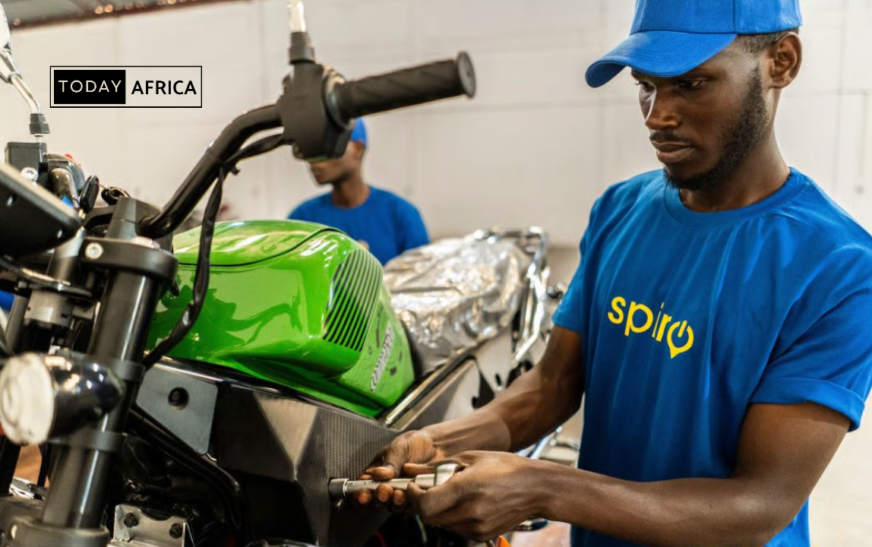
Ethiopian EV startup Dodai raised a $13 million Series A round made up of $8 million in equity and $5 million in debt. The company is building electric motorbikes and battery-swapping infrastructure in Ethiopia, with a goal of reaching 3,000 battery-swapping users and 30 stations across Addis Ababa over the next 12 months. Over three years, Dodai wants to reach 30,000 users and 1,000 battery-swapping stations before expanding into cities such as Abidjan, Kinshasa, Accra, and Dar es Salaam.
This round stands out because it is infrastructure-heavy, climate-linked, and frontier-market focused. Ethiopia has often been discussed as a difficult market for startups, but Dodai’s raise suggests investors still see large upside in practical, transport-led electrification.
Cauridor adds fuel to West African payments infrastructure
Ivorian fintech Cauridor raised a Series A round with a disclosed $2 million investment from Proparco. The total Series A size was not disclosed, but the round also included Flourish Ventures and LoftyInc Capital, and brought Cauridor’s total funding to date to $13 million. The company connects global money transfer operators to mobile money operators, banks, and cash agent networks, enabling payments through more than 25,000 agents across Guinea, Senegal, Ivory Coast, Sierra Leone, and Liberia.
Cauridor’s round fits a familiar African fintech pattern: the real money is often in the pipes. Wallets and apps get attention, but infrastructure players that make remittances, cash pickups, bank transfers, and mobile money interoperate are becoming increasingly strategic.
New capital pools and grant pipelines
Not every capital story this week was a startup round. Disrupt Africa reported that Namibia-based Bellatrix Investment Managers launched the Ndjaba Seed Fund, a $10 million VC vehicle targeting 35 to 50 startups across Southern Africa over a 10-year investment horizon. The fund will focus on sectors including fintech, agritech, e-health, edtech, clean energy, e-commerce, and enterprise software.
Disrupt Africa also reported that applications opened for the Standard Chartered Foundation’s Women in Tech Accelerator, operated with Village Capital. The programme will distribute more than $600,000 in grants across 12 markets, including Botswana, Egypt, Ghana, Kenya, Nigeria, South Africa, Uganda, and Zambia.
Noteworthy stories
Chimoney shuts down
TechCabal reported that Techstars-backed fintech Chimoney shut down after failing to raise enough capital. The Nigerian-founded, Canada-based fintech built cross-border payment infrastructure for businesses and told customers it had stopped processing new transactions and integrations from May 1, 2026, while refunding balances.
The shutdown is a reminder that fintech infrastructure is not automatically safe just because it sounds essential. Distribution, capital, compliance, and trust still decide survival.
Jiji makes another acquisition, this time outside Africa
Jiji acquired Bikroy, Bangladesh’s largest online marketplace platform, 13 months after entering the country as a direct competitor. The deal value was not disclosed. TechCabal noted that Jiji has followed a similar playbook before, including acquisitions of Tonaton in Ghana and OLX Africa’s operations in Nigeria, Kenya, Ghana, Uganda, and Tanzania.
This is one of the more interesting African tech expansion stories of the week because it flips the usual script. Instead of a global company buying an African platform, a Lagos-headquartered marketplace is using acquisition to expand beyond the continent.
South Africa tries to repair its AI policy process
South Africa appointed an independent panel of AI researchers, lawyers, and governance experts to redraft its national AI policy after an earlier draft was withdrawn following reports of fake citations. The new panel includes Wits University AI researcher Benjamin Rosman as chair, with other African researchers also involved.
For the ecosystem, this matters because AI policy is no longer academic decoration. It affects cloud investment, data governance, public-sector adoption, research credibility, and how startups build AI products for regulated sectors.
Nairobi pushes AI into traffic management
Kenya allocated KES 1.18 billion, about $9.1 million, for the next financial year to expand Nairobi’s Intelligent Transport System Phase III. TechCabal reported that the system will include smart traffic lights, surveillance cameras, and road sensors across 125 intersections linked to a central control system at Cabanas.
If it works, Nairobi gets a smarter traffic backbone. If it fails, residents get expensive cameras watching the same old gridlock.
Trends to watch
1. Funding is concentrating around infrastructure
The week’s clearest startup rounds were not consumer-social experiments or vanity marketplaces. Dodai is building electric mobility infrastructure, and Cauridor is building payment rails. Techpoint also reported that African startups raised $887 million across 84 deals between January and April 2026, up from $803 million during the same period in 2025 but across fewer than half as many deals, suggesting investors are writing fewer, more selective cheques.
2. Fintech is still the centre of gravity, but it is under more pressure
Fintech showed up everywhere this week: Airtel Money’s delayed IPO, M-Pesa’s proposed VAT exposure, Cauridor’s Series A, Yoco’s Apple Tap to Pay launch, Chimoney’s shutdown, Nigerian bank fraud, KCB’s lower Pesalink fees, and Kenya’s crypto reporting proposal. The sector is still where value is being created, but it is also where regulators, fraudsters, banks, and infrastructure costs are colliding.
3. Kenya is becoming the continent’s biggest policy laboratory
Kenya’s Finance Bill 2026 touches mobile money, smartphones, crypto, EVs, digital services, and software. That makes Kenya one of the most important markets to watch because it is testing a question many African governments are asking: how do you tax the digital economy without damaging the same inclusion story you used to celebrate?
4. AI is moving from hype to payroll, policy, and power supply
Jumia’s job cuts show AI entering company cost structures. Buddy Learning shows AI reaching learners through WhatsApp and local languages. South Africa’s AI policy reset shows governments scrambling to get the rules right. TechCabal’s energy analysis shows the deeper constraint: without reliable power and local data infrastructure, African AI sovereignty remains more slogan than system.
Conclusion
May 11th to 17th, 2026 was a week of hard signals. The ecosystem is still raising money, launching products, and expanding across borders, but the easy-money era is clearly gone. African tech is now being shaped by infrastructure depth, regulatory pressure, capital discipline, and AI-driven efficiency, which means the next winners will need more than a good pitch deck. They will need endurance, policy awareness, and the kind of business model that still works when the market stops clapping.
Leave a comment and follow us on social media for more tips:
- Facebook: Today Africa
- Instagram: Today Africa
- Twitter: Today Africa
- LinkedIn: Today Africa
- YouTube: Today Africa Studio