

What started as a small Tanzanian startup trying to simplify mobile payments has grown into one of Africa’s most closely watched fintech companies, building a bridge between millions of people, financial institutions, and global payment networks.
Behind the company’s rise is a story of experimentation, setbacks, reinvention, and a relentless focus on solving one of the biggest challenges in modern finance: making money move faster, cheaper, and more reliably across borders.
This is an inside NALA’s journey, which evolved from a promising local payments application into a global fintech player.
Founding story
NALA’s journey began in 2016 when Tanzanian-born entrepreneur Benjamin “Benji” Fernandes returned from Stanford Business School with a bold idea.
Driven by his own experience and frustration with expensive, slow remittances, Fernandes set out to build an “African-first” payments solution. NALA (a Swahili word meaning “gift” or “offering”) was conceived as a mobile money app that would make sending money home as easy as a chat message.
In April 2018, NALA launched its first product, a domestic mobile wallet aggregator in Tanzania that let users link multiple payment services via a single app, and quickly became the #1 wallet app in Tanzania.
This early success was tempered by regulatory pushback (receiving a cease-and-desist order from the dominant telecom’s mobile money service), but it validated the demand for simpler transfers.
Fernandes, a former national TV presenter and Africa MBA Fellow at Stanford, invested his $20K Stanford business prize and worked out of his mother’s house in Dar es Salaam to build the company.
He recruited an initial team, including a tech co-founder (Caleb) and, later, a finance leader (Nicolai).
They raised a $50K grant from DFS Lab in 2018, then applied to accelerators repeatedly until they succeeded with Y Combinator in Winter 2019.
By early 2019, NALA had a few dozen employees and had expanded user trials to neighboring countries.
Fernandes and his cofounders then pivoted: shutting the original product and focusing entirely on diaspora remittances, aiming to solve a massive pain point for Africans abroad.
This pivot aligned with the grim reality: Africa was and remains the most expensive region in the world to send money to, with average remittance fees around 8–9%.
Billions flow from Europe, North America, and the Gulf to African families each year, but heavy fees and a lack of real-time rails mean much of the value is lost.
Across East Africa, mobile money (M-Pesa, MTN MoMo, etc.) had soared in use for domestic transfers, but cross-border payments lagged: customers paid high fees and endured long delays to send their earnings home.
NALA’s original mission was to “increase economic opportunities for Africans globally” by slashing those costs, using digital technology to make transfers fast, transparent and accessible even to people without smartphones (via USSD text menus).
In the early days, NALA’s founders iteratively developed and validated their product. They leaned on customer feedback and rapidly iterated the user experience.
By 2020, after about 20 months of testing, NALA launched its diaspora-focused app in the UK and the US.
Early users began sending money from the UK to Kenya, Uganda and Tanzania, and by late 2020, the platform supported payments to 11 African countries. Each country launch required regulatory work and local integrations.
For example, NALA became Tanzania’s first non-bank Payment Service Provider (PSP) in 2023, enabling direct connections to banks and mobile networks. In parallel, the team raised seed capital (notably US$10 million in late 2022) to fuel expansion.
Major milestones
Marked NALA’s rise: obtaining a UK financial license as an e-money institution (via Modulr) to operate in Europe, integrating with Safaricom’s M-Pesa in East Africa, and launching multi-currency diaspora accounts.
- In 2022, it became the first Tanzanian startup to support Apple Pay and Google Pay, enabling diaspora users to pay with their phones in the US/UK while transferring to Africa.
- Over 2022–24, the company scaled from a few dozen employees to 100, and user count surged from near zero to nearly 500,000 customers worldwide.
- By mid-2024, NALA reported 10× annual revenue growth, profitability, and $350M+ in total remittance volume facilitated. Along the way, the team added experienced fintech leaders (for example, bringing in a former Monzo engineer as CTO and a finance veteran from WisdomTree).
- In July 2024, NALA closed a US$40 million Series A (led by Acrew with participation from Accel, Amplo, etc.), one of the largest Series As in African tech history, to supercharge its consumer app and to build “Rafiki,” a B2B cross-border payments platform for global businesses moving money in and out of Africa.
Thus, NALA grew from a small Dar es Salaam startup into a global fintech innovator, with a clearly defined diaspora-driven vision, multiple product pivots, and an expanding suite of payment services.
Funding history and use of capital
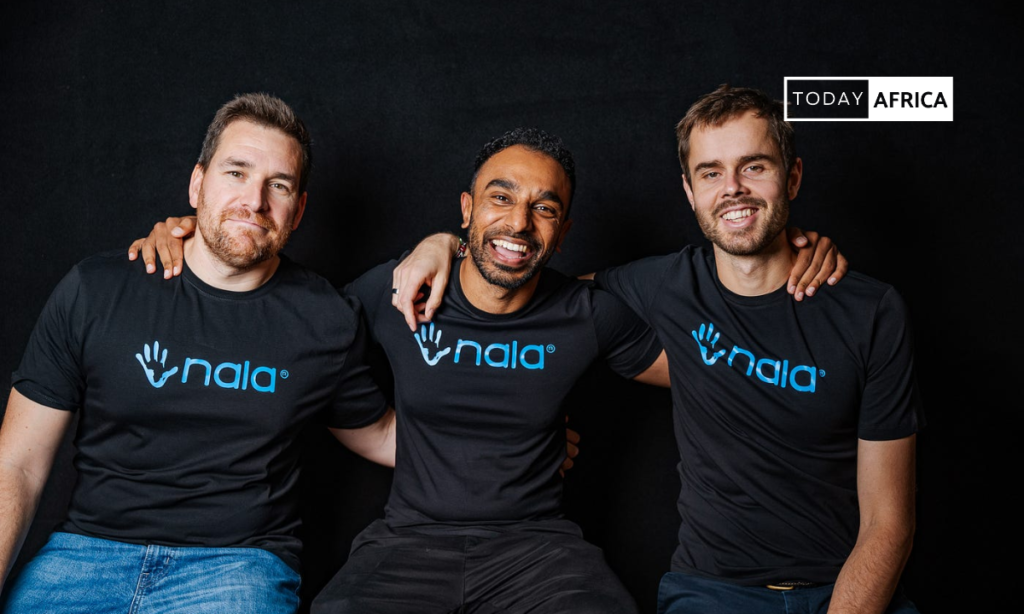
NALA’s funding journey has been marked by persistence and increasingly large bets by top investors.
After bootstrapping through 2018–2019 (including a $50K DFS Lab award and acceptance into Y Combinator), the company’s first major equity funding came in late 2022, when it announced a US$10 million seed round.
The round was led by Africa-focused firms Amplo and Accel, with participation from Bessemer Venture Partners, Y Combinator, and early backers like the DFS Lab. Notable angel investors also joined (e.g., Monzo CTO Jonas Templestein).
This seed funding (after many rejections) validated NALA’s pivot to diaspora remittances. According to reports, NALA’s founders planned to deploy the $10M primarily to expand into new markets (US, UK, Europe) and add African corridors (including Ghana, Nigeria and others).
Funds were also earmarked for technology development (moving beyond relying on third-party rails) and for hiring talent, especially engineers and compliance staff to meet regulatory needs.
For example, NALA used capital to build local infrastructure in each country, integrate directly with mobile money and banking partners, and develop its nascent “NALA for Business” product for diaspora entrepreneurs.
In July 2024, after demonstrating strong traction (10× revenue growth and positive cash flow in 2023), NALA raised US$40 million in Series A funding. This round was led by Acrew Capital, with Amplo, YC, DST Global, and others also participating.
This influx of capital was specifically aimed at two goals: (1) scaling the consumer remittance business beyond Africa’s borders, which the team had just launched in EU markets, and (2) building Rafiki, NALA’s own B2B payments infrastructure.
In practical terms, the new funds fueled aggressive expansion in the UK, US, and EU (e.g., setting up operations, marketing to the diaspora, hiring local staff) and financed Rafiki’s technology and licensing costs (including compliance systems, cloud infrastructure, and integration with stablecoin rails).
The Series A also enabled the hiring of global talent (for example, ex-Wise and ex-Currencycloud executives) to lead finance and partnerships.
Beyond equity, NALA has also leveraged debt financing.
In mid-2026, it secured a $25 million credit facility (with an option to draw up to $50 million) from Mars Growth Capital/Liquidity (an MUFG affiliate). This non-dilutive funding was intended to “pre-fund” ongoing growth and, in particular, to support the scaling of its stablecoin-based rails.
CEO Fernandes noted that the facility acted as a “lifeline,” enabling the business to keep doubling each quarter.
In summary, NALA’s funding timeline is:
- 2018–2019: Angel/pre-seed (e.g., DFS Lab $50K grant, Y Combinator’s $150K) to build initial Tanzanian app.
- 2022 (US$10M Seed): Led by Amplo, Accel, Bessemer, YC, etc. – to build a diaspora remittance app, expand UK/US corridors, hire engineers/compliance.
- 2024 (US$40M Series A): Led by Acrew (with Amplo, DST, YC, NYCA, etc.) to scale consumer market in UK/US/EU and develop Rafiki B2B platform.
- 2026 (US$25–50M Credit): Mars Growth Capital facility (Liquidity/MUFG) to expand stablecoin rails and further build payment infrastructure.
Read also: Inside Crunchies’ Journey: From one outlet in Aba to a national fast-food powerhouse
Business model and revenue streams
Cross-border payments platform
Targeting the African diaspora and pan-African commerce. The primary source of revenue is remittance fees and currency conversion margins.
In practice, when a diaspora customer sends money via NALA, the company charges a transparent fee (often a small percentage of the amount) and applies a competitive exchange rate.
Notably, NALA emphasizes no hidden fees; its marketing stresses “more money goes directly to where it’s needed”. (In fact, some media note NALA advertising “no transfer fees” and “excellent exchange rates”.)
Behind the scenes, NALA earns revenue partly from the spread between the exchange rates it offers and wholesale FX rates, as well as any nominal transaction fees. By scaling volume, these small per-transfer margins become substantial.
Business and infrastructure products
It has introduced “NALA for Business,” allowing African businesses (including diaspora-owned SMEs) to receive and send payments through the platform.
Rafiki itself is an infrastructure product: a payment API targeting other fintechs, banks, and enterprises that want reliable rails into Africa. Rafiki offers services such as mass payouts, virtual accounts, and stablecoin on- and off-ramps. ~
This B2B SaaS model generates revenue through API usage fees and custom integrations. Over time, NALA expects the B2B segment to diversify revenues beyond individual transfers.
Key elements of NALA’s offering include multi-currency accounts (so users can hold both foreign and local currencies), instant payouts to local banks and mobile money wallets, and a user-friendly mobile app.
The business segments are:
- Individual remittances: The flagship consumer app where individuals send money home from the US/UK/EU to African countries. Here, NALA’s value proposition is speed, trust, and low cost. The fee structure is typically a fixed fee plus a percentage, with total costs advertised below competitors’.
- Diaspora financial services: Multi-currency digital wallets that let diaspora workers manage money across borders and sometimes draw local currency interest (though NALA itself is not a bank). These stickier accounts help with user retention.
- Business/SME services: Payment tools for businesses trading internationally. For example, Rafiki’s APIs can handle merchant collections in Africa. (NALA’s CEO described Rafiki as akin to services like dLocal or Airwallex for Africa.)
- Remittance-focused financial products: These may include partnerships for lending or investment services that leverage NALA’s customer base (though such products are not yet reported).
The customer segments are clear: African migrants, foreign nationals of African origin, NGOs and small businesses serving Africa, and eventually local African entities needing outbound payments.
The pricing strategy is to undercut traditional players. Industry data shows the average fee to send from the US/Europe to Africa is about 8–9%.
NALA advertises significantly lower all-in costs (often in the 2–4% range) by using efficient digital rails. In effect, NALA’s unit economics rely on high volume and low margins.
Early on, small volume meant NALA ran out of money multiple times, but as scale increased 34× in 20 months, the economics have improved enough to generate profit.
Compared with legacy money transfer companies (Western Union, MoneyGram, etc.), NALA’s model is entirely digital, has no physical outlets, and leverages mobile money infrastructure.
This gives NALA a cost advantage on African corridors (since mobile networks are pervasive) and a superior UX (instant bank deposits, bill pay via M-Pesa).
Versus pure fintech remitters (Wise, Remitly), NALA offers unique local integrations: for instance, integration with Kenya’s M-Pesa PayBill means senders in the US can directly pay Kenyan phone or utility bills.
NALA’s revenue diversification is therefore growing: customer remittance fees today, B2B integration fees tomorrow, and potentially intermediation in Forex or stablecoin conversions as its rails mature.
Read also: Inside Chicken Republic’s Journey: A homegrown QSR phenomenon
Strategies fueling the growth of NALA
NALA’s rapid ascent owes much to deliberate growth strategies: focusing on trust and reliability, user-centric design, and strategic market choices.
Founder Fernandes often emphasizes that “payments are only 1% built” in Africa, a point that has guided NALA’s approach.
Key strategies include:
- Building trust through compliance and transparency: From the outset, NALA invested in regulatory approvals and security. It became a regulated agent in the UK (partnering with FCA-regulated Modulr) and obtained a Tanzanian PSP license. This official footing gave users confidence. NALA also adopted strict KYC/AML procedures (requiring IDs and SSNs during onboarding), which not only reduced fraud risk but also aligned with the expectations of diaspora customers used to regulated banks. By being fully licensed and transparent about fees, NALA differentiated itself from “backstreet” remittance solutions.
- User-first, simple product design: The NALA app was built from the ground up to be intuitive. Early on, the team focused on mobile-friendly interfaces (including USSD menus for feature-phone users) so even customers in areas with poor internet could transfer money. The onboarding process is streamlined: users link a home-country bank account in a few taps and can see clear exchange rates before sending. The product was continuously iterated based on feedback. For example, after launch, the team rapidly added new receiving channels whenever demand emerged (banks, mobile wallets, or direct bill-payment options). The “Mama NALA” in-app support (a nod to attentive customer care) and localized language support helped drive word-of-mouth among communities.
- Speed and technology infrastructure: NALA has been engineered for speed. By partnering with fast payment networks, NALA achieves near-instant transfers. In Kenya, for instance, NALA routes payments through Pesalink (an instant payments network) via Equity Bank, enabling diaspora transfers to arrive in seconds. In Tanzania and other markets, it integrates directly with mobile-money APIs. Recognizing that standard partnerships had about a 15% failure rate, NALA invested in its own infrastructure (“Rafiki”) to ensure near-zero failure. This technology focus, including 24/7 monitoring and auto-retries, builds trust; as Fernandes put it, “reliability is a premium” for customers.
- Competitive pricing and transparency: NALA aggressively undercuts incumbents. With no hidden charges and lower margins, it advertises “more of your money reaches home”. The pricing leverages volume: NALA passed on cost savings to customers to grab market share, knowing scale would follow. As usage grew (34× volume in 20 months), this strategy became self-reinforcing.
- Focus on underserved segments: Unlike many global fintechs that either skipped Africa (due to perceived risk) or only offered Western corridors to Nigeria/Ghana, NALA deliberately built a service by Africans, for Africans. Founder Fernandes has said he “won’t complain” about problems; he’ll solve them. The team targeted the East African and Tanzanian diaspora first, then expanded to 11 countries as need arose. They also developed features for specific needs (like enabling utility bill payment via M-Pesa in Kenya). This customer obsession resonated with users: they felt heard and often became evangelists.
- Leverage of existing mobile infrastructure: NALA cleverly piggybacks on Africa’s mobile money networks. Rather than building a wallet brand in every country, it plugs into the ubiquitous mobile wallets and banks. This means NALA could expand rapidly across East Africa and beyond without expensive branch networks. For example, through M-Pesa, MTN, and other APIs, it reaches hundreds of millions of users. This infrastructure-first thinking is cited by NALA as a competitive edge.
- Community-driven and brand building: The founders actively engaged with the diaspora community. They ran “Build Our Africa” forums and shared personal stories, which built brand affinity. NALA’s marketing is grassroots, referrals, community events (the NYC launch had Tanzanian MPs), and local ambassadors.
Read also: Inside Glovo’s Journey: From Barcelona errand app to Pan-African delivery powerhouse
Competition in the fintech ecosystem

NALA operates in a crowded and diverse remittances market. Competitors range from global fintech giants to regional startups and century-old money-transfer firms.
Key players include:
- Traditional remitters: Western Union and MoneyGram dominate legacy remittance services. They offer cash pick-up in virtually every African country, but at much higher fees (often >10%). These incumbents have vast agent networks but slower processing and opaque pricing. NALA competes by offering digital payouts directly into bank/mobile accounts at far lower cost.
- Digital remittance apps: Wise (formerly TransferWise) and WorldRemit once provided low-cost transfers, but both now limit or have suspended many African corridors (citing fraud/regulation). Remitly and newer apps (e.g., Flutterwave’s Send) target the diaspora too: for example, Flutterwave Send (launched Dec 2022) allows transfers from the US/UK/Europe to seven African countries, including Côte d’Ivoire and South Africa. Taptap Send (founded 2018) and Sendwave are also popular with the African diaspora, offering app-based remittances to East and West Africa with relatively low fees. These fintech rivals emphasize ease of use and broad support, but often rely on aggregators such as MFS Africa (Onafriq) for payouts. NALA’s advantage over many digital rivals lies in its direct integration and country focus, which enable features such as local bill payment and competitive local rates.
- Pan-African fintechs: Chipper Cash, founded by African entrepreneurs, offers cross-border P2P transfers across 21 African countries and has over 5 million users. It is a unicorn with extensive VC backing. Chipper focuses heavily on Africa-internal transfers, though it recently added some international send corridors. Eversend (Ugandan startup) provides currency exchange and virtual cards, with about 400k users. LemFi (Lemonade Finance), a UK startup, offers multi-currency accounts for the diaspora and recently added send-to-Africa support for 10 countries. Leatherback is a UK-based neobank for African businesses globally. These companies all aim at diaspora banking needs, similar to NALA’s multi-currency features. NALA competes with them by emphasizing remittance first and building deeper payment rails.
- Payment infrastructure providers: Companies like MFS Africa (Onafriq) and TerraPay provide the back-end connectivity that some remittance apps rely on. NALA’s Rafiki, in effect, competes with these by offering a more integrated Africa-Asia network. Grey (South African payments firm) and Eversend overlap in some ways as payment platforms.
Comparisons: In pricing, NALA typically undercuts or matches the lowest-cost players. For example, World Bank data cite an average fee of 9% for transfers to Africa, whereas NALA’s all-in costs can be 2–5%.
Chipper and Flutterwave’s Send promote single-digit fees but are still above NALA’s marketed rates. Speedwise, NALA’s use of instant networks gives it parity with or an advantage over most (remittances with NALA often complete in seconds on mobile money networks).
Western Union and MoneyGram can be slower. On reach, legacy players have more countries (often 100+), while NALA currently covers 20 countries (16 in Africa and Asia via Rafiki). Chipper covers 21 African countries, while Wise/Remitly coverage in Africa is shrinking.
User experience and trust: NALA’s app emphasizes simplicity and uses familiar interfaces (cashless mobile wallet). TechCabal notes NALA was the first Tanzanian startup to integrate Google Pay and Apple Pay, which appeals to the tech-savvy diaspora.
In user experience surveys, diaspora customers cite NALA’s reliability and customer service (local chat support) as advantages. Trust is bolstered by NALA’s FCA agent status and local licenses; in contrast, purely digital newcomers sometimes face skepticism.
Barriers and threats: New entrants must invest in similar partnerships (such as NALA’s Equity/Pesalink deal) or in licensing to reach African markets. NALA’s biggest threat may come from aggressive expansion by large players.
For instance, Flutterwave’s Send could leverage Flutterwave’s vast merchant network. Western Union/MoneyGram could also invest in their own digital channels. Finally, industry trends – such as rising stablecoin use – may disrupt all, but NALA’s early adoption gives it an edge.
Read also: Inside Spiro’s journey: Electrifying Africa, one motorcycle at a time
Expansion across Africa and global markets
NALA’s expansion strategy has followed the flows of capital and talent between Africa and the rest of the world. The company’s initial footprint was its home market of Tanzania.
By late 2021, after securing its Tanzanian PSP license, NALA began serving neighboring markets, first Kenya and Uganda, then Rwanda, Ghana, and South Africa.
A 2022 report noted NALA had operations in six African countries and aimed to reach a dozen by year-end, explicitly mentioning Nigeria as a priority.
The rationale: these markets have growing mobile money usage and significant remittance inflows. For example, Kenya’s inflows reached $4.94 billion in 2024 (up 18%), mostly from the US, the UK, and Europe.
Internationally, NALA first targeted the Tanzanian diaspora in the UK and the US.
Its US launch in March 2022 (with a New York event attended by Tanzanian government officials) marked the move.
Over the next year, NALA expanded to serve all UK and US customers wanting to send to East Africa. By mid-2024, it had also onboarded customers in the EU (initially the UK and select EU countries).
In fact, the company’s milestone chart notes “our product has launched in the UK, US, and EU, enabling sends to 11 African countries”. The focus on these Western markets reflects the high remittance volume from Europe and North America.
NALA also began enabling limited services from emerging-salary African countries; for instance, it now supports sending money from Rwanda and Kenya to the US/UK, serving migrant professionals working in Africa.
Regulatory expansion has been strategic.
In Tanzania, NALA now integrates directly with local banks and telecoms. In Kenya, instead of applying for a standalone license, NALA partnered with Equity Bank and Pesalink to enter the market, a faster route given the CBK’s long approval process.
For its UK/EU presence, NALA operates under a UK EMI license (as an agent of Modulr). In the US, it partnered with a licensed money transmitter.
Each new country required local banking partners and compliance set-ups; NALA’s founding CEO said they “worked closely with regulators” in Tanzania to enable these offerings.
Market prioritization was driven by opportunity and feasibility.
East Africa was targeted first because of Fernandes’ local connections and Tanzania’s favorable business climate. The UK/US came next due to large existing diaspora and relatively clean regulatory environments.
Plans have been reported to expand into France and Germany (for the Congolese and East African diaspora) and, eventually, to the Gulf states. More corridors in Africa will follow as local licenses or partnerships are secured.
Technologically, NALA is building multi-rail infrastructure (Rafiki) to ease future expansion: by late 2026, Rafiki will cover payments across 18 markets in Africa and Asia, enabling a single integration (such as stablecoin settlement) to open multiple corridors.
Local adaptation has also been key.
NALA tailors onboarding and customer service (e.g., language support and in-app “Mama Nala” chat) for each market. It synced with local payment habits: for example, in Kenya, it supports M-Pesa PayBill, so recipients can pay bills as well as withdraw cash.
In Europe, it partnered with local banking networks to allow faster EUR payouts. Additionally, the company is building diaspora accounts, essentially digital banks, in Kenya, Uganda, Tanzania, and Rwanda to cater to locals working in those countries.
Impact on society
NALA’s rise has had tangible social and economic effects across Africa and its diaspora.
Reducing the cost and friction of remittances puts more money in people’s pockets. With roughly 500,000 customers and over $X billion transferred since launch, the savings can be in the hundreds of millions.
For example, just one country, Tanzania, traditionally loses over $3 billion annually in remittance fees; NALA’s transparent model means a notable portion of that stays with families.
The service has broadened financial inclusion.
NALA’s internet-free USSD option lets customers in remote areas send money without data. Integrations with mobile money mean people who lack bank accounts can still receive funds.
The app has also educated many customers on exchange rates and cross-border payments.
For African migrants, NALA provides a simple way to support relatives; diaspora workers report that using NALA “gives peace of mind” because transfers are tracked and prompt. (Trustpilot reviews echo that sentiment, noting the reliability of NALA versus other apps.)
Economically, NALA supports the real economy.
It supplies forex liquidity to local businesses (via diaspora payments and multi-currency accounts) and enables cross-border trade for SMEs. NALA’s Kenyan partnership specifically targets remittance flows, and remittances are a major source of foreign exchange for countries like Kenya.
By improving these flows, NALA indirectly boosts household spending and small-business investment. The tech and regulatory investments (such as building a Tanzanian PSP network) also benefit the fintech ecosystem by creating standards and infrastructure that others can build on.
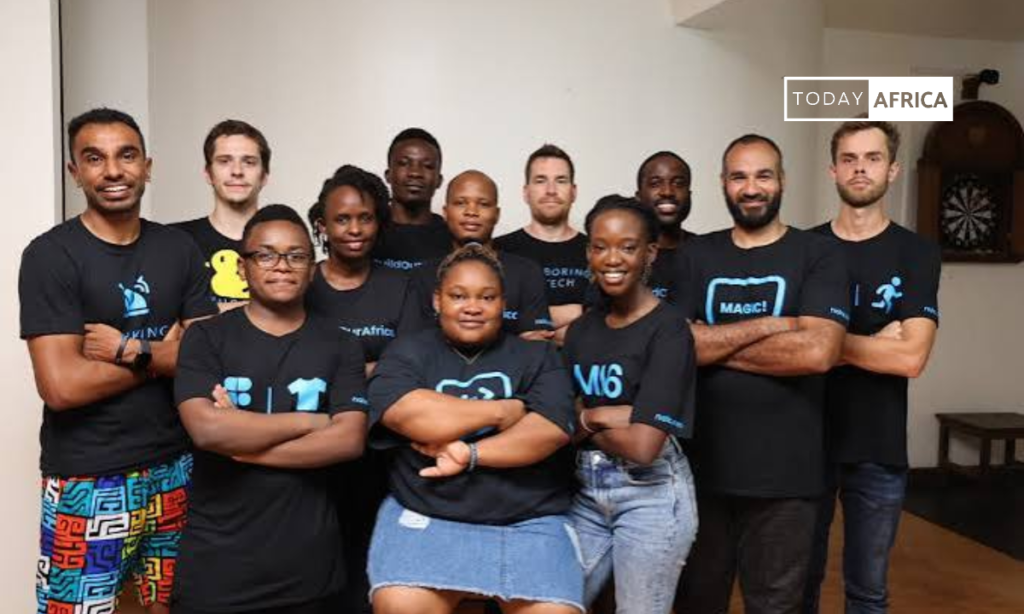
On the job front, NALA itself has created hundreds of skilled positions across Dar es Salaam, Nairobi, New York, and London.
The founding CEO notes the team grew from just 7 people in 2022 to nearly 100 by 2024. These are high-paying jobs in tech, compliance, and customer service that contribute to the local economies.
Moreover, NALA’s success story inspires other startups in Africa – showing that homegrown ventures can attract major investment and build world-class technology.
Read also: Inside Wasoko’s Journey: Transforming Access to Essential Goods and Services
Challenges NALA has faced
Regulatory complexity
Each new country has its own licensing requirements. In Tanzania, obtaining a PSP license required close collaboration with regulators and was a lengthy process.
Kenya’s central bank similarly has stringent controls, so NALA circumvented lengthy approvals by partnering with local infrastructure (Pesalink/Equity Bank).
Ensuring compliance across jurisdictions (e.g., adhering to AML rules in the US, UK, EU, plus each African regulator) has required a robust legal and compliance team.
NALA’s approach was to meet regulators early, for example, working with Tanzania’s government initiatives, so that licenses ultimately favored tech innovation.
Cross-border compliance and KYC
Verifying diaspora customers in multiple countries (some of whom lack traditional identity documents) is tough. NALA addresses this by implementing strict ID checks (even requesting SSNs for US users) and using technology (digital ID verification) to onboard quickly while mitigating fraud.
Currency volatility and FX risk also weigh on NALA’s treasury: fluctuating exchange rates across African currencies require careful exposure management.
The company mitigates this by maintaining balanced pools of local currency in advance and increasingly using stablecoins for settlement to reduce the risk of currency fluctuations.
Competitive pressure and customer acquisition
In saturated corridors, convincing users to switch from incumbents demands strong trust-building. NALA tackled this with partnerships and guarantees.
For example, COO Nicolas Eddy acknowledges that success in Kenya “will hinge on cost and speed” in the face of entrenched players like M-Pesa. To compete, NALA offers promotions (such as zero-fee launches) and localizes its service (e.g., Swahili support, local marketing).
Acquiring customers has been organic (referrals) and paid (digital ads), and the company notes it once “ran out of cash four times” while chasing growth. That scarcity meant NALA was lean in marketing, relying on product virality.
Technologically, scaling a payments platform is difficult
NALA’s engineering team had to grow rapidly (from 7 to 100 staff in 2024) to support new features. Early in 2023 a surge in volume caused outages until capacity was beefed up.
To solve this, NALA invested heavily in cloud infrastructure and built automated monitoring. Hiring skilled fintech engineers (from Wise, Monzo, etc.) helped, but competition for talent in Africa is fierce.
The company overcame this by combining local and international hires and by promoting its mission (impact-driven work attracts many African tech professionals).
Inflation and currency crises
This can slow remittance growth; for instance, a sharp devaluation in Nigeria or Ghana could deter sending. Additionally, global fintech cycles (like the crypto winter) can affect investor appetite.
NALA managed such pressures by diversifying corridors (if one currency wobbles, emphasize sending to another country) and by raising the 2026 credit facility to lock in growth funding even in a tough funding environment.
Lessons for entrepreneurs and Africa’s fintech future
NALA’s story offers many lessons.
- First, solve a real problem you understand. Fernandes built NALA because he felt the pain of remittances personally and culturally. His founder-market fit (Tanzanian diaspora tackling African remittances) was key.
- Second, perseverance through failure matters. NALA was repeatedly denied capital and “ran out of money,” yet each pivot (from domestic payments to cross-border) brought it closer to product-market fit. Entrepreneurs should view setbacks as data; NALA found its winning formula by iterating until its value proposition resonated.
- Third, regulation can be an enabler if embraced wisely. Many startups shun complex legal environments, but NALA made regulators partners – earning its license and even investing in local infrastructure. This foresight gave it a moat (trust and access). Others can learn that an early focus on compliance can differentiate you.
- Fourth, user trust and transparency are critical. In fintech especially, credibility is earned by openness: NALA’s “no hidden fees” stance and strong customer support won loyalty. Entrepreneurs must remember that reputation can make or break a financial service.
- Fifth, technology + local knowledge = advantage. NALA’s strategy combined Silicon Valley engineering (cloud, APIs, data) with African mobile money know-how. This “glocal” approach suggests that future African fintechs should similarly blend world-class tech stacks with regional partnerships (such as NALA’s Equity/Pesalink deal).
From an investor’s perspective, NALA has boosted confidence in African fintech. Its successful fundraises (especially the US$40M Series A) signal that African startups can achieve growth and returns.
This may encourage more funding into infrastructure-first companies, rather than only consumer apps.
NALA also pushes the envelope on remittances: by pioneering stablecoin rails, it shows how future cross-border payments might leapfrog old systems.
Looking ahead, trends like digital identity and blockchain will shape NALA’s path. The company is already exploring digital IDs to simplify the onboarding of migrants.
The stablecoin integration points to a future in which cross-border settlement occurs on-chain, reducing settlement time from days to seconds.
Regulatory developments (such as African Union payments frameworks or open banking initiatives) could open new corridors. NALA’s massive success demonstrates that the next wave of African fintech is not just mobile wallets, but integrated global rails.
As Fernandes notes, the global payments market is only “#1PercentBuilt”; there is enormous room for innovation.
Sources: NALA’s official announcements and blog posts; founder interviews and profiles; venture capital reports and news articles; media coverage by TechCrunch and TechCabal; and industry research such as the World Bank and Rest of World reports.
Leave a comment and follow us on social media for more tips:
- Facebook: Today Africa
- Instagram: Today Africa
- Twitter: Today Africa
- LinkedIn: Today Africa
- YouTube: Today Africa Studio