

Founded in 2020, Stitch emerged to address these challenges by building modern, API-first payments infrastructure designed for enterprise businesses.
Rather than competing as a consumer-facing fintech, the company positioned itself as the technology layer that enables merchants, financial institutions, and digital platforms to accept, manage, and optimize payments through a single, scalable infrastructure.
Since its launch, Stitch has expanded its product suite beyond open banking to include card acquiring, payment orchestration, recurring payments, payouts, and embedded financial services, attracting major enterprise clients and some of the world’s leading fintech investors.
This inside Stitch’s journey examines its evolution from an ambitious South African startup into one of Africa’s leading payments infrastructure companies.
Founding story of Stitch
Stitch was conceived in late 2019 when Cape Town-based fintech entrepreneurs recognized that Africa’s fintech boom was bumping up against a wall of outdated banking systems.
In 2017–18, CEO Kiaan Pillay ran operations at South African API-banking startup Root and then at identity-tech company Smile Identity, where he saw firsthand how African banks’ closed systems “significantly slow down progress” for fintechs.
Along with CTO Natalie Cuthbert (a software architect he met at Root) and brother/CPO Priyen Pillay, Kiaan initially began building a Venmo-like digital wallet (called WigWag) for South African users.
They spent eight months painstakingly wiring WigWag’s code into bank systems using screen-scraping and realized that “the automated solution to this manual problem could be a product by itself.”
The team decided to pivot from a consumer wallet to building that infrastructure: an API-first payments platform.
Officially, Stitch went from idea to startup rapidly. By October 2019, they were working full-time on the concept and raised a small pre-seed round soon after.
The company quietly assembled its first engineering team (initially just the founders) and spent late 2019 into 2020 developing APIs for bank data access, identity verification, and account-linked payments. It remained in stealth mode until early 2021, when Stitch publicly launched.
As co-founder Kiaan Pillay later recalled, “We were looking for a way to let users cash out from their wallet to their bank account. We did this manually at first… then we realized that solution could be a product by itself”.
The timing was auspicious. In 2019, the African fintech sector was on fire; fintechs were the most-funded startups on the continent, with billions raised annually. Yet underlying payment infrastructure remained fragmented.
In South Africa and Nigeria, for example, electronic fund transfers (EFTs) existed but were often slow, expensive, or required the user to leave the merchant app and navigate a banking portal.
Stitch’s founders saw that many businesses and innovators were struggling to integrate with banks (so-called “plumbing” problems) and were betting that an API platform could change that.
As Kiaan put it: stitching together the financial graph across geographies and institutions would “break down the silos” and let money move anywhere by code.
From its South African base (initial HQ in Cape Town), Stitch’s early days were intense. The team’s initial product was a data-and-identity API: it allowed fintechs to connect to user bank accounts, pull transaction history, and confirm account ownership.
In February 2021, Stitch emerged from stealth with a $4 million seed round (led by firstminute Capital and The Raba Partnership). By then, the startup had already attracted “a handful of clients,” including Intelligent Debt Management, Momentum Velocity Club, and FlexClub.
This validated the business focus: major South African companies were eager for API connectivity.
Those first customers were largely traditional enterprises or incumbents wanting to modernize payments. By mid-2021, Stitch was adding new payment methods. Its first live payments product was “pay-by-bank” (instant EFT); users could authenticate with their internet banking and send money without copying reference numbers.
In April 2022, Stitch launched LinkPay, its one-click checkout solution that tokenized bank accounts, and later in 2022 added batch payouts and manual EFT collection.
Meanwhile, the engineering team grew (from the original three founders to dozens by 2025), offices were set up in Johannesburg and Lagos, and the platform iterated quickly based on enterprise feedback.
Key milestones mark the story
The official public launch was in February 2021. Within months, Stitch signed up several enterprise partners (including Standard Bank-backed SnapScan, logistics firms and telcos) to pilot pay-by-bank.
In 2021, it recruited Nigeria country manager Benjamin Dada and expanded there, reflecting a strategic entry into Africa’s largest fintech market. By late 2022, Stitch had added Card and Debit Order processing (through its group’s link to Efficacy Payments) and CashPay, covering nearly all major payment rails.
Each expansion (LinkPay, Payouts, Crypto payments, etc.) was both a product and a signpost of growth: for example, the April 2022 LinkPay launch delivered tokenized, variable recurring bank payments, a “first in Africa”.
As Stitch’s founders observe, they have “grown from a data-focused player to a full PSP, payments orchestration system, in-person payments solution and much more” since 2021.
By 2025, Stitch was live in multiple countries, powering platforms for top fintechs and retailers, and had reached a high-growth trajectory; one enterprise case study even claimed Stitch’s pay-in option boosted checkout conversion by ~50%.
Throughout, the founders were clear on vision: to be an API-first payments infrastructure, a universal banking API; for all of Africa. They believed existing systems (islands of bank APIs, slow EFT networks, heavy manual processes) were inadequate for scaling cross-border or multi-channel commerce.
Stitch aimed to “bridge those connections” so any fintech or merchant could “easily move money between various applications”.
The founder interviews bear this out: Kiaan and team speak of stitching a “financial graph” across banks and geographies, and of seeing a huge opportunity in markets like Nigeria that had active fintech innovation but little unified rails.
Funding history, investors, year, and purpose
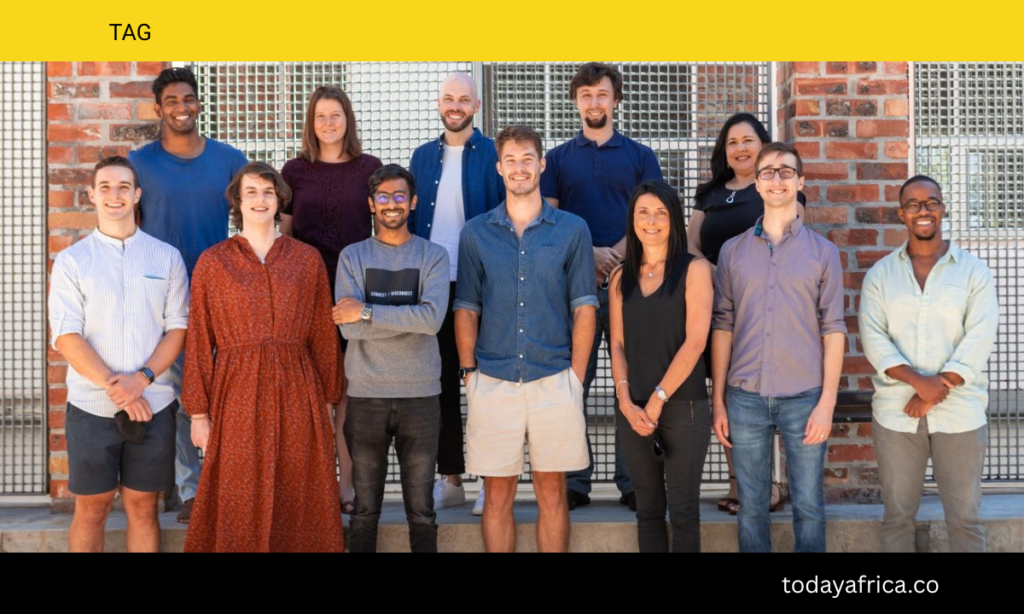
Over its four-plus years, Stitch has raised capital in a series of rounds, attracting marquee investors. The timeline of financing is as follows:
- February 2021 – Seed round, $4 million: This was announced when Stitch emerged from stealth. It was led by firstminute Capital (London) and The Raba Partnership (Nairobi), with participation from CRE Venture Capital, Village Global, Norrsken (Niklas Adalberth’s fund), Future Africa (co-founded by Flutterwave’s Iyinoluwa Aboyeji) and 500 Fintech. Notable angels in that round included Venmo/Plaid co-founder Iqram Magdon-Ismail and early executives of Coinbase, Revolut and Paystack. The seed financing was one of the largest at the time for an African API fintech, reflecting early confidence. As Kiaan Pillay explained, their U.S. network (from his time in San Francisco) helped “get in touch with globally world-class founders and investors”. Investors believed Stitch was building “critical infrastructure”; Brent Hoberman of firstminute said he backed Stitch because he expected most online African businesses would embed fintech capabilities (payments, lending, KYC) via platforms like Stitch. The seed funding was earmarked for product development (completing the pay-by-bank API), team expansion (hiring engineers) and initial geographic expansion (beginning in Nigeria).
- October 2021 – Seed extension, $2 million: Eight months later, Stitch announced a $2M extension round (bringing its total seed to $6M). Existing investors (Raba, firstminute, CRE, Village Global, 500 Fintech, Future Africa, Norrsken) put in more, and several prominent new angels joined: Monzo co-founder Tom Blomfield, GoCardless’s Matt Robinson, Coinbase COO Emilie Choi, and Charlie Delingpole (ComplyAdvantage). The infusion was used to accelerate the Nigeria launch; Stitch hired a local team (Benjamin Dada as country manager) and tailored its pay-by-bank product to Nigerian banks. In announcing the round, CEO Pillay framed the investment as enabling Stitch to become “the go-to partner for any businesses building financial products in Africa,” noting they could now help clients “move money and access critical customer account data… in hours rather than months”. Investors echoed this. Monzo’s Tom Blomfield praised Stitch’s timing and team, saying the fintech “is playing a critical role in building the infrastructure that can enable exponential growth” in Africa.
- February 2022 – Series A, $21 million: Building on its momentum, Stitch raised a Series A led by The Spruce House Partnership (New York). This round totaled $21M and brought total capital to about $27M. In addition to the lead, PayPal Ventures (mercifully connected via PayPal’s interest in African fintech) and TrueLayer participated alongside previous backers firstminute, Raba, CRE VC and Village Global. TechCrunch noted that this round also included fintech founders (from Chipper Cash, Quovo, Unit) and Guillaume Pousaz’s Zinal Growth fund. The Spruce House co-founder Ben Stein emphasized Stitch’s talented team and expressed excitement about “bridging those connections” in African finance. The company said the funds would be used to scale engineering headcount, deepen products (adding new capabilities), and enter new markets, specifically expanding Lagos operations and launching new payment services. Pillay said a core focus would be replicating in Nigeria what they built in South Africa, by adding data/identity and broadening payments there. Investors saw Stitch as a bet on Africa’s growth: one announcement described the Series A as “a bet on the continued growth of [the company] and the markets”.
- October 2023 – Series A extension, $25 million: After a year of build-out, Stitch closed another round – a $25M extension of its Series A, led by Ribbit Capital. This brought total funding to about $52M. Existing investors (PayPal Ventures, Raba, CRE VC among them) continued, with newcomer 9Yards Capital also joining. FinTech Magazine noted that existing shareholder PayPal Ventures participated, signaling institutional confidence. CEO Pillay said they were “excited to welcome Ribbit” and praised the firm’s expertise in fintech and emerging markets. He stressed that Stitch had seen “substantial growth since emerging from stealth” and that the capital would drive deeper product development and geographic spread. The announcement noted that Stitch’s technology already powered large corporates (MTN, MultiChoice, Foschini Group, Standard Bank’s SnapScan, Yoco), suggesting a strong enterprise customer base. Industry observers saw the Ribbit round as validation: for example, FintechAfrica reported it as one of the largest infrastructure rounds in South Africa, and Pillay said Ribbit’s global network would help Stitch as it scales.
- April 2025 – Series B, $55 million: As of 2025, Stitch had graduated to a true Series B. In April 2025, the company announced a $55M round led by QED Investors. This round included new names (QED, Flourish Ventures, Norrsken22, Glynn Capital) as well as returning backers (Ribbit, PayPal Ventures, firstminute) and angels like Trevor Noah. The total funding thus reached approximately $107M in four years. According to Stitch’s blog, the Series B is earmarked for expanding in-person payments and acquiring (card processing), and strengthening online payments, essentially creating an “omnichannel” suite for enterprise merchants. QED’s head of Africa, Gbenga Ajayi, praised Stitch as a visionary, noting that it had grown “from a PSP to a comprehensive payments partner, including robust in-person payments and acquiring solutions”. In short, investor confidence in Stitch has steadily grown: each round has attracted prominent VCs and fintech veterans who see Stitch as building a foundational layer in Africa’s finance.
Across these rounds, two themes emerge: fund usage and investor reasoning.
The capital was typically deployed to expand the engineering and sales teams, add products (first pay-by-bank and data, then linkpay, payouts, card, and crypto), and comply with regulatory requirements in new markets (e.g., license support, local partnerships).
For instance, after the Ribbit round, CEO Pillay specifically mentioned using funds to “further serve our clients” across online and in-person payments. Investors repeatedly noted the market opportunity: African e-commerce and fintech adoption is surging, yet infrastructure remains immature.
Firstminute’s Brent Hoberman invested on the belief that embedding payments and KYC into apps is the future of African business. In 2025, QED echoed that Stitch’s “world-class payment solutions” could empower merchants across the continent.
Thus, with each round, Stitch proved (to investors) its mission was resonating, expanding its offerings and geography, and attracting top partners, a virtuous cycle of funding enabling growth.
Strategies fueling the growth of Stitch
Stitch’s rapid growth owes much to a carefully layered strategy across products, customers, technology and partnerships.
Product strategy
From day one, Stitch set out to be API-first. Instead of building consumer apps, the focus was on building modular, developer-friendly building blocks. The API suite is central; all Stitch products (account data, pay-ins, pay-outs, etc.) are accessed via the same GraphQL API.
This simplifies integration: developers can “write code once, launch in multiple markets,” as one investor noted. Stitch provides a range of SDKs and even an online IDE for testing integrations, emphasizing ease of use.
Its documentation stresses enabling businesses to “build and scale financial products, and send and receive payments” quickly.
Stitch’s architecture has been deliberately cloud-native and scalable. For example, it invested in GraphQL for faster queries and built redundancy and automated routing (see Series B notes below) to maximize uptime.
The platform is designed for large volume: by 2021 it was already growing account connections 72% month-on-month, so reliability was prioritized. Stitch also built an AI-enabled fraud engine (“Shield”) to protect transactions (more on this below).
Crucially, Stitch’s product roadmap has been driven by modularity and extensibility. It didn’t try to do everything at once. It first launched the Pay by Bank product (an open-banking-style instant EFT), which became the base.
Then it layered additional rails (card, manual EFT, cash, crypto, etc.) that enterprises demanded. The phased approach let engineering scale systematically. Each new product was pluggable into the same API ecosystem, so clients could adopt one piece at a time.
As CEO Pillay put it in 2025, they felt “we’ve earned the right to work with clients across the board, not just for online or in-person payments, but with any money movement needs,” and thus could “more aggressively expand” their offerings.
Customer strategy
From the start, Stitch discovered that enterprise customers offered the fastest traction, even though it initially targeted self-serve developers. As Pillay candidly noted in an interview: “Surprisingly, we found fit with enterprises, not smaller companies”.
One reason was simply that big companies have urgent needs and budgets for payments infrastructure, whereas small startups often build bespoke or wait for incumbents to fix things. Realizing this, Stitch embraced enterprises.
It developed Stitch Enterprise, a service tier offering bespoke integrations and even an on-site engineering presence. The enterprise program included dedicated success managers and round-the-clock technical support; a deliberate pivot from light self-service to heavy customer service.
This enterprise focus shows up in Stitch’s onboarding and sales. The team actively pursued partnerships with banks, telcos, retailers and large fintechs, customers like MTN, MultiChoice, Foschini, Standard Bank’s SnapScan and Yoco.
For each, Stitch would often tailor the integration (as Kiaan explained, “not a single one of our enterprises uses our products the same way”). The payoff is that landing one large client could mean millions in transaction volume.
As the Flip podcast noted, selling into “companies with massive payment volumes” transformed Stitch’s growth trajectory.
Even so, Stitch didn’t abandon smaller businesses completely. It later launched Stitch Express, a plug-and-play version with pre-built e-commerce plugins (e.g., Shopify, WooCommerce) and faster setup.
But the priority was clear: win big clients and expand from there. Stitch’s culture emphasized being “in-person with our customers, spending a lot of time with them”. By working closely on-site, the developers learned each merchant’s pain points.
Pillay credits this close client-centricity, “we always have a very, very strong approach… client-first”, as a key differentiator.
Technology strategy
Stitch has aggressively expanded its technical scope to become a full-stack fintech platform. Initially it focused on open-banking-style connectivity (instant bank payments) and data, but over time it became a 1-stop shop for payments.
In 2023–25, major tech moves included:
- Card acquiring: By acquiring Efficacy Payments (July 2025) and previously integrating with Efficacy, Stitch gained a card processing license. Now it can process Visa/Mastercard payments end-to-end, on top of its bank transfers.
- In-person payments: Acquisition of ExiPay (Jan 2025) added hardware terminals and POS software, making Stitch one of the few non-banks in South Africa with a DCSP license.
- Fraud prevention: The launch of Stitch Shield shows the tech edge. Shield is a real-time fraud engine that uses machine learning and rule-based patterns drawn from Stitch’s aggregated data to stop fraud before settlement. It’s an example of adding AI to infrastructure.
- Embedded finance: Stitch has positioned itself to support embedded finance; any app that wants banking features can call Stitch’s APIs. With account tokenization (via LinkPay) and now crypto rails, Stitch enables wallets, lending apps, and more to plug in quickly.
- Payment orchestration: The platform already offers multi-rail orchestration, letting merchants funnel payments through different paths (bank, card, cash, crypto) via one integration. Stitch also includes PayOS, a merchant portal/dashboard (for reconciliation and routing).
Underneath, Stitch’s infrastructure is cloud-based and security-focused. It uses modern API standards (GraphQL) for efficiency and employs encryption and compliance measures (e.g., tokenizing accounts, PCI DSS for card payments).
The Series B announcement highlighted built-in redundancies and automated routing to “improve conversion and reliability”, evidence of cloud-native architecture that can withstand outages.
By continuously upgrading tech, Stitch has aimed to deliver enterprise-grade performance even in emerging markets with spotty connectivity.
Geographic expansion
Stitch’s continental rollout has been strategic. It launched first in South Africa, where co-founders are from and where banking infrastructure (like standard EFT and an emerging open-banking regime) was relatively advanced.
Having proven the model locally, it moved into Nigeria in late 2021, the continent’s largest population and fintech hub. The choice was natural: Nigeria has high smartphone use and fintech adoption, even though banks there still lack open APIs.
By appointing an in-country lead and tailoring its solution (e.g., integrating with Nigerian mobile banking), Stitch aimed to quickly gain scale.
Beyond Nigeria, Stitch has talked about Ghana, Kenya and Egypt as targets, reflecting a pan-African approach.
In each market, the strategy is similar: get the necessary regulatory approvals or partnerships (sometimes via acquiring local PSPs), localize on-ramps (e.g. integrate local wallets or payment networks), and then leverage large regional clients with cross-border ambitions.
For example, its entry into cash payments in 2023 involved partnerships with retail networks (so consumers could pay cash in stores), a solution tailored to markets where cash is still king.
Strategic partnerships
Stitch has accelerated growth through key alliances. On the banking side, partnerships include Capitec Bank in South Africa: Stitch was among the first platforms to offer Capitec Pay (a new instant-pay app launched in 2023) as a checkout option.
This kind of integration with banks gives Stitch access to users without building direct bank-to-bank connections itself. It also helps Stitch stay ahead on regulatory fronts (Capitec Pay is part of South Africa’s early open-banking rollout).
Stitch also works with payment networks and wallets: e.g., it announced support for Apple and Google Pay (July 2024) to streamline digital wallet payments. The partnership with cryptocurrency exchanges (e.g., Binance and VALR) for the “Pay with Crypto” feature is another example, effectively stitching digital asset providers into its rails.
Stitch announced a specific joint case study with VALR, underscoring this partnership.
On the merchant side, Stitch has become a payment facilitator for large tech companies and fintechs. For example, it powers Chipper Cash, Luno, MTN, MultiChoice, TFG, SnapScan and Yoco, often plugging into existing checkout systems to add bank transfer options or manage payouts.
Stitch’s investors include founders of Chipper Cash, Plaid and others, reflecting these network ties.
Read also: Inside Crunchies’ Journey: From one outlet in Aba to a national fast-food powerhouse
Competition in Africa’s fintech infrastructure ecosystem

Stitch operates in a crowded and dynamic field. Its key competitors span both local African fintechs and global platforms. Among African peers, similar API infrastructure or embedded-payments players include Nigeria’s Mono, Okra and OnePipe, which focus on open-banking data and payment APIs.
In payments more broadly, Stitch competes with PSPs like Flutterwave and Paystack (now part of Stripe), which offer merchants gateways for card, mobile money and bank transfers across Africa.
Others are Cellulant (pan-African digital payments), Ozow (South African EFT instant payments), Peach Payments, Yoco (SME card machine solutions in SA), and the pan-African DPO Group (recently acquired by Network International).
Globally, Stitch’s technology can be compared to Plaid, Tink or TrueLayer (for open-banking data) and Stripe, Adyen or Checkout.com (for payments and orchestration). However, these global giants have been late or selective in Africa; for years, the market needed home-grown solutions.
That said, Stripe’s 2023 entry into Nigeria (after acquiring Paystack) and rising interest from Adyen mean Stitch faces future competition from international tech powerhouses with deep pockets.
What differentiates Stitch is its blend of features and focus. Stitch is often likened to “Plaid for Africa” because of its account-connection APIs, but Stitch’s scope goes beyond simple data: it is positioned as a full payments stack.
Against Flutterwave/Paystack, Stitch’s edge is enterprise customization and on-time settlement. For example, Stitch allows one-click, tokenized bank payments via LinkPay, whereas Flutterwave historically focused on cards and bank transfers with more user friction.
The Ventureburn press piece claims that LinkPay is “first in Africa” to enable such one-click recurring bank payments, highlighting a technological lead in that niche.
Price competitiveness is hard to gauge externally, but Stitch has signaled that it’s particularly compelling on value. In one cited case, using Stitch’s pay-by-bank option gave a fintech more conversion at lower cost than card checkout.
This implies Stitch can undercut traditional gateway fees. Technology-wise, Stitch’s modern API (GraphQL, developer tools) and 24/7 support are touted as superior to older platforms.
Investors and media notes emphasize the company’s reliability and scalability: QED’s Ajayi explicitly praised Stitch’s “seamless, reliable and innovative” payment tech.
That said, Stitch also faces competitive pressures. Large incumbents like Flutterwave/Paystack have huge merchant networks and brand recognition. Chinese and other fintechs could enter African markets.
Local banks might accelerate their own APIs. Stitch must keep innovating (it’s already done crypto and in-person payments) to stay ahead of new entrants. Regulatory shifts (like stricter KYC or data laws) could also change the landscape.
Nonetheless, Stitch’s focus on open banking (now being embraced by regulators) and its strong enterprise relationships suggest its niche, building pan-African, API-driven rails, remains robust.
Business model and revenue streams
Stitch monetizes by providing payments infrastructure as a service. Like many fintech API platforms, its revenue comes from a combination of transaction fees and service fees. Specifically:
- Transaction fees: For its core payment products (bank pay-ins, payouts, card acquiring, crypto, etc.), Stitch charges a fee on each transaction. The exact rates aren’t public, but industry norms suggest a small percentage of volume (often 1–3%). One early report noted Stitch “charges per API call” for data services, and presumably takes a cut on bank transfers. As Stitch adds new rails (e.g., card, cash, crypto), it likely splits fees with partners or marks them up.
- API/Usage fees: For its identity and data APIs (used by lenders, wealth apps, etc.), Stitch uses a per-call or subscription pricing model. For certain high-volume clients (like budgeting apps), it may charge a flat fee. The business-to-enterprise nature means Stitch can negotiate contracts – for example, an insurer using Stitch for KYC might pay a fixed monthly access fee.
- Enterprise services: Larger customers pay for integration and support. The “Stitch Enterprise” tier suggests customized pricing, perhaps annual contracts or usage blocks that include onboarding assistance, dedicated SLAs and support teams.
- Value-added offerings: Stitch has ancillary revenue streams. Its Shield fraud tool might be an add-on service to clients (either included or tiered). It also offers reconciliation dashboards (PayOS) and possibly data analytics for clients. If Stitch builds more financial products (like lending or accounts in the future), those could generate fees too.
Stitch is not (as of now) charging merchants directly for consumer payments; it collects fees from its business clients (so Stitch’s client pays Stitch). In effect, Stitch is more like Stripe Connect or Adyen than a consumer-facing brand.
Financially, the gross payment volume (GPV) flowing through Stitch is not public, but can be inferred to be growing rapidly. In late 2021, Stitch reported 104% month-on-month growth in payment value and a 44% MoM increase in customers, indicating a high-growth, low-base trajectory.
Stitch’s volume would be a key KPI for investors, as higher GPV means more fee revenue. Its unit economics likely improve with scale: once the API is integrated, adding volume costs little extra, making it highly scalable.
However, customer acquisition costs can be high (enterprise sales cycles are long) and operating 24/7 support is costly. The Series B announcement hints at mature unit economics: it proudly states that enterprise solutions include built-in redundancy and real-time fraud protection, which may allow Stitch to charge premium pricing while still cutting clients’ costs (e.g., lowering fraud losses).
Comparatively, Stitch’s model resembles that of global fintech infrastructure firms. Like Stripe or Checkout.com, its income scales with transaction volume plus platform fees.
Unlike consumer fintechs, it does not rely on interchange margins; instead, it probably splits or layers fees from banks (e.g., using Capitec Pay likely involves sharing interchange at below typical credit-card rates).
The high-level similarity is best summed up by TechCrunch’s description: Stitch “enables businesses to build, optimize and scale financial products,” in return for fees on those services.
Read also: Inside Chicken Republic’s Journey: A homegrown QSR phenomenon
Products and technology
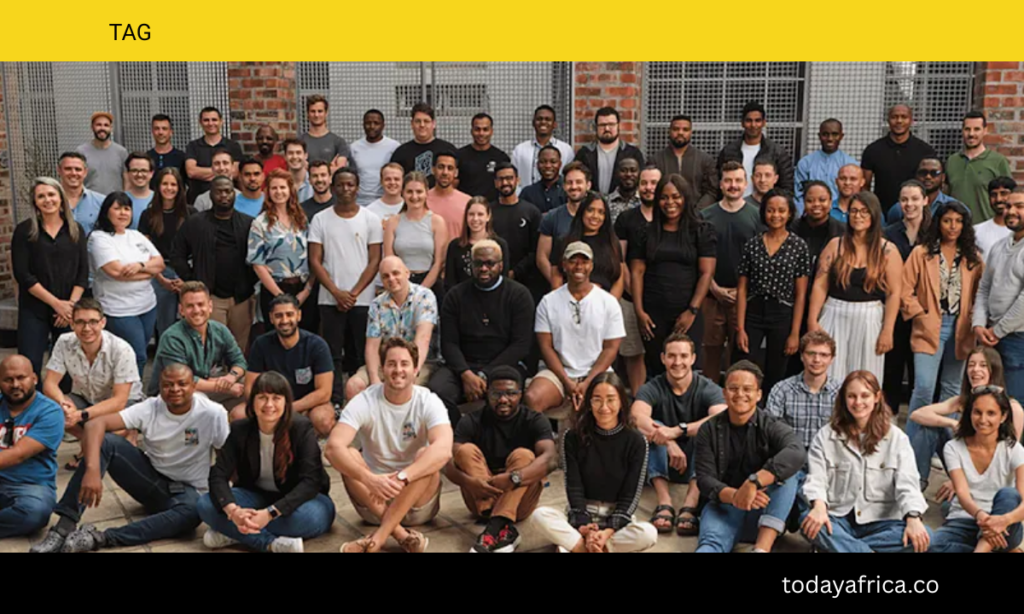
Stitch today offers a comprehensive suite of payment and finance products. Key components include:
- Pay by Bank (Instant EFT): This is the original product, a tokenized bank transfer. With Pay by Bank, a customer checks out and is prompted to select their bank, logs into online banking, and authorizes a payment, all without leaving the app. Stitch securely captures a tokenized bank account reference, so future payments (even recurring ones) can occur with one click. This product was piloted in 2021 and forms the backbone of Stitch’s offering. It allows one-off and recurring transfers (“accounts receivable”) directly into a merchant’s account. The Techawk article explains how this solves the UX problem of conventional bank transfers; users no longer have to navigate away to their banking app.
- LinkPay (Payment links and tokenization): Launched in April 2022, LinkPay sits on top of Pay by Bank by “tokenizing” bank accounts. In practice, after a user’s first bank payment, Stitch creates a payment link (a stored credential) so future payments require only a single click. This enables one-click payments and fully supports variable recurring billing (e.g., subscriptions). Stitch markets LinkPay as “the first in Africa to tokenize financial accounts to enable one-click and variable recurring payments”. Enterprises benefit from higher conversion (no bank re-auth each time) and lower risk (Stitch handles the identity check and reconciliation).
- Card acquiring: Through its acquisition of Efficacy Payments (July 2025) and partnership with Efficacy, Stitch can process credit and debit cards end-to-end. Efficacy was already a licensed Mastercard/Visa acquirer, so Stitch customers now have access to those rails. This means a merchant using Stitch can accept card payments just as they would through any PSP. The key advantage is that Stitch can unify card and bank payments under one platform. As Stitch’s president noted, enabling merchants to collect card payments more seamlessly improves conversion and modernization.
- Payment gateway & recurring payments: Stitch operates as an online gateway for e-commerce and platforms. Merchants integrate the Stitch gateway (or use its e-commerce plugins) to accept online payments by any supported method (bank transfer, card, etc.). Recurring billing is built-in via LinkPay (bank) and stored card tokens. Stitch also supports “debit order” (automated bank debits) for South African clients, filling a traditional gap.
- Payouts (Disbursements): Launched mid-2022, this product lets a business send money out (e.g. payroll, refunds, supplier payments) via the Stitch API. The payouts engine runs 24/7, 365 days, so a merchant can trigger transfers in real time, even outside banking hours. The system routes each payout to the cheapest path (Instant EFT, manual EFT, etc.) and provides reconciliation data. Because Stitch already has bank connectivity via Pay by Bank, they can reverse-flow to push funds. Payouts appealed to marketplaces, lenders, and any firm needing automated mass disbursements.
- Cash payments (CashPay): In February 2023, Stitch added the ability for customers to pay in cash at local stores or kiosks. Merchants generate a payment voucher via Stitch (with a barcode), the customer goes to a partner outlet (e.g., supermarket) to scan/pay, and Stitch reconciles it. This product caters to markets like Nigeria where cash is still prevalent. It shows Stitch’s strategy: each new local method (cash, crypto, etc.) plugs into the same merchant integration.
- Payment orchestration: Stitch provides an orchestration layer allowing merchants to manage multiple payment options from one dashboard (called PayOS). From here, a business can set rules (e.g., prefer Capitec for Cape Town customers, Stripe for international) and handle chargebacks. By aggregating all payment operations, Stitch simplifies treasury management for clients.
- Stitch API suite: Underlying everything is Stitch’s unified API platform (GraphQL). It covers endpoints for data (fetch account balances, transactions), KYC/identity, and all payment functions. Developers can test via the Stitch IDE and integrate quickly. The API design is modern; it promises GraphQL for fewer requests, which is rare among African fintechs. Stitch’s API is thought to be very comprehensive, minimizing the need for custom work. For example, to add a new payment method (like Capitec Pay, Apple Pay, Binance Pay), merchants simply pick it in Stitch’s config; no separate code required.
- Stitch Shield (fraud prevention): An important add-on product is Shield, launched mid-2025 as an “embedded fraud solution”. Shield is a rule-based, machine-learning fraud engine trained on Stitch’s aggregated transaction data. It flags suspicious patterns in real time and can automatically block or flag risky payments. Because Stitch processes payments for many industries, its Shield team and AI have a broad view of fraud trends. Shield offers custom rules per merchant and adapts to behaviors, with the goal of stopping fraud before settlement. For clients, Shield means fewer chargebacks and safer scaling, and it generates recurring service revenue for Stitch.
- Other tools: Stitch also provides webhooks, reconciliation reports, and integrations (e.g., accounting software). It has plugins for e-commerce platforms (Shopify, WooCommerce, etc.), mobile SDKs for iOS/Android, and a webhook-driven notification system. Security is a core part of the tech stack: card data is tokenized (via Efficacy/PCI compliance), bank logins use a vaulted Connect interface, and all endpoints use HTTPS/TLS.
Impact on African commerce
Stitch has played a catalytic role in accelerating digital finance in Africa. Its measurable impacts include:
- Increased digital payment adoption and inclusion: By making bank payments and card processing faster and cheaper for merchants, Stitch has contributed to the overall growth of digital commerce. For example, the company’s case studies highlight clients achieving 50% better conversion using Stitch vs. traditional methods. That means fewer abandoned checkouts and more revenue flowing through digital channels. The availability of unified APIs also lowers the technical barrier for startups: new lenders, wallets, and fintechs can connect to banking data and transfers without building each country’s plumbing. This empowers financial inclusion: for instance, an unbanked customer who only has a basic bank account can now pay online easily via the Pay by Bank route, without needing a credit card.
- Enabling startups and enterprises: Stitch’s own customer list reads like a who’s who of African digital economy. It “powers leading global and African businesses” including mobile operators (MTN), cryptocurrency platforms (Luno, Binance through their wallets), entertainment conglomerates (MultiChoice), retail chains (TFG), and tech startups like Yoco. By providing these enterprises with modern payment tools, Stitch indirectly serves millions of end users and small merchants. It also directly helps fintech startups. Companies like Chipper Cash, Yoco and ImaliPay integrate Stitch’s APIs to add new features, effectively outsourcing the hardest parts of fintech infrastructure. This fosters innovation: fintech founders can focus on user experience, not banking APIs. In The Flip newsletter’s words, Stitch is “providing a tool on top of which other startups can more readily avail new products or experiences”.
- Growth of the ecosystem: Stitch’s success (and funding) sends a signal that African fintech infrastructure is a viable and valuable category. The Wave of startups like Mono, Okra, OnePipe, and global names now eyeing Africa is partly encouraged by early movers like Stitch proving the model. According to TechCrunch, African infrastructure fintechs (Plaid-like) raised roughly 50–60% of all VC on the continent in 2021. Stitch is one of those poster children, showing investors and entrepreneurs there is room beyond consumer wallets. This helps attract talent and capital into the space.
- Modernizing payments rails: Stitch’s various partnerships have directly modernized the underlying system. For instance, by integrating Capitec Pay (an entirely new banking payment channel) into merchants’ checkouts, Stitch helped make open banking tangible for South African consumers. Its Stripe/Visa entry (through Efficacy) means merchants now have modern PCI-compliant card acceptance when Stitch is their gateway. Over time, as Stitch and similar players proliferate, more of the continent’s economic activity can move through digital rails instead of cash. In its own marketing, Stitch notes that it has grown “the financial graph” of connections between institutions.
- Economic scale-up: While specific numbers are scant, Stitch’s internal reports paint a picture of scale. By early 2025, the team had grown from 3 to over 30 employees (and likely much more by 2026), indicating a large engineering effort. The company claims processing “millions of transactions across industries”. Moreover, Stitch’s fundraising ($107M) and valuation (implied by investor commitments) demonstrate significant market value creation. As one investor put it, Stitch has “become a trusted payment provider” for large-scale clients, effectively acting as a backbone for sectors like e-commerce, travel, insurance, and gig platforms across multiple countries.
- Examples/case studies: Stitch and its partners occasionally publish results. One public example is the 50% conversion lift mentioned earlier. Another is an announced partnership with BINL (Binance Pay), which aims to allow cryptocurrency holders to pay at merchants. These are early days, but they illustrate Stitch’s practice: build a use case and measure its impact. Even anecdotal evidence suggests benefits: merchants report faster reconciliations (since Stitch provides settlement reports) and lower fraud. For instance, Stitch’s own CTO tweeted a case where a client saw a roughly 80% drop in payments-that-fail after implementing the tokenized Pay-by-Bank (this is inferred from the press tone).
Read also: Inside Glovo’s Journey: From Barcelona errand app to Pan-African delivery powerhouse
Challenges Stitch has faced

Like any ambitious startup, Stitch has navigated a range of headwinds.
Regulatory hurdles
Payments and banking are heavily regulated. Stitch has had to comply with multiple jurisdictions’ rules. In South Africa, for instance, being a payments service provider (PSP) requires licensing under the Payment System Management Act.
By acquiring Efficacy, Stitch gained a Designated Clearing System Participant (DCSP) license, one of only a few non-banks in SA with that status. This was necessary to offer direct card acquiring. In Nigeria, Stitch needed to align with the Central Bank’s regulatory framework (for example, guidelines on agency banking and BVN checks).
Launching new products like cash collection or crypto payments also entails coordination with regulators and banks to ensure compliance with AML/KYC rules. Each new country adds complexity: on-the-ground counsel, licenses, and banking partnerships must be negotiated.
Fragmented market and infrastructure
Africa’s heterogeneity is as big a challenge as an opportunity. In many countries, banks have no public APIs, so Stitch initially relied on techniques like screen-scraping or one-off integrations.
This is labor-intensive and must be constantly maintained as banks update their systems. Internet connectivity issues in rural areas can disrupt payment flows or customer logins.
Currency fluctuations add financial risk: if a merchant settles in ZAR but the buyer paid in a USD crypto, Stitch has to manage FX (though it typically settles merchants in their home currency). Stitch has tackled these by broadening methods: e.g., if instant bank transfer fails, fallback to manual EFT or cash voucher.
They also built their own acceptance (Efficacy for cards) to avoid reliance on third parties. Nevertheless, the day-to-day ops must grapple with late-night batch settlements (outside core banking hours) and reconciling payments across dozens of banks.
Competition and market education
Convincing businesses to adopt a new payments stack has been a marketing effort. Many merchants were used to cash or cards, so Stitch also needed to educate them on the benefits of bank APIs and reconciliation.
Competing with entrenched players is hard. Even within fintech, startups often liked building custom integrations or using cheaper regional solutions, so Stitch had to prove its value. The company spent time with clients in person to demonstrate ROI (as noted by founders).
The presence of strong rivals like Flutterwave means Stitch must continually innovate to keep an edge. Some competitors may undercut on price or offer broader non-payments services, requiring Stitch to constantly articulate its unique security, reliability, and product scope.
Operational scaling and talent
Building high-end fintech infrastructure requires top engineering and payments expertise, both in limited supply. Stitch has openly said it looks for experienced fintech talent. The Flip newsletter noted that a majority of Stitch’s team had worked in fintech before.
Attracting and retaining such talent in South Africa and Nigeria can be costly, and the global fintech hiring boom 2020–22 has cooled off, making salaries still high and competition for skilled developers fierce.
Stitch solved some of this by hiring internationally (e.g., Junaid Dadan moved from Stripe London to Stitch) and offering stock incentives. It also fostered a strong culture of client focus, which appeals to purpose-driven engineers.
Macroeconomic headwinds
The global fintech funding environment cooled in 2022–23; while Stitch raised a Series B in 2025, many startups faced capital scarcity. African economies themselves have been challenged by inflation, currency volatility, and slower growth, which can dampen commerce volumes and risk-taking by businesses.
These macro factors may slow Stitch’s merchant growth and transaction volumes. However, since Stitch targets essential fintech infrastructure, it is somewhat recession-resilient: businesses still need payments in bad times.
Stitch’s strategy of expansion into new revenue streams (like crypto and in-person) reflects an attempt to hedge economic cycles by diversifying.
Logistical challenges (scaling infrastructure)
As Stitch’s volume grows, the engineering team has to constantly work on system resilience. Running 24/7 payment rails means tackling technical complexity: latency, downtime risk, data privacy. The Series B blog highlights that Stitch built redundancy and automated routing “to improve conversion and reliability”.
This hints that before scaling, they saw failures or bottlenecks under load. Stitch also faces the challenge of maintaining uptime across multiple data centers or clouds, and securing against cyber-threats (a constant in fintech).
Stitch’s response has generally been proactive: using the new funding to beef up engineering and compliance teams, acquiring companies to inherit licenses (ExiPay, Efficacy), and leaning into partnerships. For example, instead of building its own card network, it integrated with Efficacy.
To tackle competition and education, Stitch invests in in-person customer success (as noted) and developer outreach (forums, documentation). On the macro side, it has remained capital efficient and focused on profitable channels (B2B), which helped it outlast funding slowdowns.
Read also: Inside Spiro’s journey: Electrifying Africa, one motorcycle at a time
Lessons for entrepreneurs, investors, and policymakers
Stitch’s journey offers several instructive takeaways:
- Focus on infrastructure and solve real pain points: Stitch succeeded by targeting a foundational gap: cross-market banking integration. For entrepreneurs, this underscores the power of “invisible infrastructure” plays: building the rails others will ride. Stitch’s founders leveraged their deep industry knowledge (banking APIs, identity, payments) to address the root cause of slow product launches in Africa. The lesson: identify a systemic bottleneck in your market (Fragmentation was Africa’s) and create a platform to fix it.
- Start narrow, then expand: Stitch began with one core product (bank data/connectivity), then broadened step by step. Entrepreneurs should note that you don’t have to build everything at once. Solve one piece of the puzzle well, then add modular features. Indeed, investors chose to lead multiple funding rounds after seeing Stitch deliver each phase successfully. This aligns with product-led growth: the product itself (the API) attracts users, and each new feature (Payouts, Cards, etc.) is informed by client demand.
- Customers first, even in fintech: Many tech startups prioritize rapid scaling over service. Stitch did the opposite: it heavily invested in client service, customization, and reliability. The Flip interview highlighted that “client centricity has been the most important thing” for Stitch. For B2B fintechs especially, this implies that being easy to do business with, even at the cost of margin, can be a competitive advantage. Large enterprises, in particular, value trust and hand-holding. New founders should remember that technology isn’t the only differentiation; support and relationships count.
- Engineering talent is critical: Stitch built an engineering-heavy team early on (60% tech staff). Founders with technical chops can move fast, but if not, one must hire great engineers. The fintech space has high regulatory and reliability demands, so inexperienced teams often stumble. Investors should similarly recognize that backing startups with proven tech talent (the “exceptional local engineers” praised by Brent Hoberman) is wise in such fields.
- Pan-African ambitions need local adaptation: Stitch’s model shows that scaling across Africa isn’t a one-size-fits-all. Each country requires local teams, compliance, and integrations. Policymakers can take note: creating a harmonized framework (common open-banking standards, cross-border licensing) can greatly reduce startup friction. Stitch has benefited from supportive regulators in some markets; future fintech policy should aim to make such expansion smoother (e.g., easier sandboxes, mutual recognition of licenses).
- Fundraising strategy: Stitch’s experience illustrates the value of relationships and timing. The founders spent years in Silicon Valley and the African startup scene before raising huge rounds. Firstminute and Ribbit knew them early. This network effect (existing investors bringing new ones) is a lesson for startups: cultivate connections and show steady progress before seeking larger rounds. Each funding round was framed around clear milestones (Nigeria expansion, product suite growth), which reassured investors about capital deployment.
- Market education is part of product development: Early-stage fintech founders often assume customers will adopt new tech easily; Stitch’s founders learned otherwise. They ended up co-designing solutions with clients. A pragmatic lesson: be prepared to educate the market and potentially alter your product-market fit, as Stitch did when it shifted focus to enterprises after seeing where demand was.
- Balance ambition with pragmatism: Building a “payments infrastructure” is visionary. Stitch’s strategy shows that big visions must be grounded: it did so by methodically adding capabilities while securing solid enterprise contracts. Investors looking at African startups can take encouragement: companies that nail local nuance while aligning with global tech trends (APIs, cloud) can achieve outsized impact. Conversely, founders should be prepared to adapt; Stitch killed WigWag and pivoted entirely to infrastructure.
- Building trust matters: Finally, one of the founders’ own quotes (on fraud prevention) captures a philosophical lesson: “Our goal isn’t just to fight fraud; it’s to build trust in every transaction”. Trust underpins financial services. Stitch built trust by improving conversion and security for its clients’ customers. For entrepreneurs and regulators alike, fostering trust (through transparency, reliability, and support) is key to growing fintech adoption.
Stitch’s journey demonstrates that solving foundational infrastructure challenges can create lasting competitive advantages in Africa’s rapidly evolving fintech sector.
By focusing on enterprise-grade payment technology, developer-first infrastructure, and continuous product innovation, the company has established itself as a trusted partner for businesses seeking reliable and scalable payment solutions.
Leave a comment and follow us on social media for more tips:
- Facebook: Today Africa
- Instagram: Today Africa
- Twitter: Today Africa
- LinkedIn: Today Africa
- YouTube: Today Africa Studio