
Africa’s businesses are often described as operating in high-growth markets. Yet many firms are still moving goods through transport systems that make growth slower, riskier, and more expensive than headline economic numbers suggest.
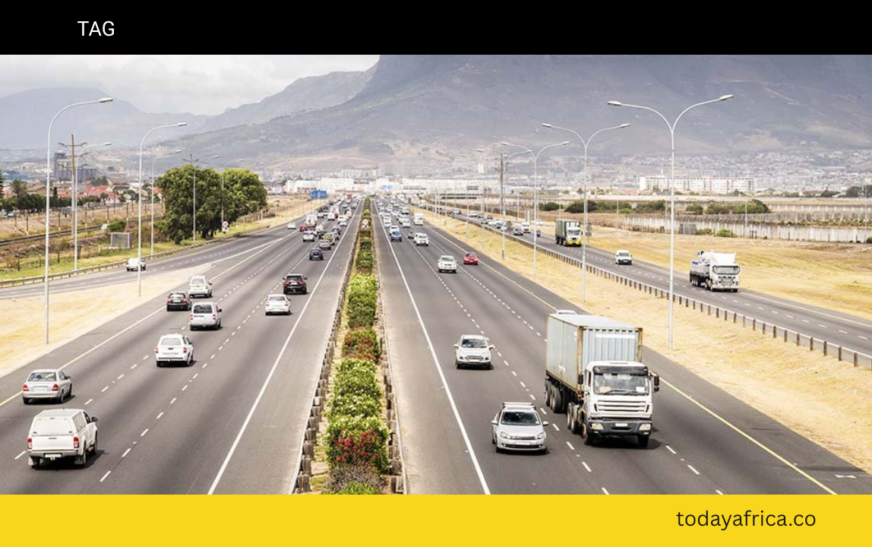
The cost is visible in product prices. UN Trade and Development estimates that road transport accounts for about 29% of the price of goods traded within Africa, compared with roughly 7% for goods traded outside the continent. Poor roads are therefore not simply an inconvenience. They operate as a hidden tax on African commerce.
That tax is becoming more important as the African Continental Free Trade Area promises to connect previously fragmented national markets. Recent World Bank modeling estimates that trade reforms under the AfCFTA could increase African exports by 3.4% and GDP by 0.6%. Combining those reforms with the completion of priority continental road projects could raise exports by 11.5% and GDP by 2%.
The message is clear: Africa can remove tariffs and harmonize regulations, but businesses will not experience a truly continental market until goods can move across it reliably.
Africa’s market is expanding faster than its transport system
The economic shift is not simply that Africa needs more roads. The bigger change is that African companies are selling into larger, more connected markets while depending on transport networks designed around smaller national economies.
Regional trade also carries greater industrial value than many people assume. Processed and semi-processed products make up approximately 61% of Africa’s regional exports.
This means better transport links would support manufacturers, food processors, pharmaceutical companies, retailers and other businesses creating value beyond raw commodity exports.
There has been progress. Governments and development institutions have financed major highways, bridges and cross-border corridors.
The African Development Bank approved nearly $18.6 billion for 258 transport interventions between 2012 and 2023, with road infrastructure receiving about 70% of the funding by value.
The AfDB also reported that more than 1,200 kilometers of cross-border and national roads were constructed or rehabilitated through its investments in 2024. But the overall system remains uneven.
Major corridors may be paved while connecting roads, rural routes and urban delivery networks remain unreliable.
A company may therefore move goods efficiently for most of a journey, only to lose hours on the road connecting a farm, factory, warehouse or border town to the main highway.
Read also: African unicorn list 2026
Poor roads function as an invisible business tax

The direct costs of a bad road are easy to identify. Trucks consume more fuel. Tires and suspension systems wear out faster. Journeys take longer, vehicles make fewer trips, and businesses spend more on repairs.
The indirect costs are often larger. Companies must hold more inventory because delivery times are uncertain. Retailers lose sales when stock arrives late. Farmers accept lower prices because buyers must account for transport risk. Food processors face spoilage, while manufacturers may stop production when imported components fail to arrive.
Reliability matters as much as distance. The World Bank’s 2025 Logistics Performance Indicators report noted that “an increase in inland transit time of one day reduces exports by 7%.”
For a large multinational, an unexpected delay may be absorbed across several warehouses, suppliers and transport providers. For a small African business, the same delay can interrupt cash flow for an entire week.
Poor roads also increase the amount of working capital required to operate. A distributor that cannot predict when its next shipment will arrive has to order earlier and hold more stock. Money that could have financed hiring, marketing or expansion remains trapped in inventory.
The result is a structural disadvantage. African businesses do not only pay to manufacture or purchase a product. They also pay for the uncertainty involved in moving it.
SMEs carry the heaviest burden
Small and medium-sized enterprises are particularly exposed because they usually lack the bargaining power and infrastructure available to larger firms.
An SME may not own a truck, negotiate bulk freight rates or operate warehouses in several cities. It often buys transport one journey at a time. When road conditions deteriorate, transport providers pass higher fuel, maintenance and delay costs directly to the customer.
Smaller businesses also tend to ship lower volumes. This raises the transport cost attached to each unit of inventory and makes it more difficult to compete with larger companies that can fill entire trucks.
The burden is especially visible in agriculture. A poor feeder road can disconnect productive farming communities from processors and urban markets, even when a major highway passes nearby. Farmers receive less because traders expect delays and losses. Consumers pay more because fewer products reach the market in good condition.
This weak connection between production zones and commercial centers limits business formation. A rural entrepreneur may have access to land, labor, and customers but still struggle to build a scalable company because moving goods remains unpredictable.
Road quality therefore influences which businesses survive long enough to grow. It also shapes where formal enterprises emerge and where informal trade remains the only practical option.
Startups cannot build around physical infrastructure forever
Africa’s digital economy has created platforms for e-commerce, food delivery, mobility, freight matching and business-to-business distribution. These companies can use software to organize demand, optimize routes and track vehicles. They cannot use software to remove a flooded bridge or repair a collapsed road.
Poor roads weaken startup economics in several ways. Drivers complete fewer orders each day. Vehicles require more maintenance. Delivery windows become harder to guarantee, and companies must spend more on customer support, refunds and failed deliveries.
Low order density creates another challenge. A logistics startup needs enough transactions within a defined area to spread the cost of drivers, warehouses and technology.
When roads make certain neighborhoods, towns or rural communities difficult to reach, the company’s effective market becomes smaller than the population figures suggest.
The impact extends beyond logistics startups. Digital lenders depend on merchant sales and repayment cycles. Online marketplaces depend on dependable fulfillment. Business software providers rely on customers that can grow their physical operations.
A startup may appear asset-light on a pitch deck, yet its growth can still depend on trucks, warehouses, fuel stations, bridges and all-season roads. As a result, infrastructure constraints eventually appear in customer acquisition costs, operating margins and expansion timelines.
Read also: Is “banking the unbanked” a cliché, or should Africa expect better?
Investors are pricing geography into growth
Investors assessing African companies increasingly need to examine more than revenue, margins and market size. They must understand the physical routes connecting a company to suppliers and customers.
Two businesses selling the same product in similarly sized markets can have very different growth prospects. One may sit near a reliable port and regional highway. The other may depend on a single road that becomes difficult to use during the rainy season.
Transport exposure affects inventory requirements, insurance costs, asset depreciation, and the number of markets a company can serve profitably. It can also influence valuation.
A company operating near a functioning corridor may deserve a stronger growth premium than one whose expansion depends on unresolved public infrastructure problems.
Yet improved roads can quickly change commercial geography. The AfDB’s evaluation of transport investments found that the Arusha-Holili/Taveta-Voi road project reduced travel time between Arusha and Mombasa from six hours to four.
It also reported that the Mombasa-Nairobi-Addis Ababa corridor cut travel time by roughly one-third and was associated with a significant rise in trade volumes between Ethiopia and Kenya.
Roads alone, however, are not enough. UNCTAD estimates that technical requirements, inefficient customs procedures and other non-tariff barriers restrict African trade three times more than tariffs do. ,
The strongest returns therefore come when road investment is combined with faster borders, predictable regulation and efficient logistics services.
The opportunity is moving toward corridors and supporting services

Africa’s road deficit creates costs, but it is also opening a sizeable business opportunity. The most immediate opportunities are not limited to constructing new highways.
Road maintenance, drainage systems, climate-resilient materials, bridge monitoring and geospatial mapping will become increasingly important as extreme weather places more pressure on existing infrastructure.
Private opportunities are also emerging around major trade corridors. These include warehouses, truck parks, cold-chain facilities, repair centers, fuel networks, freight platforms, cargo insurance and border-processing services.
Agricultural belts connected to secondary cities may offer particularly strong potential. A reliable feeder road can make previously isolated production commercially viable. That, in turn, creates demand for collection centers, processing plants, packaging businesses and financial services.
The investment case is likely to favor targeted networks rather than equal spending everywhere.
World Bank research suggests that a relatively small number of high-value links connecting ports, cities and productive regions could capture a large share of the economic benefits from improved market access.
Finding these opportunities requires more than national-level growth projections.
Companies need to know which corridors are improving, where logistics costs are falling, which sectors are clustering around new routes and which regions remain exposed to infrastructure failure.
Our Market Intelligence Studio is designed for this kind of decision-making. Through country briefs, market maps, sector research and opportunity reports, it helps organizations interpret the economic signals behind Africa’s markets rather than relying on headlines alone.
Read also: Why Africa’s GDP growth doesn’t translate into jobs
Better roads could redraw Africa’s business map
Poor roads do not merely delay trucks. They determine how far a business can sell, how much inventory it must hold and whether an otherwise promising market can be served profitably.
The AfCFTA is creating the legal framework for a larger African market. Infrastructure will determine how much of that market becomes commercially real.
Better roads would lower costs, improve delivery reliability and connect businesses to customers beyond their immediate cities. They would also make investment opportunities visible in regions that currently appear too remote or expensive to serve.
Africa’s next phase of business growth will not be shaped only in financial centers, technology hubs and government offices. It will also be shaped along highways, feeder roads, border crossings and transport corridors where the continent’s economic ambitions meet physical reality.
Leave a comment and follow us on social media for more tips:
- Facebook: Today Africa
- Instagram: Today Africa
- Twitter: Today Africa
- LinkedIn: Today Africa
- YouTube: Today Africa Studio