

Africa’s startup story is often told through pitch decks, mobile apps, founder ambition and venture capital headlines.
But the harder truth sits underneath the software. In African markets, infrastructure still decides who scales, who survives, and who quietly disappears after a promising launch.
The latest funding cycle makes that clear. African tech startups raised about $4.1 billion in equity and debt funding in 2025, according to Partech, the strongest year since 2022.
But the recovery was uneven. Debt financing reached a record $1.6 billion, while equity funding remained broadly stable, showing that investors are becoming more selective and more focused on businesses with assets, cash flow, and infrastructure-linked revenue models.
That is the real shift. Africa’s startup market is moving from the age of “growth at all costs” to the age of operational depth.
Investors are no longer only asking whether a company can acquire users.
They are asking whether it can move goods across bad roads, keep servers online, manage power outages, reach customers who cannot afford smartphones, and collect payments across fragmented financial systems.
The geography of funding shows the same pattern.
In 2025, the so-called Big Four startup markets, Nigeria, Kenya, Egypt and South Africa, attracted 82% of all startup funding on the continent, according to Africa: The Big Deal.
Those countries do not dominate because they have the only talented founders.
They dominate because they have relatively deeper layers of banking rails, mobile money networks, logistics providers, data connectivity, developer communities, regulators, accelerators, and corporate customers.
Infrastructure, in other words, is not the background. It is the market.
The new startup divide is physical, not just digital

For years, African startups were praised for “leapfrogging” weak infrastructure.
Mobile money could bypass bank branches. E-commerce could bypass formal retail. Solar home systems could bypass the national grid.
That argument was not wrong, but it was incomplete.
Leapfrogging still needs something to leap from.
- A fintech company needs reliable identity systems, mobile networks, and bank settlement rails.
- A healthtech company needs cold chains, clinics, data protection rules, and working devices.
- An e-commerce platform needs warehouses, roads, fuel, riders, and address systems.
- An AI startup needs cloud infrastructure, local data, stable power, and affordable broadband.
This is why the infrastructure gap now functions like an invisible tax on innovation.
The African Development Bank has estimated Africa’s infrastructure needs at $181 billion to $221 billion per year between 2023 and 2030.
That gap shows up inside startup income statements as generator costs, failed deliveries, higher customer acquisition costs, expensive data hosting, delayed inventory, and thinner margins.
Energy remains the clearest example.
The 2026 Tracking SDG7 report found that 655 million people globally still lacked access to electricity in 2024, with Sub-Saharan Africa bearing a disproportionate share of the gap.
The WHO summary of the report puts the regional figure at over 560 million people without access to electricity and 970 million without access to clean cooking.
For startups, unreliable electricity is not just a development statistic. It changes the business model.
This is why companies solving infrastructure pain often look more investable than companies simply building apps on top of broken systems.
Read also: How Karabo Motsamai started Walker Solar Bakery in Lesotho with just $842 and a solar cooker
Digital growth still depends on old-school foundations
Africa’s digital economy is growing, but the user base is constrained by affordability and access.
GSMA’s Mobile Economy Africa 2025 report said 416 million people were using mobile internet in Africa, yet almost 75% of the population remained unconnected.
It also found that 960 million people were not using mobile internet despite living in areas with coverage, largely due to barriers such as device affordability and digital skills.
That statistic should worry any founder building for scale. Coverage alone does not create demand.
A tower can exist in a community where people still cannot afford smartphones, data bundles, or digital literacy training.
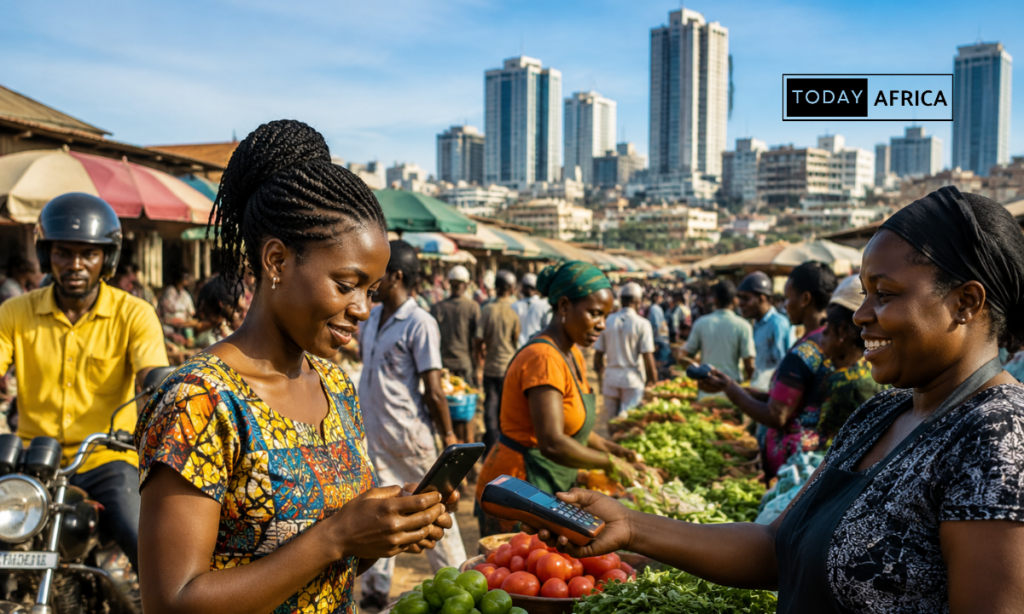
A payment app can be elegant, but if users live in a cash-heavy economy with weak dispute resolution and limited trust, adoption will be slower than the spreadsheet suggests.
The same logic applies to cloud and data infrastructure. Africa still accounts for less than 1% of global data centre capacity, according to Reuters reporting on IFC’s $100 million investment in Raxio Group.
The IFC deal aims to expand data centers in Ethiopia, Angola, Côte d’Ivoire, Mozambique, the Democratic Republic of Congo, and Uganda.
Reuters also noted that mobile data usage on the continent is rising by about 40% annually.
That is a huge opportunity, but also a constraint. Local data centers reduce latency, improve cybersecurity, lower some hosting risks, and support regulatory compliance.
Without them, startups often build African products on infrastructure physically located elsewhere, which can raise costs and reduce performance.
Big technology firms have noticed the gap.
Google said in July 2026 that it had surpassed its five-year $1 billion investment target for Africa, including infrastructure and AI development, following the launch of a cloud region in Johannesburg in 2025.
The signal is clear. The next phase of African tech growth will not be built only by consumer apps.
It will be built by power systems, fiber networks, data centers, payment switches, ports, warehouses, and regulatory frameworks.
SMEs feel the infrastructure gap first
Startups attract headlines, but small and medium-sized enterprises endure the daily burden of infrastructure weaknesses.
The World Bank reported in 2025 that transportation inefficiencies are causing major food losses in Africa, with 37% of locally produced food lost in transit due to slow processing, poor infrastructure, and non-tariff barriers.
That loss is not just a food security problem. It is a business formation problem.
When logistics are unreliable, SMEs struggle to plan. When SMEs struggle to plan, startups serving them face higher churn, lower transaction volume, and weaker credit data.
This is where the old separation between “traditional businesses” and “tech startups” breaks down.
- A logistics startup cannot grow if SMEs cannot afford its services.
- A lending startup cannot properly underwrite small businesses if transport shocks, power cuts, and informal cash flows distort sales records.
- A B2B marketplace cannot be efficient if the underlying supply chain is unstable.
Investors are reacting accordingly. The rise of debt funding in African tech suggests a shift toward businesses with tangible revenue, asset-backed models or infrastructure-linked cash flows.
Cleantech, logistics, fintech infrastructure, embedded finance, agritech distribution, and enterprise software are benefiting because they sit closer to the operating problems that African businesses must solve.
Read also: The hidden economy driving Africa’s middle-class expansion
Policy is starting to follow the market
The policy environment is also shifting. The AfCFTA Digital Trade Protocol, adopted in February 2024, is designed to support cross-border digital trade by creating common rules and standards.
African Union says the protocol aims to establish “harmonized rules and common principles and standards” for digital trade across the continent.
That matters because startups do not scale across Africa in one smooth motion.
They operate across 54 markets with different tax systems, payment rules, data laws, customs procedures, and consumer protection regimes. Infrastructure is not only physical. It is legal, financial, and institutional.
If AfCFTA implementation deepens, the winners will likely be companies that help businesses trade across borders: payments, compliance tools, digital identity, logistics platforms, customs technology, insurance, working capital finance, and B2B marketplaces.
Energy policy is another opportunity window. Mission 300, backed by the World Bank and the African Development Bank, aims to provide electricity access to 300 million people in Africa by 2030.
The World Bank has said it plans to direct up to $30 billion toward Africa’s energy sector by 2030 as part of that effort.
Solar is already moving fast. Africa added a record 4.5 GW of solar PV capacity in 2025, a 54% increase from 2024, according to the Global Solar Council data reported by Reuters.
Battery storage demand is also rising as businesses seek reliable power beyond the grid.
For founders, that opens space beyond solar panels.
The opportunity now includes energy financing, productive-use appliances, cold storage, mini-grid software, battery leasing, smart meters, pay-as-you-go systems, and maintenance networks.
Read also: Why most media brands fail in Africa, and what entrepreneurs need to know
The opportunity is where bottlenecks become markets
The biggest mistake is to view Africa’s infrastructure gap only as a weakness. For patient investors and founders, it is also a map of demand.
- Where power is unreliable, energy-as-a-service becomes attractive.
- Where roads are weak, route optimization and distributed warehousing matter.
- Where broadband is expensive, offline-first software and low-data products win.
- Where banks do not serve SMEs well, embedded credit and transaction-based lending become powerful.
- Where local cloud capacity is thin, data centers and edge infrastructure become strategic assets.
Africa Finance Corporation said in 2025 that Africa has up to $4 trillion in local capital held by institutions such as pension funds, banks and sovereign wealth funds that could be mobilized for infrastructure.
That point is important. The continent’s infrastructure future cannot depend only on external capital, especially as global interest rates, donor fatigue and debt burdens squeeze public budgets.
The next great African startups may not look like the last generation of software companies.
They may be messier, more capital-intensive, and more exposed to regulation. They may own assets, manage fleets, finance equipment, build distribution networks, or sit inside public-private systems.
That does not make them less innovative. It makes them more African in the practical sense of the word: built around the market’s real constraints.
Africa’s startup success will still be shaped by talent, capital and ambition.
But the decisive advantage belongs to founders who understand that infrastructure is not something to complain about after the pitch. It is the thing to build into the pitch.
The future of African innovation will be won by companies that turn bottlenecks into platforms.
Leave a comment and follow us on social media for more tips:
- Facebook: Today Africa
- Instagram: Today Africa
- Twitter: Today Africa
- LinkedIn: Today Africa
- YouTube: Today Africa Studio